

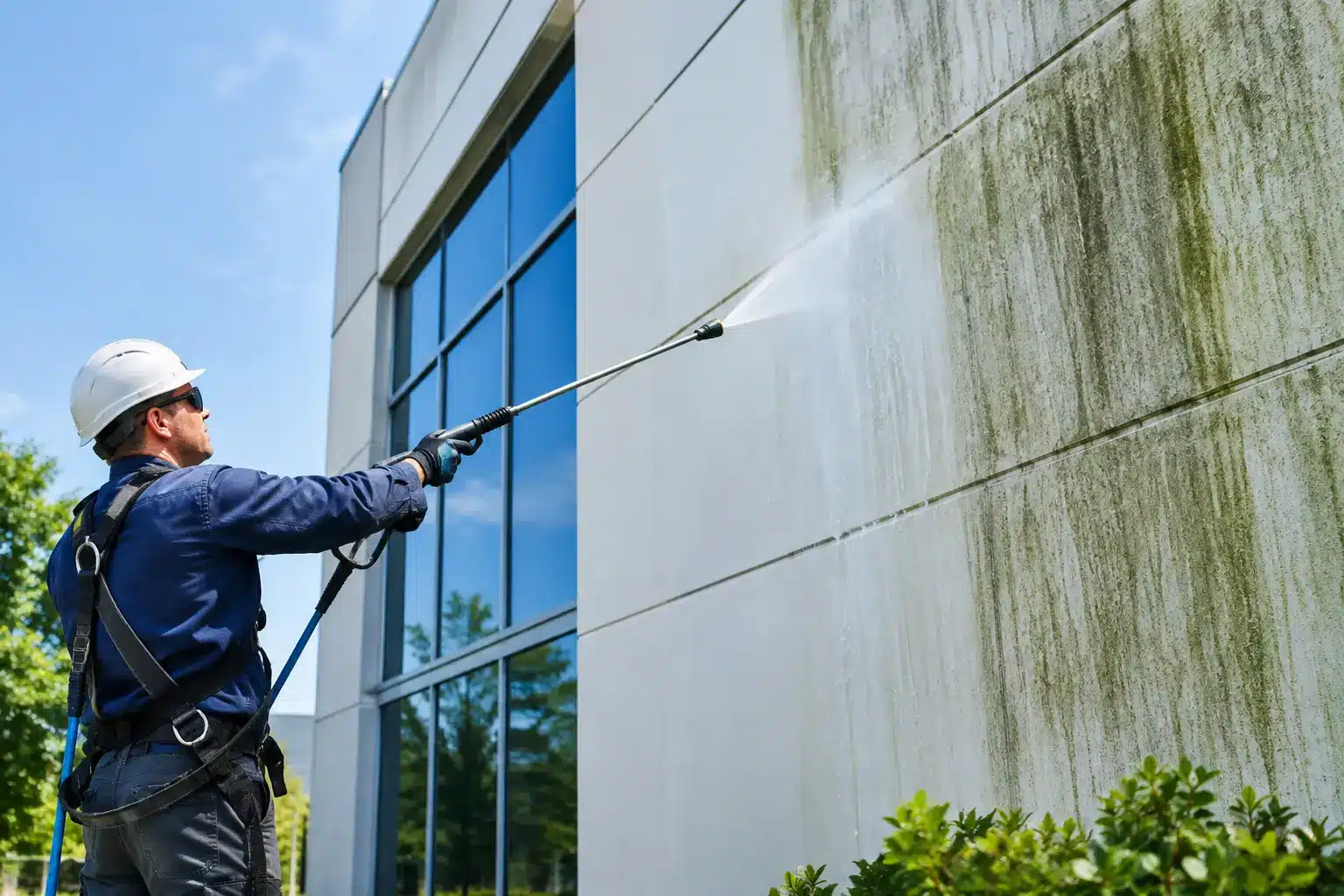

A green film on a building exterior is not a minor cosmetic issue. In humid conditions, algae can quickly spread across cladding, painted walls, concrete, stone, and glazing surrounds, leaving a commercial property looking neglected. Knowing how to remove facade algae properly helps building managers restore appearance without damaging finishes, disrupting tenants, or creating unnecessary work-at-height risk.
For office towers, industrial facilities, retail centers, and mixed-use properties, the correct approach depends on the facade material, the extent of growth, water drainage, and how technicians can safely access the affected areas. A cleaning method that works on a low concrete wall may be unsuitable for coated aluminum panels 20 stories above ground.
Why Algae Grows on Commercial Facades
Algae thrives where moisture remains on exterior surfaces. Malaysia’s frequent rain, high humidity, shaded elevations, and warm temperatures create favorable conditions, particularly on north-facing walls, recessed sections, parapets, ledges, and areas beneath leaking gutters or air-conditioning discharge points.
Dust, airborne pollutants, leaf debris, and organic residue give algae a surface to hold onto. Rough concrete, porous render, aging paint, and unsealed stone are especially vulnerable because they retain moisture longer than smooth, well-maintained cladding.
The visible green staining may also be mixed with mold, mildew, lichen, or general atmospheric grime. This matters because each type of contamination responds differently to cleaning. Treating every stain as algae can lead to ineffective results or unnecessary use of harsh chemicals.
How to Remove Facade Algae Safely
The first step is a site assessment, not a cleaning chemical. A professional team should identify the facade material, inspect the height and access points, check for loose sealant or damaged panels, and determine whether runoff could affect pedestrians, landscaping, vehicles, or neighboring premises.
On commercial buildings, access planning is part of the cleaning work. Depending on the site, technicians may use rope access, boom lifts, scaffolding, suspended platforms, or ground-based extension equipment. The safest and most efficient option depends on building height, facade layout, ground conditions, and whether the property can remain operational during cleaning.
Once access and surface condition are confirmed, algae is generally removed through a controlled combination of chemical treatment, low-pressure rinsing, and manual agitation where required. The objective is to kill and release the biological growth without forcing water behind cladding, stripping coatings, etching glass, or driving contamination deeper into porous materials.
Apply a Suitable Biocidal Cleaner
A purpose-selected exterior biocide or algae treatment is usually more effective than water alone. It should be compatible with the surface being cleaned and applied at the proper dilution. The solution needs enough contact time to break down the algae before rinsing begins.
Strong bleach-based products can produce quick visual results, but they are not automatically the right choice. On some surfaces, they may discolor paint, affect metal finishes, damage landscaping, or leave residues that require careful neutralization. Professional cleaners assess the material and test a discreet area before treating a larger section.
Use Controlled Water Pressure
High-pressure washing is often misunderstood as the fastest answer. Used incorrectly, it can damage render, remove paint, disturb sealant joints, mark soft stone, or push water into cracks and behind facade systems. This can create a bigger maintenance problem than the algae itself.
Low- or medium-pressure rinsing is generally safer for painted surfaces, curtain wall areas, composite panels, and aging exterior finishes. Pressure may be increased only where the material can withstand it and where testing confirms there is no risk of damage. The cleaning direction should also control runoff rather than allowing dirty water to streak across cleaned surfaces.
Agitate Stubborn Areas Without Scratching
Thick growth may require soft brushes or non-abrasive pads after treatment. Mechanical scrubbing should be controlled, especially on coated aluminum, glass, polished stone, and painted metal. Abrasive tools can leave permanent marks that become more visible than the original staining.
Textured concrete and porous masonry sometimes need repeated treatment rather than aggressive scrubbing. This takes longer, but it protects the surface and produces a more even finish.
Match the Cleaning Method to the Facade Material
There is no single cleaning method for every building exterior. The wrong combination of chemical, pressure, and brush type can cause costly surface damage.
Painted concrete and rendered walls often respond well to an approved algae treatment followed by a gentle rinse. If paint is already chalking, peeling, or cracked, cleaning may reveal the extent of coating failure. In that case, facade washing should be coordinated with repainting or repair work rather than treated as a stand-alone fix.
Natural stone requires special care because some stones react poorly to acidic or highly alkaline cleaners. Porous stone can also absorb contaminants and show uneven color after cleaning if treatment is not applied consistently. A small test patch is essential.
Glass and curtain wall systems need cleaning agents that will not attack seals, gaskets, coated glass, or aluminum framing. Water pressure must be managed around joints, drainage channels, and operable windows.
Metal cladding, aluminum composite panels, and coated steel can be scratched or dulled by unsuitable pads and chemicals. Cleaning teams should follow the panel manufacturer’s maintenance guidance where available and avoid leaving chemicals to dry on the surface.
Protect People, Property, and Building Operations
Facade algae removal becomes a high-risk task when it involves height, public walkways, active loading bays, or occupied office floors. Cleaning should be planned around building traffic and weather conditions, particularly when rain or strong wind could affect access equipment and runoff control.
A proper work plan usually addresses four areas:
- Safe access equipment and trained personnel for the building height and facade configuration.
- Barricades, warning signage, and exclusion zones below the work area.
- Protection for windows, vehicles, landscaping, air intakes, and sensitive equipment.
- Runoff management so chemical residue and contaminated water are handled responsibly.
For high-rise properties, rope access or suspended-platform work should only be performed by competent technicians using inspected equipment and documented safety procedures. Saving money through unqualified access work can expose building owners and facility teams to unacceptable liability.
Fix the Causes Before the Algae Returns
Cleaning restores the facade, but it does not remove the conditions that allowed algae to grow. If moisture continues to collect in the same location, staining will return sooner than expected.
After cleaning, inspect recurring problem areas for blocked gutters, leaking downpipes, overflowing roof drains, damaged sealant, cracked render, failed flashing, and air-conditioning condensate discharge. Trees or dense planting that keep walls shaded and wet may also contribute to repeated growth.
A planned exterior maintenance schedule is more cost-effective than waiting for heavy staining to develop. Light periodic cleaning usually requires less chemical, less labor, and less disruption than a full remedial wash. The ideal frequency depends on the building’s exposure, surrounding vegetation, facade material, and drainage condition. Properties near major roads, construction activity, or dense greenery may need more frequent attention.
When to Use a Professional Facade Cleaning Team
Low-level algae on a small, accessible wall can sometimes be addressed by an in-house maintenance team using an approved cleaner. The situation changes when staining affects upper floors, large elevations, fragile finishes, public areas, or surfaces with uncertain coating conditions.
Professional facade cleaning is the practical choice when access is difficult, the building remains occupied, or the cleaning scope needs coordination with gutter maintenance, window cleaning, sealant inspection, or commercial painting. A site-specific quotation should account for building dimensions, height, access method, labor, protection measures, and the condition of the existing facade.
Urban Solutions Services Sdn Bhd supports commercial and industrial properties with facade cleaning and high-risk access services across Kuala Lumpur, Selangor, Penang, and Johor. For persistent algae staining, an on-site assessment provides the clearest path to selecting a cleaning method that protects both the building finish and day-to-day operations.
A clean facade should look maintained, not merely washed. Address the moisture source, use the right treatment for the material, and plan access safely so the result lasts beyond the next rainy season.