

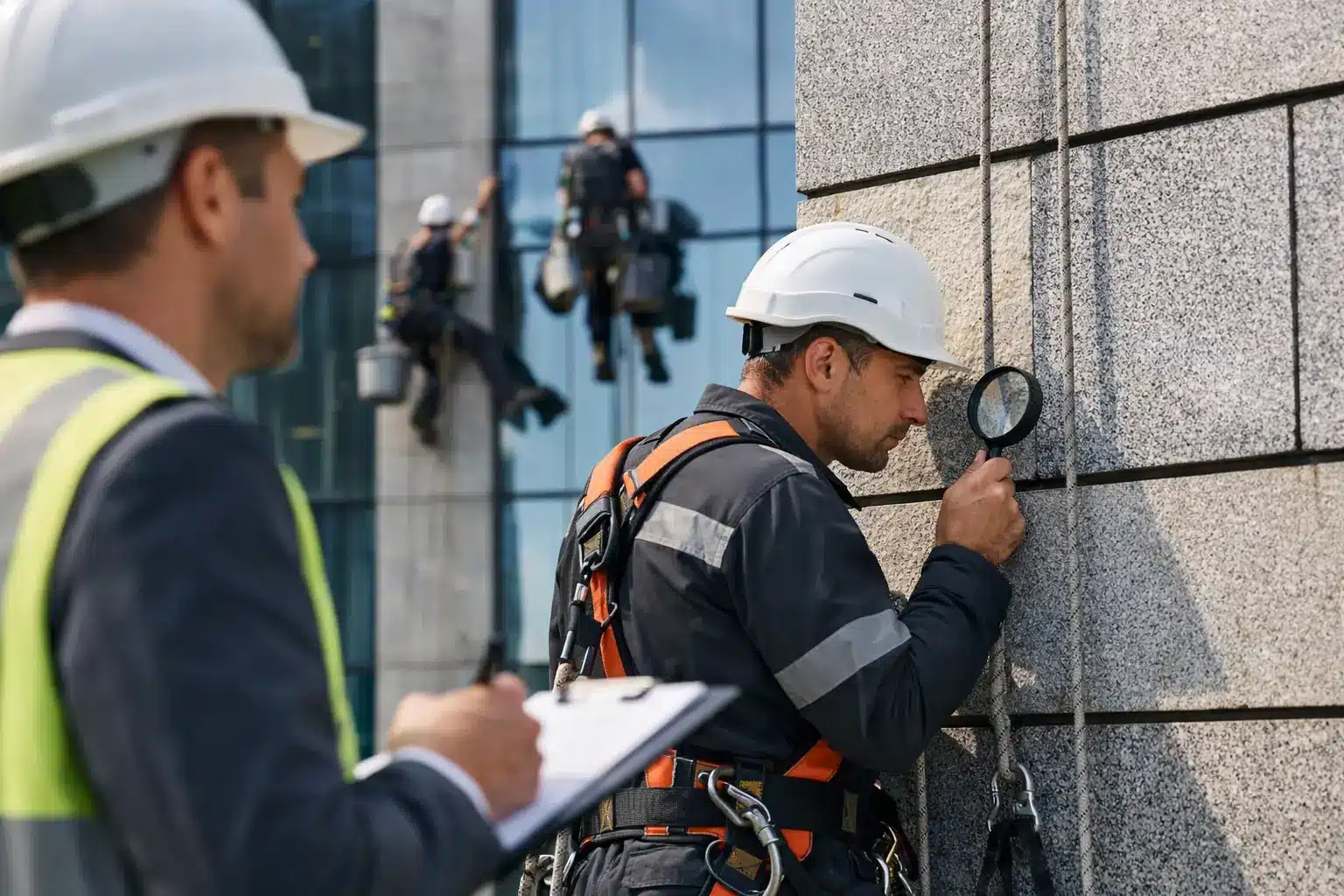

A façade inspection before cleaning is where a safe, effective exterior maintenance job begins. From ground level, a commercial building may simply look dusty, stained, or weathered. Up close, the same façade can reveal cracked sealant, loose panels, failed coatings, corroded fittings, damaged glazing, or access restrictions that change the entire cleaning plan.
For property and facilities teams, inspection is not an unnecessary delay before work starts. It is the process that protects the building, the people working on it, and the budget allocated for exterior maintenance. A proper assessment makes sure the selected cleaning method removes contaminants without creating surface damage or exposing an existing defect.
What a façade inspection before cleaning should identify
The inspection should assess more than visible dirt. A qualified exterior cleaning contractor needs to understand the façade material, its condition, how contamination has built up, and what access methods are practical at the site.
Common façade materials include glass, aluminum composite panels, painted metal, stone, tile, concrete, brick, and specialized cladding systems. Each responds differently to water pressure, detergents, abrasion, and repeated exposure to moisture. A cleaning method that is appropriate for durable glass may not be suitable for aged sealant, porous stone, or a coating that is already deteriorating.
The team should also identify the source of staining. Traffic film, algae, mineral deposits, rust runoff, construction dust, bird droppings, and exhaust residue do not all require the same treatment. Treating every stain with a stronger chemical or higher water pressure can create more problems than it solves.
During a site inspection, technicians should look for conditions such as:
- Cracked, loose, or missing façade panels
- Failed sealant joints around windows and cladding
- Water ingress marks, mold growth, and corrosion
- Loose signage, external fixtures, louvers, or decorative features
- Damaged glazing, weak window frames, and unstable ledges
- Restricted ground areas, pedestrian routes, loading bays, and nearby power lines
These findings help distinguish between a cleaning issue and a maintenance issue. For example, recurring water streaks may be caused by blocked roof gutters, failed sealant, or a leak above the stained area. Cleaning the streak alone may improve appearance temporarily, but it will not address the cause.
The condition of the surface determines the cleaning method
A façade is not a single uniform surface. Even on one elevation, there may be glass, metal flashings, painted concrete, silicone joints, and areas repaired at different times. Weather exposure can vary sharply between sides of the same building, especially where one elevation receives stronger sun, wind-driven rain, or airborne pollution.
Inspection allows the contractor to recommend a method based on actual conditions rather than assumptions. This may involve purified-water cleaning, controlled pressure washing, soft washing, hand cleaning, detergent application, spot treatment, or a combination of methods. A small test area can be useful when the finish is delicate, staining is severe, or the original surface treatment is unknown.
Pressure is a good example of why this matters. High-pressure washing can be effective on suitable concrete or durable exterior surfaces, but it may drive water behind failed joints, strip weak paint, disturb sealant, or damage loose materials. Lower pressure and a carefully selected cleaning solution may take longer, but they can be the right choice for preserving the façade.
The same principle applies to chemicals. Acidic products may help remove mineral staining but can etch certain stone finishes or affect metal components. Alkaline degreasers can be useful on heavily soiled industrial surfaces but may not be appropriate for all coatings. A professional recommendation should balance cleaning performance with the long-term condition of the building envelope.
Access planning is part of the inspection
On high-rise and difficult-access buildings, the cleaning method is only one part of the job. The contractor must also determine how technicians will reach each work area safely and efficiently.
Depending on the height, façade layout, roof condition, and surrounding space, access may involve rope access, a building maintenance unit, a mobile elevated work platform, scaffolding, water-fed poles, or a combination of approaches. Each option has different setup requirements, working limits, costs, and site impacts.
A roof-level review is often necessary for high-rise cleaning. The inspection may check suitable anchor points, parapet conditions, roof access routes, equipment positioning, and areas where rope lines could contact sharp edges or fragile architectural features. Ground-level planning is equally important, particularly around public entrances, parking areas, retail fronts, loading zones, and active offices.
This stage helps avoid common disruptions, such as closing an entrance without notice, blocking a delivery route, or discovering too late that a boom lift cannot enter the site. It also supports a more accurate schedule. A straightforward low-rise façade may be completed quickly, while a tower with limited roof access, narrow perimeter space, and multiple tenant areas will need a more detailed work plan.
Inspection helps control safety and operational risk
Exterior cleaning is high-risk work when personnel, equipment, water, and pedestrians share the same environment. The inspection gives the contractor and building representative an opportunity to identify hazards before technicians are deployed.
Potential risks can include overhead work above public walkways, uneven ground, vehicle movements, exposed electrical equipment, wind conditions, restricted emergency exits, and sensitive tenant operations. The work area may require barriers, warning signage, exclusion zones, spotters, and coordination with building security or operations staff.
Weather should also be considered. Heavy rain, lightning, and unsafe wind conditions can stop high-rise exterior work. A realistic inspection-based plan accounts for these possibilities instead of promising a completion date that ignores site conditions.
For occupied properties, communication is as important as physical controls. Facilities teams may need to notify tenants about temporary access restrictions, window cleaning near meeting rooms, noise from equipment, or work taking place above loading bays. Clear coordination reduces complaints and keeps the project moving.
A better inspection produces a more accurate quotation
Commercial cleaning quotations should reflect the actual demands of the site. Building height, total façade area, level of contamination, surface type, labor needs, access equipment, safety controls, and working hours all affect the cost and timeline.
Without an inspection, a price may overlook difficult elevations, hidden access limitations, or the need for additional protection measures. That can lead to scope changes after work has started. A site-specific quotation is more useful because it clearly defines what will be cleaned, how it will be accessed, what preparations are required, and any conditions that need repair before cleaning proceeds.
This is particularly valuable for property managers responsible for annual budgets. An inspection can help separate immediate cleaning requirements from maintenance items that should be planned for later. It also creates a record of the façade’s visible condition before work begins, which is useful for internal reporting and contractor coordination.
When cleaning should be postponed
There are situations where proceeding with cleaning is not the right decision. If the inspection finds unstable cladding, significant water ingress, loose fixtures, severe coating failure, or unsafe roof access, repairs or specialist assessment may be needed first.
Postponing part of the work is not a sign of poor service. It is a professional decision to prevent further damage and protect everyone on site. In some cases, cleaning can continue on safe sections while repairs are arranged for affected areas. The right approach depends on the condition, location, and severity of the defect.
Make inspection part of routine façade care
A façade should not only be inspected when it looks visibly dirty. Regular assessments allow building teams to spot early signs of deterioration before they become costly repairs. For many commercial properties, combining façade inspection with scheduled exterior cleaning creates a practical maintenance cycle: assess the surface, address urgent defects, clean with the right method, and document any follow-up work.
Urban Solutions Services Sdn Bhd plans exterior cleaning around real site conditions, including access complexity, surface condition, and operational requirements. For commercial and industrial properties in Kuala Lumpur, Selangor, Penang, and Johor, a site visit provides the clarity needed to plan work safely and quote it accurately.
Where the work involves roof or elevated access, property teams should also review DOSH guidance on working at height when planning access, supervision and fall-prevention controls.
For a site-specific scope, review our façade cleaning services and arrange an assessment before confirming access, timing and cost.
Before approving the next exterior cleaning job, ask for the assessment behind the method. A clean façade is the visible result, but careful inspection is what helps keep that result safe, lasting, and worth the investment.