

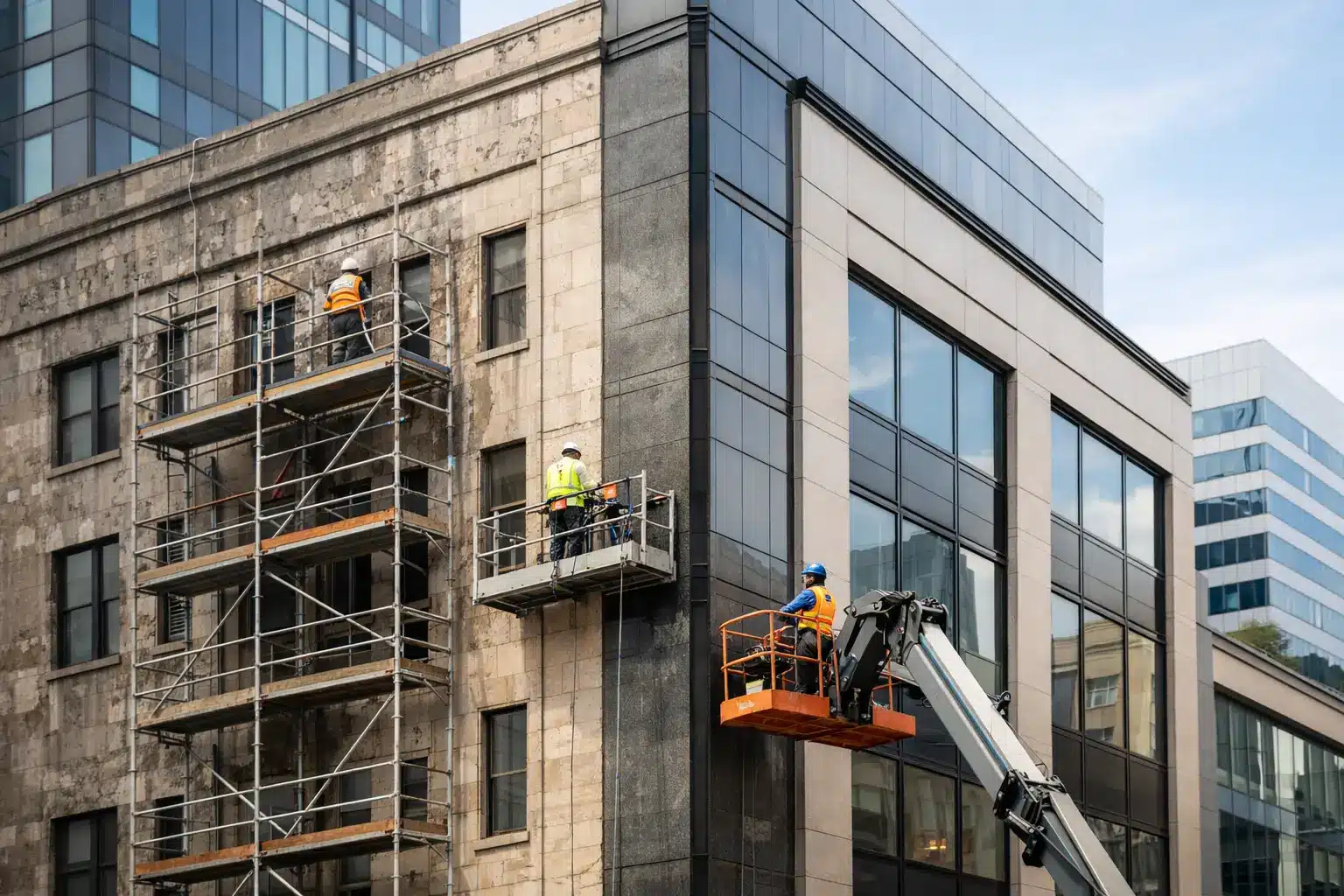

A stained exterior is rarely only a cleaning issue. On a commercial building, dark runoff marks, loose sealant, cracked render, faded coatings, and corroded metal can signal that water and weather are already affecting the facade system. Facade restoration addresses these issues before they become more disruptive repairs, tenant complaints, safety concerns, or avoidable damage to the building envelope.
For property managers and facilities teams, the goal is not simply to make a building look newer. It is to restore the exterior to a sound, presentable, and maintainable condition while managing access risk, business operations, and budget. The right scope depends on the facade material, the building’s height, the type of deterioration, and whether the underlying issue is cosmetic or structural.
What Facade Restoration Covers
Facade restoration is a targeted program of inspection, cleaning, repair, treatment, and protective finishing for a building’s exterior surfaces. It may involve glass, aluminum composite panels, painted concrete, brick, stone, metal cladding, rendered walls, curtain wall systems, or a combination of materials.
A restoration project often starts with high-level inspection because the most serious defects are not always visible from ground level. Water can enter through failed joints, damaged sealant, open cracks, deteriorated coatings, or poorly maintained roof and gutter areas. Staining may be the visible symptom, but the source can sit several stories above it.
The work can range from controlled facade washing and stain removal to localized crack repair, sealant replacement, repainting, panel treatment, and corrective maintenance around windows, flashings, and drainage points. It is not the same as a routine exterior wash. Cleaning removes surface contamination. Restoration combines cleaning with work intended to preserve the surface and reduce recurring deterioration.
Signs Your Building Needs Attention
Commercial exteriors age differently depending on exposure, design, material quality, drainage, and maintenance history. Buildings near major roads may collect more dust and traffic film. Properties exposed to frequent rain, strong sunlight, or humid conditions may develop algae, mildew, fading, and water streaking faster.
Visible staining is often the first reason building teams request an assessment. However, decision-makers should also watch for peeling paint, chalking surfaces, hairline or spreading cracks, rust marks, loose cladding elements, failed caulking around windows, and damp patches on interior walls near the exterior envelope.
Recurring leaks deserve particular attention. Reapplying sealant without identifying movement, failed drainage, or a damaged substrate can delay the problem rather than resolve it. A practical inspection should distinguish between isolated cosmetic defects and conditions that require a broader repair strategy.
Start With Access and Inspection Planning
High-rise facade work is an access project as much as a maintenance project. Rope access, suspended platforms, boom lifts, scaffolding, and other systems each have different strengths, limitations, setup requirements, and costs. The best method depends on the building geometry, working height, ground conditions, anchor points, facade layout, and areas that need treatment.
Rope access can be highly effective for targeted repairs and difficult-to-reach elevations with limited ground disruption. Suspended platforms may suit larger vertical work zones or longer-duration projects. Boom lifts can be practical where there is sufficient access and stable working space at ground level. Scaffolding may be appropriate for extensive low- to mid-rise repairs, although it can affect entrances, foot traffic, and daily operations.
A competent contractor should assess access before confirming the work scope. This helps avoid a quotation that appears attractive at first but excludes the equipment, permits, protection measures, or labor required to complete the job safely.
Safety Is Part of the Scope
Exterior restoration should never be planned as if technicians can simply reach every area from a ladder. Working at height requires trained personnel, suitable fall-protection systems, equipment inspections, controlled work zones, and a clear rescue approach where applicable.
For occupied commercial properties, safety planning also includes the people below. Entrances, parking areas, walkways, loading bays, and public-facing spaces may need temporary barriers, scheduling controls, and debris protection. Coordination with building security and operations teams keeps disruption controlled and gives tenants clear expectations.
Matching the Method to the Material
One of the most common mistakes in facade maintenance is treating every surface with the same cleaning pressure or chemical solution. A method that works on durable concrete may damage coatings, etched glass, aged sealant, soft stone, or delicate cladding finishes.
For example, high-pressure washing may remove heavy dirt from selected substrates, but excessive pressure can drive water into joints, lift failing paint, or damage weak render. Chemical treatment can be useful for mineral staining, biological growth, and pollution buildup, but it must be compatible with the surface and managed carefully to prevent runoff damage.
Painted facades may need washing, substrate preparation, crack treatment, primer, and a compatible exterior coating system. Metal elements may require corrosion removal and protective recoating. Glass and aluminum systems often call for non-abrasive cleaning, detailed inspection of gaskets and joints, and localized sealant repairs rather than aggressive surface treatment.
This is why test areas are valuable on complex or aged facades. They allow the team to confirm the cleaning result, identify surface sensitivity, and set a method that produces an even finish without creating new defects.
Repair the Cause, Not Only the Appearance
A clean facade can improve first impressions immediately, but restoration value comes from addressing the causes of deterioration. If rainwater is spilling from blocked gutters, faulty downpipes, or damaged roof drainage, the staining will return. If a crack is moving or a joint has failed, repainting over it will not provide a durable result.
A sensible work sequence is to correct drainage and water-entry issues first, repair affected surfaces next, then complete cleaning and finishing work. This order protects the investment in paint, coatings, and surface treatment.
Building managers should also consider how adjacent systems affect the facade. Roof gutters, parapets, window frames, expansion joints, air-conditioning discharge points, and exterior signage can all contribute to staining or water damage. Coordinating these areas under one maintenance plan reduces repeat mobilization and prevents one unresolved defect from affecting a newly restored elevation.
Budgeting for Facade Restoration
There is no reliable flat-rate price for facade restoration because the cost is driven by more than square footage. Building height, access complexity, material type, extent of repairs, contamination level, working hours, equipment needs, and protection requirements all affect the final scope.
A smaller building with difficult access can require more planning than a larger building with clear anchor points and open perimeter space. Similarly, an exterior that needs only washing and localized sealant work will be very different from one requiring widespread coating removal, concrete repair, and repainting.
The most useful quotation separates the major work elements so the property team can understand what is being priced. It should clarify access method, preparation work, repair allowances, cleaning or coating systems, protection measures, and any assumptions about site availability. If the condition is uncertain, a site visit and close inspection are more responsible than guessing from photographs alone.
Plan Restoration Around Building Operations
Restoration work can affect access routes, natural light, parking, loading activity, and tenant comfort. A clear work plan protects operations as well as the facade. For office towers, teams may schedule noisy preparation work outside peak hours and coordinate window-adjacent activities with occupants. For industrial sites, work may need to avoid loading schedules, production areas, or restricted zones.
Weather also matters. Rain, wind, humidity, and surface temperature can affect cleaning results, sealant curing, paint adhesion, and safe access. A contractor should build reasonable weather contingencies into the schedule instead of forcing work under unsuitable conditions.
Communication is equally practical. Building management should know which elevations will be active, what areas require temporary controls, and when access will return to normal. This keeps the project moving without unnecessary complaints or last-minute changes.
Protect the Result With Ongoing Maintenance
Restoration should lead into a maintenance plan, not another long period of neglect. Periodic facade cleaning removes pollution, organic growth, and runoff marks before they become deeply embedded. Scheduled inspections can identify sealant failure, blocked drainage, coating breakdown, and loose components while repairs are still localized.
The right frequency depends on the building’s exposure and use. A prominent corporate office with high public visibility may need more frequent exterior cleaning than a low-traffic industrial facility. Buildings with recurring water runoff issues may need seasonal gutter and drainage maintenance alongside facade checks.
Urban Solutions Services Sdn Bhd approaches high-access exterior work with the same principle: assess the building condition, select a safe and practical access method, and complete the scope with minimal disruption to site operations. For commercial properties, a well-planned facade restoration is not cosmetic spending. It is a controlled maintenance decision that protects appearance, supports safer conditions, and gives the building team a clearer path for future upkeep.
The best time to assess a deteriorating facade is before loose finishes, persistent leaks, or public-facing stains turn a manageable maintenance task into an urgent repair project.