

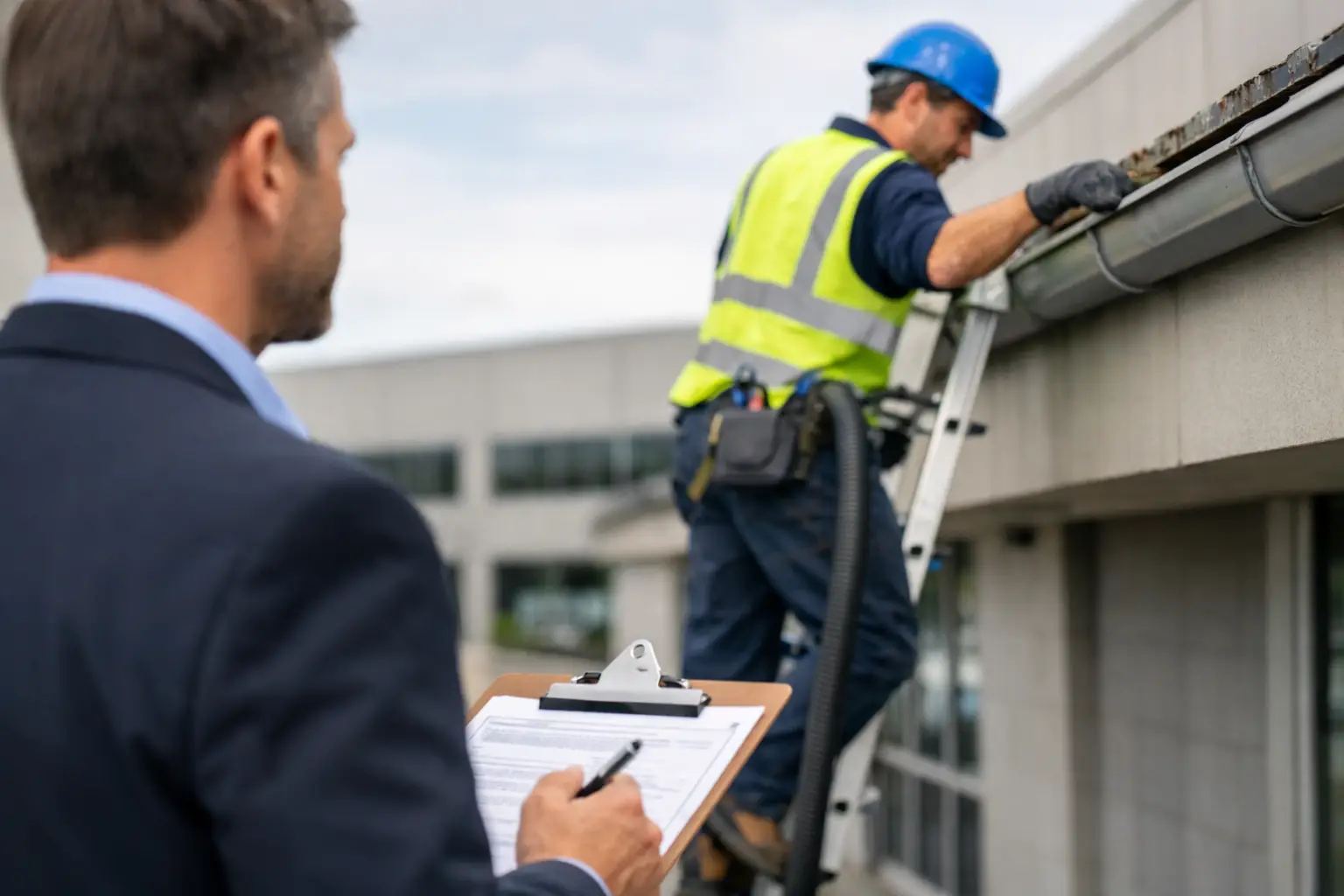

A blocked roof gutter rarely stays a minor maintenance issue for long. On a commercial building, standing water can overflow onto façades, soak soffits, damage roof edges, stain exterior walls, and create leaks that disrupt tenants or operations. Choosing gutter cleaning vendors is therefore not simply a housekeeping decision. It is a decision about safe roof access, controlled work practices, and protecting a valuable building asset.
For office towers, retail centers, factories, warehouses, and mixed-use properties, the right contractor must be able to reach the work area safely and complete the job without shifting risk to the property team. Price matters, but it should be assessed alongside scope, access method, technician capability, and proof of completed work.
What Commercial Gutter Cleaning Actually Requires
Commercial gutters are often difficult to inspect, let alone clean. They may sit behind parapet walls, above sloped roof sections, beside fragile roof sheets, or at the edge of a multi-story structure. Debris can include leaves, sediment, branches, nesting material, plastic waste, and material carried by wind or heavy rain.
A proper service does more than remove visible debris from the nearest gutter section. The contractor should inspect the accessible gutter run, downspout entry points, outlets, joints, and areas where water is likely to pond. Where blockages are identified, the work scope should state whether the vendor will clear them, flush the system, or recommend a separate repair.
This distinction matters. A gutter can look clean from the roofline while a blocked downspout continues to force water back over the gutter edge. Likewise, clearing debris without identifying loose brackets, rusted sections, or damaged sealant may leave a property exposed during the next severe storm.
Start With Access and Safety Capability
The first question for gutter cleaning vendors should be simple: how will your team access this specific roof and gutter line safely? A ground-level commercial unit may allow ladder access under controlled conditions. A taller building, restricted rooftop, fragile roofing system, or difficult edge condition may require rope access, mobile elevated work platforms, roof anchors, or another engineered approach.
The access method should never be an afterthought. It affects labor, equipment, scheduling, cost, and the risk profile of the work. A low quote that does not account for safe access can lead to shortcuts, delays, or a contractor requesting unplanned charges after arriving on site.
Ask vendors to explain the proposed method in plain language. They should be able to identify the access point, fall-protection requirements, equipment needed, exclusion zones below the work area, and any building support required from your team. For occupied sites, they should also address how the work will be separated from staff, visitors, vehicles, and daily operations.
A capable provider will treat a site visit as part of planning, not as a formality. Roof height, edge conditions, drainage layout, access restrictions, and the condition of the building all influence a responsible quotation.
Look for Site-Specific Risk Planning
Generic safety statements are not enough for elevated work. The vendor should have a practical plan that matches the property. This may include pre-work inspections, appropriate personal protective equipment, trained technicians, equipment checks, weather monitoring, and a clear response process if conditions become unsafe.
Weather deserves particular attention. Gutter work is often requested after heavy rain, when problems become visible. However, wet surfaces, lightning risk, strong winds, and active rainfall can make roof and high-access work unsafe. A dependable contractor will reschedule when required rather than take unnecessary risks to meet an arbitrary date.
For large commercial or industrial properties, confirm who will supervise the work and who will communicate with the facilities contact. One accountable point of contact helps prevent confusion around access approvals, work permits, roof keys, loading areas, and completion sign-off.
Compare Gutter Cleaning Vendors by Scope, Not Price Alone
Two quotations can have very different meanings even when both are labeled “gutter cleaning.” One may cover only debris removal from easily accessible gutters. Another may include difficult-access sections, downspout clearing, water testing, debris disposal, before-and-after documentation, and minor observations on visible defects.
Before comparing numbers, make sure each vendor has priced the same outcome. A useful scope of work should describe the gutter areas included, the access approach, the level of cleaning, disposal arrangements, and exclusions. If the property has multiple roof elevations or separate blocks, those should be identified clearly.
The following details are worth confirming before approval:
- Whether all accessible gutters, outlets, and downspout entry points are included
- Whether flushing or flow testing is included after debris removal
- How debris will be bagged, lowered, and removed from the property
- Whether photos and a completion report will be provided
- Which repairs, replacement parts, or concealed drainage issues fall outside the cleaning scope
This clarity protects both parties. Facilities teams know what they are buying, and the contractor can allocate the right labor and equipment before work begins.
Be Careful With Unrealistic Fixed Prices
Some buildings can be priced from photos and basic measurements. Others cannot. A fixed rate may be reasonable for a small, familiar site with simple roof access and a known maintenance history. It is less reliable for high-rise properties, older buildings, large industrial roofs, or sites where drainage problems have not been investigated.
A site-specific quotation is often the more practical choice because it reflects actual working conditions. The final cost may depend on building height, total gutter length, debris volume, access complexity, number of technicians, equipment, work permits, and whether the job must be completed outside operating hours.
The lowest price is not always the lowest operational cost. If a vendor cannot safely reach all required areas, leaves debris on the roof, or provides no evidence of completed work, your team may need to arrange another visit. That can mean more disruption and more expense than selecting a qualified provider at the outset.
Documentation Turns Maintenance Into a Defensible Process
Commercial property maintenance requires records. If an overflow later causes water damage, it helps to know when gutters were serviced, which sections were cleaned, what was found, and whether any repair needs were raised.
Request before-and-after photos where practical, particularly for elevated or concealed areas that the property team cannot inspect directly. A concise completion report should note the work date, areas serviced, significant debris or blockages removed, visible defects observed, and recommended next steps. The report does not need to be lengthy. It needs to be specific enough to support maintenance decisions.
Documentation is also useful when managing multiple sites or reporting to owners, tenants, or internal operations leaders. It provides a clear record that preventative maintenance was completed and gives the team a reference point for future inspections.
Choose a Maintenance Frequency Based on Exposure
There is no single cleaning schedule for every commercial property. Buildings near mature trees, construction activity, open fields, or high-wind areas may need more frequent attention. Roof geometry also matters. Flat roofs and valley areas can collect sediment, while concealed box gutters may hold water and debris longer before an issue is noticed.
For many properties, inspections before and after periods of heavy rain are a sensible starting point. Sites with repeated blockages may benefit from a planned service schedule rather than waiting for an overflow. Preventative work is generally easier to schedule, safer to manage, and less disruptive than urgent attendance after water has entered the building.
A qualified contractor can help establish the right interval after reviewing the site. The objective is not to sell unnecessary visits. It is to prevent avoidable drainage failures based on the building’s actual exposure and condition.
Questions to Ask Before Appointing a Vendor
A short vendor discussion can reveal whether a company understands commercial roof work. Ask how it will access the gutters, how it protects people below the work area, what the quoted scope includes, and what evidence it provides at completion. Ask whether technicians are experienced with elevated or restricted-access work, and whether the contractor can identify visible drainage or gutter defects during the service.
It is also reasonable to ask what happens if the team finds a serious blockage, damaged gutter section, or unsafe roof condition. The right answer is not necessarily that every issue will be repaired immediately. It is that the contractor will stop where needed, communicate clearly, document the condition, and recommend an appropriate next action.
For properties in Kuala Lumpur, Selangor, Penang, and Johor, Urban Solutions Services Sdn Bhd provides site-specific roof gutter services supported by experienced access teams and practical maintenance reporting. A free site visit can clarify the safest access method and the work required before a quotation is issued.
Where the work involves roof or elevated access, property teams should also review DOSH guidance on working at height when planning access, supervision and fall-prevention controls.
Do not wait for water to spill over a roof edge before reviewing your drainage maintenance plan. Arrange an inspection while conditions are stable, define the scope clearly, and appoint a contractor that can complete difficult-access work with the control your property requires.