

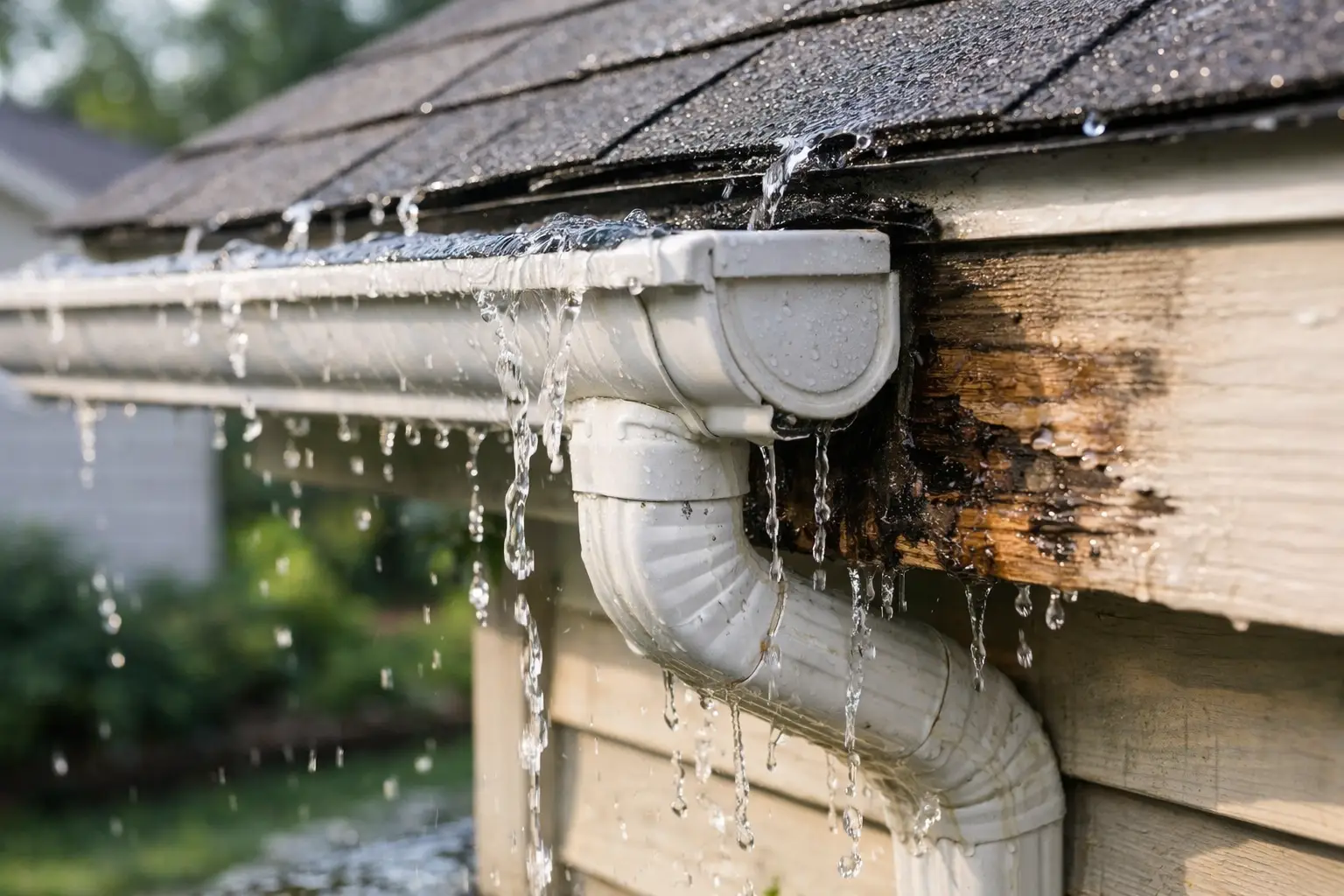

A blocked gutter can turn a routine rainstorm into a building maintenance issue within hours. To prevent water damage from gutters, commercial properties need more than occasional debris removal. They need a planned approach that keeps roof drainage clear, directs water away from the structure, and identifies defects before they affect ceilings, walls, façades, or operations. Regular maintenance is essential to prevent water damage from gutters.
For office towers, retail centers, warehouses, and industrial facilities, gutter failure is rarely limited to the roofline. Overflow can stain exterior walls, saturate insulation, corrode metalwork, create slippery access areas, and allow water to enter occupied spaces. The cost of a professional gutter inspection is usually far lower than emergency repairs, tenant disruption, or damage to stock and equipment.
To effectively prevent water damage from gutters, regular inspections and cleaning are vital.
Why Commercial Gutters Cause Water Damage
Gutters are designed to collect roof runoff and move it into downspouts and drainage points. When any part of that route is obstructed, undersized, loose, or damaged, water takes the path of least resistance. That may mean spilling over the gutter edge, backing up beneath roofing materials, or pooling near vulnerable joints and penetrations.
Identifying how to prevent water damage from gutters can save property owners from costly repairs.
Leaves, branches, roof grit, bird nests, and windblown litter are common causes of blockages. On commercial sites, debris can also include packaging material, construction dust, loose fasteners, and residue from nearby trees. Flat and low-slope roofs are particularly vulnerable because water may carry debris slowly toward outlets rather than flushing it through the system.
To truly prevent water damage from gutters, property managers must stay proactive in maintenance.
Overflow is not always caused by a blockage. A gutter may be incorrectly pitched, have insufficient downspout capacity, or pull away from the fascia under the weight of standing water. Cracked joints, rusted sections, and damaged outlet connections can leak even when the channel appears clean from ground level.
Heavy seasonal rain makes these weaknesses more visible. For properties in Kuala Lumpur, Selangor, Penang, and Johor, intense downpours can quickly overwhelm a poorly maintained drainage system. Facility teams should treat roof drainage as a preventive maintenance priority, not a task to address only after a leak appears.
How to Prevent Water Damage From Gutters at Commercial Sites
By implementing strategies to prevent water damage from gutters, businesses can ensure longevity and safety.
The most effective gutter program combines scheduled cleaning, targeted inspection, timely repairs, and safe access planning. The right frequency depends on roof size, surrounding vegetation, building height, drainage design, and the amount of airborne debris around the site.
Set an inspection schedule around actual site conditions
A twice-yearly inspection is a sensible starting point for many commercial buildings: once before a period of heavier rain and again after it. Sites near mature trees, active construction, busy roads, or industrial operations may require quarterly checks. Buildings with recurring overflow history may need more frequent monitoring until the root cause is corrected.
Inspections should not stop at looking into the gutter channel. A competent assessment reviews the roof surface, gutter runs, outlet points, downspouts, brackets, joints, flashings, and the ground-level drainage route. If water leaves the roof successfully but backs up at the base of a downspout, the property still faces overflow and foundation-related risks.
Effective inspections are crucial to prevent water damage from gutters and keep the system functioning.
Keep inspection records with photographs and notes on defects. This helps facilities managers identify repeat problem areas, support repair decisions, and plan maintenance budgets before rain-related issues become urgent.
Remove debris completely, not just from visible sections
Be thorough in your cleaning efforts to prevent water damage from gutters caused by hidden debris.
Partial cleaning can create a false sense of security. Debris commonly compacts at outlet points and inside downspouts, where it cannot be seen from the roof edge. A professional cleaning scope should clear the full gutter length, remove sediment from outlets, and test that water can pass through the downspout without restriction.
Roof debris matters as much as gutter debris. If leaves and grit remain across the roof, the next storm may simply wash them back into freshly cleaned channels. Clearing drainage paths and nearby roof surfaces together provides a more reliable result.
To ensure effectiveness, always focus on how to prevent water damage from gutters during maintenance.
Waste should also be removed from the site rather than pushed into surface drains. Moving debris from a rooftop gutter to a ground drain only shifts the blockage to another part of the property.
Test water flow before leaving the site
Visual checks have limits. Water testing is one of the clearest ways to confirm whether gutters are draining as intended. Controlled flow testing can expose slow outlets, leaks at joints, backflow, and low points where water remains after the test.
Standing water in a gutter is a maintenance signal. It may indicate poor pitch, sagging brackets, a distorted channel, or a concealed obstruction. Left unresolved, standing water increases loading on gutter supports and accelerates corrosion in metal systems.
Standing water is a clear sign that action is needed to prevent water damage from gutters.
For larger buildings, testing should include representative sections across different elevations and roof zones. A drain that works well on one side of a structure does not prove that every outlet can handle runoff.
Repair small defects before they become leak paths
By addressing minor issues early, you can prevent water damage from gutters before they escalate.
Gutter systems often fail progressively. A loose bracket allows a section to sag. The sag traps water and debris. Extra weight opens a joint or pulls the channel farther from its fixing point. During the next heavy rain, water begins to overflow against the façade or roof edge.
Address loose fasteners, separated joints, damaged sealant, rusted areas, cracked downspouts, and misaligned outlets as soon as they are identified. In some cases, localized repair is appropriate. In others, repeated leaks or extensive corrosion may justify replacing a section to restore reliable drainage.
Avoid treating sealant as the answer to every issue. Sealant can help at sound, properly aligned joints, but it will not correct poor slope, structural movement, or a gutter section that is no longer adequately supported.
Take a holistic view on how to prevent water damage from gutters to enhance overall system reliability.
Make sure water finishes its journey safely
A clean gutter is only the first stage of drainage. Downspouts should discharge into a suitable drainage system or direct water away from the building perimeter. Water that repeatedly pools near entrances, loading areas, foundations, or external equipment can create separate safety and maintenance concerns.
Check for splashback at downspout outlets, blocked drain grates, damaged drain covers, and erosion around discharge points. On industrial and commercial sites, coordinate roof drainage inspections with ground drainage maintenance so the entire water route is functioning as one system.
Proper coordination between gutter and ground drainage systems helps to prevent water damage from gutters.
Safe Access Is Part of Gutter Maintenance
Gutter work on commercial buildings can involve significant risk. Roof edges, wet surfaces, fragile roof materials, electrical hazards, restricted access points, and height exposure require proper planning. A facilities team should not assume that a ladder and basic hand tools are suitable for every property.
Safety measures are crucial in ensuring work to prevent water damage from gutters is performed effectively.
The access method should match the building. Depending on height, roof configuration, and site restrictions, work may require trained rope-access technicians, mobile elevated work platforms, scaffolding, or controlled roof access systems. The goal is not simply to reach the gutter. It is to complete cleaning, inspection, and repairs without creating a fall risk, damaging the roof, or disrupting daily operations.
Before work starts, confirm the contractor’s site assessment covers access routes, exclusion zones, weather conditions, roof load limits, and safe handling of removed debris. This is especially relevant for high-rise buildings and facilities where public walkways, parking areas, or loading bays sit below the work zone.
Signs Your Gutters Need Immediate Attention
Do not wait for a full maintenance cycle if the building shows active warning signs. Overflow during rain, water marks beneath roof edges, damp ceiling areas, peeling paint, façade staining, and water collecting near the building are all reasons to arrange an inspection promptly.
Immediate attention is necessary when signs indicate the need to prevent water damage from gutters.
Other signs are less obvious. Vegetation growing from a gutter, birds regularly gathering at one roof section, visible sagging, or an unusually loud waterfall effect during rain can point to obstruction or poor drainage. In multi-story properties, these symptoms may only be visible from certain elevations, making professional access and inspection valuable.
A leak inside the building does not always mean the roof covering has failed. Water can travel from an overflowing gutter or blocked outlet before appearing at a ceiling, wall, or service penetration. Identifying the actual source prevents unnecessary repairs in the wrong area.
Understand the relationship between leaks and gutter maintenance to prevent water damage from gutters.
Build Gutter Care Into Your Maintenance Plan
Reliable gutter maintenance works best when it is planned alongside roof, façade, and exterior cleaning activities. Combining compatible work can reduce repeat access setup, improve visibility of building defects, and help facility managers coordinate budgets and site disruptions.
Gutters should be an essential part of any maintenance plan to prevent water damage from gutters.
Urban Solutions Services Sdn Bhd provides site-specific roof gutter services for commercial and industrial properties, with access methods suited to challenging heights and building layouts. The scope should be based on what the property actually needs, whether that is routine clearing, drainage testing, repair support, or a closer review of recurring overflow.
The practical next step is simple: inspect your gutters before the next major rainfall exposes a problem. A clean, properly draining system protects more than the roofline. It helps keep the building dry, safe, presentable, and ready for daily operations.
Where the work involves roof or elevated access, property teams should also review DOSH guidance on working at height when planning access, supervision and fall-prevention controls.
For a site-specific scope, review our roof and gutter services and arrange an assessment before confirming access, timing and cost.
To conclude, knowing how to prevent water damage from gutters is crucial for maintaining property value and safety.