

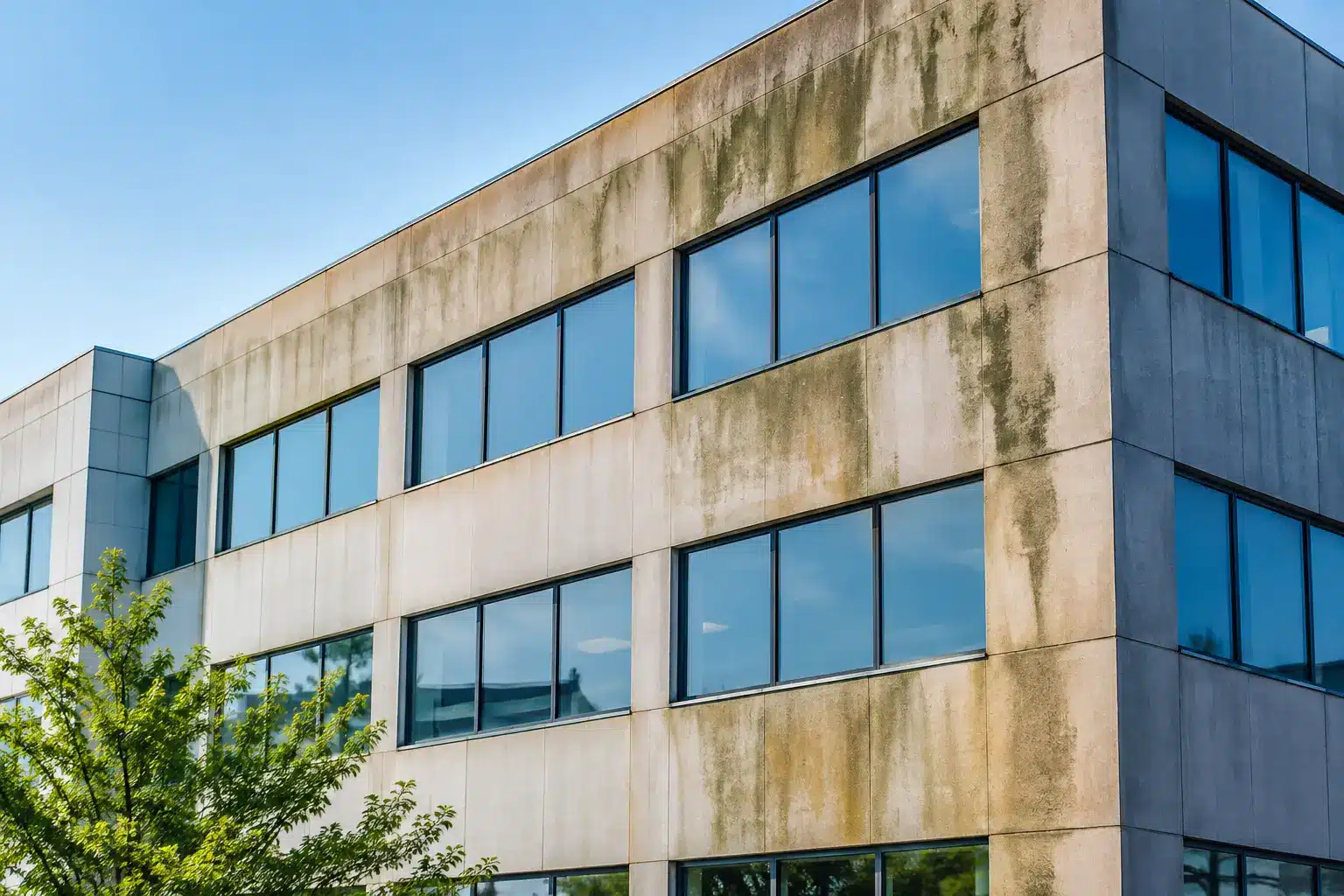

A dark vertical streak below a window, a rusty mark near a metal bracket, or a pale patch spreading across a concrete wall is more than an appearance issue. Facade discoloration causes can point to drainage failures, material deterioration, airborne contamination, or cleaning methods that are no longer suitable for the building finish. For property and facilities teams, identifying the source before scheduling cleaning helps prevent repeat stains and unnecessary repair costs.
Why facade discoloration deserves attention
A stained exterior can weaken a tenant’s and visitor’s first impression of a commercial property. More critically, some discoloration is an early warning sign. Water marks may indicate failed sealant or blocked drainage. Rust stains can signal corroding fixtures or reinforcement. Green or black biological growth may show that moisture is remaining on the surface longer than it should.
Not every mark requires major remedial work. Buildings beside busy roads often collect soot and traffic film quickly, while shaded elevations may develop algae without a structural fault. The practical challenge is separating routine surface soiling from discoloration caused by an active building defect.
A site assessment should consider the stain’s color, location, pattern, and rate of return. One isolated stain around a pipe penetration requires a different response from broad gray staining across an entire elevation.
Common facade discoloration causes
Air pollution and airborne particles
Commercial buildings in dense urban areas are continually exposed to vehicle exhaust, construction dust, industrial emissions, and fine airborne particles. These contaminants settle onto glass, aluminum composite panels, painted surfaces, concrete, and stone. Rainwater then carries the deposits downward, often creating gray or black streaks beneath ledges, window frames, and façade joints.
Pollution staining is usually most visible on light-colored finishes and rough, porous materials. It may be heavier on lower floors near traffic, although upper floors can also collect pollutants depending on wind direction and building geometry. Regular professional façade cleaning can manage this type of buildup, but cleaning intervals should reflect the property’s exposure rather than follow a generic calendar.
Water runoff, leaks, and poor drainage
Water is one of the most frequent causes of persistent exterior staining. Rainwater picks up dust, minerals, corrosion residue, and organic material as it moves across roofs, ledges, gutters, and façade features. When it repeatedly follows the same path, it leaves visible lines and patches.
Blocked roof gutters, undersized downpipes, failed flashings, damaged sealant, and incorrectly sloped ledges can all direct water onto areas that should remain dry. In high-rise buildings, the source may be several floors above the visible mark. Cleaning the stain without correcting the water path may improve appearance temporarily, but the discoloration will return after the next period of heavy rain.
White, chalky deposits can also develop where water evaporates and leaves behind salts or minerals. This is commonly known as efflorescence. It is more likely on masonry, concrete, and cement-based finishes, especially where moisture is entering from behind the surface.
Metal corrosion and rust runoff
Orange, brown, or reddish stains commonly originate from corroding metal components. Possible sources include window hardware, balcony railings, steel brackets, anchors, exposed fasteners, air-conditioning supports, and drainage accessories. Even a small corroding screw can leave a long stain when rainwater carries rust particles down a pale façade.
Rust staining is not always a cosmetic concern. Surface corrosion on a non-structural fitting may need straightforward replacement or recoating. Corrosion around structural connections, concrete spalling, or embedded reinforcement requires prompt technical evaluation. The pattern matters: stains that emerge from cracks, concrete edges, or fixing points should not be treated as ordinary dirt.
Biological growth in damp or shaded areas
Green algae, black mildew, lichen, and other organic growth thrive where moisture remains on a façade. North-facing or heavily shaded elevations, areas behind landscaping, recessed walls, and sections near leaking pipes are particularly vulnerable. Humid climates and frequent rainfall make the issue more common, especially when surface drainage is poor.
Biological growth can make walkways and lower wall surfaces slippery, while its roots or holdfasts may retain moisture against porous finishes. Aggressive cleaning is not always the right answer. The appropriate method depends on the façade material, the extent of growth, and whether the underlying cause is shade, water intrusion, or inadequate drainage.
Material aging and coating failure
Painted walls, sealants, render systems, and some cladding finishes change over time due to sun exposure, rain, heat, and general weathering. Fading is often uniform on sun-exposed elevations, while patchy discoloration can indicate coating breakdown, moisture beneath paint, or uneven previous repairs.
Chalking is another common condition. As a coating deteriorates, it releases a powdery residue that can make the finish look faded or uneven. Washing may remove loose chalk temporarily, but a failing coating often needs surface preparation and repainting rather than repeated cleaning.
Different materials age differently. Natural stone can darken as it absorbs pollutants. Concrete can develop uneven tones as it weathers. Aluminum panels may show staining around joints or failed protective coatings. A cleaning product that works on one material may damage another, so façade type must guide the maintenance approach.
Improper cleaning methods and chemical residue
Sometimes discoloration is created or worsened during an attempt to remove it. Strong acidic or alkaline chemicals, abrasive pads, incorrect pressure settings, and incomplete rinsing can leave etching, streaks, bleaching, or residue. This risk is especially high with glass coatings, painted metal, stone, and composite panels.
High-pressure washing can be effective on suitable concrete and hard surfaces, but it can force water into joints, damage sealant, or strip coatings when used incorrectly. Chemical selection, dilution, dwell time, water pressure, and rinsing procedure should be matched to the material and stain. A test area is a sensible safeguard before treating a large, visible elevation.
How to diagnose the source before cleaning
Start by documenting the stain with photographs from close range and at a wider distance. Note whether it appears below a joint, drain outlet, window, roof edge, or metal component. Check if it is limited to one elevation or repeated across the building. This information helps determine whether the issue is environmental, drainage-related, or material-specific.
The stain color provides useful clues. Black or gray marks often suggest pollution and runoff. Green or black patches in damp areas may be biological growth. White deposits can indicate salts moving through masonry. Orange-brown streaks point toward metal corrosion. However, color alone is not enough, particularly on older façades where several issues may occur at once.
For high-rise or difficult-access areas, inspection access is part of the diagnosis. Ground-level observation may not reveal deteriorated sealant, blocked gutters, loose fixtures, or failed joints above. Skilled technicians using appropriate rope access, elevated platforms, or other site-approved access methods can inspect and clean areas that cannot be assessed safely from the ground.
Cleaning is only one part of the remedy
A proper maintenance plan addresses both the visible staining and its cause. If pollution is the main factor, scheduled façade washing may be sufficient. If runoff is responsible, the plan should include clearing gutters, correcting drainage, resealing joints, or repairing affected components. If corrosion is present, cleaning should be coordinated with replacement, treatment, or repainting of the metal source.
The best cleaning method depends on the surface. Glass and metal panels may require controlled washing with compatible detergents and purified water. Concrete, stone, and textured coatings may need specialized treatments to lift embedded deposits without damaging the finish. Paint failure or widespread chalking may be better addressed through commercial painting after suitable surface preparation.
Access complexity also affects planning. A low-rise wall can often be cleaned from ground-based equipment, while a tower façade may require rope access or suspended access systems. The safest and most efficient method depends on height, façade design, anchor points, surrounding public areas, weather conditions, and the work that must be completed at the same time.
Preventing stains from returning
Prevention is usually less disruptive than repeated corrective cleaning. Regular gutter and roof drainage maintenance reduces overflow marks. Sealant inspections can catch water-entry points before they create visible staining. Recoating exposed metal fixtures reduces rust runoff, while planned façade cleaning removes pollution before it becomes embedded in porous surfaces.
Facilities teams should also coordinate exterior work. For example, repairing a leaking air-conditioning drain after façade cleaning can create a fresh stain within weeks. Grouping inspection, minor repairs, cleaning, and touch-up painting into one maintenance scope can reduce repeated access costs and keep the building presentable for longer.
Urban Solutions Service Sdn. Bhd. supports commercial and industrial properties with site-specific façade cleaning and high-risk access work. For buildings in Kuala Lumpur, Selangor, Penang, or Johor, a site visit can establish whether discoloration is a cleaning issue, a maintenance issue, or both.
A clean façade is valuable, but a stain-free façade that stays that way is the better operational result. Treat recurring discoloration as useful evidence, investigate the path behind it, and plan the corrective work before the next rain exposes the same problem again.