

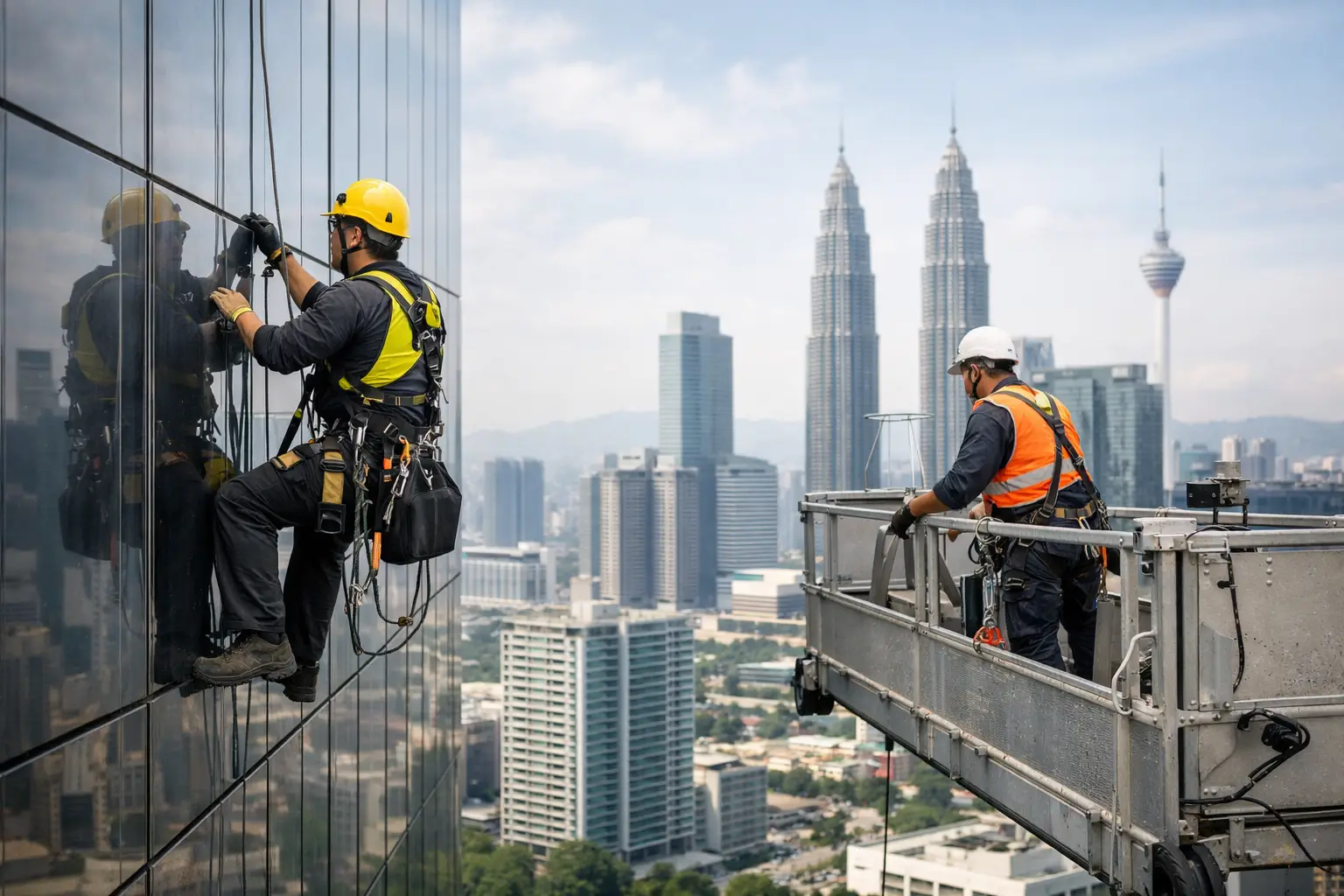

A stained curtain wall, blocked roof edge, or neglected high-rise glass line does more than hurt appearance. It creates risk for tenants, visitors, and the asset itself. When you hire a facade access contractor Malaysia property teams rely on, you are not just buying cleaning labor. You are buying safe access, technical planning, and a contractor that can work on difficult elevations without disrupting daily operations.
For commercial buildings, that distinction matters. Facade work is rarely straightforward. Access can be limited by podium roofs, traffic flow, fragile surfaces, tight setbacks, or active tenant spaces below. Some properties need rope access. Others need gondola systems, boom lifts, scaffolding, or a mixed method based on elevation and site conditions. The right contractor understands that access is the job, not an afterthought.
What a facade access contractor in Malaysia actually does
A facade access contractor is responsible for reaching and servicing exterior building areas that standard cleaning crews cannot handle safely. That includes high-rise window cleaning, facade washing, sealant-area cleaning, exterior maintenance support, roof edge cleaning, and hard-to-reach inspections. In some cases, the same team may also support confined space work, gutter cleaning, and exterior painting where access planning overlaps.
For building managers, the benefit is operational control. Instead of coordinating one vendor for facade cleaning, another for roof gutters, and another for elevated touch-up work, a specialized contractor can often manage several related tasks under one site plan. That reduces scheduling conflicts and lowers the chance of access equipment being mobilized multiple times.
This is especially useful on office towers, malls, mixed-use developments, industrial facilities, and commercial blocks where downtime and public safety controls must be tightly managed. A capable contractor works around occupancy, weather, loading access, and permit requirements while keeping the site presentable.
Why facade access contractor Malaysia selection is a safety decision
Price matters, but facade access is not a low-skill service category. The risk profile is higher than routine janitorial work, and that changes how buyers should evaluate vendors.
Safe facade work starts before anyone leaves the ground. A proper contractor reviews anchor points, drop zones, edge conditions, access routes, rescue planning, public protection, and the condition of the surface being cleaned or maintained. Glass, metal cladding, stone, and coated panels all respond differently to cleaning methods. Using the wrong chemicals or tools can leave permanent marks, corrosion, or scratches.
There is also the issue of site-specific complexity. A 20-story building with open perimeter access is one job. A shorter building with poor equipment access, heavy pedestrian movement, and multiple facade materials may be more difficult and more labor-intensive. This is why serious contractors quote based on real site conditions, not rough assumptions over the phone.
If a proposal looks unusually cheap, it is worth asking what has been excluded. Sometimes the gap comes from less supervision, weaker site controls, or unrealistic manpower planning. Those shortcuts tend to show up later as delays, missed areas, or avoidable safety concerns.
How to evaluate a facade access contractor Malaysia property teams can trust
The first thing to look for is experience with buildings similar to yours. High-rise office towers, industrial plants, and retail complexes each create different access challenges. A contractor that mainly handles low-level exterior cleaning may not be equipped for complex suspended work or difficult roof access.
Next, review method suitability. The contractor should be able to explain why rope access, gondola access, lifts, or scaffolding is appropriate for your site. There is no single best method for every project. Rope access can be efficient and less intrusive on certain elevations, but it depends on safe anchor arrangements and suitable working conditions. Boom lifts can speed up lower-level facade work, but only if the site has enough clearance and stable ground conditions. A dependable contractor will explain the trade-offs clearly.
Scope clarity matters just as much. Some buyers request facade cleaning but actually need more than that – stained glass restoration, frame detailing, roof gutter clearing, algae removal, or access-based inspection support. A detailed site visit helps define the work properly so there are fewer changes once the team is on site.
Responsiveness is another practical indicator. Commercial buildings do not always have the luxury of waiting weeks for basic scheduling answers. A contractor that can arrange a site visit, assess access limitations, and issue a usable quotation quickly is easier to work with when maintenance windows are tight.
What affects pricing for facade access work
Most facade access jobs are quoted case by case, and that is the correct approach. Building height is only one part of the cost.
Surface area has a direct impact, but labor demand is often shaped more by access complexity than square footage alone. A facade with multiple recesses, fins, ledges, canopies, and architectural breaks takes more time than a flat elevation. Material sensitivity also affects method selection. Some surfaces need gentler cleaning systems, additional rinsing control, or hand detailing.
Another factor is frequency. A one-time deep clean usually takes more effort than routine scheduled maintenance because built-up grime, water staining, and environmental deposits are harder to remove. Buildings near major roads, construction zones, or coastal environments may need more frequent attention to maintain appearance and prevent long-term deterioration.
Timing also plays a role. Night work, restricted access windows, public exclusion controls, and special permit requirements can all change the labor plan. If your property has active retail frontage or heavy daytime foot traffic, the contractor may need to phase the work carefully to reduce disruption.
Why combining access and maintenance support saves time
Many commercial buyers initially search for facade cleaning when the real need is broader building maintenance support at height. If the same contractor can handle windows, facade washing, roof gutters, elevated dust removal, and selected exterior touch-up works, the site becomes easier to manage.
That does not mean every service should be bundled automatically. Sometimes a specialist task requires a separate crew or a different schedule. But in many cases, combining access-based services under one contractor reduces duplicate mobilization, repeated safety briefings, and conflicting work zones.
For facilities teams, that translates into fewer vendor touchpoints and better accountability. One contractor manages the access plan, manpower, and sequencing rather than passing responsibility between multiple parties.
This is where companies with a high-rise and industrial maintenance background tend to stand out. They understand that facade appearance, drainage performance, and hard-to-reach maintenance are connected operational issues, not isolated line items.
Signs your building should not delay facade access work
Visible dirt is only the most obvious trigger. Water marks beneath ledges, dark staining on cladding joints, overflowing gutters, debris at roof edges, and inaccessible dirt accumulation around facade details all point to maintenance needs that can worsen if left alone.
Tenant-facing buildings should also pay attention to presentation cycles. If your property hosts corporate offices, retail traffic, or client visits, exterior condition influences perception before anyone enters the lobby. For premium commercial assets, delayed facade maintenance can undermine leasing value and brand image.
There is also the practical side of defect spotting. Regular access work helps identify minor issues earlier, such as loose debris, blocked drainage paths, staining patterns, or areas where water runoff is affecting the facade. Cleaning crews with proper access often become the first line of visibility for exterior maintenance concerns.
What a good site visit should cover
A meaningful site visit is not just a walkthrough with a quick price at the end. The contractor should assess roof access, anchor availability, elevation difficulty, public protection needs, water and power access, work timing constraints, and any areas that need special treatment.
This is also the right time to clarify outcomes. Are you trying to restore appearance before tenant move-in, maintain an existing cleaning cycle, or address neglected buildup on upper floors? Those goals influence the method, crew size, and frequency recommendation.
For larger properties in Kuala Lumpur, Selangor, Penang, or Johor, site logistics can vary significantly even when buildings look similar on paper. Access roads, service bays, podium layouts, and surrounding pedestrian activity all affect execution. A contractor that asks detailed questions usually delivers a more accurate plan.
Urban Solutions Services Sdn Bhd works with this kind of reality every day – high-rise, hard-to-access, and operationally sensitive sites where planning matters as much as labor.
Where the work involves roof or elevated access, property teams should also review DOSH guidance on working at height when planning access, supervision and fall-prevention controls.
For a site-specific scope, review our façade cleaning services and arrange an assessment before confirming access, timing and cost.
The best time to review facade access is before the building looks neglected or a minor access issue turns into a bigger maintenance problem. A careful site assessment gives you a clearer scope, a safer plan, and a contractor relationship built on execution instead of guesswork.