

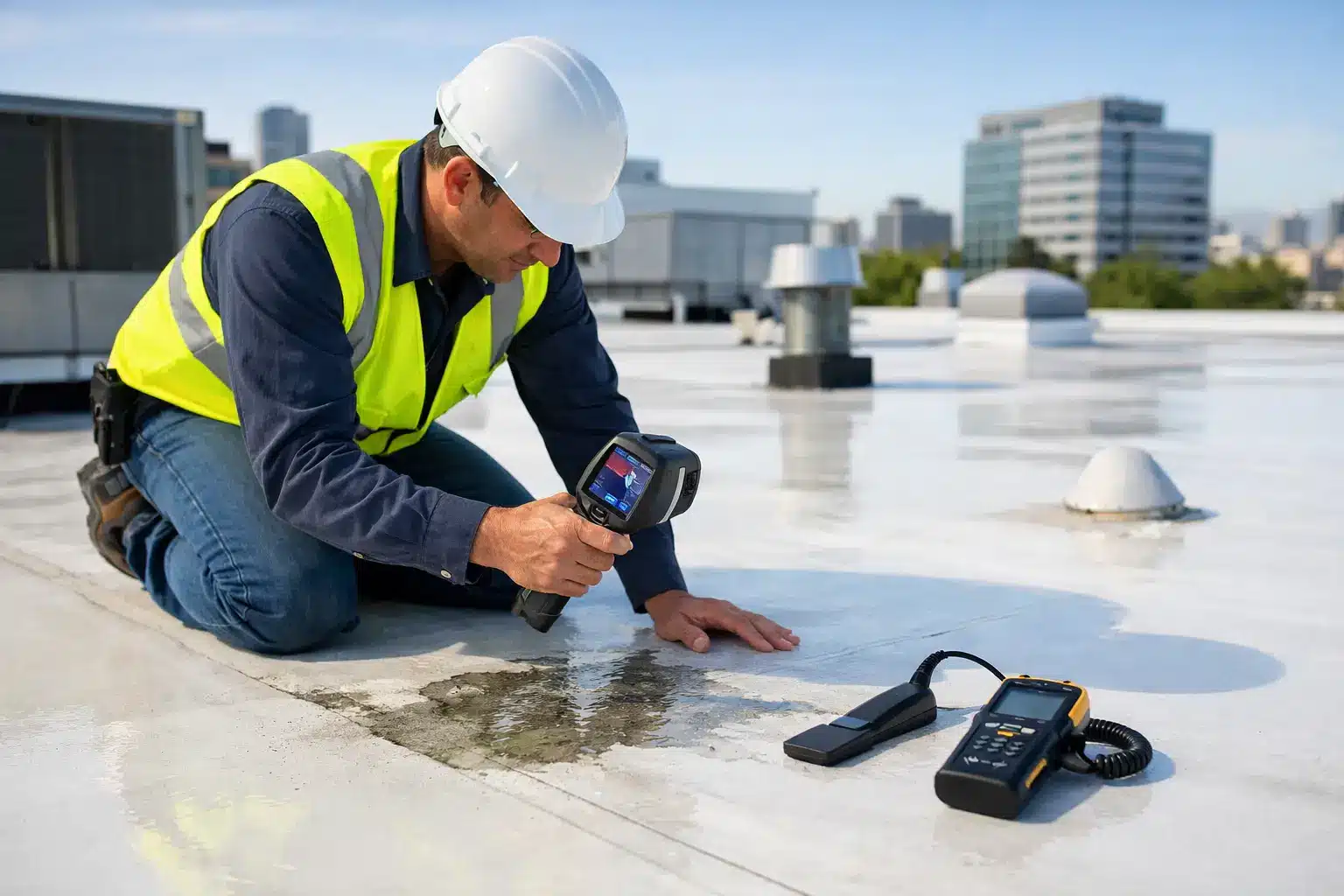

A ceiling stain is often the last visible sign of a much larger problem. By the time water reaches an office ceiling, warehouse floor, electrical room, or production area, it may have traveled a considerable distance beneath the roof membrane. Commercial roof leak detection helps facility teams identify the actual entry point, assess the extent of moisture, and arrange focused repairs before a minor defect becomes an operational disruption.
For commercial and industrial properties, leak detection is not simply about finding water after rainfall. It is a planned inspection process that considers roof condition, drainage performance, penetrations, access points, and the building areas most exposed to damage. The right approach reduces unnecessary repair work and gives property managers clearer information for maintenance decisions.
Why Commercial Roof Leak Detection Requires a Methodical Approach
A roof leak rarely follows a straight path. Water can enter through a failed joint, damaged flashing, cracked sealant, blocked drain, loose fastener, or puncture in the membrane. It may then move beneath insulation, along structural elements, or through service openings before appearing inside the building.
That is why repairing the location of an interior stain without inspecting the roof can be ineffective. The visible symptom may be several feet away from the source. A proper inspection compares internal reports with external roof conditions, then checks the areas where water is most likely to collect or penetrate.
Commercial roofs also carry more complexity than many smaller properties. Air-conditioning equipment, pipe penetrations, skylights, solar installations, parapet walls, gutters, drains, and access routes all create potential weak points. On high-rise buildings and difficult-access sites, the inspection itself must be planned around safe access, competent personnel, and suitable equipment.
Signs Your Building Needs a Roof Inspection
A major drip during a storm needs immediate attention, but it is not the only reason to arrange an inspection. Early warning signs often appear between heavy rain events and can be easy to overlook in busy facilities.
Watch for these conditions across the property:
- Water marks, peeling paint, swollen ceiling panels, or damp odors indoors
- Ponding water that remains on the roof long after rainfall
- Overflowing gutters, slow roof drains, or debris around drainage points
- Cracked sealant, lifted flashing, open seams, or damaged roof edges
- Damp insulation, corrosion near roof equipment, or unexplained humidity in top-floor areas
It also makes sense to inspect a roof after severe weather, nearby construction activity, equipment installation, or maintenance work that involved roof traffic. A dropped tool, unsecured cable tray, or poorly resealed service penetration can create a small opening that only becomes apparent during the next sustained rain.
What a Professional Leak Detection Inspection Covers
Effective commercial roof leak detection starts with gathering information. Facilities teams should share the location and timing of leaks, recent repair records, roof age, previous water damage, and areas where business operations are most sensitive. This helps the inspection team prioritize likely paths and assess urgency.
The external review normally begins with drainage. Standing water places extra stress on membranes and joints, while blocked gutters and drains can force water toward wall junctions or roof edges. Inspectors should check whether debris, leaves, sediment, or damaged components are preventing water from leaving the roof as designed.
Attention then moves to vulnerable details. Roof penetrations, flashing, expansion joints, parapet caps, pipe boots, skylight frames, and equipment curbs require close examination because these are common points of failure. The roof surface is also reviewed for blisters, punctures, cracks, open laps, worn coatings, and signs of aging.
Inside the building, the team may inspect ceiling voids, wall surfaces, upper-floor rooms, and service areas where safe access is available. Matching interior evidence with roof findings helps distinguish an active roof leak from condensation, plumbing issues, façade water ingress, or air-conditioning drainage problems.
Choosing the Right Detection Method
The best detection method depends on the roof system, the type of suspected defect, weather conditions, and access constraints. A visual inspection remains essential because it identifies obvious damage, drainage failures, and maintenance issues. However, visual checks alone may not reveal trapped moisture or a leak hidden beneath a membrane.
Moisture meters and infrared thermal imaging can help locate areas that may contain moisture. Thermal imaging is most useful when there is enough temperature difference between wet and dry roof materials. It can indicate a potential concern, but it does not replace physical verification. Readings can be affected by roof construction, weather, surface temperature, and recent rainfall.
For certain roof assemblies, electronic leak detection may be appropriate. This method uses low-voltage electrical testing to help identify breaches in a waterproofing layer. It can be particularly valuable when a membrane is concealed beneath other materials, although it may not suit every roof type or site condition.
Controlled water testing can also be used to confirm suspected entry points. This needs to be carried out carefully and in sections. Flooding a large area at once can make results unclear, introduce unnecessary water into the building, and delay an accurate diagnosis. The objective is to isolate the defect, not simply prove that the roof is wet.
Safety and Access Are Part of the Inspection
A roof inspection is a high-risk maintenance activity, particularly on high-rise, industrial, or restricted-access properties. Safe access planning should be part of the scope from the start, not an afterthought once a leak is reported.
The right method may involve fixed roof access, mobile elevated work platforms, rope access, ladders, or a combination of approaches. The choice depends on building height, roof layout, edge protection, nearby hazards, weather, and the work required. Technicians need to work without damaging the roof surface, interfering with building operations, or creating further safety exposure.
This is especially relevant where gutters, roof edges, façade junctions, and external drainage points need inspection. These areas may be directly connected to the reported water issue but difficult for an in-house team to reach safely. A specialist contractor can coordinate access and inspection work as one planned activity rather than leaving gaps between diagnosis and maintenance.
From Findings to a Practical Repair Plan
A useful inspection report should do more than state that a leak exists. It should identify the likely cause, affected locations, observed roof conditions, recommended repairs, and the priority of each item. Photos and clear site notes are valuable for property owners, maintenance teams, and approval processes.
Not every defect requires a major roof replacement. A targeted repair may be sufficient when the membrane is generally sound and the problem is limited to a penetration, flashing detail, drain, or isolated damaged area. On the other hand, repeated leaks across multiple locations, widespread ponding, brittle materials, or recurring patch failures may indicate that broader restoration work should be considered.
The trade-off is straightforward: a low-cost patch may stop an immediate leak, but it can become expensive if the surrounding roof system is reaching the end of its service life. Decisions should be based on inspection evidence, risk to operations, expected repair life, and the cost of unplanned water damage.
Preventing the Next Leak
Leak detection works best as part of routine roof maintenance. Regular gutter cleaning, debris removal, drain checks, roof condition reviews, and inspections after severe weather reduce the chance that small issues become emergencies. Buildings with heavy rooftop equipment or frequent contractor access may need more frequent checks than low-traffic roofs.
Urban Solutions Services Sdn Bhd supports commercial properties with safe roof access, gutter services, exterior maintenance, and site-specific inspection planning for challenging buildings. A clear site review helps determine the access method, labor requirements, and scope needed before work begins.
Where the work involves roof or elevated access, property teams should also review DOSH guidance on working at height when planning access, supervision and fall-prevention controls.
For a site-specific scope, review our roof and gutter services and arrange an assessment before confirming access, timing and cost.
When a leak report comes in, act before the next rainfall turns a manageable repair into damaged ceilings, interrupted operations, and avoidable cleanup. Arrange a qualified site inspection, document the findings, and prioritize repairs based on the risk to your building and occupants.