

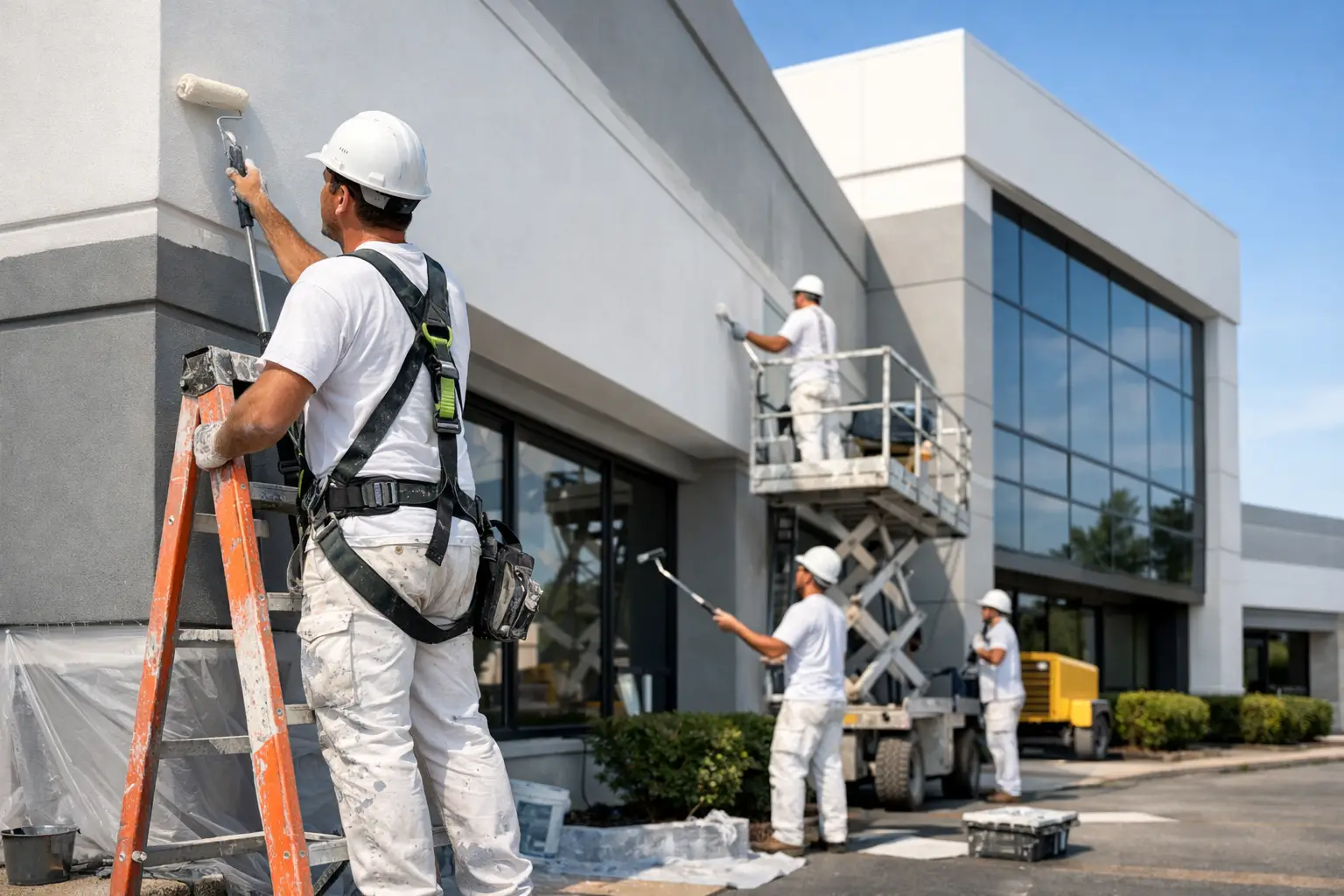

A faded facade does more than make a property look tired. It can signal deferred maintenance, raise questions for tenants and visitors, and leave exterior surfaces exposed to moisture, UV damage, and premature wear. That is why commercial exterior painting services are not just a cosmetic upgrade. For many buildings, they are a practical part of long-term asset protection.
For property managers, facility teams, and building owners, the real question is not whether a building needs paint. It is whether the work can be carried out safely, on schedule, and with the right preparation for the surface, height, and site conditions. On commercial properties, especially multi-story and hard-to-access buildings, execution matters as much as the coating itself.
What commercial exterior painting services actually cover
Commercial exterior painting services typically include more than applying a fresh finish to outside walls. The scope often starts with a site assessment, followed by surface inspection, cleaning, preparation, minor patching, coating selection, access planning, and final paint application. On some buildings, the job may also include railings, soffits, exterior metalwork, service areas, loading zones, or other exposed elements that weather differently from the main facade.
This is where commercial work separates itself from smaller residential-style painting. A commercial building may have concrete, plaster, metal cladding, masonry, and coated steel on the same elevation. Each surface can require a different preparation method and coating system. If the building is high-rise, access equipment and safety planning become central to the job, not a side issue.
In many cases, painting should also be coordinated with facade cleaning or maintenance work. Dirt, organic growth, chalking, and failed coatings need to be addressed before any new paint goes on. If they are not, even a high-quality system can fail early.
Why exterior painting is a maintenance decision, not just a visual one
A clean, well-painted building makes a strong first impression, but the operational value goes further. Exterior coatings act as a protective layer against sun exposure, rain, humidity, and general environmental wear. In a demanding climate, these factors can break down surfaces faster than many owners expect.
Once paint begins to crack, peel, or lose adhesion, water intrusion becomes a bigger concern. That can lead to substrate damage, staining, corrosion on metal components, and a wider repair scope later. A planned repaint cycle is usually more cost-effective than waiting until visible failure spreads across multiple elevations.
There is also the issue of occupancy and brand image. Office buildings, retail properties, industrial sites, and mixed-use developments all benefit from a maintained exterior. Tenants notice it. Visitors notice it. Prospective clients and investors notice it. For many commercial assets, appearance and maintenance standards are tied closely together.
How the right contractor approaches commercial exterior painting services
On a commercial project, the best results usually come from a contractor that starts with conditions on site rather than a one-size-fits-all package. Building height, facade design, coating condition, access limitations, weather exposure, and operational constraints all affect the plan.
A proper assessment should identify failing areas, surface contamination, hairline cracks, water-damaged sections, and any access risks before work begins. This matters because not every exterior needs the same level of preparation. Some properties need pressure washing and spot repairs. Others need extensive scraping, patching, priming, and access support for upper elevations.
The coating recommendation also depends on the substrate and the performance required. For example, concrete and masonry may need breathable systems that help manage moisture movement. Metal elements may need rust treatment and specific primers. Highly exposed facades may need better UV and weather resistance than sheltered sections.
A dependable contractor will also explain what affects the quote. In commercial work, price is usually shaped by surface condition, total area, number of stories, labor intensity, and how difficult the building is to access. That is why site-specific quotations are often the only accurate way to price the work.
Surface preparation is where the job succeeds or fails
Paint gets the attention, but preparation determines how long it lasts. On commercial exteriors, this stage often includes washing, stain removal, scraping loose material, sanding rough areas, sealing cracks, repairing minor defects, and priming where needed.
Skipping or reducing this step may lower the upfront price, but it often increases the risk of blistering, peeling, uneven finish, or early coating failure. That is especially true on buildings exposed to heavy rain, airborne pollutants, or years of neglected maintenance.
Preparation also helps reveal issues that painting alone will not solve. If there is active water ingress, damaged sealant, corrosion behind coated metal, or substrate movement, those conditions should be addressed before repainting proceeds. A good contractor does not paint over avoidable failure points.
Access, safety, and planning are part of the service
For low-rise storefronts, access may be simple. For office towers, industrial buildings, and large commercial blocks, it rarely is. Elevated work can require boom lifts, suspended access, rope access support, scaffolding, or a combination of methods depending on the building layout.
This is one of the biggest reasons commercial exterior painting services should be handled by teams with experience in high-access environments. Safety planning, equipment selection, site control, and work sequencing all affect productivity and risk. On occupied properties, there is also a need to manage pedestrian routes, loading areas, parking zones, and tenant disruption.
In practice, the safest and most efficient solution is not always the cheapest access method. It depends on the shape of the building, the working height, obstacles on the ground, and the amount of facade area involved. A contractor with high-rise and difficult-access capability can usually recommend the best fit for the site rather than forcing the site to fit one access system.
What to expect during a commercial painting project
Most commercial clients want three things from a painting contractor: clear communication, minimal disruption, and consistent workmanship. That means the project should begin with a defined scope, realistic timeline, access plan, and explanation of how work areas will be managed.
During the job, progress should be organized by elevation, zone, or phase so the site remains functional. On active buildings, scheduling may need to account for business hours, tenant access, deliveries, or weather windows. Some projects move faster in sections. Others need staged execution to keep operations running.
Quality control should include inspection of surface prep, coating coverage, edge detailing, and finished appearance. If multiple substrates are involved, the finish should look consistent without ignoring the technical needs of each surface.
This is also where an experienced provider adds value beyond painting alone. If the same team can assess facade condition, identify access constraints, and handle exterior maintenance work around the painting scope, the client avoids coordinating several vendors for one exterior project.
When is the right time to repaint?
There is no universal repaint schedule because building exposure varies. A sheltered low-rise office may hold its finish longer than a high-rise facade that takes full sun and rain year-round. Surface type, previous coating quality, and how well the building has been maintained all matter.
Still, there are common signs that repainting should be evaluated soon. These include fading, chalking, peeling, patchy finish, hairline cracking, visible water stains, rust bleed, and coating failure around edges or joints. If those issues are limited to isolated sections, spot repairs may still be possible. If they are widespread, a larger repaint program is usually the better move.
The most practical approach is to arrange a site inspection before the damage becomes extensive. That allows the scope to be planned properly and helps avoid reactive work later.
Choosing commercial exterior painting services with long-term value
The cheapest quote is rarely the lowest-cost outcome over time. If preparation is weak, coating selection is poor, or access planning is rushed, the repaint cycle may come back sooner than expected. For commercial properties, that means more disruption, more vendor management, and more maintenance spend.
Long-term value comes from a contractor that understands exterior building conditions, works safely at height, and prices the job according to real site demands. That is particularly relevant for offices, industrial properties, and multi-story commercial buildings where facade access is a technical issue, not a simple setup.
Urban Solutions Services Sdn Bhd works in this space because many commercial buildings need more than paint application alone. They need a team that can assess difficult exteriors, manage access safely, and carry out the work with the discipline expected on active commercial sites.
Where the work involves roof or elevated access, property teams should also review DOSH guidance on working at height when planning access, supervision and fall-prevention controls.
For a site-specific scope, review our commercial painting services and arrange an assessment before confirming access, timing and cost.
If your building exterior is showing wear, the best next step is usually not a rushed repaint. It is a proper site review that looks at condition, access, and the most practical scope for lasting results.