

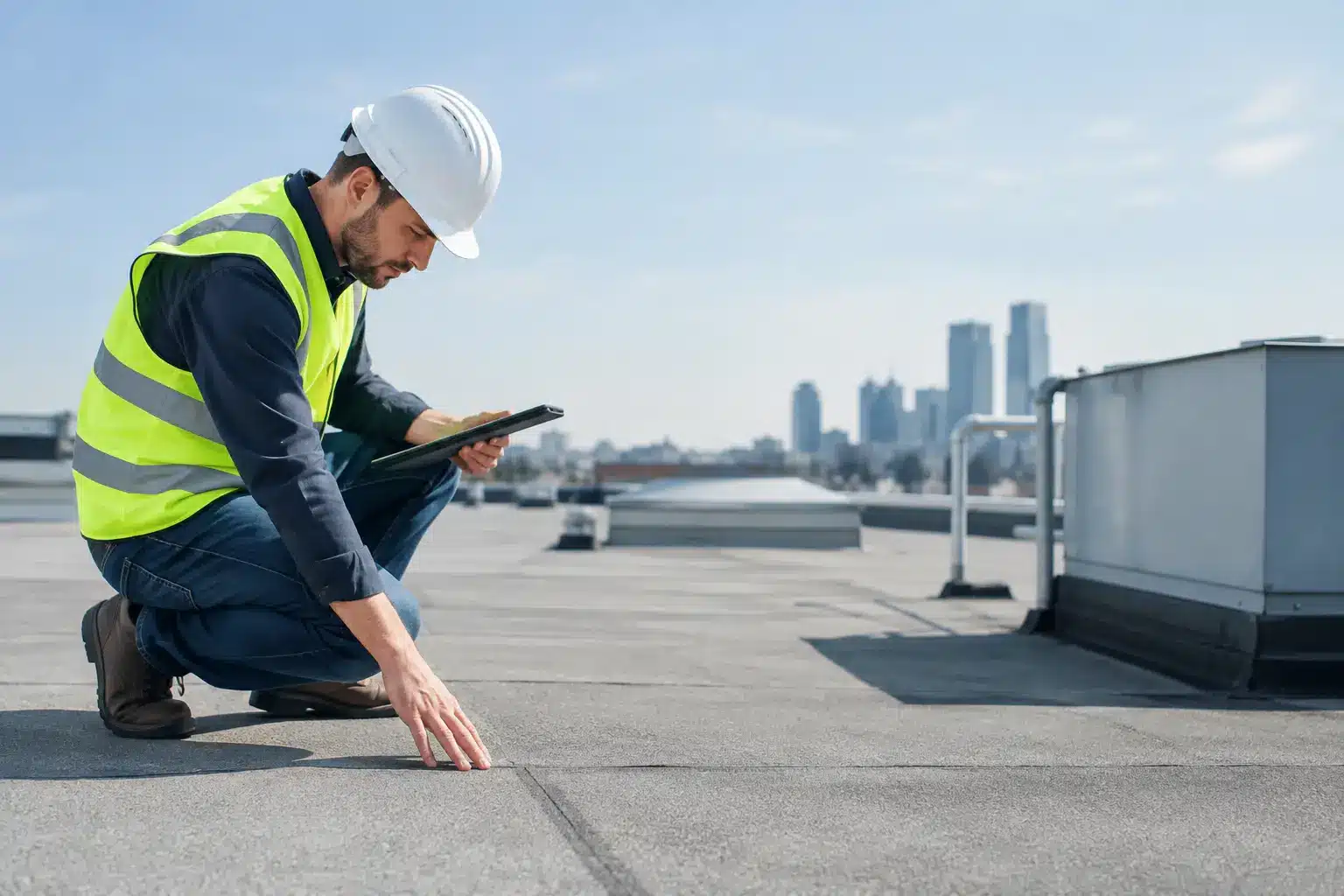

A rooftop can look clear from ground level and still present serious access, fall, and structural hazards. These essential rooftop safety inspection points help facility teams identify risks before cleaners, maintenance crews, or contractors begin work. For commercial and industrial properties, a proper inspection protects people, prevents avoidable damage, and keeps planned work from turning into an operational disruption.
Start With Safe Roof Access
The inspection begins before anyone steps onto the roof. Check the full access route, including ladders, stairwells, roof hatches, access doors, and any internal pathways used to transport equipment. A roof hatch should open fully, stay secured when open, and provide a safe transition point without forcing workers to climb around obstructions.
Inspect fixed ladders for loose rungs, corrosion, damaged cages, missing handholds, or poor landing clearance. Portable ladders need stable footing, a secure tie-off point where required, and enough height above the landing to allow safe movement on and off the roof. If access is through a service room or plant area, make sure the route is not blocked by stored materials, cables, or wet floors.
Access requirements depend on the building and task. A short inspection may need less equipment than gutter cleaning or façade work, but the route must still be safe for every person, tool, and material involved. Never treat roof access as a minor detail simply because the work itself is brief.
Essential Rooftop Safety Inspection Points for Fall Protection
Fall exposure is often the most immediate rooftop risk. Inspect the roof perimeter and identify every location where a worker could approach an unprotected edge, skylight, opening, or level change. Parapet walls, guardrails, lifelines, anchor points, and warning lines should be assessed before work is assigned.
Guardrails must be secure and free from obvious damage, while parapets should be evaluated for their actual height and condition rather than assumed to provide protection. A low parapet may offer little practical fall prevention. Where a personal fall arrest system is needed, the anchor point must be verified as suitable for the intended load and correctly positioned for the work area.
Do not overlook skylights. They can blend into a roof surface, especially where panels are dirty, weathered, or surrounded by standing water. A skylight is not automatically safe to walk on. Mark fragile areas, establish exclusion zones, and plan work routes that keep crews away from them wherever possible.
Check the Plan Against the Actual Roof
A fall-protection plan on paper is only useful if it matches site conditions. New equipment, temporary materials, roof repairs, or changed access routes can alter the safe working area. During the inspection, confirm where workers will stand, how they will move, where they will connect fall-protection equipment, and how they will retrieve tools without leaning or overreaching near an edge.
Rescue planning also matters. If a fall arrest system is used, the site team needs a realistic method to respond quickly to a suspended worker. Calling for help is not a complete rescue plan when access is restricted or the roof is difficult to reach.
Assess the Roof Surface and Structural Condition
Roof surfaces change over time due to heat, heavy rain, ponding water, maintenance traffic, and equipment installation. Look for loose membrane sections, cracked coatings, broken tiles, damaged metal sheets, soft spots, exposed fasteners, and areas of visible deterioration. These conditions can create slip, trip, and collapse risks for workers.
Standing water needs particular attention. It can hide holes, cable runs, uneven surfaces, and roof penetrations. It also indicates possible drainage problems that can add weight to the roof and accelerate material failure. Schedule non-urgent work after the surface has dried when practical, especially if workers need to carry equipment across broad roof areas.
Inspect walkways and designated service paths as well. They should be stable, clearly defined, and capable of supporting regular maintenance traffic. If crews must cross sensitive roofing material to reach gutters, air-conditioning units, or façade access points, temporary walk pads or another access method may be necessary.
Structural concerns require a measured response. Minor surface staining is different from sagging deck areas, widespread corrosion, damaged supports, or movement around equipment bases. Stop work in any area where the roof’s capacity is uncertain and involve the appropriate building professional before allowing access.
Inspect Drainage, Gutters, and Roof Penetrations
Blocked drains and gutters are maintenance problems, but they are also safety issues. Overflowing water can create slippery roof surfaces, damage ceilings and electrical systems below, and add unnecessary load around low points. Check outlets, scuppers, downpipes, gutter runs, and drain covers for leaves, debris, sediment, or loose components.
Gutter work often places crews near roof edges, which makes access planning especially important. The safest method may involve roof access, elevated work platforms, rope access, or another controlled system depending on the building height, gutter position, and surrounding ground conditions. The fastest-looking approach is not always the safest or most cost-effective once risk controls are considered.
Roof penetrations deserve the same attention. Inspect pipes, vents, ductwork, cable trays, flashing, and equipment supports for loose covers, sharp edges, damaged seals, and unstable bases. These areas are common sources of water ingress and can become trip hazards when poorly maintained.
Review Mechanical Equipment and Electrical Hazards
Commercial roofs commonly carry air-conditioning systems, exhaust fans, solar equipment, communications hardware, and other plant. These assets can create heat, noise, rotating parts, exposed cables, and restricted movement around tight service zones.
Check whether equipment is protected by suitable barriers and whether service clearances remain open. Look for leaking fluids, loose panels, damaged insulation, unsecured conduit, and electrical enclosures that show signs of corrosion or water entry. Where maintenance requires isolation, confirm that the responsible team understands the lockout or shutdown procedure before work begins.
Equipment areas can also concentrate hazards. A worker may be protected from a roof edge but still face poor footing, low overhead clearance, or limited escape routes between units. The inspection should consider how the whole work area functions, not just individual defects.
Consider Weather, Housekeeping, and Site Activity
Weather can change rooftop conditions quickly. High winds affect ladders, elevated platforms, loose materials, and workers handling large panels or cleaning tools. Rain creates slippery surfaces and reduces visibility. Heat exposure is also a real concern on open commercial roofs, particularly where reflective surfaces and mechanical equipment increase ambient temperatures.
Set clear stop-work conditions based on the planned activity and the site’s risk assessment. Workers need access to drinking water, suitable breaks, communication devices, and a way to leave the roof safely if conditions deteriorate. For larger properties, check mobile signal or radio coverage before relying on phones for emergency contact.
Good housekeeping reduces many routine hazards. Remove loose debris, secure materials, manage hoses and power cords, and keep access points clear. Coordinate with building operations so rooftop work does not conflict with deliveries, public access below, crane activity, or other contractors working on the same site.
Document Findings and Set Priorities
A useful inspection record does more than list defects. It should identify the location, describe the condition, include photos where appropriate, assign a risk level, and state what must happen before work proceeds. This gives facility managers a clear basis for approving repairs, scheduling maintenance, and selecting a suitable access method.
Separate immediate hazards from planned improvements. An unprotected opening, failed guardrail, unstable ladder, or suspected structural weakness requires prompt action. A faded walkway marking or minor gutter debris may be scheduled, provided it does not create an immediate danger. Clear priorities help prevent urgent risks from being buried in a long maintenance report.
For high-rise, difficult-access, or heavily equipped rooftops, a site-specific inspection is the practical starting point. Urban Solutions Services Sdn Bhd assesses access complexity, work scope, and building conditions before recommending a safe maintenance approach. A careful inspection gives your team the information to act early, protect contractors, and keep the roof working as it should.