

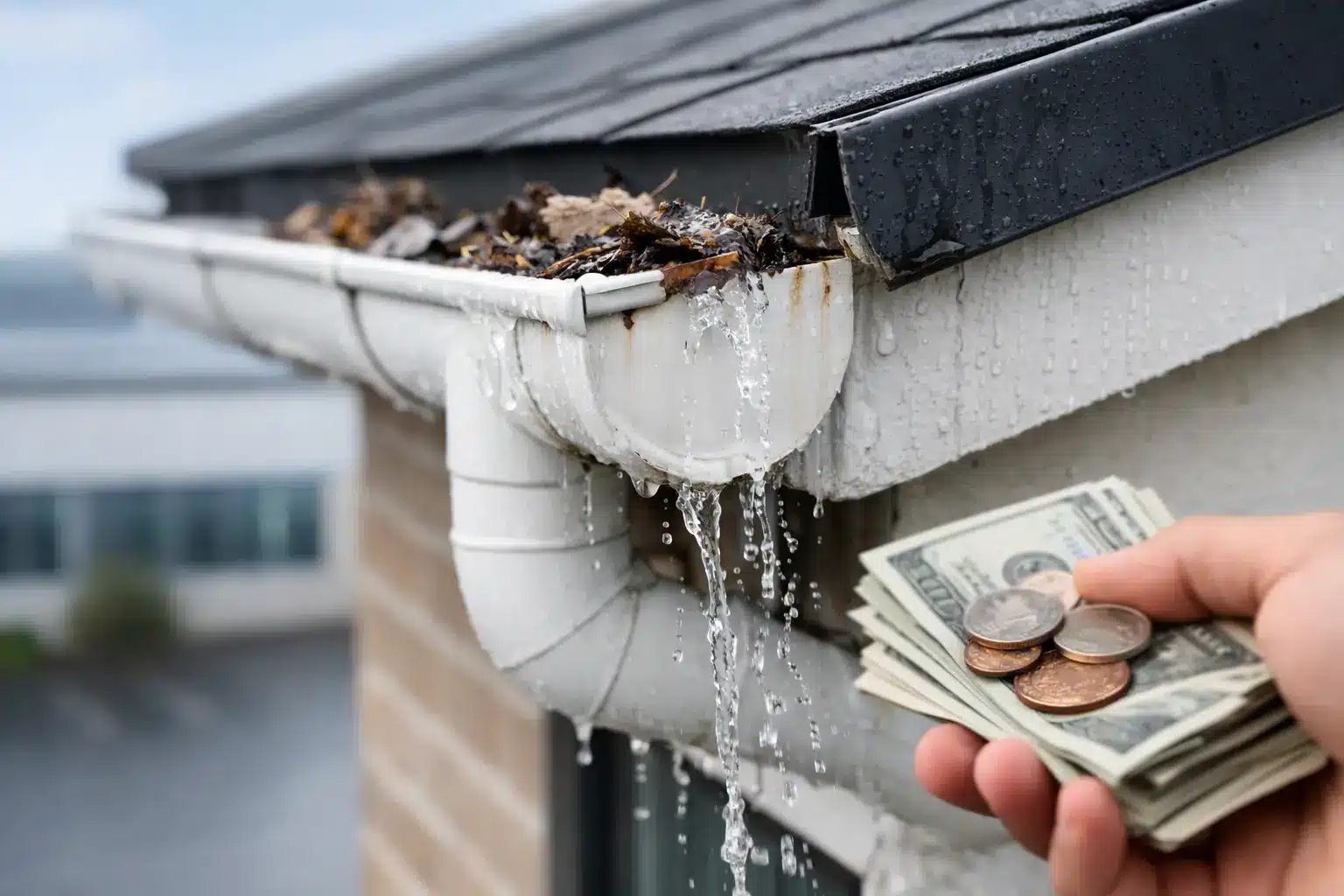

A blocked gutter on a commercial building is rarely just a housekeeping issue. When rainwater cannot move away from the roof as designed, it can overflow onto façades, enter ceiling spaces, damage loading areas, and create slip hazards at ground level. The top commercial gutter problems often begin out of sight, then become expensive once water finds a path into the building envelope.
For property and facilities teams, gutter maintenance is a risk-control task. The right response depends on the building’s roof layout, height, surrounding trees, drainage capacity, and safe access requirements. A low single-story warehouse may need a different approach from a high-rise office tower with concealed box gutters and restricted roof access.
1. Debris Buildup and Blocked Downpipes
Leaves, twigs, seed pods, windblown litter, roof grit, and bird nesting material collect in commercial gutters over time. On flat or low-slope roofs, standing water can also carry silt toward outlets. The gutter may look clear from ground level while a downpipe outlet or internal rainwater pipe is fully blocked.
During heavy rain, the result is overflow. Water can spill over gutter edges, run down exterior walls, stain cladding, and saturate areas around entrances or loading bays. Where water backs up onto the roof, it may also find weaknesses in flashings, joints, and waterproofing membranes.
Cleaning the visible gutter channel without checking outlets and downpipes is not enough. A proper service should remove debris, clear drainage points, test water flow where practical, and identify whether the blockage is local or deeper within the drainage line.
2. Poor Gutter Slope and Standing Water
Gutters need sufficient fall to direct water toward outlets. If a section sags, has shifted at its brackets, or was installed with inadequate slope, water remains in the channel after rainfall. This standing water accelerates corrosion, attracts debris, and increases the load carried by the gutter system.
For commercial properties, this problem can be difficult to spot because it may occur along a long roof edge or inside a concealed box gutter. Water marks, repeated overflow at one point, algae growth, or rust around a specific section are useful warning signs.
The practical fix depends on the material and layout. It may involve realigning brackets, repairing supports, replacing distorted sections, or correcting outlet positions. Repeated cleaning will not solve a drainage design problem. A site assessment should separate a maintenance issue from a repair or modification requirement before work begins.
3. Corrosion, Cracks, and Failed Joints
Metal gutters are exposed to sun, rain, debris, and moisture for years. In coastal areas, industrial zones, or buildings with persistent standing water, corrosion can progress faster. Small cracks and failed joints are equally problematic because water escapes behind the gutter rather than flowing toward the intended outlet.
Leaking joints often leave telltale stains below the roofline. Over time, they can contribute to damaged soffits, peeling exterior paint, rusted steel components, and water marks on walls. On industrial facilities, leaks near electrical routes, equipment areas, or pedestrian access points need prompt attention.
Temporary sealant repairs may be appropriate for minor defects, but they are not a permanent answer to widespread corrosion or movement in the gutter run. An experienced contractor should assess the condition of the full section, including joints, brackets, outlets, and adjacent flashing. Replacing only the visibly damaged point can lead to repeat callouts if surrounding materials are already deteriorating.
4. Undersized Drainage for Heavy Rainfall
A clean gutter can still overflow if it lacks the capacity to handle intense rainfall. This is a common issue on properties that have been extended, re-roofed, or altered without upgrading their rainwater drainage system. Large roof catchment areas send substantial volumes of water into gutters and downpipes within minutes.
Overflow during only the heaviest storms does not automatically mean the gutter is blocked. The system may be undersized, outlets may be too few, or downpipes may not discharge fast enough. Roof valleys can also direct concentrated water into a section not designed for the volume it receives.
This requires a closer review than standard cleaning. The building team may need to consider additional outlets, larger downpipes, improved overflow provisions, or changes to roof drainage paths. The appropriate solution depends on the existing structure and local site conditions. Treating capacity failure as a cleaning problem delays the real repair.
5. Hidden Box Gutter Failures
Box gutters are commonly concealed behind parapet walls or within roof structures. Their hidden position makes them visually tidy, but it also means debris buildup, membrane damage, and internal leaks may go unnoticed until water appears inside the building.
A failed box gutter can affect ceilings, insulation, interior finishes, and tenant operations. In severe cases, water can travel far from the original leak point before becoming visible. This makes reactive repairs more disruptive and more difficult to diagnose.
Regular inspection is particularly valuable for concealed drainage systems. Technicians should check for ponding, cracked waterproofing, deteriorated joints, blocked outlets, and evidence of overflow at parapets or nearby walls. Safe access is essential, especially on high-rise and restricted roofs where unsuitable access methods can create a greater risk than the maintenance task itself.
6. Vegetation Growth and Pest Activity
When debris remains wet in a gutter, it becomes a growing medium. Moss, weeds, and even small plants can take root in accumulated silt. Their roots hold moisture against the gutter surface and trap more debris, turning a simple blockage into a recurring drainage issue.
Birds and pests can also build nests near downpipe openings or roof drainage points. Beyond the obstruction itself, pest activity may create hygiene concerns and damage surrounding components. Facilities managers should not assume that a gutter guard eliminates this risk. Guards can reduce the amount of large debris entering the channel, but fine material still collects and guards themselves require inspection.
The most effective approach combines debris removal with a review of nearby overhanging vegetation, pest entry points, and drainage outlet protection. The goal is not just to clear the current blockage but to reduce how quickly it returns.
Warning Signs That Need Prompt Attention
Commercial gutter failures are easier and less costly to manage when reported early. Building teams should arrange an inspection when they notice four or more recurring signs, including:
- Water cascading over roof edges during rain
- Damp patches, ceiling stains, or peeling paint near external walls
- Rust streaks, algae growth, or persistent staining below gutters
- Pooling water near entrances, walkways, or loading areas
- Dripping, sagging, or visibly separated gutter sections
These signs do not always point to the same fault. For example, façade staining may come from overflow, a leaking joint, or a failed roof flashing. A site-specific assessment prevents unnecessary work and helps prioritize the repairs that reduce risk first.
A Practical Maintenance Plan for Commercial Properties
Gutter service frequency should be based on exposure rather than a fixed calendar alone. Buildings near mature trees, construction activity, open land, or busy industrial areas often need more frequent inspections because debris and airborne dust accumulate faster. Properties with concealed gutters, large flat roofs, or a history of leaks also deserve closer monitoring before periods of heavy rain.
A practical program includes scheduled cleaning, visual condition checks, drainage testing, and clear reporting of defects. Cleaning should be completed by trained personnel using access methods suitable for the height, roof condition, and surrounding operations. On elevated or difficult-to-reach sites, attempting ad hoc access can expose staff to falls and can damage roofing materials.
Urban Solutions Services Sdn Bhd provides commercial gutter cleaning and maintenance support for buildings where access complexity, height, and safety planning matter. A site visit allows the work scope to reflect the actual roof area, labor needs, drainage layout, and access requirements instead of relying on guesswork.
Top Commercial Gutter Problems and Their Costs: Practical Takeaways
Where the work involves roof or elevated access, property teams should also review DOSH guidance on working at height when planning access, supervision and fall-prevention controls.
Do not wait for the next major storm to reveal a drainage weakness. A professionally inspected gutter system gives your team clearer repair priorities, safer access planning, and fewer unwelcome water-related disruptions to manage.