

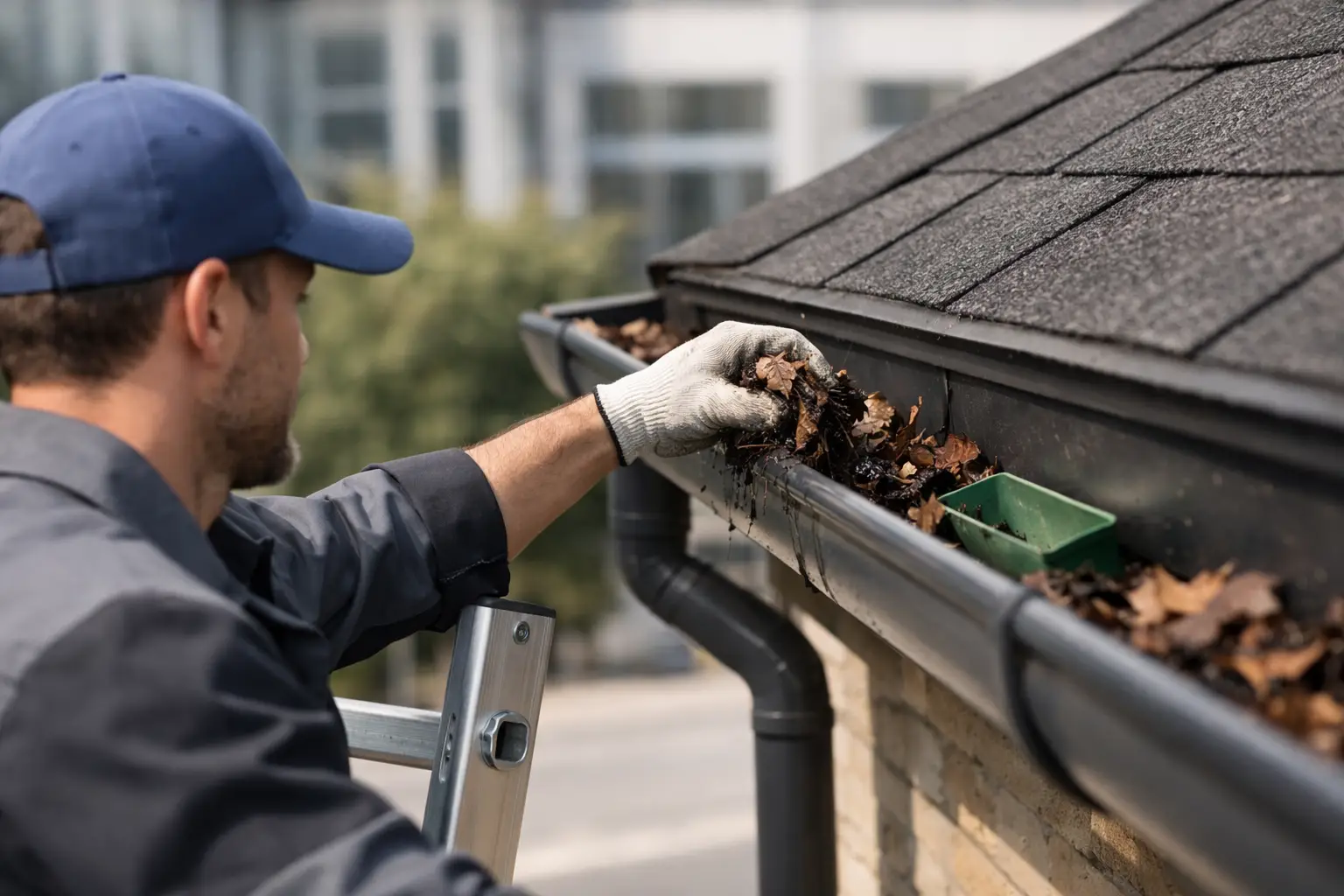

A blocked gutter usually does not announce itself until water starts spilling over an office entrance, staining a facade, or backing up onto the roof. By that point, the real question is not just how often clean roof gutters, but how to set the right schedule before drainage problems turn into repairs, safety issues, or tenant complaints.
For commercial and industrial buildings, gutter cleaning is not a once-a-year box to tick and forget. The right frequency depends on roof design, nearby trees, rainfall intensity, debris load, and how difficult the system is to access safely. A low-rise retail lot with light exposure is one thing. A high-rise office block or industrial site with hard-to-reach drainage lines is another.
How often should you clean roof gutters?
For most commercial properties, roof gutters should be inspected at least twice a year and cleaned at least every six months. That is the practical baseline for buildings that want to stay ahead of overflow, standing water, and debris buildup.
That said, six months is not a universal rule. Some sites need quarterly cleaning, especially when they sit near heavy tree cover, collect windblown debris, or experience repeated clogging during storm season. Other buildings with simpler roof layouts and low debris exposure may only need cleaning once or twice a year, provided inspections confirm the gutters are still draining properly.
If you are managing a property portfolio, the better question is not only how often clean roof gutters, but which buildings need a preventive schedule and which can run on condition-based maintenance. Frequency should follow risk, not guesswork.
Why gutter cleaning frequency varies by building
Commercial gutters handle more than leaves. On many sites, they collect silt, seed pods, small branches, nesting material, dust, roofing granules, and general airborne debris. Flat and low-slope roofs are especially vulnerable because debris can wash slowly into drainage channels and settle over time.
Tree proximity is one of the biggest factors. A building surrounded by mature trees may need attention every three months, particularly during leaf drop or monsoon periods. Even if the gutters do not look full from ground level, downpipes can already be restricted.
Roof design also matters. Buildings with multiple levels, internal gutters, box gutters, concealed drainage paths, or narrow outlets often need more frequent service because blockages are harder to spot and consequences are more severe. Water may travel laterally, leak into ceiling spaces, or pool on the roof before anyone notices.
Then there is rainfall. In high-rain environments, one partially blocked outlet can quickly become a major problem. A gutter that seems acceptable in dry weather can fail during the first heavy storm. That is why pre-rainy-season cleaning is often more valuable than waiting for visible overflow.
Signs your gutters need cleaning sooner
A fixed schedule is useful, but visible warning signs should always override the calendar. If water spills over the sides during rain, cleaning is overdue. If you see plant growth, staining on exterior walls, sagging sections, or debris protruding from the gutter line, the system is already under stress.
For commercial properties, less obvious signs can be just as important. Repeated roof ponding, damp ceiling patches near perimeter walls, clogged downpipes, and unexplained facade streaking often point back to poor gutter flow. On industrial sites, blocked gutters may also contribute to slip risks around entrances, loading areas, or perimeter walkways.
Buildings with inaccessible roof edges need extra caution. If the gutter line cannot be visually checked without specialized access equipment, waiting for symptoms is a poor maintenance strategy. In those cases, planned inspection and cleaning is the safer approach.
How often clean roof gutters on high-rise and hard-to-access sites?
High-rise and access-restricted buildings should generally be inspected more frequently than standard low-rise properties, even if full cleaning is not required each time. A quarterly inspection cycle is often appropriate because drainage failures at height can lead to facade staining, water ingress, and difficult reactive work under time pressure.
This is where many commercial clients underestimate the issue. A gutter on a high-rise roof is not just another housekeeping task. Access planning, technician safety, anchor points, edge protection, weather conditions, and equipment selection all affect how the work should be carried out. The cleaning frequency therefore has to match both debris exposure and the operational reality of getting the job done safely.
For buildings with complex access constraints, a preventive maintenance plan is usually more cost-effective than emergency callouts. Reactive work tends to happen during bad weather, after overflow has started, when risk and disruption are both higher.
The cost of waiting too long
Gutter cleaning is often delayed because the blockage is out of sight and the roof appears fine from below. The problem is that drainage failures rarely stay isolated.
Overflow can stain building exteriors, damage paint, affect soffits, and accelerate wear on waterproofing systems. If water backs up under roofing materials or into internal drainage channels, the repair scope becomes much larger than a cleaning visit. For commercial properties, the indirect cost can be just as serious – complaints from tenants, disruption to operations, and damage to the building’s appearance.
There is also a safety angle. Water discharging where it should not can create slippery ground surfaces and uncontrolled runoff around entrances and service areas. On industrial sites, that can interfere with daily operations and raise avoidable risk.
A practical maintenance schedule for commercial properties
If you need a workable standard, start with two service points a year – one before the heaviest rain period and one after peak debris accumulation. For many buildings, that will maintain proper flow and reduce the chance of surprise blockages.
Move to quarterly service if the property has dense tree coverage, recurring overflow history, internal box gutters, flat roof drainage issues, or difficult access that makes emergency response more complicated. Monthly visual checks by site teams can also help, but they should not replace proper cleaning where debris load is high.
For multi-building portfolios, it helps to group assets by risk level. Low-risk buildings can stay on a six-month cycle with inspections in between. Higher-risk buildings should be scheduled more aggressively. This avoids overservicing easy sites while giving more attention to problem locations.
Inspection matters as much as cleaning
Cleaning removes debris, but inspection identifies developing issues that cleaning alone will not fix. During service, technicians should check for blocked outlets, damaged brackets, corrosion, joint failures, standing water, and signs that the gutter pitch is no longer draining as intended.
This is especially important on commercial roofs where drainage problems may be tied to aging materials, structural movement, or previous patchwork repairs. If the gutter is cleaned but the outlet remains undersized or misaligned, the same issue may return after the next storm.
That is why a professional roof gutter service should do more than scoop out debris. It should confirm whether the system is functioning properly and flag defects before they become leaks or facade damage.
Why professional access matters
Not every gutter can or should be cleaned by an in-house maintenance team. For low-level, easily accessible sections, basic checks may be manageable. But once the work involves height, fragile roofing, concealed gutters, or restricted roof access, specialist support becomes the safer option.
A commercial contractor with high-access capability can assess the site properly, use suitable equipment, and carry out the work without exposing your team to unnecessary risk. That matters even more for office towers, industrial buildings, and mixed-use developments where access conditions are rarely straightforward.
Urban Solutions Services Sdn Bhd handles this kind of work with the same approach used across high-risk exterior maintenance – planned access, trained technicians, and service recommendations based on the actual building rather than a generic price or schedule.
Where the work involves roof or elevated access, property teams should also review DOSH guidance on working at height when planning access, supervision and fall-prevention controls.
For a site-specific scope, review our roof and gutter services and arrange an assessment before confirming access, timing and cost.
If you are deciding how often to clean roof gutters, the smartest answer is simple: often enough to prevent overflow, not after it happens. A clear schedule based on your building’s exposure, layout, and access risk will protect the roof, reduce disruption, and make gutter maintenance far easier to manage over time.