

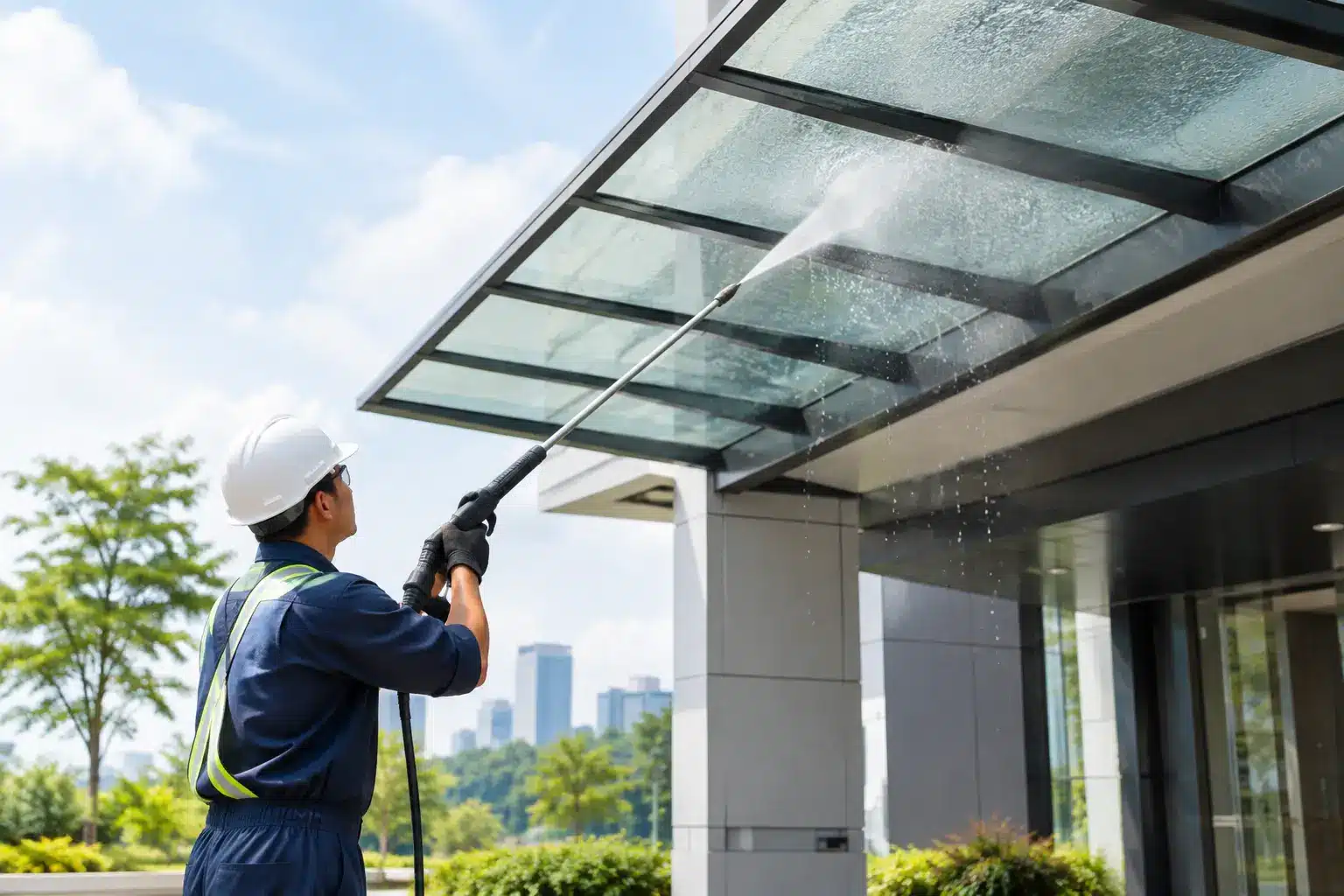

A stained canopy changes how a commercial property is perceived before visitors reach the lobby. More seriously, runoff from algae, bird droppings, dust, and trapped debris can create slippery entrance surfaces and accelerate material deterioration. Professional Selangor canopy cleaning helps property teams keep these exposed structures presentable, safe, and easier to maintain without placing staff at risk.
Canopies are often treated as a minor exterior detail until staining becomes obvious or a leak develops. In reality, they sit above some of the busiest parts of a property: main entrances, loading bays, walkways, drive-through areas, guardhouses, and retail frontage. Cleaning them properly requires more than a hose, a ladder, and a quick wash. The correct method depends on the canopy material, elevation, access conditions, surrounding foot traffic, and the condition of the structure itself.
Why Commercial Canopies Need Planned Cleaning
A canopy faces continuous exposure to rain, humidity, airborne dust, vehicle exhaust, leaves, and biological growth. In commercial and industrial environments, it may also collect grease particles, construction residue, or emissions from nearby operations. These contaminants do not only affect appearance. They hold moisture against surfaces, block drainage points, and can cause finishes to look aged well before their expected service life.
For building managers, the operational concern is usually the entrance zone below. Dirty canopy edges can drip discolored water onto pavers, glass doors, signage, and walkways. Moss and algae buildup may spread to the roof edge or guttering. Bird nesting materials can obstruct drainage and create hygiene issues around visitor-facing areas.
Routine cleaning is generally more cost-effective than waiting for heavy buildup. A canopy that receives periodic inspection and washing is easier to clean, needs less aggressive treatment, and is less likely to hide early signs of corrosion, loose panels, damaged sealant, or blocked outlets. The right interval depends on the site. A sheltered office entry may need attention less frequently than a canopy near a major road, food outlet, industrial facility, or tree-lined compound.
Selangor Canopy Cleaning Is an Access and Safety Job
The visible surface is only one part of the job. Many canopies extend above glass façades, landscaping, active drop-off lanes, or restricted areas where a standard ladder is neither safe nor practical. Technicians may need to work from mobile elevated work platforms, rope access systems, scaffolding, or carefully planned roof access, depending on height, reach, load capacity, and site layout.
This is why commercial canopy cleaning should begin with a site assessment. The contractor needs to identify the canopy construction, access points, fall hazards, pedestrian exposure, nearby electrical fittings, drainage paths, and any fragile materials. Polycarbonate sheets, glass panels, aluminum composite cladding, metal decking, tensile fabric, and coated steel all respond differently to pressure, cleaning chemicals, and mechanical scrubbing.
A low-cost approach can become expensive when it damages a finish or creates risk at an occupied property. High-pressure washing may be suitable for certain metal or concrete surfaces, but it can force water through joints, lift aging sealant, or damage more delicate panels if used without control. Similarly, strong chemicals may remove visible stains quickly while affecting protective coatings, nearby plants, or runoff management.
A professional team plans the work around the property rather than interrupting it unnecessarily. This can include isolating the work zone, scheduling around visitor peaks, protecting adjacent glass and signage, controlling runoff, and ensuring technicians use suitable personal protective equipment and fall-protection measures. At active commercial sites, these details matter as much as the final clean.
What a Proper Canopy Cleaning Scope Should Cover
A dependable cleaning scope starts with an inspection, not an assumption. The team should check the top surface, underside, edges, support frames, gutters, downpipes, joints, lighting locations, and surrounding drainage. Dirt visible from ground level is often only part of the issue.
For most sites, the cleaning process involves removing loose leaves and debris, treating algae or organic growth where needed, washing the canopy with material-appropriate tools and solutions, and clearing accessible drainage channels. Frames, fascia sections, and underside areas should be considered where they affect appearance or ongoing maintenance. If the canopy is attached to a façade, the cleaning plan should also prevent dirty runoff from transferring to windows and wall finishes.
The scope should be specific about exclusions. Cleaning is not the same as repair, and a responsible contractor should flag defects rather than conceal them. Cracked panels, rusted fasteners, deteriorated sealant, unstable brackets, or drainage failures may require repair work before or after cleaning. Identifying these conditions early gives facility teams a clearer maintenance plan.
For larger sites, photographs and work completion records are useful. They provide a practical reference for property managers, support maintenance budgeting, and help establish an appropriate cleaning schedule based on actual buildup rather than guesswork.
Choosing the Right Frequency for Your Property
There is no single cleaning frequency that suits every canopy. The best schedule is based on exposure and use. A corporate office entrance with moderate traffic may be maintained on a semiannual basis. A retail property with high visitor volume, nearby trees, food-service activity, or frequent rainwater staining may need quarterly attention. Industrial facilities can require more frequent inspections where dust, residue, or debris accumulates quickly.
Cleaning should also be considered after nearby construction work, severe storms, roof maintenance, or a long period of deferred exterior upkeep. These events can leave sediment in drainage points and expose issues that are not apparent from the ground.
Facility teams should avoid scheduling based only on appearance. By the time staining is prominent, drainage and surface contamination may already be significant. A planned program keeps the exterior in better condition and allows work to be coordinated with façade cleaning, window cleaning, roof gutter services, or exterior painting where appropriate.
Questions to Ask Before Requesting a Quote
A useful quotation should reflect the actual difficulty of the work, not just the canopy’s square footage. Height, access method, labor requirements, material type, degree of buildup, work-zone controls, and operating hours all affect the scope. A small canopy above a busy entrance can require more planning than a larger structure with clear ground access.
Ask whether the provider will conduct a site visit, what access method is proposed, and how pedestrian and vehicle areas will be managed. Confirm that the cleaning approach is suitable for your canopy material and that the scope includes debris removal and drainage checks where accessible. If the canopy is high or difficult to reach, experience in elevated exterior work is essential.
It is also worth asking how defects will be reported. Cleaning crews are often among the few people who can closely inspect elevated canopy surfaces. Clear reporting can help the property team act on deteriorating sealant, corrosion, or blocked outlets before these become larger repair issues.
Protecting Appearance Without Creating Operational Disruption
Commercial cleaning work should fit the building’s operating reality. A busy office tower may require early-morning work and careful control of the main entrance. A warehouse may need cleaning planned around loading schedules. A retail site may need barriers and access routes that preserve customer movement. The cleaning method and schedule should adapt to these conditions.
Urban Solutions Services Sdn Bhd approaches hard-to-access exterior cleaning with site-specific planning, skilled technicians, and equipment suited to demanding commercial environments. For canopy work, that means evaluating access and safety before the first cleaning tool reaches the surface.
A clean canopy supports a better first impression, but its greater value is practical: it helps protect drainage, surface finishes, and the safety of the entrance below. Arrange a site assessment before buildup becomes a visible problem or an avoidable maintenance callout.