

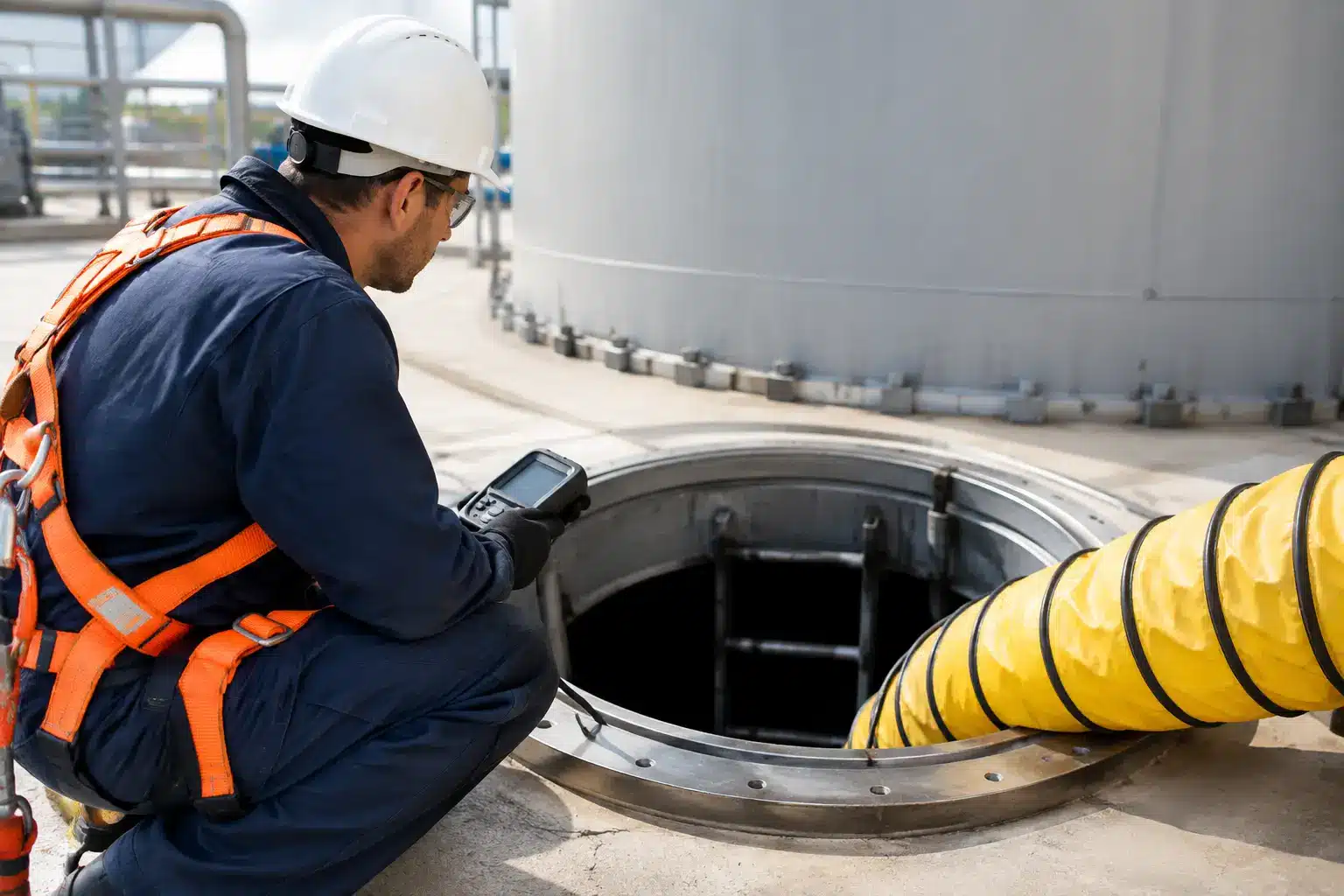

A drain chamber, water tank, duct, pit, or service void may look like a routine cleaning task from the outside. Once a worker enters, however, conditions can change quickly. To manage confined space hazards effectively, facility teams need more than PPE and a willing crew. They need a controlled entry process that identifies risks before work starts and keeps every person on site accountable.
For commercial and industrial properties, confined space work is often tied to cleaning, inspection, maintenance, and repair. The job may be necessary to protect asset condition and prevent operational disruption, but it should never be treated as standard janitorial work. Access limitations, poor air quality, difficult communication, and restricted rescue routes require specialist planning.
What makes a confined space high risk?
A confined space is not simply a small area. It is an enclosed or partially enclosed location that was not designed for continuous occupancy and may have limited access or exit. Examples include tanks, manholes, grease traps, culverts, pits, silos, ducts, sewer lines, and underground chambers.
The danger is often invisible. Oxygen levels can fall below safe limits, while gases, vapors, or fumes can build up without warning. A cleaning chemical, welding activity nearby, decomposing material, stagnant water, or residue from previous operations can alter the atmosphere. In other cases, the main risk is physical: engulfment, flooding, moving machinery, heat stress, falling objects, or a narrow opening that prevents a fast exit.
The work scope matters. A visual inspection may require different controls than sludge removal or repair work involving powered tools. That is why a generic safety checklist is not enough. Each site needs a task-specific assessment.
Manage confined space hazards before anyone enters
The safest confined space entry is the one that can be avoided. Before arranging entry, assess whether inspection, cleaning, or repair can be completed from outside using remote cameras, extended tools, vacuum equipment, or other non-entry methods. This is particularly useful for service pits, drainage lines, and tanks where the condition can be assessed without exposing workers to atmospheric hazards.
When entry is necessary, start with a site survey. The survey should confirm the space location, access points, depth, dimensions, internal layout, previous use, nearby operations, possible contaminants, and emergency access. It should also identify whether the space connects to other pipes, chambers, electrical systems, or process equipment that could introduce hazards during the work.
A clear scope prevents unsafe assumptions. Define what must be cleaned, inspected, removed, repaired, or tested. Confirm how long the work is expected to take, which equipment is required, and whether the task could create additional hazards such as fumes, dust, sparks, noise, or water accumulation.
Use permits and isolation controls
A permit-to-work system gives the entry team a formal stop point before work begins. The permit should state the work scope, identified hazards, atmospheric test results, required PPE, communications method, authorized entrants, standby attendant, entry period, and rescue arrangements.
Isolation is equally critical. Depending on the site, this may involve locking out electrical equipment, blanking or disconnecting pipes, closing valves, isolating pumps, blocking moving parts, and preventing vehicle traffic near an open chamber. If water, gas, steam, chemicals, or product can enter the space, it must be controlled before entry, not after a worker reports a problem.
Test the atmosphere and keep testing
Atmospheric testing is one of the most important controls for confined space work. A space that appears safe at the entrance may contain a hazardous layer deeper inside, especially where gases settle or where ventilation is poor. Test before entry at different levels of the space and continue monitoring while people are inside.
A calibrated gas detector should check oxygen concentration, flammable gases or vapors, and toxic contaminants relevant to the site. The exact contaminants depend on the location and task. For example, sewer-related work may involve hydrogen sulfide and methane, while industrial tanks may have solvent vapors or process-specific gases.
Do not rely on smell, irritation, or visible haze as a warning. Some toxic gases cannot be reliably detected by human senses, and a worker can lose consciousness before recognizing the danger. If readings move outside acceptable limits, the team should leave the space immediately, identify the cause, and restore safe conditions before re-entry.
Ventilation must match the hazard
Mechanical ventilation can improve air quality, but it is not a substitute for testing or isolation. Air must reach the areas where workers will be positioned, not just circulate around the entrance. Ducting, fan capacity, and air intake location all affect whether ventilation is effective.
There are trade-offs. Introducing air too aggressively can disturb dust, spread vapor, or worsen a flammable atmosphere if the equipment is not suitable for the environment. The right method depends on the space, the contaminant, and the work being performed. A competent supervisor should confirm the ventilation approach before entry begins.
Put the right people and equipment in place
Confined space work should be carried out by trained personnel who understand entry procedures, gas monitoring, emergency signals, and the limits of their authority. Experience with general cleaning does not automatically qualify someone to enter a tank, pit, or underground chamber.
Every entry team needs defined roles. The entrant performs the authorized work inside the space. The standby attendant remains outside, monitors conditions, maintains communication, and prevents unauthorized entry. A supervisor verifies that the permit, controls, and rescue plan are in place. On smaller projects, one person may hold more than one responsibility only where site procedures and safe staffing levels allow it.
Equipment selection should be based on the actual conditions, not what is easiest to transport. Typical requirements may include calibrated gas monitors, forced-air ventilation, suitable lighting, communication devices, retrieval equipment, fall protection, protective clothing, respiratory protection, and barriers around the entry point. Electrical equipment may need to be appropriate for potentially flammable environments.
PPE is the final layer of protection, not the primary control. A respirator does not make an untested atmosphere safe, and a harness does not replace a rescue plan. Workers must be fitted, trained, and medically suitable for any respiratory equipment required by the task.
Plan rescue before the first entry
A rescue plan cannot be limited to calling emergency services. In a confined space emergency, a delayed or untrained response can put both the entrant and would-be rescuers at risk. Many secondary casualties occur when a colleague enters to help without air monitoring, breathing equipment, or retrieval capability.
The rescue plan should identify how an incapacitated worker will be recovered, who will carry out the rescue, which equipment will be used, and how emergency responders can access the site. If vertical entry is involved, retrieval systems must be positioned and checked before work starts. If the space has bends, obstructions, or a small opening, confirm that rescue is realistically possible with the proposed method.
The team should also establish simple communication and stop-work signals. Radios may not work reliably underground or behind concrete structures, so the method should be tested at the location. If communication fails, atmospheric readings change, weather affects the work area, or site conditions differ from the permit, stop the job and reassess.
Maintain control throughout the work
Confined space safety is not completed when the permit is signed. Conditions can change because of rainfall, nearby construction, chemical use, pump activity, shifting residues, or work that generates fumes. The attendant and supervisor should remain alert to changes in the space and surrounding work area.
Keep the entry point controlled, protect open access points from falls and vehicle movement, and prevent unauthorized personnel from interfering with equipment. Record gas readings, entry and exit times, changes to the scope, and any incident or near miss. These records help improve future planning and give facility managers a clearer picture of recurring maintenance risks.
For building and industrial sites, a specialist contractor can bring the trained crew, access equipment, and task planning needed for difficult cleaning and maintenance work. Urban Solutions Service Sdn. Bhd. approaches confined space projects with site-specific assessment because no two tanks, pits, or service chambers present the same conditions.
The practical goal is not simply to finish the cleaning or maintenance task. It is to return the asset to service without exposing people to preventable danger. When the work involves a confined space, careful planning is what keeps a necessary job from becoming an emergency.