

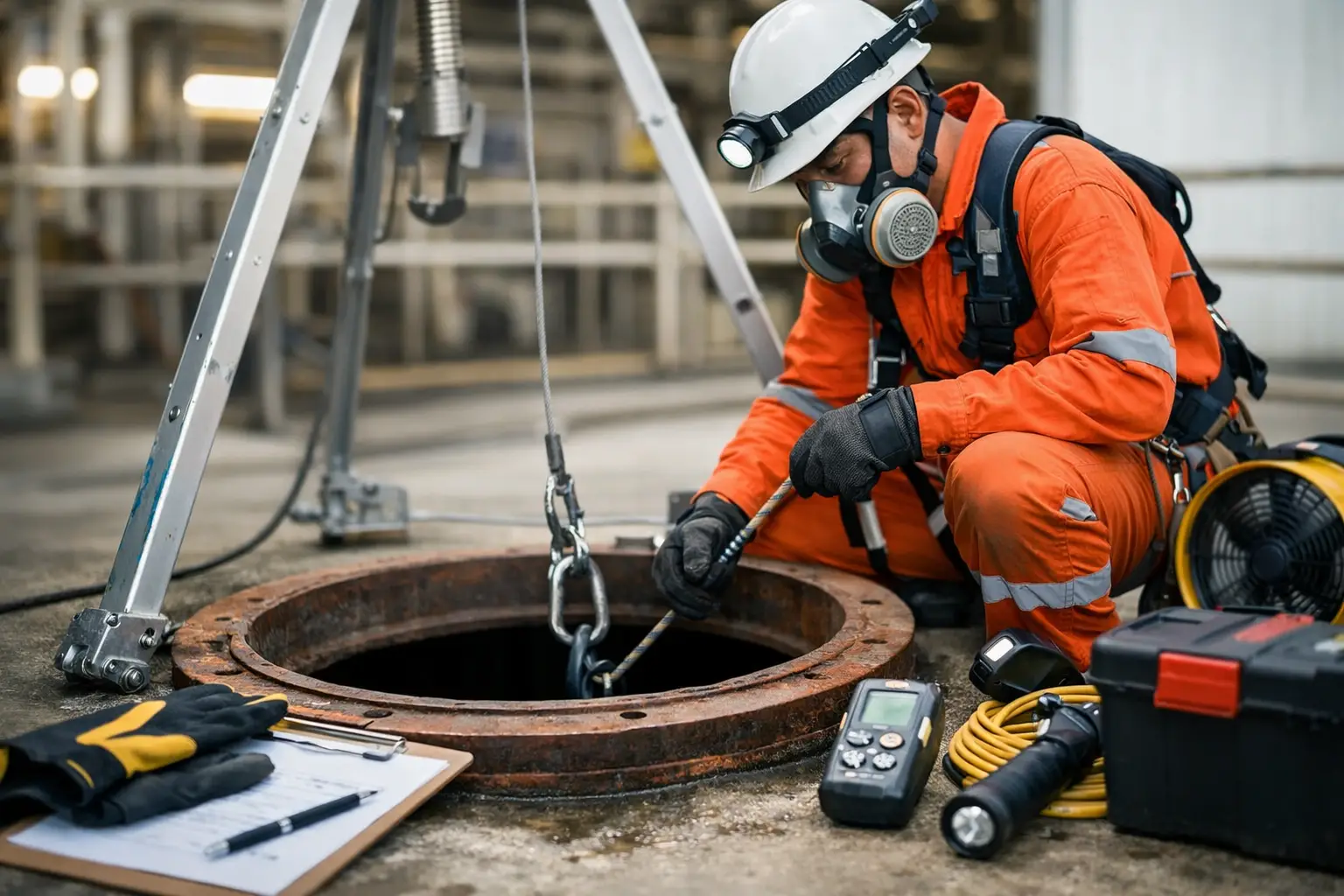

A confined space job usually looks manageable until access, air quality, residue buildup, and rescue planning all collide at once. That is why a confined space maintenance checklist guide is not just paperwork for facilities teams – it is a working control document that helps reduce delays, prevent oversights, and keep contractors aligned before anyone enters the space.
For commercial and industrial properties, confined spaces often sit out of sight until a blockage, odor issue, water ingress problem, contamination concern, or system fault forces action. Tanks, pits, ducts, shafts, manholes, sumps, and service voids can all demand specialized cleaning or maintenance under strict controls. When the scope is urgent, the temptation is to move straight to execution. In practice, that is where risk multiplies.
Why a confined space maintenance checklist guide matters
The main value of a checklist is consistency. Different teams may be involved in one job – facility management, site safety personnel, operations staff, and the service contractor. Without a shared checklist, small gaps appear fast. One team assumes isolation is complete, another assumes ventilation has been tested, and someone else expects rescue equipment to be on standby.
A proper confined space maintenance checklist guide keeps the job grounded in sequence. First confirm the space, then confirm the hazards, then confirm the controls, then confirm the people, equipment, and emergency readiness. That order matters. Even experienced contractors should not rely on memory when conditions vary from site to site.
It also helps with budgeting and scheduling. A simple cleanout inside a service chamber may become a more technical operation if sludge removal, gas testing, water extraction, or restricted vertical entry is involved. For building managers and operations teams, the checklist is useful because it turns a vague maintenance request into a clearly scoped job.
Start with the actual condition of the space
Before permits and equipment are discussed, the first question is basic – what exactly is being maintained, and what is its current condition? Too many jobs begin with a generic label such as tank cleaning or pit inspection. That is not enough.
The team should identify the type of confined space, likely contaminants, access limitations, depth, internal layout, and any connected systems. If there is standing water, chemical residue, grease buildup, low visibility, poor airflow, corroded ladders, or unstable footing, the method of work may need to change. A space that was safe to enter six months ago may now require a more controlled setup.
This is also where site history matters. Repeated clogging, known biological growth, industrial residue, or previous oxygen-deficient readings should never be treated as minor background details. They directly affect labor planning, PPE, ventilation needs, and cleaning method.
What your checklist should cover before entry
The strongest checklists are practical, not bloated. They focus on the controls that determine whether work can proceed safely and efficiently.
At minimum, the pre-entry section should confirm site assessment, hazard identification, isolation of energy sources, atmospheric testing, ventilation setup, communication method, rescue planning, permit approval, and worker competency. It should also confirm that entry and exit routes are usable and that any required lighting is suitable for the space.
For maintenance work, it helps to go one step further and define the actual task sequence. Cleaning, desilting, inspection, minor repair, coating touch-up, debris removal, and washdown do not carry the same risks. Some tasks generate fumes, disturb settled residue, or require tools that affect air quality. A checklist should reflect the work being performed, not just the fact that the area is confined.
Permit, isolation, and atmosphere are not box-ticking items
Three sections often determine whether a confined space job runs smoothly or becomes a stop-start problem on site: permit control, system isolation, and atmospheric testing.
Permit control should confirm who authorized entry, what work is allowed, how long the permit remains valid, and what conditions require the permit to be suspended. This sounds administrative, but it prevents crews from continuing work after the original conditions have changed.
Isolation must be specific. Mechanical, electrical, hydraulic, pneumatic, and process-related isolation points should be identified and secured. Where lines feed into the space, blanking or physical disconnection may be needed rather than simple shutoff. It depends on the system and the consequence of unexpected flow or startup.
Atmospheric testing needs the same discipline. A single reading at the opening is rarely enough if the space is deep, segmented, or poorly ventilated. The checklist should require testing for oxygen levels and any relevant toxic or flammable gases based on site conditions. If the work itself can alter the atmosphere, then continuous or repeated monitoring becomes part of the plan.
Equipment checks should match the task
A common mistake is using a generic equipment checklist for every confined space job. In reality, maintenance access into a dry service void is not the same as cleaning a contaminated sump or entering a vertical shaft.
The checklist should confirm entry gear, retrieval systems, ventilation units, gas detectors, lighting, communication devices, PPE, and any cleaning or extraction tools. If sludge, wastewater, or industrial residue is involved, the team may also need pumps, wet vacuums, pressure cleaning equipment, or containment measures for removed waste.
Condition matters as much as availability. A tripod on site is not enough if the setup point is unsuitable. A gas detector is not enough if calibration status is unclear. Ventilation equipment is only useful if airflow reaches the working zone. For decision-makers managing commercial buildings or industrial facilities, this is one reason specialist contractors are often the better choice for confined space maintenance – the access plan and equipment selection are tied to real site conditions, not assumptions.
People, roles, and supervision need to be clear
A confined space checklist should make responsibilities visible. Who is the entry supervisor? Who is the standby person? Who enters the space? Who is responsible for atmospheric testing? Who controls isolation? Who activates emergency response if conditions change?
When these roles are vague, delays and unsafe decisions follow. Workers may enter before all controls are verified, or site staff may believe the contractor is handling an element that remains under the client’s authority. The checklist should remove that ambiguity.
Competency should be part of this section as well. Training records, permit familiarity, task-specific briefing, and understanding of emergency procedures all matter. If the job includes cleaning, maintenance, and minor rectification in one scope, crews need to understand where the work stops and when a separate repair contractor or engineer should be consulted.
The checklist should continue during the job
A good checklist is not finished once entry begins. Conditions inside confined spaces change quickly. Water levels rise, residue gets disturbed, visibility drops, heat builds up, and airflow patterns shift. If the work takes several hours, the checklist should require periodic reviews rather than a single start-of-job signoff.
This is especially relevant during cleaning and maintenance operations where the task itself changes the environment. Desilting a pit can release gases. Pressure washing can reduce visibility and create slip risk. Removing accumulated debris can expose damaged surfaces that need a different work method. The checklist should include hold points where the supervisor reassesses conditions before the team continues.
For larger properties or active commercial sites, it also helps to coordinate the checklist with surrounding operations. Nearby plant movement, drainage activity, scheduled shutdowns, and tenant access can all affect timing and safety controls.
After-exit checks are part of maintenance quality
Post-work checks often receive less attention than entry controls, but they matter for both safety and asset condition. The checklist should confirm personnel count, tool retrieval, waste removal, surface condition, final inspection, permit closure, and reactivation of isolated systems under controlled approval.
From a maintenance standpoint, this is also the right stage to document what was found. Corrosion, cracks, worn coatings, excessive sediment, blocked channels, damaged covers, and abnormal moisture levels should be recorded clearly. That information supports better planning for future maintenance instead of treating each visit as a one-off cleanup.
For building managers, this creates a practical benefit. A contractor who leaves behind clear findings helps you make decisions earlier, before small confined space issues become expensive downtime or structural deterioration.
One checklist does not fit every site
The best confined space maintenance checklist guide is one that can be adapted. A short checklist may be enough for routine, low-complexity access under controlled conditions. High-risk industrial spaces usually require more technical detail, stricter permit controls, and closer coordination with site safety teams.
That is why site visits are valuable before quoting or scheduling major confined space work. They help define access difficulty, equipment needs, labor requirements, and risk controls based on the actual structure. In practice, that leads to smoother execution and fewer mid-job surprises.
For properties in Kuala Lumpur, Selangor, Penang, and Johor, where commercial sites often combine aging infrastructure with active operations, a checklist should be treated as a job planning tool as much as a safety document. The cleaner the planning, the cleaner the execution.
Where the work involves roof or elevated access, property teams should also review DOSH guidance on working at height when planning access, supervision and fall-prevention controls.
For a site-specific scope, review our confined space cleaning services and arrange an assessment before confirming access, timing and cost.
Confined space maintenance rarely gives much room for improvisation. A clear checklist gives your team and contractor a shared standard before the first entry, while there is still time to correct the plan rather than react inside the space.