

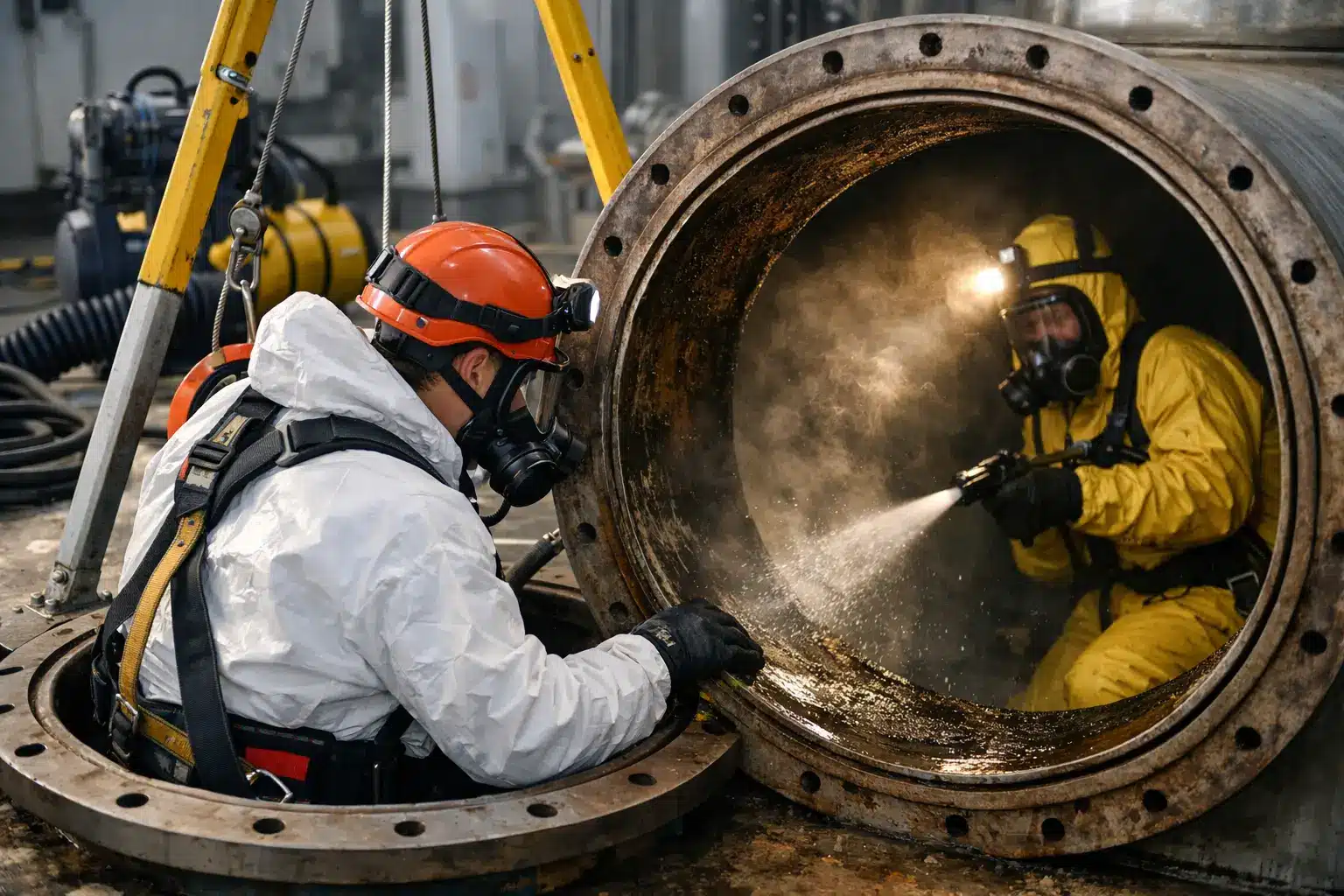

A tank that has not been cleaned in months, a duct system collecting residue, or a service shaft with limited ventilation can turn into an operational problem fast. Confined space cleaning services are not routine janitorial work. They are specialized maintenance work carried out in restricted areas where access, air quality, visibility, and worker safety all need to be managed properly from the start.
For property managers, facilities teams, and industrial operators, this matters because neglected confined spaces do not stay minor issues for long. Dirt buildup, sludge, standing water, dust, grease, and debris can affect equipment performance, create safety hazards, and make future maintenance more difficult and more expensive. The right contractor does more than clean the space. They assess access conditions, plan the work around risk, and complete the job with the right equipment and trained personnel.
What confined space cleaning services actually cover
Confined spaces vary widely by site. In commercial and industrial properties, they can include tanks, pits, manholes, shafts, ducting, sumps, crawl spaces, voids, and other enclosed or partially enclosed areas that are not designed for continuous occupancy. Some are dry and relatively straightforward. Others involve moisture, residue, chemical contamination, poor ventilation, or difficult entry points.
That is why confined space cleaning services should never be treated as a standard cleaning assignment with a standard price. The cleaning method depends on what is inside the space, how technicians can enter and exit, whether mechanical ventilation is required, and what level of contamination is present. A service provider needs to understand both cleaning execution and access control.
In some cases, the goal is removing debris and restoring a clean working environment for inspection or repair. In others, the job involves washing down internal surfaces, extracting sludge, clearing drainage pathways, or preparing a space for maintenance crews. The work may also need to be coordinated with shutdown schedules, tenant operations, or production windows. For a busy facility team, that operational flexibility is often just as important as the cleaning itself.
Why confined space cleaning services require a specialist
The phrase confined space tends to get used loosely, but the risk profile is real. Limited entry and exit are only part of the issue. A confined area may have low oxygen levels, poor air circulation, slippery surfaces, residual chemicals, biological contaminants, or restricted movement that complicates even simple tasks.
This is why a general cleaning crew is not the right fit. Specialist confined space cleaning services are built around planning, site assessment, controlled access, and task-specific equipment. Before the cleaning starts, the contractor should review the space dimensions, identify the access method, evaluate potential hazards, and determine what level of manpower and supervision is required.
It also depends on the site. A small service chamber in an office complex is different from an industrial tank or below-grade utility area. The equipment setup, cleaning duration, and safety controls may look very different from one project to the next. A dependable contractor will say so clearly instead of forcing every job into the same scope.
What a professional process should look like
A proper confined space cleaning job starts with a site visit or technical assessment. That allows the contractor to inspect the access point, understand the internal condition of the space, and identify anything that could affect execution. This is where realistic planning happens. Without that step, quotations tend to miss the real labor and equipment needs.
Once the site is reviewed, the cleaning scope can be defined properly. That may include debris removal, wet cleaning, pressure washing, vacuum extraction, sludge removal, wiping down internal surfaces, or clearing built-up residue from hard-to-reach sections. In many cases, the challenge is not just cleaning the area but reaching it safely and working efficiently once inside.
Equipment selection matters. Depending on the environment, crews may require ventilation support, access systems, lighting, extraction equipment, water-fed tools, industrial vacuums, or other specialized cleaning gear. The point is not to overcomplicate the work. The point is to use the right setup for the actual condition on site.
Execution should also be controlled and documented. Commercial clients want confidence that the work will be carried out professionally, with minimal disruption and a clear understanding of what was completed. That is especially important when the confined space is part of a larger building system, where cleaning is tied directly to safety inspections, maintenance schedules, or regulatory requirements.
Common reasons buildings and facilities need this service
In commercial buildings, confined spaces are often out of sight until they start affecting something visible. Drainage issues, odors, blocked systems, water retention, and maintenance delays can all trace back to enclosed areas that have not been cleaned or inspected for some time.
Industrial sites usually face a different pressure. Production environments can generate residue, dust, waste material, and buildup that accumulates in tanks, pits, and service zones. Cleaning these spaces is often necessary before repair, inspection, shutdown maintenance, or system recommissioning. Delaying the work can slow down operations and increase the complexity of the next service window.
There is also the matter of asset condition. When debris, moisture, or contaminants are allowed to remain in a confined area, corrosion and wear become more likely. That does not always show immediate damage, but over time it can shorten the service life of infrastructure and increase repair costs. In that sense, confined space cleaning is not only reactive. It supports preventive maintenance as well.
How pricing is usually determined
Commercial buyers often want a quick number, but confined space jobs are rarely simple enough for flat-rate pricing. A realistic quote depends on the size of the space, depth or height, internal condition, access restrictions, labor needs, equipment requirements, and the time needed to complete the work safely.
If the space has heavy sludge, contaminated water, or difficult entry points, the scope changes. If the site requires work outside business hours or must be coordinated around live operations, that also affects planning and cost. The most reliable quotations are built after a site inspection because that is the only way to match resources to the actual conditions.
This is also where experience makes a difference. Contractors who regularly handle high-risk access work are better positioned to estimate labor and equipment accurately. That reduces the chance of delays, change orders, or incomplete cleaning due to poor planning.
What to look for in a confined space cleaning contractor
The first thing to look for is not a low price. It is whether the contractor clearly understands access difficulty and job risk. A capable provider should ask the right questions about location, dimensions, contamination type, operational constraints, and the intended outcome of the cleaning.
You should also expect a practical approach to manpower, equipment, and scheduling. If a contractor cannot explain how they will reach the space, ventilate it if needed, remove waste material, and complete the work without disrupting surrounding operations, that is a warning sign. Technical jobs need technical planning.
A strong contractor will also be comfortable working across demanding property types, from commercial towers to industrial facilities. That broader access experience is valuable because confined space work often overlaps with other hard-to-reach maintenance needs. Urban Solutions Services Sdn Bhd, for example, approaches these projects with the same focus it brings to other high-risk access and exterior maintenance work: careful site assessment, trained execution, and results that support ongoing building performance.
When to schedule confined space cleaning services
The best time is usually before the problem becomes urgent. If your team is planning inspections, shutdown maintenance, drainage work, repairs, or system testing, it makes sense to assess enclosed spaces ahead of time. Cleaning first often gives technicians better visibility, safer access, and fewer delays during the next phase of work.
That said, some jobs are triggered by immediate issues such as standing water, blockage, foul odor, residue buildup, or access limitations caused by debris. In those cases, speed matters, but rushing without proper assessment can create more risk. The right response is fast planning, not careless execution.
For multi-site operators and property managers, it is often worth identifying these areas before they become reactive maintenance calls. A site review can help prioritize which confined spaces need attention now and which can be scheduled as part of a broader maintenance plan.
Site teams should align their risk controls with Malaysia’s Occupational Safety and Health Act when planning the work.
For a site-specific scope, review our confined space cleaning services and arrange an assessment before confirming access, timing and cost.
Clean, accessible building infrastructure does not get much attention when everything is working. That changes quickly when one enclosed area is neglected and starts affecting safety, maintenance, or operations. The practical move is simple: treat confined spaces like critical assets, and make sure the contractor you bring in is equipped to handle them properly from the first visit.