

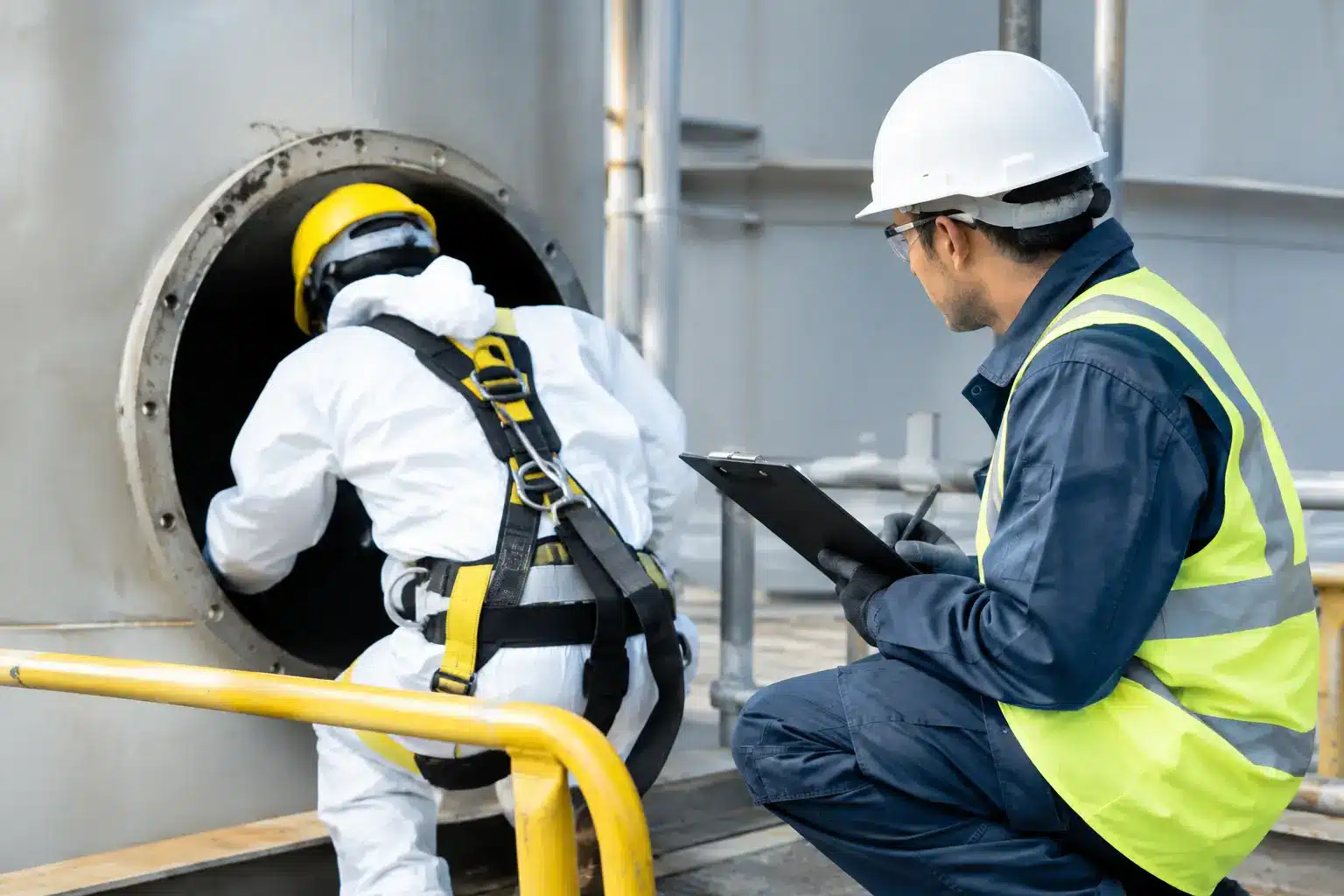

A confined cleaning job can look straightforward on a maintenance schedule, then become a high-risk operation once the crew reaches the access point. A tank, duct, pit, crawlspace, shaft, or service chamber may have limited entry, poor visibility, hazardous residues, restricted movement, or no practical way to remove waste. Knowing how to scope confined cleaning properly helps facility teams set a realistic budget, protect personnel, and avoid work delays after mobilization.
For commercial and industrial properties, the scope should do more than describe what needs to look clean. It must define the space, the material to be removed, the access method, the safety controls, and the condition the site should be left in. A clear scope allows the cleaning contractor to assign the right people, equipment, time, and supervision from the start.
Start With the Space, Not the Cleaning Method
The first question is not whether the area needs pressure washing, vacuuming, wiping, or chemical treatment. It is whether the work area is truly a confined space or a restricted-access area with similar operational challenges. The distinction affects entry requirements, rescue planning, air monitoring, ventilation, and staffing.
Document the location and function of the space. A grease interceptor, underground water tank, drainage chamber, plant-room pit, ceiling void, and industrial duct system each present different conditions. Note the entry points, internal dimensions, depth, floor condition, obstructions, ladders, platforms, and nearby operating equipment.
Photos and measurements are useful, but they do not replace a site inspection. A hatch that appears adequate in a photo may not allow a technician, breathing equipment, lighting, hoses, or waste containers to pass through safely. Site conditions determine whether work can proceed from outside the opening or whether controlled entry is necessary.
Define the Cleaning Objective
“Clean the tank” is not a workable scope. State what must be removed and what acceptable completion looks like. The requirement may be to remove loose sediment, accumulated sludge, oil residue, dust, bird droppings, scale, mold growth, construction debris, or standing water.
Be specific about surfaces as well. Does the scope cover floors only, or walls, corners, baffles, pipework, internal ladders, and access covers? If the objective includes odor reduction, disinfecting, corrosion assessment, or preparation for coating or inspection, say so early. These requirements change the products, equipment, drying time, and labor involved.
A practical scope also identifies exclusions. For example, a cleaning contractor can remove accessible debris from a chamber, while repairs to damaged pipework, electrical isolation, or disposal of regulated waste may require separate authorization or specialist support.
Assess Access and Site Logistics
Access complexity is often the biggest quotation factor in confined cleaning. The contractor needs to understand how personnel, equipment, water, power, and extracted waste will move through the property without disrupting building operations.
Review the route from the loading area to the work zone. Consider lift access, stairways, ceiling heights, narrow corridors, security checkpoints, parking limitations, loading restrictions, and the distance from the nearest water supply or electrical source. At an industrial site, production activities, forklifts, process lines, and delivery schedules may also limit working hours.
Waste handling deserves equal attention. Wet sludge, contaminated water, and heavy debris cannot simply be left at the nearest drain or loading bay. The scope should identify the estimated waste volume, collection method, temporary containment, transport route, and approved disposal responsibility. If the material has not been characterized, allow for assessment before committing to a final removal method.
For occupied commercial properties, plan containment and cleanliness outside the confined area too. Protective coverings, hose management, temporary barricades, warning signage, and post-work cleaning can prevent a confined-space project from becoming a disruption to tenants or staff.
Identify Hazards Before Pricing the Work
Confined cleaning should never be priced solely by square footage. Labor time is only one part of the work. Hazards can change the number of technicians required, the level of supervision, the equipment package, and whether the job can be completed in one shift.
During the initial assessment, consider atmospheric conditions, oxygen levels, toxic or flammable gases, heat stress, water ingress, mechanical hazards, sharp surfaces, biological contamination, chemical residues, poor lighting, restricted visibility, slips, and difficult communication. The risk profile may also change during cleaning. Removing sludge can release trapped gases, while high-pressure water can create splash exposure or make surfaces more slippery.
The facility team should provide available information on the space’s previous use, current contents, chemicals handled nearby, known incidents, isolation points, and applicable site rules. If the history is unclear, the safest approach is to treat the condition as unknown until it has been assessed.
Confirm Responsibilities at the Site
A strong scope assigns responsibilities clearly. The building representative may need to provide access, approve shutdowns, isolate connected systems, confirm utility locations, and coordinate permits. The contractor may be responsible for work planning, trained personnel, cleaning equipment, supervision, and housekeeping within the work area.
Entry authorization, atmospheric testing, attendant coverage, communication procedures, and emergency response arrangements should be agreed before the crew arrives. Requirements vary by site and local regulations, so the project plan must follow the applicable rules rather than rely on a generic checklist.
Build the Confined Cleaning Scope Around the Work Sequence
A well-written scope follows the way the job will actually happen. This makes it easier for property managers to compare quotations and reduces assumptions that lead to variation orders.
The scope should cover these essential stages:
- Pre-work site briefing, access confirmation, work permits, equipment checks, and area barricading.
- Isolation or shutdown of relevant services, where required and authorized by the facility.
- Entry preparation, including ventilation, testing, lighting, communications, and standby arrangements when applicable.
- Cleaning, debris extraction, washing, vacuuming, treatment, or other approved methods for the identified contamination.
- Waste containment, removal, and disposal in line with the agreed waste classification and site procedure.
- Final inspection, housekeeping, photo documentation where requested, and handover of the area.
This sequence should also state the expected work window. A simple pit clean may be completed during standard hours, while a job near critical building systems may need to be scheduled overnight or during a planned shutdown. After-hours work can reduce disruption, but it may increase labor, access coordination, and supervision costs.
Match Equipment and Crew Size to the Conditions
The right equipment depends on the space and contamination, not on a standard cleaning package. A dry dust buildup may require industrial vacuum extraction and controlled collection. Sludge removal may require pumping, vacuum recovery, hoses, and suitable containers. Grease, scale, or biological growth may require approved cleaning agents, controlled rinsing, and adequate drying.
Equipment must fit the access route and the work zone. Large machinery may be efficient in an open service yard but impossible to position inside a basement plant room. In that case, smaller equipment and additional manual handling may be necessary. This is one reason a free site visit provides more reliable pricing than a quote based only on a description.
Crew size should reflect the task and safety arrangements, not simply the desire to finish quickly. Some work may require an entry team, an attendant outside the space, and a supervisor. Other restricted-access cleaning tasks may be completed externally with the correct tools, avoiding entry altogether. The safer option is not always the lowest initial price, but it usually prevents greater cost from incidents, delays, or incomplete cleaning.
Set Acceptance Standards and Documentation
Before work begins, agree on how completion will be checked. Visual cleanliness may be sufficient for a non-critical service chamber. For water-related systems, food-related operations, healthcare areas, or sensitive industrial environments, the acceptance requirement may include additional sanitation steps, drying, testing, or inspection by the facility team.
Define whether before-and-after photographs are required, who will inspect the completed work, and how defects or inaccessible areas will be recorded. If corrosion, structural damage, leaks, or blocked lines are discovered during cleaning, the contractor should report the condition rather than conceal it. Cleaning often exposes maintenance issues that were not visible under debris or buildup.
A clear handover record protects both the property owner and the contractor. It confirms what was cleaned, what could not be cleaned, what waste was removed, and whether follow-up maintenance is recommended.
Get a More Accurate Confined Cleaning Quote
When requesting a quotation, provide the site address, type of space, recent photos, approximate dimensions, access details, known contaminants, preferred work dates, and any permit or induction requirements. The more accurate the information, the less likely the final project will need changes after mobilization.
For complex spaces, arrange a site visit. This allows a specialist team to inspect access, identify practical cleaning methods, assess labor and equipment needs, and build a safer work plan. Urban Solutions Service Sdn. Bhd. scopes confined cleaning projects around actual site conditions, helping commercial and industrial facilities plan demanding maintenance work with greater confidence.
The best time to clarify access, hazards, waste handling, and acceptance standards is before the first technician arrives at the entry point. A thorough scope turns a difficult-to-reach cleaning task into a controlled maintenance project with clear responsibilities and a dependable path to completion.