

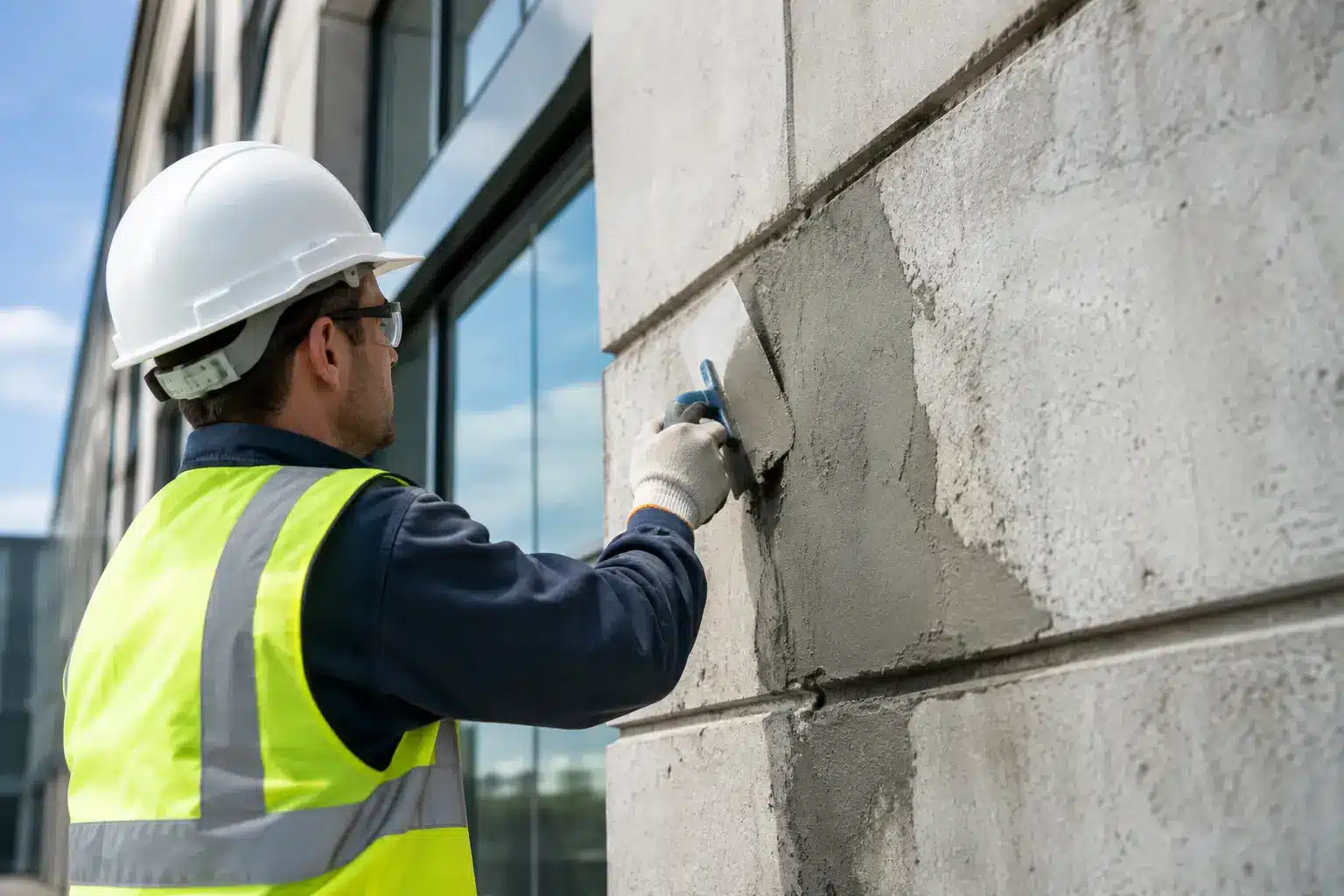

A small patch of loose concrete on the 20th floor is not a minor cosmetic issue. It can become a falling-object hazard, allow water to reach reinforcement steel, disrupt tenant operations, and expose building management to avoidable risk. Timely concrete facade repair protects the building envelope before a localized defect becomes a larger and more expensive maintenance project.
For commercial and industrial properties, the right response starts with a proper inspection. The visible crack or stain is often only part of the problem. A dependable repair plan identifies the source of deterioration, selects compatible materials, and provides safe access to every affected area.
When Concrete Facade Repair Is Needed
Concrete facades are exposed continuously to rain, heat, humidity, airborne pollutants, and movement within the building structure. Over time, these forces can weaken the surface and allow moisture to penetrate deeper into the concrete.
Spalling is one of the clearest warning signs. It occurs when concrete breaks away from the facade, often revealing rusted reinforcement bars underneath. Steel expands as it corrodes, placing pressure on the surrounding concrete until it cracks and detaches. What begins as a small hollow-sounding or chipped area can spread across a larger section of wall.
Cracking also deserves prompt attention, but not every crack has the same cause or urgency. Fine surface crazing may be mostly cosmetic, while vertical, diagonal, or widening cracks can indicate moisture entry, thermal movement, settlement, or structural stress. Water stains below windows, peeling paint, exposed aggregate, rust marks, and recurring damp patches are further signs that the facade needs assessment.
Facility teams should not rely on ground-level observations alone. Defects often develop around slab edges, parapets, window openings, balconies, service ledges, and upper elevations where access is limited. A close-range inspection is the practical way to determine the actual condition of the facade.
Why Early Repairs Cost Less Than Reactive Work
Water is usually the main driver of escalating facade damage. Once it enters cracks, failed joints, or porous concrete, it can reach steel reinforcement. Corrosion then expands the steel and causes more cracking, which allows even more water in. This cycle does not stop without corrective work.
Early intervention can limit repairs to localized removal, treatment, patching, and protective coating. Delayed action may require wider concrete removal, reinforcement replacement, repeated access mobilization, traffic or pedestrian protection, and more extensive restoration of surrounding finishes.
There is also an operational cost. Loose facade material can require emergency barricades, restricted entrances, tenant notifications, and urgent contractor mobilization. Planned maintenance gives property managers more control over timing, access, budget, and site safety.
A Proper Inspection Comes Before Any Repair
A repair contractor should first establish what is failing and why. Simply covering cracks or applying a fresh coat of paint may improve appearance temporarily, but it does not resolve active corrosion, water pathways, or weak concrete.
The inspection scope depends on the building height, facade design, age, previous repair history, and reported defects. On high-rise properties, close visual checks may be completed using rope access, suspended platforms, boom lifts, or other approved access methods. The safest and most efficient option depends on the elevation, ground conditions, facade profile, and site restrictions.
A thorough assessment commonly checks for four areas:
- Cracks, delamination, spalling, and hollow-sounding concrete
- Rust staining, exposed reinforcement, and signs of active corrosion
- Failed sealant joints, leaking windows, and water-entry points
- Coating failure, surface contamination, and areas vulnerable to future moisture penetration
Where damage appears significant or potentially structural, a qualified engineer should assess the affected elements and specify the repair requirements. This is especially important where reinforcement loss, deep cracking, slab-edge damage, or repeated spalling is present.
The Concrete Facade Repair Process
The repair process should match the cause and severity of the damage. A sound repair is not just a patch. It is a controlled sequence that removes unsound material, prepares the substrate correctly, restores the concrete profile, and protects the repaired area from repeated exposure.
1. Secure the work area and access system
Before work begins, the contractor establishes exclusion zones below the work face and confirms the access approach. High-rise facade work may require rope access technicians, suspended platforms, mobile elevated work platforms, or scaffolding. Each method has trade-offs. Rope access can reduce disruption and reach complex elevations efficiently, while platforms or lifts may be more suitable for larger repair zones or heavy material handling.
Access planning should consider pedestrians, vehicle routes, tenants, nearby buildings, roof anchor points, weather exposure, and rescue procedures. For an occupied commercial property, keeping entrances and daily operations moving safely is part of the job.
2. Remove weak or contaminated concrete
Technicians remove loose, cracked, delaminated, or unsound concrete until they reach a stable substrate. The repair perimeter is cut back as needed to avoid leaving weak edges that could fail later. Dust containment and debris control are critical, particularly above active walkways, loading bays, or public areas.
The exposed surface must be clean and properly prepared. Repair materials will only perform as intended when they are bonded to sound concrete free from loose particles, oil, coatings, and other contaminants.
3. Treat reinforcement and rebuild the section
If reinforcement steel is exposed, it is cleaned and assessed for corrosion and section loss. Severely deteriorated steel may need replacement or additional engineering direction. Suitable corrosion-protection treatment can then be applied before rebuilding the concrete section with a repair mortar designed for the application.
Material compatibility matters. The selected mortar should suit the repair depth, orientation, curing conditions, and movement characteristics of the original concrete. Using an unsuitable patch material can lead to shrinkage cracks, weak bonding, color variation, or premature failure.
4. Seal, coat, and protect the repaired facade
Once the repair has cured, the facade may require crack sealing, joint replacement, waterproofing treatment, or protective coating. This final stage is often what prevents the same moisture issue from returning.
The appropriate finish depends on the facade condition and building requirements. Breathable protective coatings can help reduce water absorption while allowing moisture vapor to escape. Elastomeric coatings may be suitable where hairline cracking and thermal movement are concerns. A coating should never be treated as a substitute for repairing active spalls, deep cracks, or failed joints first.
Choosing a Contractor for High-Rise Repair Work
Concrete facade repairs involve more than masonry skills. The contractor must be able to inspect and work safely at height, control falling debris, manage occupied premises, and complete repairs with consistent quality across difficult-to-reach elevations.
Ask how the contractor will access the work areas, protect people below, identify hidden defects, and manage weather interruptions. Request clarity on the proposed repair sequence, material system, quality checks, and handover documentation. A site-specific quotation is more useful than a generic price because labor, access equipment, protection measures, repair volume, and facade height can vary significantly from one property to another.
For buildings in Kuala Lumpur, Selangor, Penang, or Johor, weather exposure and high humidity can make water management a constant maintenance concern. Regular inspections after heavy rain, facade cleaning work, or reports of interior leaks can help identify issues before they become visible from the ground.
Maintenance After the Repair
Facade repair is more effective when paired with a maintenance plan. Cleaning removes dirt and biological growth that can hide cracks and stains. Periodic checks of sealant joints, drainage paths, parapets, gutters, and window perimeters help keep water from finding its way behind the facade.
Repair records are also valuable. Keep photographs, defect locations, repair dates, material details, and inspection notes. This gives future facility teams a clear history of recurring areas and helps them budget for planned exterior maintenance rather than reacting to emergencies.
A well-executed repair should leave the facade safer, more weather-resistant, and easier to maintain. When cracks, spalls, or rust stains appear, arrange a close-range site assessment early. The most cost-effective facade repair is usually the one completed before the defect reaches the next floor, the next tenant space, or the ground below.