

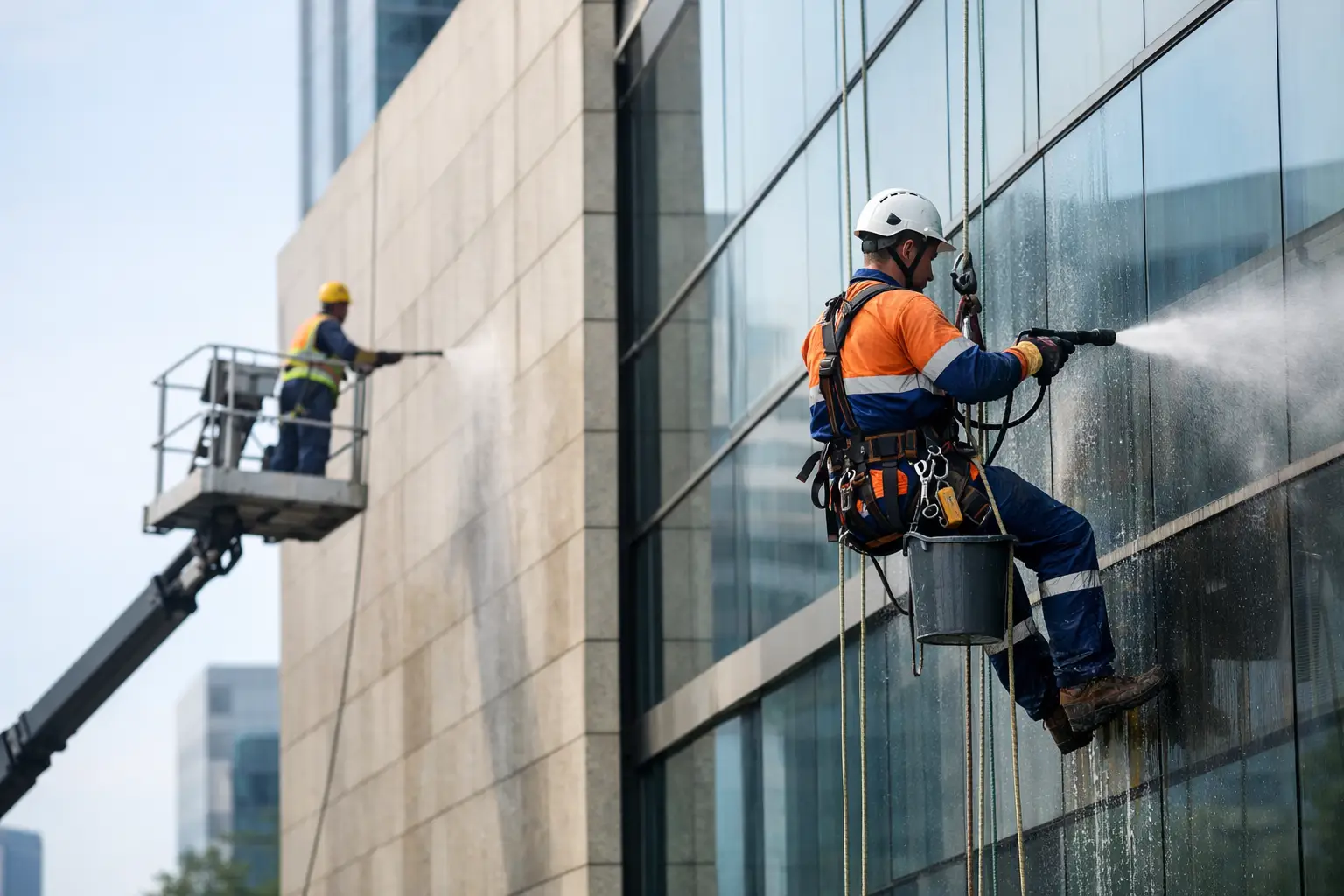

A stained facade changes how a property is perceived long before anyone steps through the entrance. For office towers, retail buildings, industrial sites, and mixed-use developments, building facade cleaning is not just about appearance. It is part of asset protection, tenant confidence, and safe long-term maintenance.
When dirt, algae, traffic film, mineral buildup, and airborne pollutants stay on exterior surfaces too long, the issue usually gets more expensive, not less. What starts as a cosmetic problem can become surface deterioration, permanent staining, blocked drainage paths, and harder access work later. For building owners and facility teams, that is why facade cleaning needs to be planned as a maintenance function, not treated as a last-minute fix.
Why building facade cleaning matters
Commercial buildings deal with constant environmental exposure. Rain carries contaminants across cladding. Dust settles into joints and textured finishes. Urban pollution leaves visible film on glass, metal, and painted surfaces. In humid conditions, biological growth can spread quickly on shaded elevations.
The impact is not the same on every building. A low-rise office with easy access may only need routine washing and spot treatment. A high-rise with mixed materials, recessed panels, and hard-to-reach sections may require rope access, elevated work platforms, and more careful method selection. That is where experience matters. The right contractor looks beyond surface dirt and evaluates height, access constraints, facade type, surrounding operations, and safety requirements before work begins.
For many commercial properties, facade cleaning also supports broader maintenance goals. Clean surfaces make it easier to identify cracks, failed sealant, corrosion, water marks, and coating issues early. If your building is due for painting, repairs, or window maintenance, a proper clean often becomes the first necessary step.
What builds up on a facade over time
Not all exterior staining is the same, and treating every surface with the same method can create damage. Glass may show mineral deposits, water spotting, and traffic film. Painted walls often collect dirt, mold, and streaking. Metal cladding can trap grime in panel joints and reveal oxidation or discoloration. Stone and textured finishes may hold deeper staining that needs a gentler but more thorough approach.
This is why building facade cleaning should never be reduced to just spraying water over the exterior. The cleaning result depends on understanding the material first. Pressure that works on one section may be too aggressive for another. Detergents that remove grime from industrial cladding may not be appropriate for sensitive architectural finishes.
A site inspection helps define the condition of the facade, the likely cause of staining, and the safest way to restore the surface without creating avoidable wear.
Choosing the right cleaning method
The correct method depends on the building itself. There is no one-size-fits-all approach for commercial exteriors, especially on larger or taller properties.
Water-fed and manual cleaning
For accessible glass and lighter exterior soil, purified water systems and manual cleaning methods can be effective. These methods are useful where a streak-free finish is required and surface contamination is still at a manageable level.
Pressure washing and soft washing
Pressure washing can remove heavy dirt from suitable hard surfaces, but it needs to be controlled carefully. Too much pressure can damage paint, sealant lines, and some cladding materials. Soft washing is often the better option for more delicate surfaces or where biological growth needs chemical treatment rather than force.
Rope access and high-rise facade work
On high-rise buildings, access is often the main challenge. Rope access allows trained technicians to clean areas that cannot be reached efficiently from the ground or by conventional equipment. It is especially practical where facade design, height, or site congestion limits other access options.
That said, rope access is not always the only answer. In some cases, boom lifts, gondolas, or scaffolding may be more suitable. The best choice depends on the building layout, work scope, time frame, and what will create the safest and most efficient working conditions.
Safety is not a side issue
For property managers and operations teams, exterior cleaning work is often judged on two things: whether the result looks right and whether the contractor can complete the job without creating risk on site. The second part is where many decisions are won or lost.
Facade cleaning can involve working at height, managing pedestrian zones, protecting glazing and finishes, coordinating with building operations, and controlling runoff. On occupied commercial properties, there may also be loading bays, tenant entrances, rooftop equipment, and restricted access areas to consider.
A dependable contractor should be able to explain how the work will be carried out, what access system will be used, how areas will be barricaded, and how the team will minimize disruption. If that process is vague, the risk usually shifts back to the building owner or facility team.
When should a commercial building schedule facade cleaning?
The right schedule depends on location, exposure, and building use. Properties facing major roads, industrial activity, or dense urban traffic typically show contamination faster. Buildings with lighter-colored finishes, large glass elevations, or prominent entrances also tend to require more frequent attention because the visual impact is immediate.
For some sites, annual cleaning is enough to maintain condition. Others may need semiannual service, especially when presentation matters to tenants, visitors, or corporate stakeholders. A building with recurring algae growth, heavy dust exposure, or drainage staining may also need targeted cleaning in specific sections between full facade projects.
The practical approach is to assess the facade before the problem becomes obvious from the street. Once dirt and staining become deeply embedded, restoration takes more labor, more equipment time, and sometimes more aggressive treatment.
What affects the cost of building facade cleaning?
Commercial buyers usually want a straight answer on cost, but facade cleaning is one of those services where the right quotation depends on the actual site conditions.
Height is a major factor, but it is not the only one. Access difficulty, building footprint, facade material, level of soiling, labor requirements, and equipment type all affect the final scope. A simple low-rise exterior wash is very different from cleaning a high-rise with multiple elevations, restricted access, suspended work zones, and mixed surface types.
Timing can also affect planning. Weekend work, night work, or phased execution around tenants and operations may increase labor and coordination needs. The most accurate way to price the job is through a proper site visit. That allows the contractor to assess risk, confirm access options, and recommend a method that fits the building rather than forcing the building to fit a standard package.
What commercial clients should look for in a contractor
The lowest price is rarely the full story in high-access exterior work. Commercial properties need a contractor that can deliver a clean finish, protect the building, and manage the site professionally from start to finish.
Look for clear experience with high-rise and technically challenging access work. Ask how the team handles different facade materials, what safety controls are used, and whether the quotation is based on a site assessment. A capable provider should be comfortable discussing scope limitations, likely problem areas, and realistic outcomes. That honesty matters, especially on older buildings where some staining may need restoration work beyond standard cleaning.
It also helps to work with a company that understands maintenance beyond one isolated task. Facade cleaning often overlaps with window cleaning, roof gutter clearing, exterior painting, and hard-to-reach maintenance support. A specialist contractor with broader access capability can simplify coordination and reduce the need to manage multiple vendors.
Building facade cleaning as part of long-term maintenance
The most effective exterior cleaning programs are not reactive. They are built into a wider plan for asset care. When facade cleaning is scheduled at the right intervals, surfaces stay in better condition, access work is easier to manage, and the building continues to present well to tenants, visitors, and stakeholders.
That matters whether you are managing a premium office tower, a retail center, an industrial facility, or a multi-block commercial development. Clean exteriors support the image of the property, but they also reduce the chance that small exterior issues go unnoticed until they become repair projects.
Where the work involves roof or elevated access, property teams should also review DOSH guidance on working at height when planning access, supervision and fall-prevention controls.
For a site-specific scope, review our façade cleaning services and arrange an assessment before confirming access, timing and cost.
Urban Solutions Services Sdn Bhd approaches facade work with that practical mindset – assess the site properly, use the right access method, and complete the job with safety and surface condition in mind. If your building exterior is starting to show the effects of exposure, the best time to inspect it is before the staining becomes part of the structure’s normal appearance.