

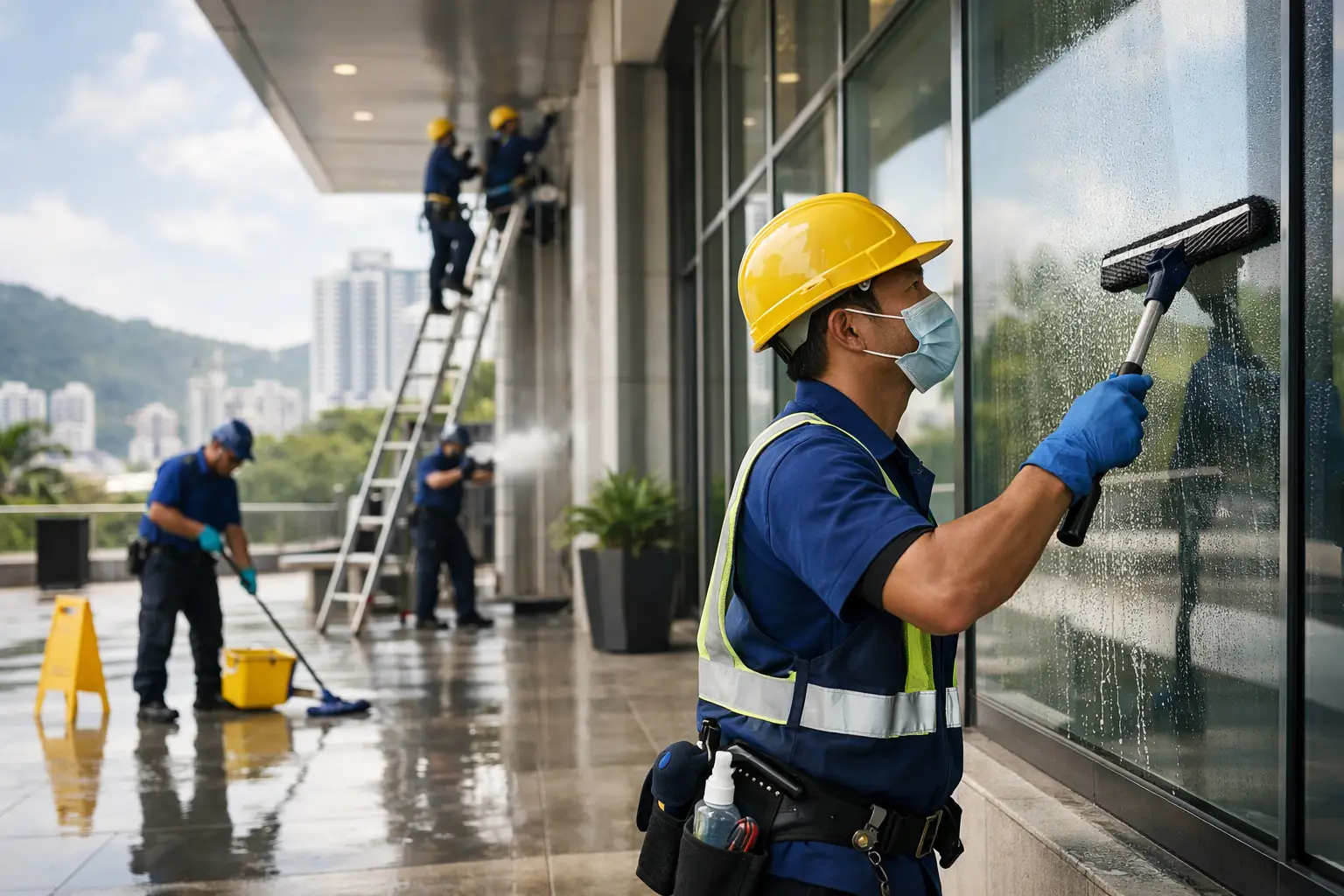

A stained facade, overflowing gutter, or neglected exterior window is more than a presentation issue. It can affect tenant confidence, create slip or water-ingress risks, and make routine maintenance more expensive. Commercial building cleaning Penang requires more than a standard janitorial crew when the work involves height, difficult access, heavy buildup, or active business operations.
For property managers, building owners, and facilities teams, the right cleaning contractor should make the process easier to control. That means a clear scope, suitable access methods, trained personnel, practical scheduling, and work completed without creating unnecessary disruption on site.
What Commercial Building Cleaning in Penang Should Cover
Commercial cleaning needs vary widely between a low-rise office, a retail complex, a warehouse, and a high-rise commercial tower. A useful service plan starts with the condition of the building and the areas that most affect safety, appearance, and operations.
Interior commercial cleaning may cover common areas, lobbies, restrooms, office spaces, corridors, loading areas, and other high-traffic zones. Exterior work can include window cleaning, facade washing, roof gutter cleaning, pressure cleaning, and removal of accumulated dirt, algae, dust, and debris. Industrial premises may also require cleaning in restricted or confined areas where standard methods are not appropriate.
The difference matters because each area carries its own access and safety requirements. A ground-level walkway can often be cleaned with conventional equipment. A glass facade several stories above ground may require rope access, boom lifts, gondolas, or another site-approved access method. Treating both jobs as the same service can lead to incomplete results or unnecessary site risk.
Start With a Site-Specific Assessment
A reliable quotation should be based on an inspection, not a guess from a building photo or a broad floor-area estimate. Building height, total surface area, access points, surface material, soil level, operating hours, and public movement all influence the work involved.
During a site assessment, a contractor should identify where technicians can safely enter and work, whether anchor points or lifting equipment are required, and how pedestrian and vehicle movement will be managed. For exterior cleaning, they should also check for damaged sealant, loose panels, blocked drainage, cracked glass, or other conditions that may affect the work. Cleaning is not a substitute for repairs, but finding visible issues early helps the facilities team plan the next action.
In Penang, frequent rainfall, humidity, and exposure to airborne dust can accelerate staining and organic growth on exterior surfaces. Buildings close to coastal areas may also face additional salt residue. The appropriate frequency depends on the building’s location, facade material, traffic exposure, and required presentation standard. A corporate headquarters with a prominent glass frontage may need more frequent attention than a back-of-house industrial facility.
Access Method Is Part of the Service
For technically demanding jobs, access planning is not an administrative detail. It determines whether the cleaning can be completed safely and thoroughly.
Rope access can be efficient for high-rise windows and facades where suitable anchorage is available and space at ground level is limited. Boom lifts may be more practical for certain elevations, canopies, warehouse exteriors, or areas that need wider working reach. Gondolas can suit buildings designed with permanent facade access systems. In confined spaces, the method must account for entry procedures, ventilation, communication, rescue planning, and the specific hazards of the area.
There is no single best option for every commercial property. Rope access can reduce the need for large equipment on the ground, but it is not suitable for every facade or weather condition. A lift can provide a stable work platform, but it needs safe positioning space and may affect parking, traffic lanes, or public access. A competent contractor explains the trade-offs before work starts instead of choosing a method based only on convenience.
Protect Operations While the Work Is Underway
Commercial properties cannot always close while cleaning is in progress. Offices have employees and visitors, retail sites have customers, and industrial facilities may have delivery schedules or production activity. The cleaning plan should account for that reality.
Work may need to be scheduled before business hours, after closing, or in controlled sections of the property. Exterior work zones should be clearly isolated where there is a risk of falling water, debris, or equipment. For window and facade cleaning, teams need to coordinate with building management on access, tenant notices, parking restrictions, and weather monitoring.
The goal is not simply to finish quickly. It is to complete the required scope while protecting people, property, and day-to-day operations. This is particularly important when high-risk access work is being carried out above active entrances, sidewalks, loading bays, or public areas.
Look Beyond a Low Initial Price
A low quote can be attractive, especially when a cleaning budget is under pressure. However, commercial building cleaning is not a service where price alone gives a useful comparison. A lower figure may exclude difficult sections, omit access equipment, allow too little labor time, or provide no allowance for proper site controls.
When comparing proposals, check whether the scope identifies the surfaces to be cleaned, the access method, labor and equipment requirements, work timing, safety controls, exclusions, and expected completion period. Ask how the contractor will handle bad weather, restricted access, and unexpected conditions found during the job.
It is also worth separating routine cleaning from restoration work. Regular facade washing can remove surface dirt and fresh staining, but long-standing discoloration, mineral deposits, paint damage, or deterioration may need specialized treatment or repair. Clear expectations prevent disputes over whether a surface is clean but still visibly aged.
Build a Maintenance Schedule Around Risk and Appearance
A planned cleaning schedule is usually more manageable than waiting until a property looks neglected or a drainage problem causes damage. The best intervals are based on the condition and use of the building, rather than a fixed calendar rule.
High-visibility entrances, lobbies, external glass, walkways, and retail frontages often need frequent attention because they shape first impressions and collect daily foot traffic. Roof gutters and drainage points should be inspected before periods of heavy rain and cleaned when debris buildup is likely. Facades may need periodic cleaning to control algae, dust, and staining before they become harder to remove.
For larger sites, facilities managers can prioritize work in phases. Start with public-facing areas, drainage systems, high-risk access zones, and surfaces showing active deterioration. This approach spreads budget requirements while keeping the most critical parts of the property under control.
Choose a Contractor Prepared for Difficult Areas
The strongest commercial cleaning partner is one that can handle routine requirements and respond when the building presents a more complex challenge. That reduces the need to coordinate separate vendors for windows, facades, gutters, confined areas, and related maintenance support.
Ask about the team’s experience with buildings similar to yours, the equipment available, the access plan, and how the work will be supervised. For elevated and restricted-area work, safety competence and practical execution should be visible in the proposal, not treated as an afterthought. Urban Solutions Services Sdn Bhd provides site-based cleaning and maintenance support for commercial and industrial properties where specialist access capability is required.
Commercial Building Cleaning Penang: Practical Takeaways
Site teams should align their risk controls with Malaysia’s Occupational Safety and Health Act when planning the work.
For a site-specific scope, review our high-rise window cleaning services and arrange an assessment before confirming access, timing and cost.
A clean commercial property supports more than appearance. It helps protect the building envelope, keeps drainage functioning, reduces avoidable hazards, and gives occupants and visitors confidence in how the site is managed. Arrange a site visit before the problem grows, then use the findings to create a cleaning plan that fits the building, the access conditions, and the way your business operates.