

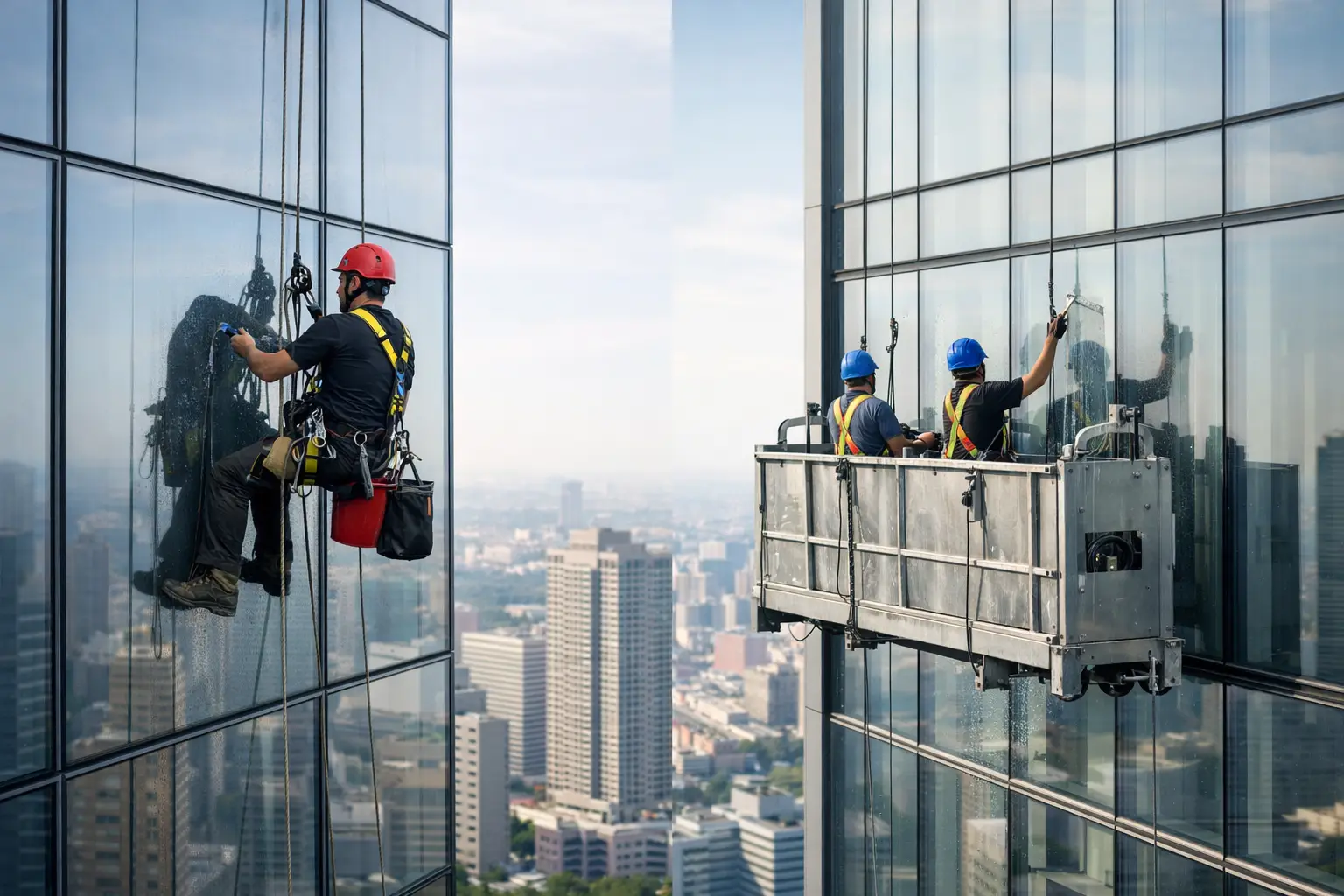

A façade can look clean from ground level while upper corners, recessed windows, and areas behind architectural fins collect visible dirt and water stains. For property managers, the real decision is not simply who will clean the building. It is whether rope access vs gondola cleaning is the right method for the building’s design, maintenance scope, and operating conditions.
Both methods can deliver professional results when planned and carried out by trained technicians. The better option depends on how the exterior is built, where the work is located, how often access is needed, and whether the building already has a permanent access system. Choosing the wrong method can increase cost, delay the schedule, or leave difficult areas untreated.
Rope Access vs Gondola Cleaning: The Key Difference
Rope access uses certified technicians who work from independently anchored ropes, harnesses, and specialized descent and positioning equipment. It is designed for controlled access to vertical and complex exterior areas where platforms, ladders, or conventional equipment cannot reach efficiently.
Gondola cleaning uses a suspended working platform. The platform may be part of a permanent building maintenance unit, often installed on the roof, or a temporary suspended platform arranged for a specific project. It allows technicians to work with cleaning tools, water, and equipment from a larger stable work area.
The central difference is mobility. Rope access technicians can move around façade features, transition between elevations, and reach narrow or irregular spaces with less setup. A gondola provides more standing space and can support a more equipment-intensive task, but it needs a clear vertical travel path and suitable roof-level support.
Neither method should be treated as a shortcut. High-rise cleaning requires a site-specific work plan, suitable anchorage or suspension points, weather monitoring, trained personnel, exclusion zones below the work area, and clear coordination with building operations.
When Rope Access Is the Better Choice
Rope access is often the practical choice for buildings with complicated façade geometry. Curtain walls with setbacks, curved sections, protruding ledges, decorative screens, balconies, signage, and recessed window lines can prevent a gondola from maintaining close and consistent access. A technician on ropes can position directly beside the surface instead of being limited by the platform’s fixed line of descent.
It is also well suited to targeted work. If a facilities team needs cleaning on selected upper-level windows, stain removal from a small façade section, inspection of sealant joints, cleaning around signage, or access to difficult roof-edge areas, rope access can avoid the cost and disruption of installing a full temporary platform.
Setup can be comparatively efficient when approved roof anchors are available and the access route is clear. This does not mean rope access is automatically faster. Planning, safety checks, and rigging remain essential. However, for short-duration work or scattered maintenance items, it can reduce the amount of equipment mobilization required.
Rope access is also valuable where ground space is restricted. Busy commercial entrances, narrow service roads, landscaped areas, and active loading zones may make it difficult to stage large access equipment. Technicians can often work with a smaller ground footprint, while the work area below is still properly controlled.
Limits of Rope Access
Rope access is not the answer to every large cleaning project. Technicians have limited capacity to carry heavy equipment, large volumes of water, or bulky replacement materials. For extensive restoration work, large-scale coating applications, or long runs of repetitive cleaning where substantial equipment must remain at the workface, a platform may be more productive.
The condition and location of roof anchors also matter. If anchorage points are unavailable, uncertified, poorly located, or unsuitable for the required work, additional engineering review or another access method may be necessary. A professional contractor should assess this before confirming the scope, rather than making assumptions from building photos alone.
When Gondola Cleaning Makes More Sense
A gondola is often effective for broad, uninterrupted elevations. On a high-rise office tower with long vertical window runs and a permanent building maintenance unit, the platform can provide a predictable working position for systematic cleaning. Technicians can move across the façade in planned sections and carry more supplies than they could on ropes.
This is particularly useful for scheduled window-cleaning programs where the same façade requires regular attention. If the building has a well-maintained permanent gondola system and the platform can travel close to the glass, the process may be straightforward for large areas of standard curtain wall.
A gondola can also be preferable when the job involves tasks beyond washing windows. Façade detailing, localized repairs, controlled surface treatment, and work requiring multiple tools may benefit from the larger platform. The team has a more stable work area and can keep materials organized throughout the task.
For buildings without a permanent system, temporary gondolas can still be arranged. However, this requires careful review of roof structure, suspension points, rigging locations, ground-level safety controls, and installation logistics. The setup period can be significant, especially where access to the roof is limited or the property remains fully occupied.
Limits of Gondola Access
A gondola travels vertically, so it works best when the façade follows a relatively clear path from roof to ground. Deep recesses, projecting canopies, stepped façades, balconies, or irregular building profiles can create gaps between the platform and the surface. These gaps may make detailed cleaning difficult or prevent access altogether.
Wind exposure is another operational factor. All high-rise work must stop when conditions are unsafe, but suspended platforms can be especially affected by movement and contact with the building in gusty conditions. A safe contractor will schedule with weather contingencies rather than promise completion dates that ignore site conditions.
Gondolas also require more space for mobilization and may affect building operations. The property team may need to manage pedestrian diversions, loading access, tenant notices, and roof access arrangements. On a busy commercial property, that coordination should be included in the project plan from the start.
How to Choose the Right Access Method
The right choice begins with a site inspection, not a standard price list. Building height is relevant, but it is only one part of the assessment. A 20-story tower with flat glass walls may be ideal for gondola access, while a shorter building with multiple setbacks and narrow façade features may be better suited to rope access.
A reliable assessment should consider the façade shape, surface material, roof access, certified anchor points, permanent maintenance equipment, ground-level restrictions, scope of cleaning, frequency of service, and tenant activity. The contractor should also identify whether the work includes related needs such as roof gutter cleaning, façade washing, confined-area maintenance, or commercial painting. Combining compatible tasks can reduce repeated mobilization and avoid multiple vendors working at height.
Cost should be evaluated as a project cost, not only a daily labor rate. Rope access may be more economical for targeted or complex work because it can reduce platform setup. Gondola cleaning may offer better value for extensive, straightforward elevations or ongoing maintenance programs where permanent equipment is already available. The lowest initial quote is not always the lowest operational cost if inaccessible areas require follow-up work later.
Safety standards should remain non-negotiable in either case. Ask how the contractor plans the work, verifies access equipment, manages rescue preparedness, protects people below, and coordinates with the building management team. A clear method statement and site-specific risk assessment are signs that the contractor understands both the cleaning scope and the access risk.
A Practical Approach for Property Teams
Before requesting quotations, document the areas that need attention and note recurring concerns such as water stains, algae growth, dusty windows, blocked gutters, or difficult sections that previous contractors could not reach. Photos are useful for initial discussion, but a physical site visit is usually needed to confirm access conditions.
Share practical constraints early. This includes permitted work hours, loading restrictions, tenant-sensitive areas, roof access procedures, available anchor certifications, and any dates when public-facing areas cannot be closed off. Good information allows the contractor to recommend the right method instead of pricing a generic high-rise cleaning package.
For commercial and industrial properties, the best access method is the one that reaches every required area safely, protects daily operations, and supports a consistent maintenance standard. Urban Solutions Services Sdn Bhd evaluates access conditions as part of the job scope so property teams can plan façade and high-level cleaning with fewer surprises.
A clean exterior is a visible part of property management, but safe access is what makes that result achievable. Arrange a detailed site assessment before committing to ropes or a gondola, and let the building’s actual conditions determine the method.
Where the work involves roof or elevated access, property teams should also review DOSH guidance on working at height when planning access, supervision and fall-prevention controls.
For a site-specific scope, review our high-rise window cleaning services and arrange an assessment before confirming access, timing and cost.