

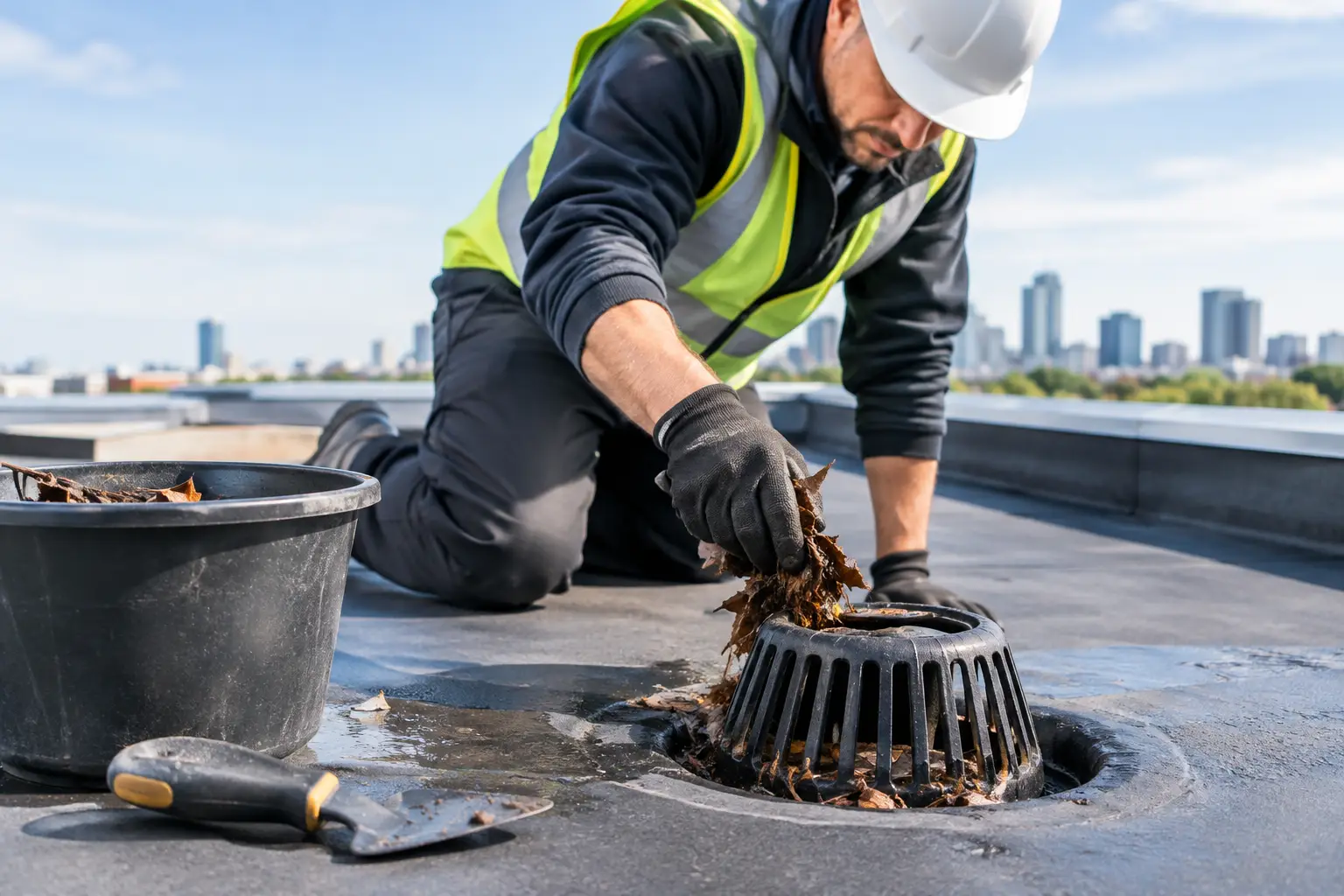

A blocked roof drain rarely looks urgent from ground level. By the time water stains appear on a top-floor ceiling or ponding water reaches a roof penetration, the building may already be dealing with membrane damage, interior disruption, and an avoidable repair bill. The best rooftop drainage maintenance practices focus on finding restrictions early, keeping water routes clear, and completing work safely on roofs that are often difficult to access.
For commercial and industrial properties, drainage maintenance is not a one-time cleaning task. It is a planned protection measure for the roof system, façade, equipment, tenants, and daily operations below.
Why rooftop drainage requires planned maintenance
A rooftop drainage system is designed to move rainwater away from the roof surface at a controlled rate. On a low-slope commercial roof, this may include internal drains, scuppers, gutters, downpipes, strainers, grates, sumps, and overflow routes. Each component depends on the others. A clear drain does little good if a downpipe is blocked, and a clean gutter can still overflow if its outlet is restricted.
Leaves, plastic packaging, construction dust, sediment, bird nesting material, and roof membrane fragments can collect quickly around drainage points. In areas with heavy rainfall, a short storm can expose a partial blockage that seemed harmless during dry weather. Water may back up beneath flashings, enter service penetrations, or overflow onto walkways and lower roof sections.
The operational cost is often greater than the roof repair itself. Water ingress can interrupt office work, damage stock or equipment, create slip hazards, and lead to urgent callouts at the worst possible time. Planned maintenance gives facility teams control over timing, access, and budget.
Best rooftop drainage maintenance practices for commercial sites
Inspect before and after severe weather periods
A routine inspection schedule should reflect the building’s surroundings, roof design, and weather exposure. Properties near mature trees, active construction sites, industrial operations, or busy roads usually need more frequent attention because debris and airborne dirt accumulate faster.
At minimum, inspect drainage points before a known heavy-rain period and again afterward. Pre-rain checks confirm that drains, gutters, scuppers, and overflow paths are open. Post-rain checks reveal ponding, slow drainage, displaced grates, and debris patterns that may not be visible in dry conditions.
For many commercial properties, quarterly inspections are a sensible starting point. A high-debris site or a roof with repeated drainage issues may require monthly checks during wetter periods. The right frequency depends on risk, not a generic calendar.
Clear drains, gutters, and outlets completely
Drainage maintenance should remove debris from the entire water path, not simply the visible material around a drain cover. Technicians should clear strainers and grates, inspect the drain bowl or sump, remove sediment from gutters, and check outlet connections where practical.
A common mistake is pushing debris toward a drain during general roof cleaning. This can create a compacted blockage inside the outlet or downpipe, where it is harder to identify and remove. Collected debris should be bagged and removed from the roof rather than washed into the drainage system.
Cleaning methods also matter. High-pressure water can be useful in certain systems, but careless use may damage joints, force water into vulnerable areas, or move sediment deeper into the pipework. The method should suit the roof material, drain configuration, and condition of the system.
Check for ponding water and drainage patterns
Standing water is one of the clearest signs that a roof needs attention. After rainfall, note where water remains after the expected drainage period. Ponding may result from a blocked drain, poor roof falls, a sunken area, inadequate drain capacity, or a damaged outlet.
Maintenance teams should not assume that clearing the nearest drain solves the problem. If ponding returns in the same location, the issue may be structural or related to the roof membrane. Repeated water retention accelerates deterioration, increases load on the roof surface, and can encourage algae growth.
Documenting these patterns helps building managers make better repair decisions. Photos, roof-zone references, and notes on weather conditions create a useful record when discussing remedial work with roofing or maintenance specialists.
Inspect overflow provisions and secondary drainage
Overflow scuppers, secondary drains, and emergency discharge routes are safeguards, not optional extras. They provide a visible path for water when the primary drainage system cannot cope with the volume or becomes blocked.
These components need the same attention as primary drains. Confirm that overflow openings are not obstructed by leaves, stored materials, paint buildup, or poorly placed equipment. If water is regularly leaving through an overflow route, treat it as a warning that requires investigation rather than proof that the system is working normally.
Keep rooftop equipment zones clear
Air-conditioning units, solar equipment, ductwork, pipe supports, and communications installations can make drainage access more difficult. They also create pockets where debris gathers and water flow changes. Service contractors may leave packaging, cable ties, fasteners, or insulation fragments behind, all of which can migrate toward drains.
Facility teams should keep defined access paths and drainage zones clear. Avoid placing stored materials, spare tiles, pallets, or maintenance waste near gutters, scuppers, and roof drains. Any contractor working on the roof should understand where the drainage points are and leave the area clean after work is completed.
Inspect the roof surface around drainage points
A clean drain does not guarantee a watertight roof. Examine the membrane, sealant, flashing, and protective layers around each drainage point for cracks, lifting edges, blisters, loose fasteners, corrosion, or signs of previous patching.
Drain bowls and scuppers are high-stress areas because they handle concentrated water flow. Small defects can become leak paths during prolonged rain. Early identification allows repairs to be scheduled before water reaches the building interior.
Safe access is part of the maintenance standard
Rooftop drainage work can involve unprotected edges, fragile roof surfaces, wet conditions, confined access points, and work near electrical or mechanical equipment. Sending untrained staff onto a roof with basic hand tools may create more risk than it removes.
A competent contractor should assess access before starting work. That includes roof entry points, fall-protection requirements, anchor locations, surface condition, weather, equipment handling, and safe debris removal. High-rise buildings may require specialized access planning where drainage components are located along parapets, façades, or difficult-to-reach gutter lines.
Work should be postponed when weather conditions make the roof unsafe. A blocked drain is a concern, but a rushed response during lightning, heavy rainfall, or strong winds can put people at unnecessary risk. The practical approach is to maintain the system proactively so emergency work is less likely.
Build a record, not just a maintenance invoice
Each visit should produce useful site information. A simple maintenance record should identify the areas inspected, drains and gutters cleaned, debris removed, visible defects, drainage concerns, photographs, and recommended follow-up actions.
This documentation helps facilities teams compare conditions over time. If one drain blocks repeatedly, the record can point to a nearby tree, roof deterioration, poor slope, or a recurring source of construction debris. It also supports budget planning by separating routine cleaning from repairs that require a larger scope of work.
For multi-building sites, labeling roof zones and drainage points is especially valuable. Clear naming reduces confusion when a leak report comes from a tenant or when a contractor needs to attend a specific area quickly.
When routine cleaning is not enough
Some warning signs call for further investigation rather than another basic cleanout. These include repeated interior leaks, water remaining on the roof long after rainfall, persistent overflow discharge, foul odors from drains, visible pipe damage, rust around outlets, or drainage failures after each major storm.
At that point, the issue may involve concealed downpipe obstructions, defective waterproofing, inadequate drainage design, or roof settlement. A site-specific assessment is the sensible next step. The scope may involve cleaning, testing, repair coordination, or a broader roof maintenance plan depending on what the inspection finds.
Urban Solutions Service Sdn. Bhd. supports commercial property teams with safe-access roof gutter and drainage maintenance for buildings where routine cleaning is not enough and access conditions demand experienced technicians.
A roof does not need to be visibly leaking to need attention. Treat drainage points as critical building assets, inspect them before they fail, and keep accurate records of what the roof is telling you. That disciplined approach protects the property long before the next heavy rain tests it.