

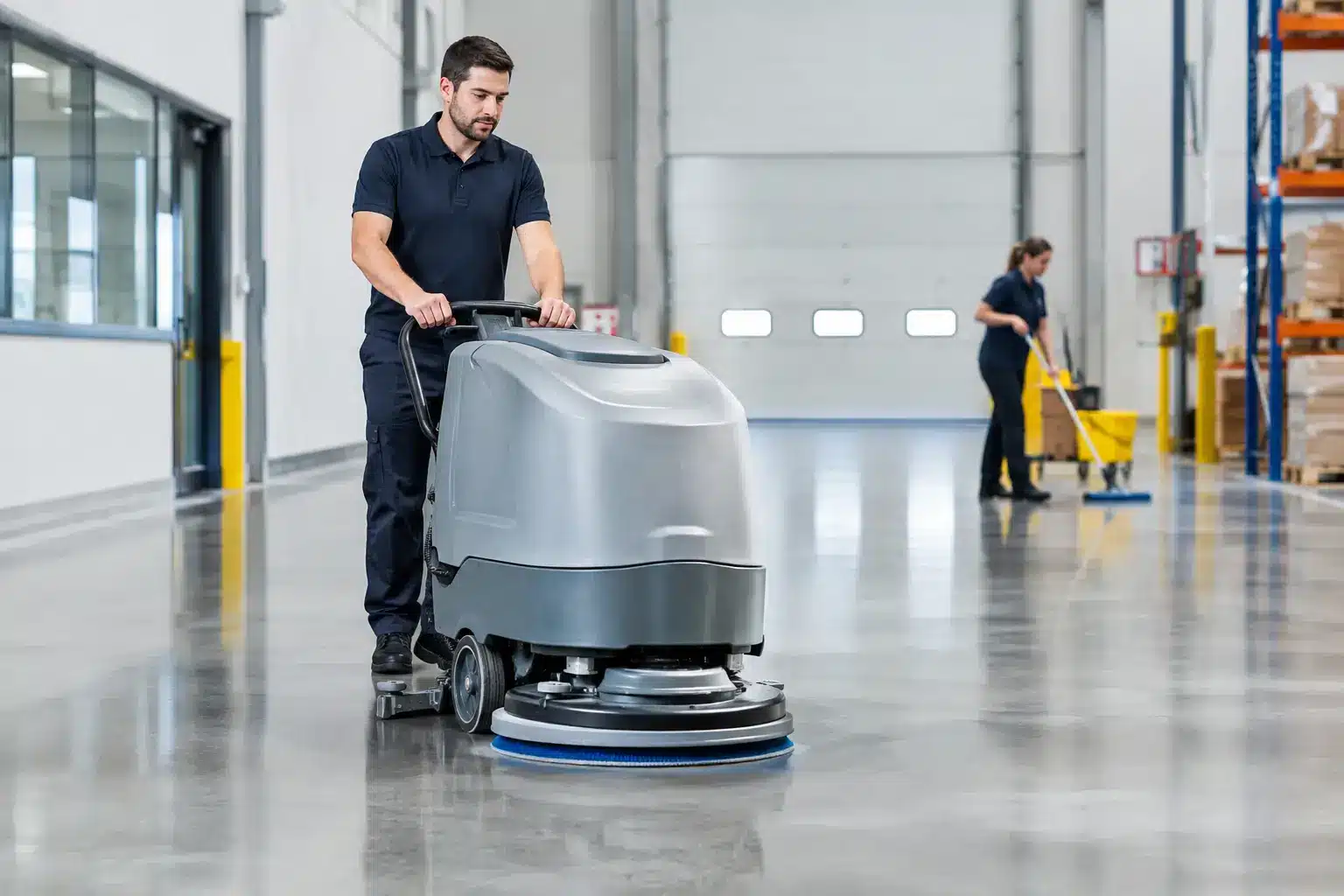

A warehouse floor can look clean after a quick pass with a mop while still holding fine dust, oil residue, tire marks, and slip hazards. For facility managers, the top industrial floor cleaning methods are not simply about appearance. The right method protects workers, supports inspections, reduces premature floor damage, and keeps daily operations moving without unnecessary downtime.
The best approach depends on the floor material, the type of contamination, the traffic level, drainage, and whether cleaning must happen around production or logistics activity. A distribution center with forklift traffic needs a different process from a food processing area, workshop, parking structure, or plant room. Selecting equipment first and assessing the site later often leads to poor results.
Top Industrial Floor Cleaning Methods for Facilities
Mechanical sweeping for dry debris control
Mechanical sweeping is usually the first line of defense in facilities affected by dust, sand, packaging waste, metal shavings, or tracked-in debris. Walk-behind and ride-on sweepers collect loose material far more efficiently than manual sweeping, particularly across large warehouse aisles and loading zones.
This method is most effective when used frequently. If dust and grit are left on the surface, vehicle tires grind them into concrete or coatings, creating abrasion and making later wet cleaning more difficult. Regular sweeping also limits airborne dust, which matters in storage areas, manufacturing spaces, and sites with sensitive equipment.
Sweeping alone will not remove oil films, bonded dirt, or old tire marks. It should be treated as the preparation stage before scrubbing, not a complete floor-cleaning solution where heavier contamination is present.
Auto scrubbing for routine deep cleaning
For many commercial and industrial facilities, auto scrubbing is the most practical method for routine floor care. A floor scrubber applies a controlled amount of cleaning solution, agitates the surface with brushes or pads, and recovers dirty water in the same pass. This leaves floors cleaner and drier than traditional mopping.
Auto scrubbing is well suited to sealed concrete, epoxy, vinyl, tile, and other smooth hard-floor surfaces. It performs particularly well in warehouses, factory walkways, corridors, common areas, and loading bays where dust, footprint traffic, and light vehicle residue build up over time.
The choice of brush, pad, and chemical matters. A pad that is too aggressive can dull or scratch a coated floor. A detergent that is too mild may leave oil behind, while an overly strong product can damage finishes or create rinse problems. For this reason, cleaning specifications should match the floor system and contamination type rather than relying on one standard chemical for every area.
Degreasing for workshops and maintenance areas
Workshops, machinery rooms, service bays, and industrial kitchens often require targeted degreasing. Hydraulic oil, lubricants, grease, and fuel residue create more than a visual problem. They can substantially increase slip risk and may affect drainage systems if handled carelessly.
A professional degreasing process begins by containing the affected area, applying a suitable industrial degreaser, allowing proper dwell time, and agitating the surface where needed. The loosened contamination is then recovered using a scrubber, wet vacuum, or controlled washdown process. Dirty water should never be pushed toward a drain without confirming site procedures and local disposal requirements.
For fresh spills, immediate spot treatment is more effective and less disruptive than waiting for a scheduled monthly clean. Facilities with recurring leaks should also address the source. Repeated degreasing can manage the symptom, but it cannot replace equipment maintenance.
High-pressure washing for exterior hard surfaces
High-pressure washing is useful for exterior concrete, loading aprons, parking decks, ramps, bin areas, service corridors, and other surfaces exposed to weather, mud, algae, tire residue, and accumulated grime. It can restore a visibly cleaner surface quickly, especially in hard-to-reach outdoor zones.
However, pressure washing is not appropriate for every floor. Excessive pressure can damage weakened concrete, force water into joints, disturb coatings, or spread contaminated runoff. It also creates a significant slip risk until the area dries. The method works best when pressure settings, nozzles, water volume, and runoff control are planned for the specific surface.
On heavily soiled exterior areas, pre-treatment with a compatible cleaner and mechanical agitation can improve results. Pressure alone may remove loose dirt while leaving an oily film behind.
Steam cleaning for hygienic and sensitive zones
Steam cleaning uses high-temperature vapor to loosen grime and sanitize selected hard surfaces with limited chemical use. It is valuable in areas where hygiene matters, such as food-related operations, laboratories, healthcare support spaces, and washrooms. It can also reach edges, joints, and equipment-adjacent surfaces that larger machines cannot access easily.
Steam is not a replacement for floor scrubbing across a large warehouse. It is slower and less productive over broad square footage. It is best used as a targeted method for detailed cleaning, sanitation support, or stubborn soil in confined areas.
Before using steam, confirm that the floor coating, adhesive, grout, and surrounding equipment can tolerate heat and moisture. Poorly bonded finishes or sensitive electrical installations require a more controlled approach.
Wet vacuum recovery and spill response
Wet vacuuming is essential whenever cleaning produces wastewater or when a spill needs rapid containment. It removes liquid from low points, corners, drains, and areas that scrubbers cannot reach. In industrial settings, fast recovery is often what separates a controlled cleaning task from a slip incident or operational interruption.
For spill response, trained personnel should first identify the substance and its hazards. Water may spread some chemicals or make a reaction worse. Absorbent materials, containment tools, personal protective equipment, and approved disposal procedures should be available before a spill occurs, not assembled afterward.
Match the Method to the Floor Material
Concrete floors are durable, but unsealed concrete absorbs oils and stains quickly. Routine sweeping and scrubbing prevent grit from wearing the surface, while dedicated degreasing is needed for oil-prone areas. Older concrete may need lower-pressure cleaning and careful chemical selection to avoid exposing weak sections.
Epoxy and polyurethane floors are easier to maintain but can lose gloss or suffer surface damage when treated with abrasive pads, harsh solvents, or incorrect cleaners. Neutral or manufacturer-approved detergents, soft to medium brushes, and controlled auto scrubbing are generally the safer choice.
Textured safety floors require enough agitation to lift dirt from the profile, but they can hold cleaning solution if water recovery is inadequate. Tile and grout may require periodic detailed cleaning because soil collects in joints even when the tile face looks acceptable.
A small test area is a sensible precaution when the floor type, coating condition, or chemical compatibility is uncertain. It is faster than repairing a damaged finish across an active facility.
Plan Cleaning Around Operations and Safety
The cleaning method is only half the decision. Timing, access control, and drying time determine whether the work can be completed safely. A ride-on scrubber may be ideal for a large open warehouse, but it is not practical in narrow aisles during peak picking hours. Likewise, pressure washing may be effective outside, but the area needs barriers, runoff management, and sufficient time to dry before vehicles return.
A practical industrial floor program often combines daily sweeping, scheduled auto scrubbing, immediate spill response, and periodic intensive cleaning for high-soil zones. The right frequency depends on traffic, weather exposure, production residue, and the level of cleanliness required for the operation.
High-risk locations deserve extra attention. Loading docks, entrances, ramps, forklift turning points, waste handling areas, and machine perimeters usually soil faster than the rest of the floor. Cleaning every square foot to the same frequency can waste labor while leaving the most hazardous areas under-serviced.
Professional cleaning teams should also work with clear site controls: warning signs, restricted work zones, appropriate personal protective equipment, equipment checks, and documented chemical use. For larger or complex facilities, a site assessment helps determine access routes, water availability, drainage limitations, floor condition, and the most suitable machine size before work begins.
A clean industrial floor should support the way your facility operates, not interrupt it. Start with the contamination and the floor condition, then choose a method that delivers safe, recoverable results within your operating window.