

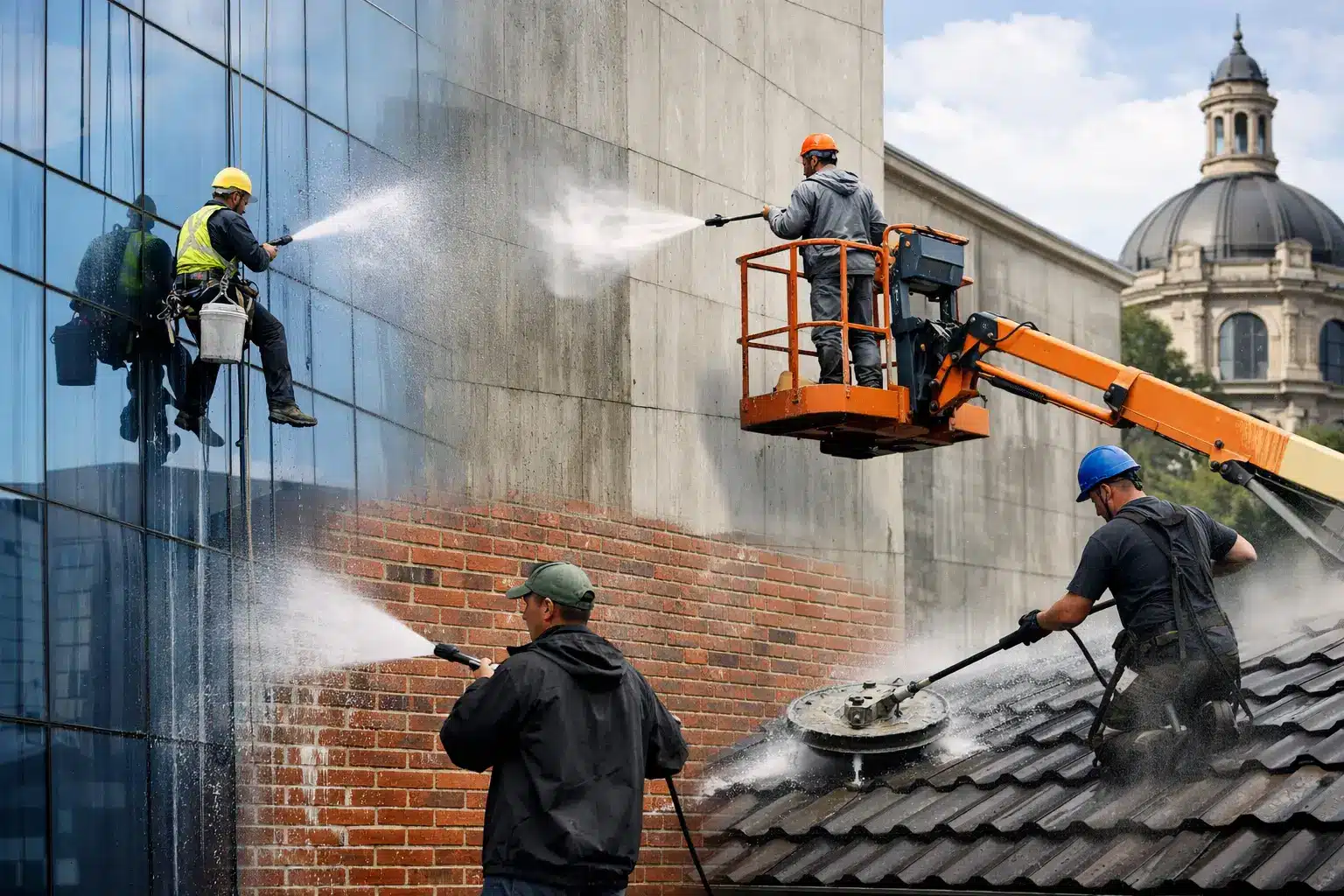

A stained facade, blocked gutter, or dirt-streaked glass does more than make a building look neglected. It can shorten material life, create safety issues, and turn routine maintenance into a larger repair bill. For commercial properties, the best exterior cleaning methods are not just about appearance. They are about choosing the right process for the surface, the height, the access conditions, and the level of contamination.
For property managers and facilities teams, that choice matters. Use too much pressure on the wrong surface and you can damage coatings, force water into joints, or leave etched marks behind. Use a method that is too light and the building still looks dirty a week later. The right cleaning plan balances results, safety, access, and long-term building care.
What the best exterior cleaning methods depend on
There is no single method that works for every commercial building. A low-rise office with painted walls and standard windows has very different cleaning needs from a high-rise tower with curtain wall glazing, aluminum cladding, rooftop drainage issues, and hard-to-reach facade sections.
The best approach usually depends on five factors: the surface material, the type of dirt or staining, the height of the building, site access, and how sensitive the surrounding area is to water, chemicals, or disruption. In active commercial environments, cleaning also needs to fit around tenant movement, parking areas, loading zones, and business hours.
That is why experienced contractors typically assess the site first. A proper site visit helps determine whether the job needs high-pressure cleaning, soft washing, rope access, water-fed pole systems, manual detailing, or a combination of methods.
1. Soft washing for delicate exterior surfaces
Soft washing is one of the best exterior cleaning methods when the surface is painted, coated, sealed, or otherwise vulnerable to damage from high pressure. It uses low-pressure water combined with suitable cleaning agents to break down organic growth, dirt, and surface staining.
This method works well on painted facades, coated walls, signage areas, exterior decorative panels, and some types of cladding. It is especially useful where mold, algae, and general grime are the main issue rather than heavy mineral buildup or thick grease.
The advantage is control. Soft washing cleans effectively without stripping paint or damaging sealants when handled correctly. The trade-off is that it may not be enough for deep staining, cement residue, or heavy industrial deposits. In those cases, a stronger method or targeted spot treatment may be needed.
2. High-pressure washing for durable hard surfaces
For concrete, certain masonry areas, loading bays, external walkways, and other hard-wearing surfaces, high-pressure washing is often the fastest and most effective option. It removes built-up dirt, mud, traffic marks, bird droppings, and surface contaminants that lighter washing methods cannot shift.
On commercial sites, this method is commonly used for service yards, perimeter pavements, exterior walls with durable finishes, and parking structures. It is practical, efficient, and well suited to larger ground-level areas where water runoff can be managed properly.
That said, pressure washing is not automatically the best choice for every exterior surface. Too much force can scar render, damage aging mortar, loosen fittings, or drive water behind facade elements. Pressure levels, nozzle type, spray angle, and operator experience all make a difference. For building exteriors, pressure should be matched to the surface rather than treated as a one-size-fits-all solution.
3. Water-fed pole cleaning for glass and low-to-mid-rise access
For external windows and glass panels that can be reached safely from the ground or from accessible levels, water-fed pole systems are an efficient solution. These systems use extendable poles and purified water to clean glass without leaving mineral streaks.
This method is ideal for office buildings, retail fronts, showrooms, schools, and commercial blocks where access is possible without lifts or rope systems. It allows cleaning crews to cover a lot of glass quickly while minimizing disruption around the building.
The main benefit is efficiency and safety at moderate heights. The limitation is reach and precision. Once buildings become taller or architectural details become more complex, water-fed poles may no longer deliver the control needed for edges, recessed glazing, or heavily soiled areas. At that point, elevated access or rope access becomes more suitable.
4. Rope access cleaning for high-rise facades and windows
On high-rise buildings, rope access is often one of the best exterior cleaning methods because it combines reach, flexibility, and reduced setup requirements. Skilled technicians descend the building using specialized access systems to clean windows, facade panels, and difficult exterior sections that are not practical to reach with standard equipment.
This method is particularly valuable on towers, buildings with limited ground space, structures with architectural setbacks, and sites where swing stages or large machinery would be inefficient. Rope access also works well for targeted cleaning in isolated areas, such as stained panels, upper glazing, or facade sections above podium roofs.
The benefit is access to places that other systems cannot reach efficiently. The trade-off is that this is specialist work. It requires trained technicians, strict safety procedures, planning, and weather awareness. For commercial property owners, that means choosing a contractor with genuine high-rise experience rather than treating rope access as a basic cleaning service.
5. Facade cleaning tailored to cladding type
Facade cleaning is not one method. It is a category that includes different techniques depending on whether the building has glass, aluminum composite panels, stone, render, metal, or painted concrete. Each material responds differently to water pressure, agitation, and cleaning chemicals.
For example, aluminum and coated panels may need gentle washing and careful stain treatment to avoid surface dulling. Stone can require low-pressure cleaning with the right detergent to remove atmospheric staining without affecting the finish. Painted concrete may need a more controlled approach to avoid patchiness or coating damage.
This is where many cleaning problems start. A facade may look durable from a distance, but the wrong process can leave permanent marks. The best exterior cleaning methods for facades are material-specific, and they should be selected after checking both the visible finish and the age or condition of the surface.
6. Gutter and roof-edge cleaning to prevent bigger issues
Exterior cleaning should not stop at what tenants and visitors can see from the front. Gutters, roof edges, downpipes, and drainage paths are critical maintenance points. When they are blocked by leaves, sludge, or debris, water overflows can stain walls, damage roof lines, and create internal leak risks.
For commercial and industrial properties, gutter cleaning is part of preventive building care. It helps protect facade appearance, reduces water-related deterioration, and supports proper drainage during heavy rain. In Malaysia’s climate, this is especially relevant because intense rainfall can turn a minor blockage into an operational issue quickly.
The method used depends on roof access, building height, and debris volume. Some jobs can be handled through manual removal and flushing. Others may require vacuum systems, elevated access, or rope-supported work near roof edges. What matters is that the cleaning is thorough and safe, not rushed as an afterthought.
7. Confined and hard-to-access exterior area cleaning
Some of the most neglected exterior sections are not high up. They are hidden in service zones, narrow voids, plant areas, canopies, ledges, and confined access points where dirt accumulates and standard crews cannot work effectively. These areas often affect drainage, hygiene, and the overall condition of the building envelope.
Cleaning these sections may involve manual detailing, specialized tools, controlled washing, or confined-space procedures depending on the environment. This is less visible work, but it matters in commercial buildings where maintenance teams need the whole site functioning properly, not just the front elevation looking clean.
In practice, these jobs usually require a contractor that can combine cleaning capability with access planning. That is often more useful than hiring separate vendors for each hard-to-reach issue.
How to choose the right method for your property
The right method starts with the building, not the equipment. If the main problem is organic staining on coated surfaces, soft washing may be the best fit. If the issue is ground-level grime on concrete or service yards, pressure washing may be more effective. If the property is a high-rise with limited access and visible facade buildup, rope access and facade-specific cleaning are usually the better choice.
Cost also depends on more than square footage. Height, access restrictions, labor intensity, risk controls, and site conditions all affect the quotation. A lower quote is not always better if it leaves out the access method, water management, safety planning, or the level of detailing needed for a commercial result.
For many building managers, the most practical route is a site inspection with a contractor that understands exterior cleaning as part of building maintenance, not just surface washing. Urban Solutions Services Sdn Bhd works this way on commercial and industrial properties, especially where facade access, high-rise work, and technically difficult cleaning conditions are part of the job.
Site teams should align their risk controls with Malaysia’s Occupational Safety and Health Act when planning the work.
For a site-specific scope, review our high-rise window cleaning services and arrange an assessment before confirming access, timing and cost.
A clean exterior does more than improve first impressions. It protects assets, reduces avoidable deterioration, and makes the rest of your maintenance plan easier to manage when the right method is used from the start.