

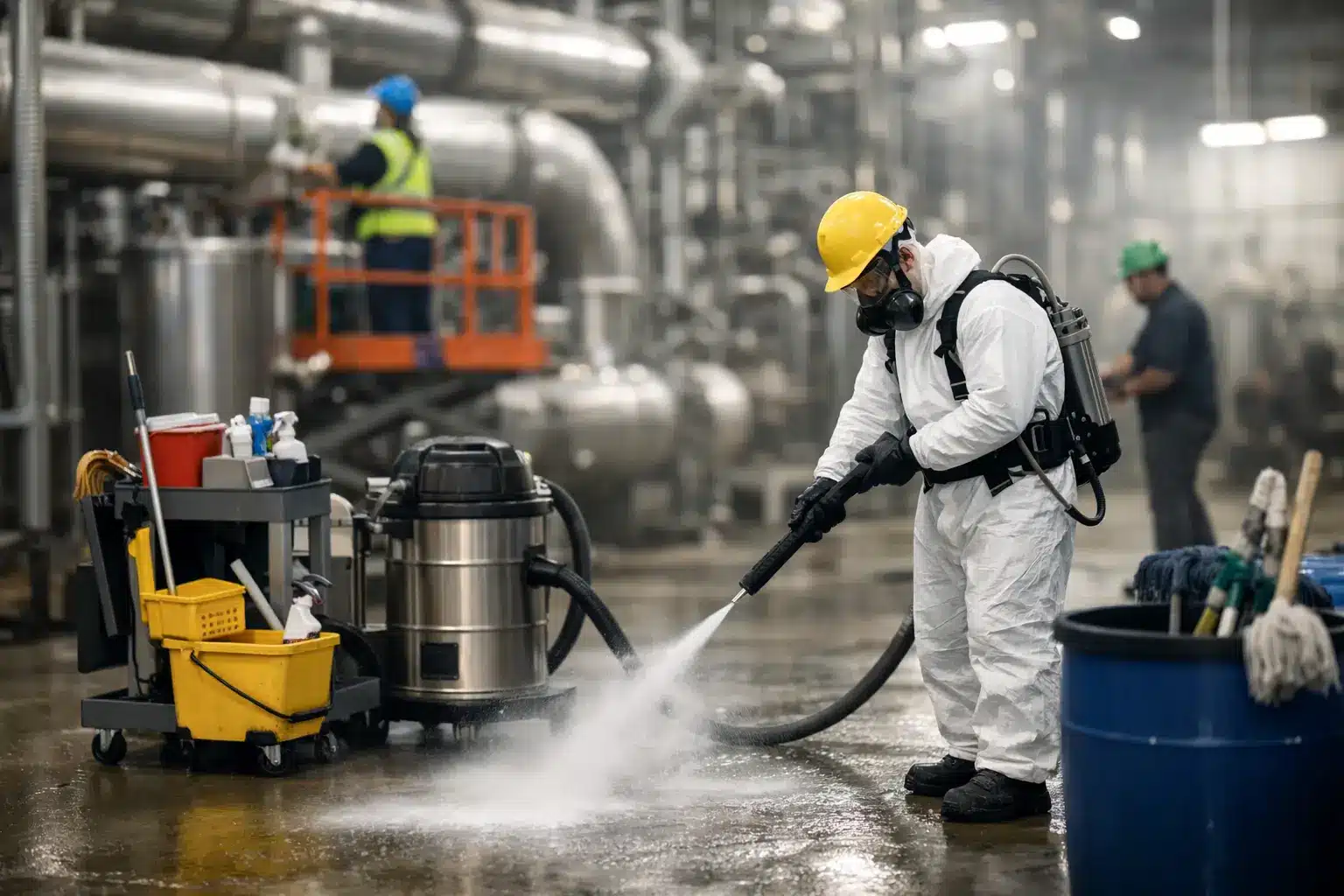

A loading bay stained with oil, a dust-covered production ceiling, and blocked roof gutters are not three separate housekeeping issues. They are part of one industrial cleaning scope that must be planned around risk, access, operations, and the condition of the building. For facility managers, the goal is not simply to make a site look clean. It is to keep work areas safe, protect assets, and complete demanding maintenance work without disrupting the business.
Industrial sites often have areas that standard cleaning crews cannot safely or effectively reach. Elevated steelwork, high windows, exterior facades, rooflines, tanks, ducts, confined areas, and machinery zones each require different methods, equipment, and controls. A clear scope turns a vague request for “cleaning” into a workable plan with defined outcomes.
What Does an Industrial Cleaning Scope Include?
An industrial cleaning scope defines the areas to be serviced, the level of cleaning required, the access method, the work schedule, and the safety measures needed before work begins. It should also establish what is excluded, particularly where production equipment, electrical systems, hazardous materials, or restricted spaces are involved.
The right scope depends on the facility. A warehouse may require high-level dust removal, roller shutter cleaning, floor degreasing, and roof gutter maintenance. A commercial tower with industrial-grade exterior requirements may need facade washing, rope-access window cleaning, canopy cleaning, and drainage inspections. A manufacturing site may require cleaning around machinery only during a planned shutdown.
The difference matters because the labor, time, equipment, and site controls change with every condition. Treating all cleaning work as routine janitorial service can leave difficult areas untouched or introduce unnecessary safety risk.
Define the Cleaning Objective First
Start with the reason for the work. Is the priority to remove accumulated grime before an audit, reduce slip hazards, restore a building exterior, prepare surfaces for painting, or prevent water damage from blocked gutters? The objective determines the cleaning method and acceptable result.
For example, a facade may only need a maintenance wash to remove dust and rain marks. If it has algae growth, traffic film, mineral deposits, or paint staining, a more intensive treatment may be needed. Similarly, a floor that looks dirty may require basic scrubbing, while an oil-contaminated surface may need degreasing and controlled wastewater handling.
A professional contractor should clarify the expected finish before quoting. Terms such as “clean,” “spotless,” and “deep clean” can mean different things to different teams. Clear expectations prevent disputes after the work is completed.
Key Areas to Assess in an Industrial Cleaning Scope
A site walk-through is the most reliable way to build an accurate scope. Photographs are useful, but they rarely show access restrictions, surface condition, active work zones, or overhead hazards. During a site assessment, the contractor should examine the full work environment rather than pricing only by floor area.
The most important factors usually include:
- The surfaces and contaminants involved, such as dust, grease, mold, algae, chemical residue, soot, or construction debris.
- The working height and access conditions, including rooftops, suspended platforms, boom lifts, rope access, ladders, or restricted internal routes.
- Site operations, including delivery schedules, production hours, tenant activity, vehicle movement, and shutdown windows.
- Safety requirements, such as fall protection, exclusion zones, permits, lockout procedures, confined-space controls, and emergency access.
- Water supply, drainage, waste collection, and whether runoff needs to be contained or disposed of through a defined process.
These details affect both the price and the method. A low-rise exterior with open access may be completed quickly using water-fed poles or mobile equipment. The same surface on a high-rise building, above public walkways or beside active tenants, may require certified rope-access technicians, ground barricades, permits, and a more controlled work schedule.
Access Is Often the Deciding Factor
In high-risk cleaning projects, access is not an afterthought. It is often the main consideration. A contractor must determine how technicians will reach the work area, secure themselves, move equipment, and protect people below.
Options may include rope access, mobile elevated work platforms, building maintenance units, scaffolding, water-fed pole systems, or manual work from safe internal access points. No one method is right for every building. Rope access can be efficient where ground space is limited and facade geometry is complex. A boom lift may be practical for lower elevations with sufficient vehicle access. Scaffolding can suit longer-duration repair and painting work but may affect site traffic and require more setup time.
The best choice balances safety, productivity, building protection, and operational impact. It also needs to account for weather. High winds, lightning, heavy rain, and slippery roof surfaces can stop exterior work, so a realistic scope should allow for safe rescheduling when conditions change.
Cleaning Methods Must Suit the Surface
Industrial cleaning should remove contaminants without damaging the surface underneath. This is especially important for glass, coated metal panels, painted facades, roof membranes, natural stone, sealed floors, and sensitive equipment housings.
Pressure washing may be effective on durable concrete, external walkways, and selected hard surfaces. Used incorrectly, it can force water into joints, strip coatings, damage seals, or spread contaminated runoff. Chemical cleaning can be useful for grease, mineral buildup, or biological growth, but the product must suit the substrate and be applied under controlled conditions. Mechanical scrubbing, vacuum recovery, low-pressure washing, manual detailing, and dry dust removal each have a place depending on the job.
For facilities with electrical panels, machinery, or active production lines, cleaning boundaries must be clearly marked. Technicians need to know which areas can be washed, which require dry methods, and which must be isolated by the client before work starts. This protects equipment and keeps responsibility clear.
Plan Around Safety and Site Operations
A strong scope protects the facility as well as the cleaning crew. Before work begins, the contractor should establish a work plan that addresses access, technician competency, personal protective equipment, public protection, equipment inspection, and emergency procedures.
For exterior and high-level work, ground-level controls are just as important as work-at-height controls. Pedestrian routes, parking spaces, loading areas, and entrances may need temporary barriers or scheduled closures. If cleaning takes place above an active roadway, retail entrance, or warehouse dispatch zone, timing becomes a major operational decision.
Confined spaces require additional care. Tanks, pits, ducts, service shafts, and enclosed utility areas can present risks related to restricted entry, poor ventilation, hazardous gases, or difficult rescue conditions. These tasks should never be added casually to a general cleaning request. They need a separate assessment, appropriate permits, trained personnel, and a defined rescue arrangement.
For occupied commercial properties, communication is part of the scope. Building management should know when work will occur, which zones will be affected, where access equipment will be positioned, and whether noise or temporary route changes are expected. Clear coordination reduces complaints and avoids last-minute delays.
How to Make the Scope Easier to Quote
An accurate quote requires enough detail to price the work responsibly. Facility teams can speed up the process by sharing the building address, approximate dimensions, number of levels, affected areas, site photographs, access limitations, operating hours, and any known hazards. It also helps to state whether the request is a one-time project, a pre-handover clean, emergency response, or scheduled maintenance.
A free site visit is particularly valuable for high-rise facades, roof gutters, difficult internal areas, and sites with limited access. It allows the contractor to verify measurements, inspect surface conditions, identify safe equipment positioning, and confirm whether extra labor or specialized access systems are required.
Price should not be assessed by square footage alone. Two buildings with the same facade area can require very different resources if one has open perimeter access and the other has narrow service lanes, landscaped setbacks, overhead obstructions, or active public areas. The quotation should reflect the actual work conditions, not just the visible size of the job.
Set a Maintenance Frequency That Matches the Site
The right cleaning frequency depends on exposure and use. Facilities near busy roads, construction activity, coastal conditions, or heavy industrial activity may need more frequent exterior maintenance than sheltered properties. Roof gutters should be inspected before prolonged rainy periods, while high-level dust can require scheduled attention where warehouse operations or ventilation systems create ongoing buildup.
Planned maintenance is usually easier to manage than emergency cleaning. Regular visits help identify blocked drainage, deteriorating paint, stained facades, and access issues before they become larger repair costs. They also allow the same contractor to understand the site and work more efficiently over time.
Site teams should align their risk controls with Malaysia’s Occupational Safety and Health Act when planning the work.
For a site-specific scope, review our commercial cleaning services and arrange an assessment before confirming access, timing and cost.
For technically demanding properties in Kuala Lumpur, Selangor, Penang, and Johor, Urban Solutions Services Sdn Bhd can assess the work conditions directly and recommend an approach that fits the building, access requirements, and operating schedule. The most useful next step is a site-specific discussion: define the areas that matter most, identify the risks early, and build a cleaning plan that keeps your facility presentable, protected, and ready for daily operations.