

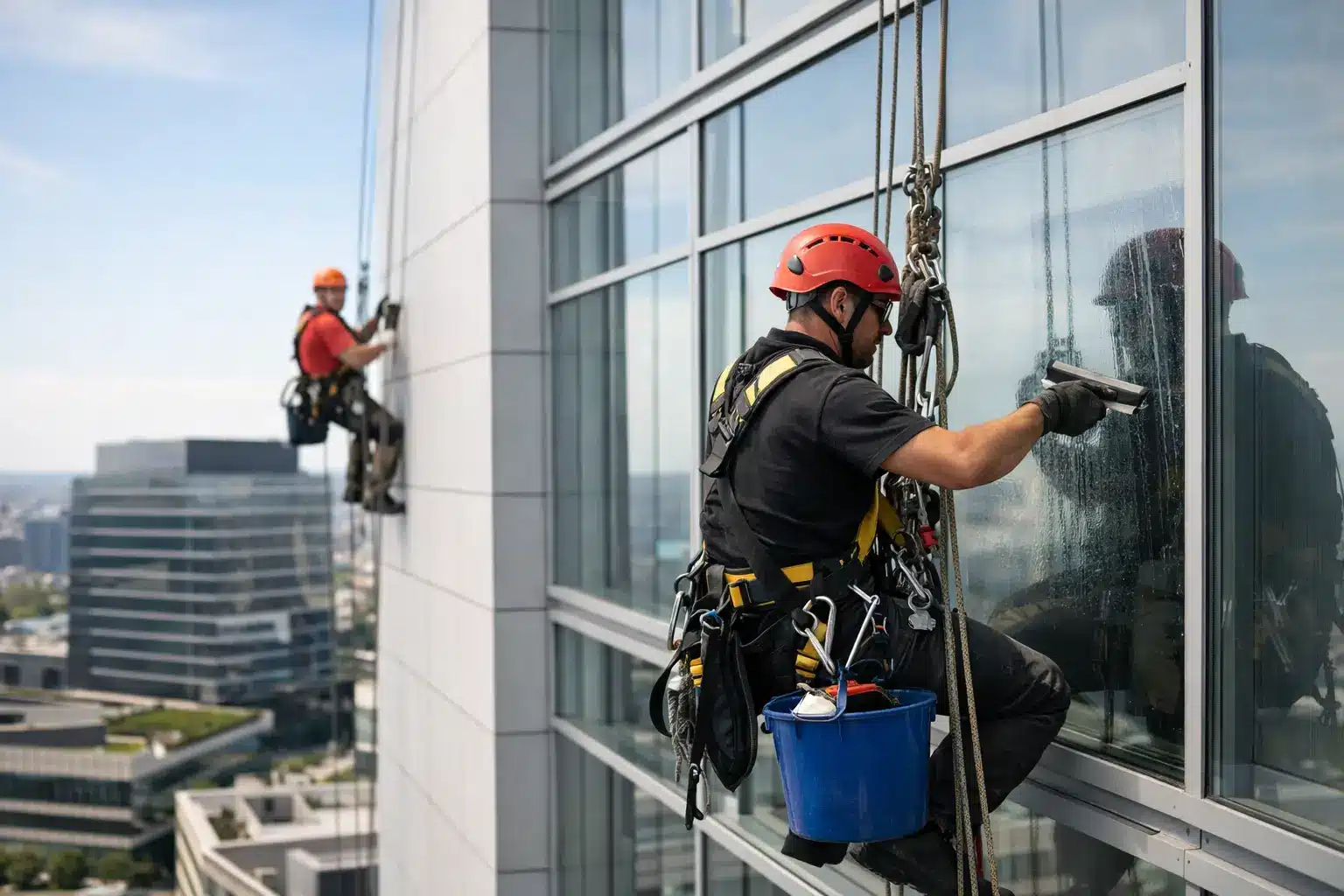

A stained glass façade, blocked roof gutter, or neglected expansion joint can become a costly building issue long before it is visible from ground level. Rope access contractors give property teams a practical way to reach these areas without turning every maintenance task into a major access project. For commercial buildings, industrial sites, and high-rise properties, the right contractor brings trained people, controlled access methods, and a clear plan for getting difficult work done safely.
When Rope Access Is the Right Access Method
Rope access is a work-positioning method that allows trained technicians to descend, ascend, and work from ropes while secured by independent safety systems. It is commonly used where a work area is elevated, restricted, or difficult to reach with standard ladders, scaffolding, or lifting equipment.
For a building manager, the value is not simply that technicians can work at height. It is that many exterior cleaning and maintenance tasks can be completed with less setup time, a smaller ground footprint, and less disruption to occupants, visitors, traffic flow, and daily operations.
This approach is often suitable for high-rise window cleaning, façade washing, exterior painting touch-ups, gutter cleaning, roof-edge inspections, sign cleaning, and maintenance around architectural features. It can also support work in selected confined or restricted-access areas when the site conditions and scope allow it.
Rope access is not the answer to every job. Large-scale repairs that require heavy materials, extended work platforms, or significant demolition may be better suited to scaffolding, a boom lift, a building maintenance unit, or another engineered access solution. A dependable contractor should recommend the method that fits the work, rather than forcing every scope into a rope-based approach.
What Professional Rope Access Contractors Should Deliver
High-risk access work should never be treated as an add-on to ordinary cleaning. The contractor must be able to evaluate the building, define the work area, plan access and rescue arrangements, and manage the job from setup through closeout.
A professional team starts with a site assessment. This includes reviewing building height, roof access, anchor locations, façade condition, obstructions, pedestrian areas, weather exposure, and the condition of the surfaces being cleaned or maintained. For occupied commercial properties, the team should also consider tenant schedules, delivery routes, public entrances, parking access, and noise restrictions.
The site visit is where an accurate scope takes shape. A quote based only on exterior photographs may overlook practical issues such as limited roof access, weak water pressure, fragile cladding, restricted loading zones, or sections that require alternative access. These details affect labor, equipment, timing, and the safest way to complete the work.
Qualified technicians should use inspected equipment appropriate to the assignment. Depending on the site, this may include ropes, harnesses, backup safety lines, edge protection, descenders, helmets, rigging hardware, communication equipment, barricades, and fall-protection systems. The equipment matters, but competence in rigging, positioning, and monitoring conditions matters just as much.
Safety Is a Working System, Not a Checklist
Commercial buyers often ask whether a contractor is insured or trained. Those are necessary questions, but they should lead to a broader discussion about how the work will be controlled on site.
A proper rope access plan addresses the full working environment. Technicians need safe roof entry and exit points, suitable anchor arrangements, protection where ropes pass over edges, a managed drop zone below, and a practical rescue plan. Ground-level controls are equally important. A small tool dropped from height can create a serious hazard, so exclusion zones, tool tethering, signage, and active supervision cannot be overlooked.
Weather also changes the risk profile. High winds, lightning, heavy rain, and poor visibility may require work to pause or be rescheduled. That can be inconvenient when a property has a deadline, but continuing in unsuitable conditions is not efficient or professional. Reliable contractors communicate early, explain the impact on the schedule, and return when conditions support safe execution.
The building itself must be treated carefully. Incorrect rigging or abrasive cleaning methods can damage roof membranes, sealants, coatings, glazing, and façade finishes. Contractors should understand the difference between removing surface dirt and causing permanent damage while trying to remove it.
The Importance of a Controlled Work Zone
At ground level, rope access work affects more than the technicians on the ropes. Office staff, shoppers, visitors, delivery drivers, and security personnel may move through the area below throughout the day.
The work zone should be clearly controlled before any external work begins. Depending on the site, that can involve rerouting pedestrians, reserving a section of parking, coordinating with building security, or scheduling work outside peak entry times. Good access planning protects the public while helping the building remain operational.
Cleaning and Maintenance Benefits Beyond Appearance
A clean façade makes a strong first impression, but regular exterior access work also helps property teams identify defects earlier. During window cleaning or façade washing, experienced technicians may notice loose sealant, damaged panels, blocked drainage points, corrosion, staining patterns, or water intrusion concerns that are difficult to identify from the ground.
That visibility can support better maintenance decisions. A small leak around a façade joint or a gutter filled with debris may appear minor, yet both can lead to staining, dampness, material deterioration, and more expensive repair work if left unresolved.
Rope access also allows maintenance to be targeted. Instead of mobilizing a large access system for a localized issue, a trained team may be able to inspect, clean, seal, or report on the affected area with a more focused setup. The final cost still depends on height, access conditions, labor, scope, and safety controls, but the method can reduce unnecessary disruption for the right kind of job.
How to Evaluate Rope Access Contractors
Price matters, especially for recurring building maintenance. However, the lowest quote can become expensive if it excludes essential safety controls, assumes unrealistic access conditions, or leaves the facility team managing site coordination that should be handled by the contractor.
Ask potential contractors how they will access the work area, what they need from the building, how they will protect people and property below, and what happens if weather interrupts the job. Their answers should be specific to your site. General assurances are not a substitute for a workable plan.
It is also worth clarifying the actual deliverables. For window and façade cleaning, confirm the surfaces included, the cleaning method, water availability, stain limitations, and whether difficult corners, ledges, or architectural features are part of the scope. For maintenance work, define whether the contractor is inspecting, cleaning, repairing, applying a treatment, or reporting defects for follow-up.
A clear quotation should reflect the real complexity of the property. Building height, total work area, roof configuration, access restrictions, surface condition, manpower, project duration, and required traffic or pedestrian controls all influence the final price. Comparing proposals is easier when each contractor has inspected the site and stated these assumptions clearly.
Questions Worth Raising Before Work Starts
Before approving a project, facility teams should confirm the proposed work dates, access requirements, point of contact, tenant or security coordination, and expected completion standard. They should also establish how changes will be handled if the team finds additional staining, damaged materials, blocked drains, or access restrictions that were not visible during the initial assessment.
This conversation prevents misunderstandings. It also gives the contractor time to organize the right equipment and manpower instead of making improvised decisions once technicians are on site.
Planning Recurring Exterior Maintenance
Exterior cleaning is often scheduled only when a building begins to look visibly neglected. A reactive approach can work for isolated issues, but it is rarely the most efficient way to manage a high-rise or large commercial property.
A planned schedule allows building teams to coordinate cleaning around leasing events, inspections, seasonal rain, tenant activity, and budget cycles. Window cleaning intervals depend on the building’s location, exposure to traffic dust, nearby construction, landscaping, and the level of appearance expected by occupants and visitors. Gutters and roof drainage should be checked before heavy-rain periods, particularly where leaves, debris, and rooftop sediment can accumulate.
For properties across Kuala Lumpur, Selangor, Penang, and Johor, local conditions can vary significantly from one site to another. A tower beside a busy roadway may need more frequent façade attention than a sheltered office block, while an industrial site may need a different cleaning approach because of dust, residue, or operational constraints.
Urban Solutions Services Sdn Bhd approaches high-risk cleaning and maintenance as a site-specific service, not a standard janitorial task. The practical starting point is a site visit that identifies the access method, work scope, safety controls, and scheduling requirements before the team begins work.
Where the work involves roof or elevated access, property teams should also review DOSH guidance on working at height when planning access, supervision and fall-prevention controls.
In practice, rope access contractors works best when the scope, access method and maintenance schedule are agreed before mobilisation.
A building does not need to wait for visible deterioration to address hard-to-reach areas. A timely assessment can turn an uncertain maintenance issue into a controlled scope, clear quotation, and work plan that keeps the property presentable and protected.