

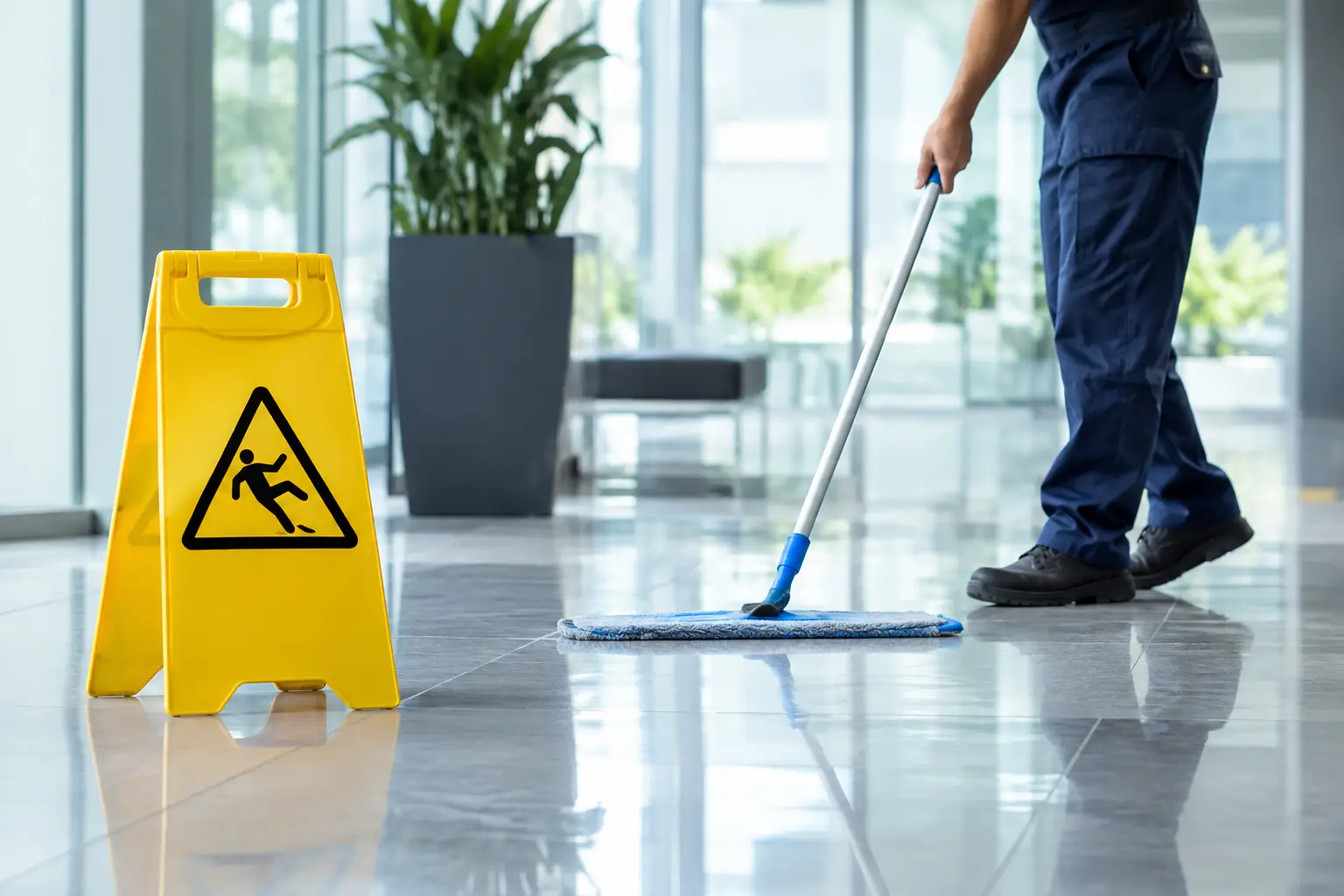

A wet lobby entrance after rain, oil near a loading bay, or fine dust on a warehouse walkway can turn an ordinary floor into an incident waiting to happen. Can clean floors improve safety? Yes, when cleaning is planned around the actual risks of the site rather than treated as a purely visual task. For commercial and industrial properties, clean floor conditions help reduce slip, trip, and fall hazards while making the workplace easier to manage.
A clean floor is not automatically a safe floor. The method, timing, products, drying process, and follow-up inspection all matter. Facility teams get the best results when floor care is part of their safety routine, especially in busy entrances, restrooms, kitchens, production areas, corridors, and external access routes.
How Clean Floors Improve Safety
Floor contamination changes traction. Water, grease, mud, dust, food waste, chemical residue, and loose debris can reduce the grip between footwear and the floor surface. Even small amounts can be enough to cause a person to slip, particularly when they are carrying materials, turning a corner, or moving quickly through a crowded space.
Regular commercial cleaning removes these contaminants before they build up. It also makes hazards easier to see. A clean, well-maintained floor gives supervisors and cleaning teams a clearer view of leaks, cracks, uneven joints, peeling coatings, damaged floor mats, and other conditions that need repair.
There is also an operational benefit. Dirty floors often spread contamination from one area to another through footwear, trolley wheels, and equipment. In offices, that may mean wet footprints across a reception area. In industrial settings, it can mean dust or oil being carried into work zones where workers need stable footing and clean processes.
Cleaning prevents buildup, not every hazard
Cleaning is a control measure, not a substitute for maintenance. A polished floor may still be unsafe if it has loose tiles, poor drainage, inadequate lighting, or a surface finish that is unsuitable for the activity taking place. Likewise, a floor can become slippery immediately after cleaning if excess water or the wrong chemical is used.
The goal is not simply to make a surface look spotless. It is to keep the floor clean, dry where appropriate, clearly managed, and fit for the people and equipment using it.
The High-Risk Areas That Need More Attention
Not every part of a property requires the same cleaning frequency. A boardroom carpet and a main entrance experience very different traffic, weather exposure, and spill risk. Effective floor safety begins with identifying the areas where contamination is most likely and where a fall would have the greatest consequence.
Entranceways deserve close attention because rainwater, dirt, and leaves are brought in throughout the day. During wet weather, cleaning teams may need to inspect and dry these areas more often, replace saturated mats, and place warning signs while work is underway.
Restrooms, pantries, kitchens, and beverage stations require fast spill response. Water around sinks, soap residue, dropped food, and cleaning chemicals can quickly create slick surfaces. These areas should have clear reporting procedures so a spill is not left for the next scheduled cleaning round.
In warehouses, workshops, loading bays, and plant rooms, the risks are often more complex. Oil, lubricants, metal filings, dust, packaging debris, and outdoor contaminants may be present. These conditions call for cleaning methods and degreasers suited to the floor type and the material being removed. Using a generic product without checking compatibility can damage coatings or leave a residue that creates another hazard.
Why the Cleaning Method Matters
A floor can look clean and still have a film of detergent, polish, or grease left behind. This is why professional floor care depends on correct product selection, dilution, equipment, and rinsing procedures.
For example, over-applying cleaning solution can leave residue that attracts dirt and affects traction. Aggressive scrubbing pads can damage certain finishes. Too much water can seep into joints, lift flooring edges, or create prolonged wet conditions. On the other hand, cleaning too lightly may leave oil or grime in place.
The right approach depends on the surface. Vinyl, tile, concrete, epoxy, stone, and anti-slip coatings all respond differently to cleaning chemicals and mechanical action. High-traffic commercial floors may also need periodic deep cleaning to remove embedded dirt that routine mopping cannot address.
Drying is equally important. Wet-floor signs are useful during active cleaning, but they do not make a wet area safe on their own. Teams should use controlled amounts of water, maintain equipment in good condition, and verify that the surface is dry before reopening a high-traffic route. Where drying time cannot be avoided, cleaning should be scheduled during quieter periods or managed with safe alternative access.
Can Clean Floors Improve Safety for Visitors Too?
Visitors do not know a building’s layout, hazard areas, or internal procedures. They may be wearing footwear that is less suitable for wet or industrial surfaces, and they are more likely to be distracted while checking in, looking for directions, or carrying bags. This makes reception spaces, lobbies, corridors, and visitor routes especially important.
Well-maintained floors support a safer first impression. Clear walkways, dry entrances, clean mats, and promptly managed spills show that the property is being actively looked after. For building managers, that supports both duty of care and the professional image expected by tenants, clients, and guests.
In multi-tenant properties, floor safety also depends on coordination. Cleaning teams, security personnel, tenants, and maintenance contractors should know who responds when an issue is reported. A simple escalation process can prevent a small leak or spill from becoming an avoidable incident.
Build Floor Cleaning Into the Safety Plan
The most reliable results come from a site-specific cleaning schedule. Rather than assigning the same routine everywhere, review foot traffic, operating hours, weather exposure, floor materials, spill history, and the type of work performed in each area.
High-risk zones may need several checks per day, while lower-traffic areas can follow a less frequent schedule. Cleaning records can help facilities teams identify patterns, such as repeated water ingress at an entrance or recurring oil contamination near a machine. Those patterns point to maintenance work that cleaning alone cannot solve.
A practical floor safety plan should cover routine cleaning, immediate spill response, periodic deep cleaning, and inspection. It should also define who places warning signs, who checks for drying, and who reports damaged surfaces. Clear responsibilities reduce the chance that everyone assumes someone else has handled the issue.
Training matters as well. Cleaning staff need to understand safe chemical handling, correct equipment use, proper signage, and the importance of leaving no excess moisture behind. Operational staff should know how to isolate a spill, report it quickly, and avoid creating additional risk by using unsuitable materials to clean it.
When Professional Commercial Cleaning Adds Value
Internal teams can manage everyday cleaning in many workplaces. However, specialist support is often valuable where floor conditions are heavily soiled, difficult to access, or affected by industrial contaminants. It is also useful when a property needs deep cleaning outside business hours, consistent documentation, or coordinated cleaning across multiple high-traffic areas.
A professional contractor can assess the floor material, the source of contamination, access restrictions, and the safest cleaning method before work starts. This is particularly relevant for large commercial sites where poor drainage, external dirt, and operational traffic create ongoing pressure on floor conditions.
Urban Solutions Service Sdn. Bhd. supports commercial and industrial properties with practical cleaning and maintenance services designed around site conditions. A proper assessment helps determine whether the issue calls for routine cleaning, deep cleaning, surface treatment, drainage attention, or a wider maintenance solution.
Clean floors will not eliminate every workplace risk, but they remove one of the most common and controllable causes of slips and falls. Treat each floor as an active part of your safety program, and address contamination before it becomes an incident.