

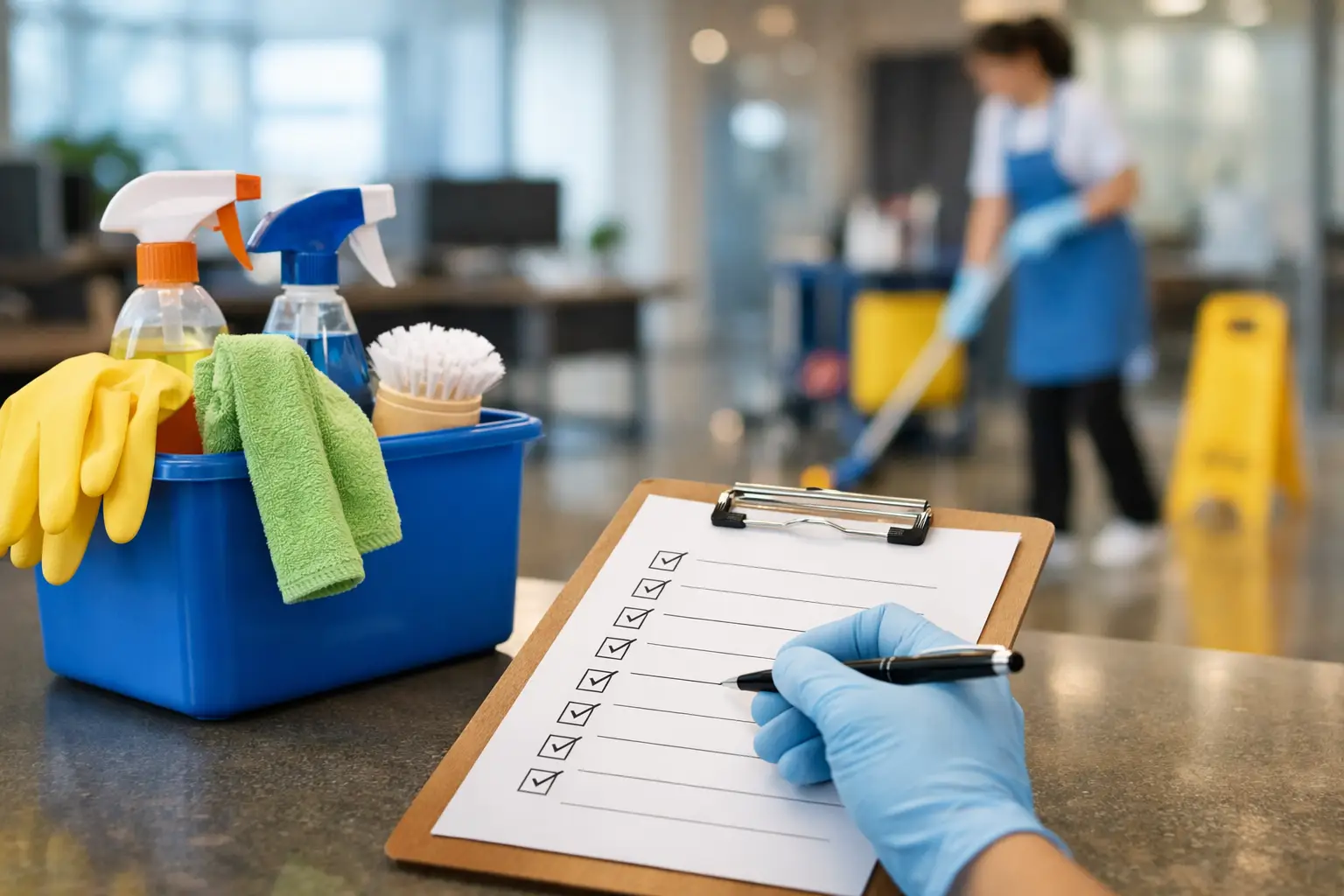

A missed rooftop drain rarely looks urgent until water starts backing up. A neglected lobby floor becomes a risk the moment a visitor slips. That is why a commercial property cleaning checklist matters. For building managers and facilities teams, cleaning is not just about appearance. It affects safety, tenant satisfaction, asset life, and how efficiently your site runs day to day.
The challenge is that most commercial properties do not need one generic checklist. They need a structured cleaning plan that matches how the building is actually used. A ground-floor office with steady foot traffic has different demands than a retail center, industrial facility, or high-rise with exterior glass and limited access areas. A useful checklist should help you prioritize what must happen daily, what can be scheduled weekly or monthly, and what requires a specialist contractor.
What a commercial property cleaning checklist should cover
A proper commercial property cleaning checklist should cover interior presentation, hygiene control, exterior upkeep, and hard-to-access maintenance points. If it focuses only on visible areas, problems build up in places that are easy to ignore, such as façades, roof gutters, service corridors, plant rooms, loading areas, and confined spaces.
That gap is where many properties lose control of maintenance standards. The front of the building may look acceptable, but blocked drainage, stained exterior panels, dirty windows, or poorly maintained back-of-house spaces can still affect operations and create risk. A checklist works best when it separates routine janitorial tasks from technical cleaning work that requires trained personnel, proper access systems, and site-specific planning.
Daily interior cleaning priorities
Daily cleaning should focus on the spaces people use most and notice first. Entrances, reception areas, elevator lobbies, restrooms, shared work areas, and high-touch surfaces usually sit at the top of the list. Floors should be swept, vacuumed, or mopped according to the surface type and traffic level. Smudged glass doors, dusty counters, and overflowing trash bins signal poor building management faster than most teams realize.
Restrooms need stricter attention. Toilets, sinks, mirrors, partitions, dispensers, and flooring should be checked and cleaned consistently throughout operating hours if foot traffic is high. In office buildings and commercial sites, restroom complaints can escalate quickly because they affect every occupant.
High-touch disinfection is also part of daily control. Door handles, elevator buttons, handrails, shared desks, pantry counters, and meeting room touchpoints collect constant contact. The exact frequency depends on occupancy, but if your property has dense traffic, cleaning once a day may not be enough.
Weekly and periodic interior tasks
Not every task belongs on a daily schedule. Some items are better handled weekly or on a rotating basis to keep labor efficient without lowering standards. This usually includes deeper carpet care, spot treatment on upholstered furniture, dusting of vents and high ledges, interior glass partitions, wall marks, and detailed cleaning in break rooms or pantry spaces.
This is also the right interval to inspect areas that often get skipped. Storage rooms, stairwells, service hallways, and low-visibility corners tend to collect dust and debris over time. They may not shape first impressions, but they still affect cleanliness, pest control, and overall building condition.
For larger commercial properties, periodic floor care matters as well. Hard floors may need machine scrubbing, polishing, or recoating. Carpets may require extraction rather than basic vacuuming. The right frequency depends on traffic, material type, and whether tenants expect a premium presentation standard.
Exterior areas that should never be ignored
Exterior cleaning has a direct impact on appearance, drainage performance, and long-term building preservation. It should be included in any commercial property cleaning checklist, not treated as a separate afterthought. Entrances, walkways, parking areas, loading zones, signage, perimeter drains, and external walls all need inspection and cleaning at planned intervals.
Ground-level exterior work is straightforward compared with elevated cleaning, but it still needs structure. Oil stains, algae, leaves, litter, and standing water can create both visual and safety issues. Pressure washing may be appropriate for some surfaces, but not all. Painted finishes, delicate cladding, and aged sealants can be damaged by the wrong method, so the cleaning approach should match the material.
Windows and façades need more careful planning, especially on mid-rise and high-rise properties. Dirt buildup on glass and exterior panels does more than make the building look tired. Over time, pollution residue, mineral deposits, and organic growth can become harder to remove and may affect the surface itself. For buildings with height or access constraints, this is specialist work, not a general cleaning task.
Roofs, gutters, and drainage checks
One of the most overlooked parts of a cleaning program is rooftop and gutter maintenance. Yet these areas often cause the most expensive avoidable issues. Debris in gutters and roof drains can lead to ponding water, overflow, façade staining, leaks, and added strain on drainage systems.
A checklist should include scheduled inspection of gutters, outlets, downpipes, and rooftop debris. The right frequency depends on the property type, nearby trees, weather exposure, and building design. During monsoon periods or in sites surrounded by vegetation, checks may need to happen more often.
This is also where access matters. On many commercial sites, rooftops are not simple open spaces. There may be fragile surfaces, restricted routes, mechanical equipment, or edge protection requirements. Cleaning teams need to work safely and without disrupting building systems.
High-risk and hard-to-access areas
Some cleaning tasks require more than manpower and standard tools. Façade cleaning, high-rise window cleaning, confined space cleaning, and elevated maintenance access all fall into a different category. These areas should still appear on your checklist, but with clear notes on access method, risk controls, permit requirements, and contractor qualifications.
This is where property managers need to be realistic. A low-cost cleaning vendor may handle basic common areas well, but that does not mean they are equipped for rope access work, boom lift operations, or confined space entry. Combining everything under one checklist is useful only if you separate routine scope from specialist scope.
Urban Solutions Services Sdn Bhd typically sees this issue on buildings where interior cleaning is consistent but exterior maintenance has been delayed because access planning was never built into the schedule. The result is avoidable deterioration and a larger corrective job later.
How to build a checklist that actually works on site
The most effective checklist is built around the property, not copied from a template. Start by dividing the site into zones such as lobby, office floors, restrooms, elevators, stairwells, external grounds, façade, roof, and service areas. Then assign a cleaning frequency to each zone based on traffic, exposure, and operational importance.
After that, define the method and ownership of each task. Some items belong to an in-house team. Some belong to a routine contract cleaner. Others need a specialist contractor with the right equipment, supervision, and safety procedures. If ownership is unclear, tasks get missed.
It also helps to record inspection points, not just cleaning actions. For example, a checklist should not simply say clean gutter. It should also note whether the gutter is blocked, damaged, overflowing, or showing signs of corrosion. The same applies to façades, windows, drains, and confined spaces. Cleaning and condition reporting should work together.
Common mistakes in checklist planning
A common mistake is overloading the daily schedule with tasks that are not necessary every day, then missing critical periodic work. Another is treating all areas as equal when they are not. A public entrance and a locked utility room do not need the same frequency, but a locked utility room may still need regular inspection for dust, debris, or drainage concerns.
There is also a tendency to focus on visible dirt and ignore access complexity. Buildings with height, architectural features, or restricted zones need cleaning plans that consider equipment, permits, technician skill, and weather windows. If those factors are ignored, jobs are postponed until the issue becomes urgent.
Finally, many checklists fail because they are never reviewed. Tenant mix changes, occupancy levels rise, weather patterns shift, and building surfaces age. A checklist should be updated when the property changes, not left untouched for years.
A practical standard for commercial sites
If you manage an office tower, retail property, industrial site, or mixed-use building, your checklist should do more than prove that cleaning happened. It should help you control standards, reduce reactive maintenance, and identify when specialist access work is needed before the problem grows.
That usually means combining routine interior cleaning with scheduled exterior care, drainage checks, and periodic high-risk maintenance. It is a more disciplined approach, but it is also the one that protects the building best.
Where the work involves roof or elevated access, property teams should also review DOSH guidance on working at height when planning access, supervision and fall-prevention controls.
For a site-specific scope, review our commercial cleaning services and arrange an assessment before confirming access, timing and cost.
A clean property is not defined by a polished lobby alone. It is defined by how well the entire site is maintained, including the places most people never see until something goes wrong.