


A stained glass facade on the 28th floor cannot be treated like a ground-level cleaning job. The access method affects how safely technicians reach the work, how much of the building remains usable, how long the project takes, and what the maintenance budget needs to cover. When comparing building cradles vs scaffolding, the right answer depends on the facade, the task, the duration, and the conditions around the site.
For commercial property teams, this is not simply a choice between two pieces of equipment. It is a decision about operational control. A poorly matched access method can obstruct tenant entrances, slow down repair work, limit cleaning quality, or introduce avoidable risk. The most practical option is the one that gives trained workers stable access to every required area while keeping the site properly managed.
Building Cradles vs Scaffolding: The Core Difference
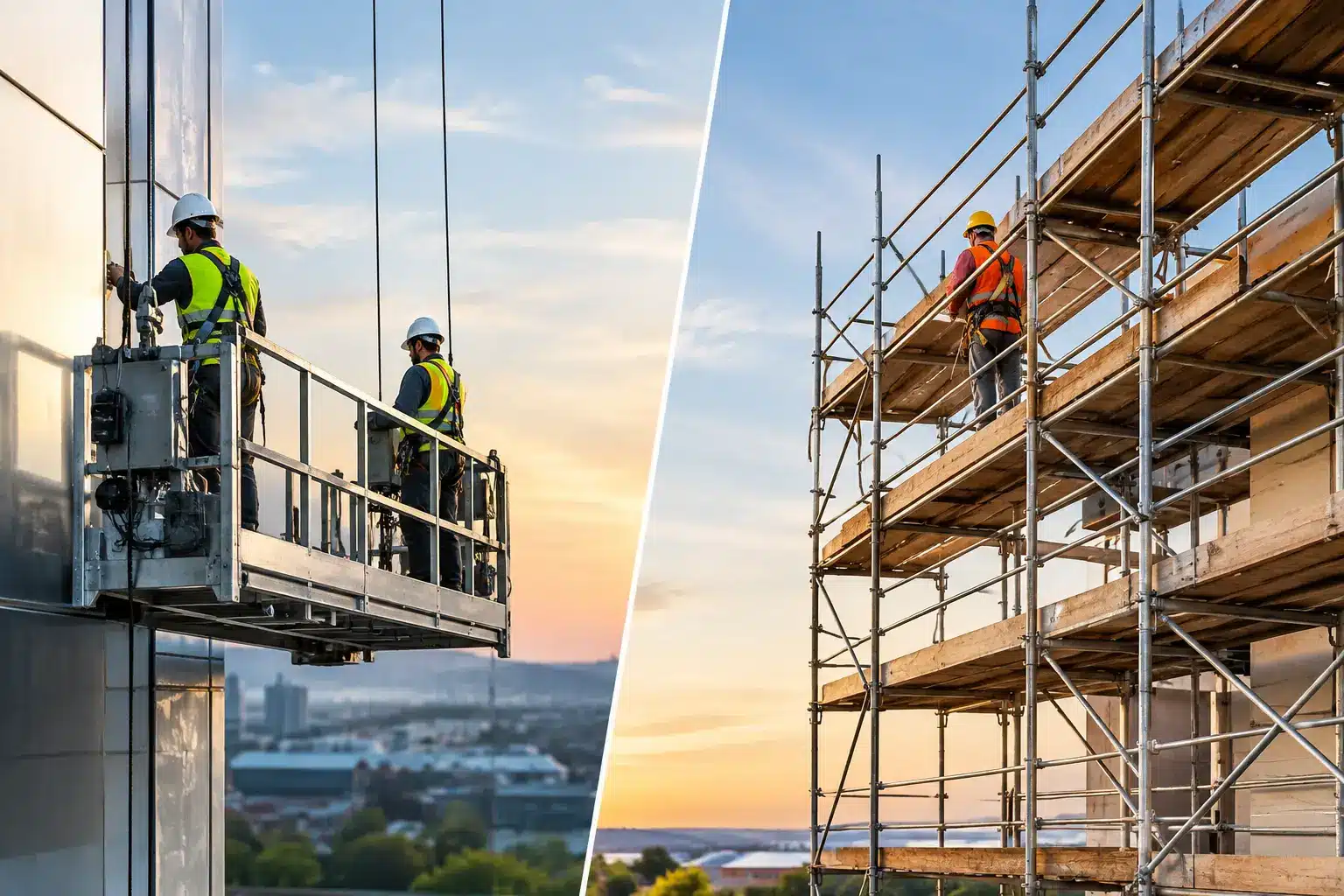
A building cradle, also called a suspended platform, is a powered work platform suspended by wire ropes from a roof-mounted system, parapet clamps, davits, or other approved support arrangement. It moves vertically along the exterior of a building and can be positioned at different levels for facade cleaning, window cleaning, painting, inspections, and localized repairs.
Scaffolding is a temporary structure erected from the ground or another stable base. It creates fixed working platforms around a portion of the building, allowing crews to work at selected elevations for extended periods. Depending on the setup, scaffolding may wrap around a facade, cover a smaller work zone, or extend over entrances and lower-level features.
The distinction matters because each system solves a different access problem. A cradle is designed for vertical mobility and broad facade coverage. Scaffolding is designed for stable, repeated access to a defined area.
| Factor | Building Cradle | Scaffolding | | — | — | — | | Best suited for | Tall facade work and vertical coverage | Fixed work areas and longer repair programs | | Setup location | Roof level and building exterior | Ground level or a supported base | | Building footprint | Usually minimal at ground level | Can require substantial perimeter space | | Movement | Travels up and down the facade | Fixed platforms, with access by lifts or stairs | | Typical work | Window cleaning, facade washing, painting, inspections | Repairs, restoration, masonry, detailed construction work |
When a Building Cradle Is the Better Choice
For high-rise properties, a cradle often provides the most efficient route to exterior access. A single platform can cover multiple floors in one descent, allowing cleaning or maintenance teams to work systematically across large vertical sections. This is especially useful for glass curtain walls, aluminum composite panels, exterior glazing, and tall office towers where routine facade presentation is a priority.
Cradles are also valuable where ground-level space is limited. Commercial entrances, driveways, landscaped areas, loading zones, and pedestrian routes are common around urban buildings. A suspended platform can reduce the amount of equipment occupying these areas, although proper exclusion zones and ground supervision may still be required beneath the work area.
Suitable tasks for cradle access
Cradle access is often a strong fit for high-rise window cleaning, facade washing, external painting, sealant inspections, and selected exterior maintenance tasks. It gives technicians close access to the building surface, which supports better cleaning results than methods performed from a distance.
For example, water marks, traffic film, algae, and construction residue can require controlled washing and manual detailing. A cradle allows the team to inspect the surface as they work, identify damaged sealant or loose fittings, and maintain a consistent cleaning standard across higher floors.
That said, a cradle requires the right roof conditions. The building must have suitable, approved anchorage or support arrangements, sufficient roof capacity, and a safe route for equipment handling. The facade itself must also allow the platform to travel without catching on fins, ledges, canopies, signage, or irregular architectural elements.
When Scaffolding Makes More Sense
Scaffolding is often the better option when technicians need a stable work platform in one location for days or weeks. It is particularly useful for facade restoration, concrete repair, masonry work, extensive repainting, waterproofing, cladding replacement, or detailed repairs around lower and mid-level elevations.
Unlike a cradle, which is positioned and moved during the workday, scaffolding gives crews a fixed base at the required height. This can make a meaningful difference when the work involves heavy materials, repeated tool use, or multiple trades working in the same area. A repair crew may need to remove damaged render, prepare the substrate, apply repair materials, allow curing time, and complete protective coatings. A stable scaffold platform supports that sequence more effectively than a suspended platform in many cases.
Scaffolding can also be the practical answer for buildings without appropriate roof access or cradle support systems. Older buildings, low-rise commercial blocks, and properties with complex rooflines may not be suitable for suspended platforms without additional engineering or specialized arrangements.
The trade-off is site impact. Scaffolding takes time to erect and dismantle, occupies space around the building, and may affect walkways, parking, retail visibility, deliveries, or emergency access. Property managers need a clear plan for barricades, pedestrian routing, tenant communication, and security while the structure is in place.
Access Choice Depends on More Than Height
A common mistake is assuming that tall buildings always need cradles and shorter buildings always need scaffolding. Height is relevant, but it is only one factor. The real question is how the work must be performed.
A high-rise facade cleaning project may be completed efficiently with a cradle because the team needs to move vertically across extensive glass surfaces. A lower building with serious concrete spalling or facade repairs may require scaffolding because the crew needs stable, continuous access to the same area. In some projects, the best solution combines methods. Scaffolding may support heavy repair work near the lower levels, while a cradle handles cleaning or inspections on upper elevations.
The building layout also changes the decision. Recessed balconies, stepped facades, projecting canopies, curved surfaces, exterior sunshades, and narrow service lanes can complicate either method. The safest choice comes from assessing access routes, roof conditions, facade obstacles, ground conditions, and the exact scope of work before equipment is mobilized.
Safety, Site Control, and Weather Planning
Both cradles and scaffolding require competent planning, trained personnel, inspections, and site-specific safety controls. The equipment itself is only part of the safety picture. The quality of the setup, daily checks, worker competence, communication, and supervision determines whether access work is carried out responsibly.
With building cradles, attention must be given to suspension points, wire ropes, platform controls, emergency procedures, fall protection, and safe loading. Wind conditions are also a major consideration. A suspended platform can move against the facade in unfavorable weather, so work may need to pause when conditions exceed safe operating limits.
With scaffolding, the focus includes stable foundations, correct ties and bracing, platform decking, edge protection, access ladders or stairs, load limits, and protection from unauthorized access. Because scaffolding remains on site, it also needs ongoing monitoring as weather, nearby work, and site activity can affect conditions.
For occupied commercial properties, public protection is equally important. Drop zones, covered walkways where necessary, warning signs, barriers, and scheduled work periods help reduce disruption. A professional contractor should explain how access equipment will affect entrances, parking, tenants, deliveries, and daily building operations before work starts.
Cost: Look Beyond the Daily Equipment Rate
The lowest equipment price rarely tells the full story. Cradle costs can be influenced by roof access, support systems, the number of drops, building height, platform length, labor requirements, and the complexity of moving around facade features. Scaffolding costs are shaped by the footprint, height, design, erection time, rental period, and the amount of perimeter that must be covered.
A cradle may be more cost-effective for recurring high-rise window cleaning because it reaches large vertical areas without constructing a full ground-up structure. Scaffolding may offer better value for substantial repairs because it gives the repair team constant access and reduces time spent repositioning equipment.
The stronger approach is to compare complete project costs: access setup, labor productivity, work duration, site disruption, safety measures, and the quality of the final result. An inexpensive method that slows the crew down or prevents proper surface preparation can become costly very quickly.
Start With a Site Assessment, Not an Assumption
Before selecting building cradles or scaffolding, define the work clearly. Is the priority routine facade cleaning, detailed inspection, repainting, waterproofing, repair, or a combination of services? Then assess the building from roof to ground level.
A proper site review should identify the facade materials, work heights, roof access, available anchorage, ground restrictions, pedestrian flow, obstacles, weather exposure, and any operational constraints set by tenants or building management. It should also confirm whether the access method allows workers to complete the job without compromising the surface or creating unnecessary disruption.
For commercial buildings, the right access plan protects more than the project schedule. It protects the property’s appearance, the people using the site, and the long-term condition of the facade. Arrange a professional site assessment before committing to an access method, and let the work requirements – not a default preference – determine the platform beneath the crew.