

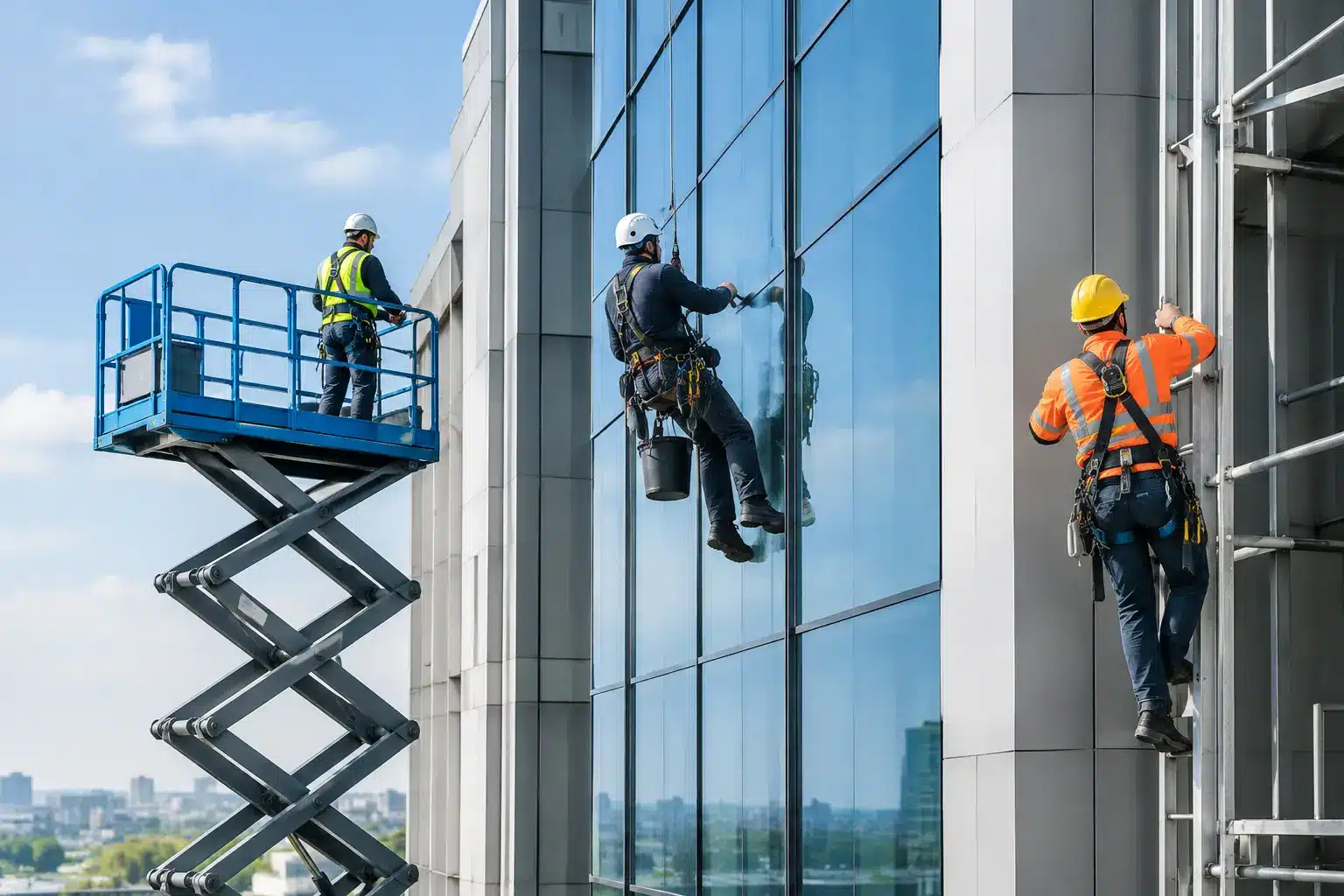

A facade may look clean from ground level while holding dirt, algae, staining, loose sealant, and blocked drainage points several stories above. Choosing the best access methods for facades is therefore not just a question of reaching height. It affects worker safety, cleaning quality, tenant disruption, project time, and the long-term condition of the building envelope.
For commercial and industrial properties, there is no single access method that suits every facade. A low-rise retail center, a glass office tower, a factory with rooftop obstructions, and a building with recessed architectural features each require a different approach. The right decision starts with a site assessment, not with the equipment that happens to be available.
What Determines the Best Access Method for a Facade?
Height is the obvious factor, but it is only one part of the decision. A 10-story building with a clear perimeter may be easier to access than a six-story property surrounded by parking structures, landscaping, power lines, or narrow service lanes.
The facade material also matters. Glass curtain walls, aluminum composite panels, painted concrete, stone cladding, louvers, and exterior signage can require different cleaning techniques and working positions. Technicians must be able to reach the surface without applying excessive pressure, dragging hoses across delicate finishes, or placing equipment where it can damage the property.
A proper access plan considers the building’s height, roof configuration, anchor points, ground-level working space, facade condition, public traffic, weather exposure, and the scope of work. Cleaning windows is different from removing heavy staining, replacing sealant, inspecting cracks, or carrying out painting repairs. The access method must support the task safely and efficiently.
Safety and compliance come first
High-level exterior work requires trained personnel, inspected equipment, rescue planning, and clear site controls. An access method that appears cheaper on paper can become costly if it creates long shutdowns, requires extensive road closures, or leaves technicians unable to reach key areas safely.
For occupied commercial properties, the plan should also manage risks below the work zone. This may include cordoning off walkways, coordinating with security, protecting parked vehicles, and scheduling work outside peak tenant hours. A dependable contractor builds these operational details into the method statement rather than treating them as last-minute adjustments.
Rope Access for High-Rise and Complex Facades
Rope access is often one of the most practical solutions for tall buildings and difficult facade geometry. Technicians descend from certified roof anchor points using specialized rope systems, allowing them to work closely along windows, cladding, ledges, fins, and recessed sections.
Its main advantage is flexibility. Rope access can reach areas where ground-based equipment cannot be positioned, including narrow side setbacks, podium roofs, atriums, and upper elevations above landscaped zones. It also requires less ground space than a boom lift or scaffolding, which helps reduce disruption around active offices, hotels, retail entrances, and industrial facilities.
Rope access is particularly effective for high-rise window cleaning, facade washing, localized inspections, sealant checks, and minor maintenance work. Because technicians can move vertically across the building, it can be a cost-effective option for large elevations when suitable roof anchors are available.
The trade-off is that rope access depends on a sound roof setup and favorable weather conditions. It may not be suitable where the roof has no approved anchor system, where fragile roofing limits safe positioning, or where the job requires carrying heavy materials. Strong wind, lightning, and heavy rain can also pause work, so realistic project scheduling is essential.
Boom Lifts and Other Mobile Elevated Work Platforms
Boom lifts provide a stable work platform that can extend upward and outward from ground level. They are useful when technicians need to work at a fixed point for longer periods, carry equipment, or access facade areas that sit behind obstacles such as lower roofs, canopies, or landscaped setbacks.
For lower- and mid-rise commercial buildings, a boom lift can be an efficient choice for facade cleaning, painting, gutter work, signage cleaning, repairs, and exterior inspections. The basket provides room for tools and allows workers to maintain a controlled position against the building surface.
However, mobile elevated work platforms need suitable ground conditions. The site must have enough space for the machine, a clear access route, stable bearing ground, and sufficient overhead clearance. Soft ground, basement structures, tight driveways, busy loading bays, and low-hanging cables can make lift access impractical.
A boom lift can also require traffic management and exclusion zones, especially when operating near public entrances or vehicle routes. For this reason, the fastest-looking option is not always the least disruptive option.
Building Maintenance Units and Suspended Platforms
A building maintenance unit, often called a BMU, is a permanent roof-mounted system designed for facade access. It may use a powered cradle or platform that travels vertically down the building. For towers with extensive glass facades and recurring cleaning requirements, a BMU can provide consistent access with less need to mobilize large temporary equipment for every service visit.
Suspended platforms and temporary cradles serve a similar purpose when a permanent BMU is not installed. They are valuable for broad, continuous elevations where technicians need a stable working deck for washing, restoration, painting, or repair works. Compared with rope access, a platform can carry more equipment and materials.
These systems work best when roof loading, davit arms, tracks, tieback points, and platform travel paths have been properly assessed. They are not automatically suitable simply because a building is tall. Poorly positioned roof equipment, facade projections, and changing building profiles can leave blind spots that require a separate access method.
For property managers, the key consideration is frequency. If the facade needs regular cleaning and maintenance, maintaining the BMU or cradle system may be more efficient over time. If the work is occasional or limited to isolated areas, rope access or a lift may offer better value.
Scaffolding and Mast Climbers for Extended Work
Scaffolding remains a practical access method for long-duration facade projects, particularly when repairs, repainting, waterproofing, cladding replacement, or restoration work is required. It creates a stable work area across a large portion of the elevation and supports repeated access over days or weeks.
Mast climbers can provide a similar stable platform while moving vertically along the structure. They are commonly considered for broad facade works where crews need materials close at hand and must work continuously across the same elevation.
The limitation is setup time and site impact. Scaffolding can affect pedestrian routes, loading zones, storefront visibility, and building appearance. It may also require permits, protective hoarding, and more extensive coordination with tenants. For a one-day window-cleaning project, it is usually excessive. For a major repair program, it may be the safest and most productive option.
Why One Building May Need More Than One Method
The best facade access plans are often combined plans. A building may use a boom lift for its lower levels and entrance canopy, rope access for upper glass elevations, and a temporary platform for a section requiring repairs. Trying to force the entire scope into one method can increase cost, extend the schedule, or leave hard-to-reach areas untreated.
This is especially common on mixed-use developments and industrial properties. Architectural features, rooftop plant rooms, solar panels, external pipes, and restricted service areas can all change how technicians reach different sections of the same building.
A site-specific quotation should clearly identify the proposed access method, the work zones, expected duration, exclusion requirements, and any conditions that may affect pricing. Building height, labor requirements, equipment mobilization, and access complexity all influence the final cost.
Planning Facade Access With Fewer Disruptions
Before appointing a contractor, provide current building drawings if available, details of roof access, known anchor points, site operating hours, and any areas with restricted vehicle access. A pre-work site visit helps identify practical issues before crews and equipment arrive.
It is also worth coordinating facade work with other exterior maintenance. Window cleaning, gutter clearing, facade washing, localized painting, and visual inspections can sometimes be scheduled together, reducing repeated access setup and minimizing interruptions to tenants.
For commercial properties in Kuala Lumpur, Selangor, Penang, and Johor, weather planning deserves particular attention. Exterior high-rise work should allow for rain, wind, and lightning delays rather than relying on an unrealistic fixed completion date.
The right access method protects more than the people doing the work. It protects your facade, your operations, and the professional appearance of the property. A thorough site assessment gives facilities teams the confidence to choose an approach that reaches every required area without creating unnecessary risk or disruption.