


A facade rarely fails all at once. More often, the warning signs show up gradually – water streaks under ledges, patchy staining near joints, dirt buildup on shaded elevations, and glass that never quite looks clear even after rain. That is usually when property teams start asking when should facade cleaning be scheduled, and the right answer depends less on the calendar alone and more on exposure, building use, access conditions, and the level of presentation your site needs to maintain.
For commercial and industrial properties, facade cleaning should be treated as planned maintenance rather than a reactive fix. Waiting until staining is obvious can make the job more complex, increase cleaning time, and in some cases leave permanent marks on painted, coated, stone, metal, or glass surfaces. A better approach is to schedule cleaning based on how quickly contaminants build up and how critical the building’s appearance and exterior condition are to operations.
When should facade cleaning be scheduled for best results?
In most cases, commercial facades benefit from scheduled cleaning every 6 to 12 months. That range works for many office towers, retail properties, mixed-use buildings, and industrial facilities, but it is not a universal rule. A low-rise building in a cleaner environment may hold its appearance longer, while a high-rise in a dense urban corridor may need more frequent attention.
The best schedule is one that matches the building’s actual exposure. Traffic pollution, construction dust, algae growth, bird activity, coastal salt, and frequent rain runoff all affect how fast an exterior degrades visually. A facade that looks acceptable at street level may still have significant buildup on upper elevations, recessed areas, fins, ledges, and glazing systems.
For buildings with strong public visibility, tenant expectations, or premium positioning, twice-yearly cleaning is often the practical standard. For more utilitarian assets, annual cleaning may be enough if inspections confirm that dirt and staining have not advanced beyond routine maintenance.
What affects facade cleaning frequency?
Several site conditions influence when facade cleaning should be scheduled. The first is location. Buildings in high-traffic commercial areas tend to accumulate soot, dust, and exhaust residue more quickly than properties in less congested surroundings. Sites near active construction also collect fine particulate matter that clings to cladding, frames, sealant lines, and glass.
The second factor is building design. Complex elevations with deep reveals, horizontal ledges, decorative fins, and uneven surfaces trap dirt and moisture. These features can create streaking patterns and localized biological growth, especially where airflow and direct sunlight are limited. Smooth facade systems are generally easier to maintain, but even they can show runoff stains if drainage paths are poor.
Material type matters as well. Glass, aluminum composite panels, painted surfaces, natural stone, precast concrete, and coated metal all respond differently to contaminants and cleaning methods. Some surfaces can tolerate standard washing intervals. Others require more controlled treatment to avoid etching, fading, or damage to protective finishes.
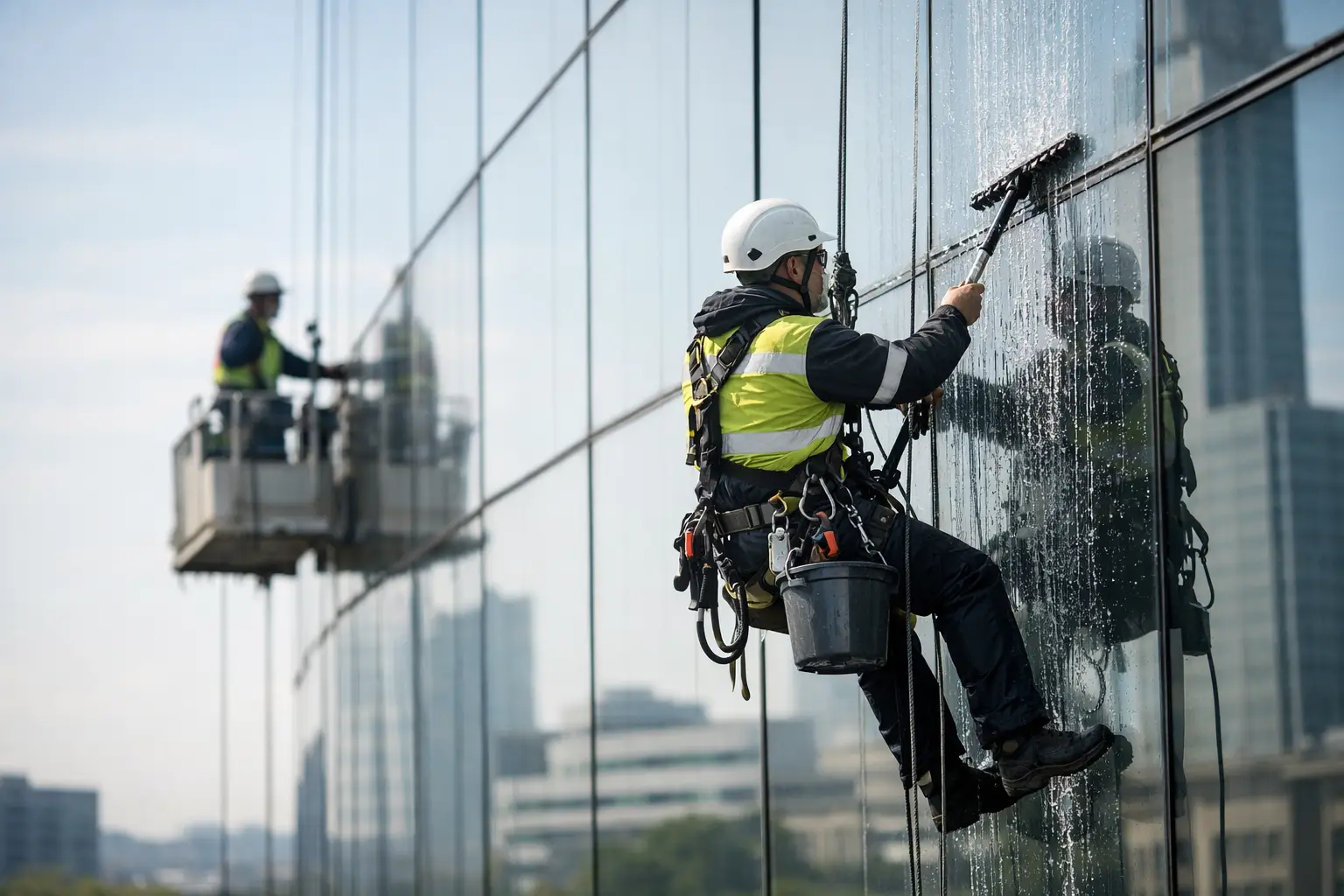
Then there is access. If a building requires rope access, boom lifts, gondola systems, or a combination of methods, scheduling should happen before conditions become urgent. High-risk access work needs planning, site assessment, and coordination with operations. It is easier to carry out safely and efficiently when the work is scheduled in advance rather than rushed after complaints or visible deterioration.
Seasonal timing matters more than many teams expect
A facade cleaning schedule should also account for weather patterns. In Malaysia, frequent rain does not replace proper cleaning. Rainwater can actually worsen staining by carrying dirt across the surface and leaving mineral marks or runoff lines behind. It may rinse loose dust, but it does not remove bonded contaminants, oily residue, algae, or embedded grime.
The more practical approach is to schedule cleaning during periods with a more stable forecast and enough lead time for safe access planning. This helps reduce delays, supports better drying conditions where needed, and lowers disruption to tenants or daily operations. For high-rise and exposed exterior work, weather is not a side issue. It directly affects safety, productivity, and final results.
Many facility managers find it useful to align facade cleaning with broader maintenance cycles. For example, scheduling around window cleaning, roof gutter clearing, sealant inspection, or exterior touch-up painting can reduce repeat mobilization and make access planning more efficient. If the same elevation needs multiple services, combining them into a coordinated maintenance window usually makes operational sense.
Signs your building is overdue for facade cleaning
You do not always need a strict annual date to know action is needed. Certain conditions indicate that the facade has moved beyond routine surface dust and into maintenance risk.
The most obvious sign is uneven staining. When some elevations look noticeably darker, streaked, or discolored, contaminants are building up in a way that will only become harder to remove. Another sign is recurring marks below joints, coping edges, or drainage points. These often suggest concentrated runoff carrying dirt over the same path repeatedly.
Glass clarity is another indicator. If the facade appears dull even after rain or routine window cleaning, the issue may be a broader buildup across the exterior envelope. On industrial and commercial sites, residue from airborne particles can settle across both glass and solid surfaces, reducing the building’s overall presentation.
There is also the reputational side. If the exterior no longer matches the standard expected by tenants, customers, investors, or visitors, waiting longer rarely improves the outcome. For front-facing office buildings and commercial assets, exterior cleanliness is part of how the property is judged before anyone walks inside.
Reactive cleaning costs more than planned cleaning
One of the most common mistakes in facade maintenance is treating cleaning as cosmetic only. In reality, delayed cleaning can increase labor, equipment time, and the level of treatment required. Light dirt can often be removed with standard methods. Heavier staining, algae growth, bird fouling, or neglected runoff marks may require more detailed cleaning and more time on the facade.
That matters for budgeting. A scheduled maintenance cycle is usually easier to forecast than a corrective job that has been postponed too long. It also helps facility teams avoid last-minute approvals, urgent access arrangements, and service disruption.
From an asset protection standpoint, the goal is simple: remove contaminants before they sit long enough to affect finishes, joints, coatings, or appearance in a lasting way. This is especially relevant for buildings with premium cladding systems or highly visible elevations where replacement or restoration is far more expensive than routine cleaning.
How facility teams should plan the right schedule
The most effective schedule starts with a site-specific assessment. Rather than applying the same interval to every property, look at façade height, material type, surrounding environment, occupancy profile, and access complexity. A tower in a dense urban district may need a different cleaning plan than an industrial building with isolated exposure but higher residue from operations.
A practical starting point is to inspect the exterior every six months and use those findings to confirm whether cleaning should happen annually, twice yearly, or on another cycle. This avoids over-servicing low-exposure facades while catching buildup early on more demanding sites.
It is also worth distinguishing between full facade cleaning and partial maintenance cleaning. Some properties benefit from more frequent cleaning on street-facing or high-visibility elevations, with a full building program scheduled less often. That approach can control cost while keeping the most visible areas presentable.
For high-rise and complex commercial buildings, working with an experienced access and exterior cleaning contractor is part of the scheduling decision. The right provider will assess not just the dirt level, but also anchor points, elevation risks, public safety controls, equipment needs, and the best cleaning method for the surface. That level of planning matters because facade work is not standard janitorial cleaning. It is technical exterior maintenance.
Urban Solutions Services Sdn Bhd handles these requirements for commercial and industrial properties where access, safety, and execution quality cannot be treated casually. For building managers, that means fewer assumptions and a clearer maintenance plan built around the actual site.
Where the work involves roof or elevated access, property teams should also review DOSH guidance on working at height when planning access, supervision and fall-prevention controls.
For a site-specific scope, review our façade cleaning services and arrange an assessment before confirming access, timing and cost.
If you are deciding when to put facade cleaning on the calendar, do it before the building forces the issue. A clean exterior is easier to maintain than a neglected one, and the best time to schedule the work is while it is still routine.