

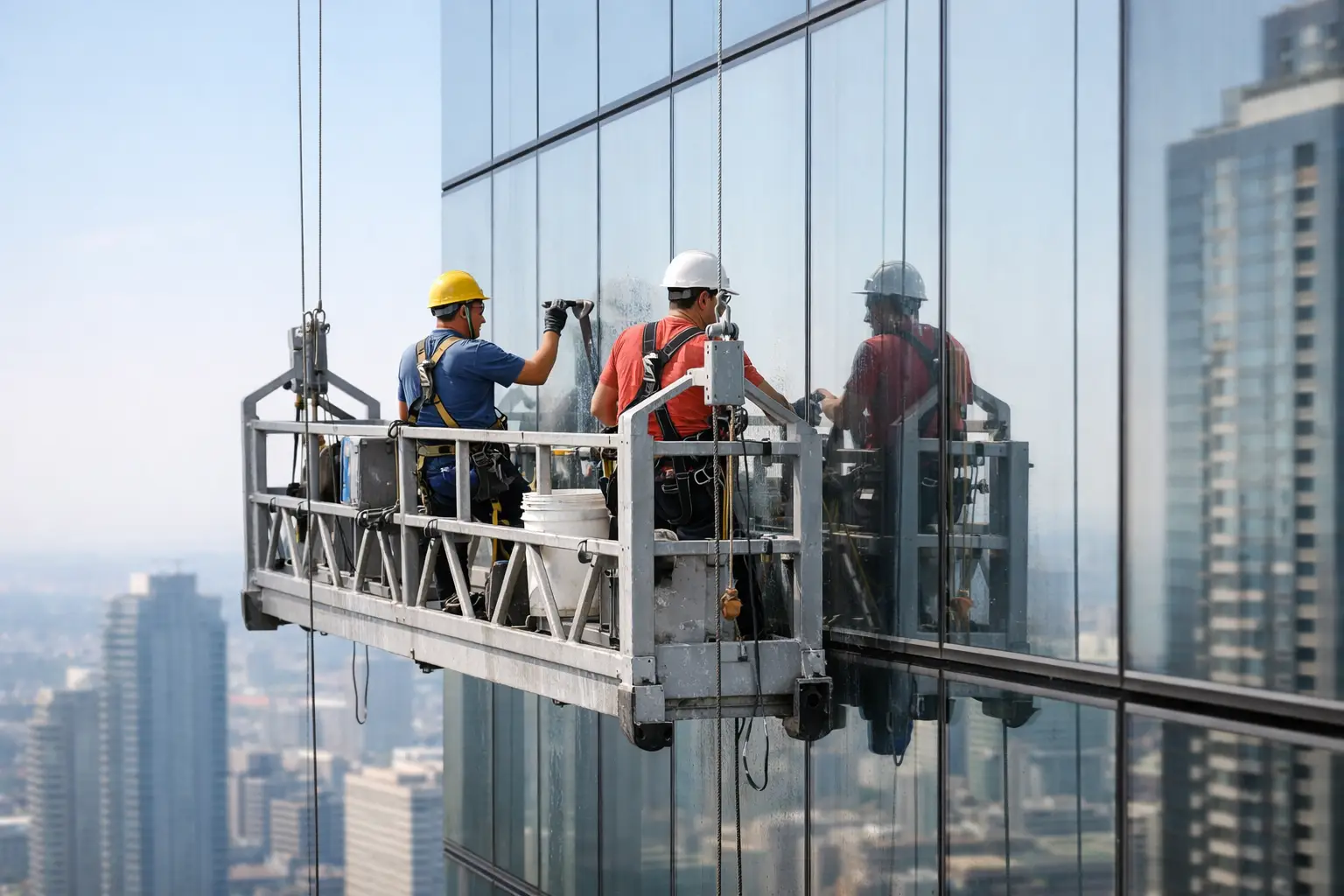

If you have ever looked up at a crew cleaning glass 20 or 30 stories above ground, you have probably asked, what is a high rise window cleaning platform called? In most commercial settings, the correct term is a suspended platform. Depending on the system, it may also be called a gondola, cradle, swing stage, or building maintenance unit platform.
For property managers and facility teams, that distinction matters more than it seems. Different access systems suit different building heights, facade layouts, and maintenance scopes. Using the right term helps when you request quotations, review method statements, or discuss safety controls with a contractor.
What is a high rise window cleaning platform called in practice?
The short answer is this: most people are referring to a suspended platform when they talk about a high-rise window cleaning platform. That is the general industry term for a powered or manually positioned working platform that is suspended from the roof or another overhead structure.
On many projects, people also use the word gondola. In commercial building maintenance, gondola usually means a permanent or semi-permanent suspended platform installed or designed for facade access. In some regions and job sites, swing stage is the more common term, especially when referring to temporary suspended access equipment.
You may also hear cradle. That usually describes the basket-like platform where technicians stand while carrying out window cleaning or facade work. Meanwhile, a building maintenance unit, often shortened to BMU, refers to the larger engineered system mounted on the roof that supports and moves the platform.
So if you ask, what is a high rise window cleaning platform called, the safe answer is suspended platform. If you need to be more specific, the exact name depends on whether the system is permanent, temporary, or part of a full BMU installation.
The most common names you will hear on site
In everyday site discussions, several terms overlap. That can create confusion for building owners who are trying to compare service proposals.
Suspended platform
This is the broad technical term. The platform hangs from wire ropes or suspension points above and allows workers to move vertically along the facade. It is commonly used for window cleaning, facade washing, sealing, inspection, and light maintenance.
Gondola
Gondola is one of the most common commercial terms for a high-rise window cleaning platform. It usually refers to a powered suspended platform used on taller buildings. Some buildings have dedicated gondola systems designed into the structure from the start.
Swing stage
A swing stage is typically a temporary suspended platform set up for specific works. It is widely used for construction, painting, repairs, and exterior cleaning. For a one-off access requirement, a swing stage may be more practical than relying on a permanent roof-mounted system, if the building design allows it.
Cradle
Cradle often refers to the actual working basket or platform itself. Some contractors and building teams use cradle and gondola almost interchangeably. Others use cradle to describe the platform section of a larger access system.
Building Maintenance Unit
A BMU is not just the platform. It is the complete mechanical access system, usually roof-mounted, that can raise, lower, and position the platform around the facade. BMUs are common on modern towers with complex exteriors or architectural features that make simple rope access or standard suspended platforms less suitable.
Why the name changes from building to building
The reason there is no single universal answer is that facade access is not one-size-fits-all. A straight glass tower with roof davits may use a temporary suspended platform for periodic window cleaning. A premium office tower may have a dedicated BMU with a telescopic arm and powered cradle. Another building may rely on rope access for localized cleaning and use suspended platforms only for broader facade work.
That is why experienced contractors do not choose equipment by label alone. They assess roof structure, suspension points, facade setbacks, overhangs, glass type, wind exposure, pedestrian zones, and the scope of work. The right term helps communication, but the right method depends on the building.
How these platforms actually work
A standard suspended platform is supported by wire ropes connected to roof-mounted outriggers, davits, or a permanent BMU. The platform is raised and lowered by hoists, allowing technicians to stop at working levels along the facade.
This gives crews a stable base for repetitive cleaning over larger window sections. Compared with rope access, it can be more efficient on broad, uninterrupted elevations. Compared with boom lifts, it is often more practical for very tall buildings where ground-based machinery cannot reach or where site access is restricted.
That said, suspended platforms are not automatically the best option for every project. Buildings with narrow setbacks, curved facades, recessed windows, or limited roof load capacity may require a mixed access approach.
When a suspended platform is the right choice
For large commercial properties, suspended platforms are often chosen because they balance reach, productivity, and worker positioning. They are especially useful when the facade has long vertical drops and repeated cleaning zones.
They also allow teams to carry more tools and cleaning supplies than a single rope access technician would. That can improve output on full-building window cleaning schedules.
But there are trade-offs. Setup can be more involved. Roof access must be suitable. Wind conditions can affect operations. And if the building was not designed with practical suspension points, temporary setup may become more complex and more expensive.
When another access method may be better
If the facade has many architectural breaks, deep ledges, fins, or irregular surfaces, rope access may be the better tool. It gives technicians more flexibility to move around difficult areas, though it may be slower for large flat glass elevations.
For lower-rise sections, a boom lift or scissor lift may be more efficient. For internal atriums or hard-to-reach enclosed spaces, a different access setup may be required entirely.
This is where site-specific planning matters. Commercial decision-makers are not just buying cleaning labor. They are buying a safe access strategy that fits the building and avoids unnecessary disruption.
What building managers should ask before approving the job
If you are reviewing a high-rise window cleaning proposal, asking only what the platform is called is not enough. You also want to know what system will be used, whether it is temporary or permanent, and why it suits your facade.
A capable contractor should be able to explain the access method in plain terms, outline roof requirements, confirm operator competency, and identify any limitations before work starts. They should also address exclusion zones, weather controls, rescue planning, and how the work will be staged around tenant activity.
That level of detail is what separates a routine cleaning vendor from a specialist high-rise contractor.
What is a high rise window cleaning platform called on a quotation?
On formal quotations or method statements, you may see terms such as suspended working platform, temporary suspended platform, gondola system, cradle access, or BMU access. All can be correct in the right context.
The key is not to get stuck on terminology alone. If a quotation simply says gondola cleaning, you should still expect clarity on the exact access setup, manpower, safety controls, and whether the building already has the required roof system in place.
For commercial properties with complex exteriors, that detail affects pricing, scheduling, and risk management.
The practical answer for commercial property teams
If your main question is what to call the equipment, suspended platform is the clearest general term. Gondola is also widely understood and commonly used in building maintenance. If the building has a permanent engineered roof access machine, the broader system may be a building maintenance unit.
For your next facade cleaning discussion, the more useful question is this: what access method is most suitable for this building? That is where an experienced contractor adds value. The right equipment choice protects the facade, improves efficiency, and keeps work controlled at height.
Where the work involves roof or elevated access, property teams should also review DOSH guidance on working at height when planning access, supervision and fall-prevention controls.
For a site-specific scope, review our high-rise window cleaning services and arrange an assessment before confirming access, timing and cost.
On high-rise projects, terminology is helpful. A proper site assessment is what gets the job done safely and without avoidable delays. If your building needs exterior glass or facade access work, start with the method, not just the name.