

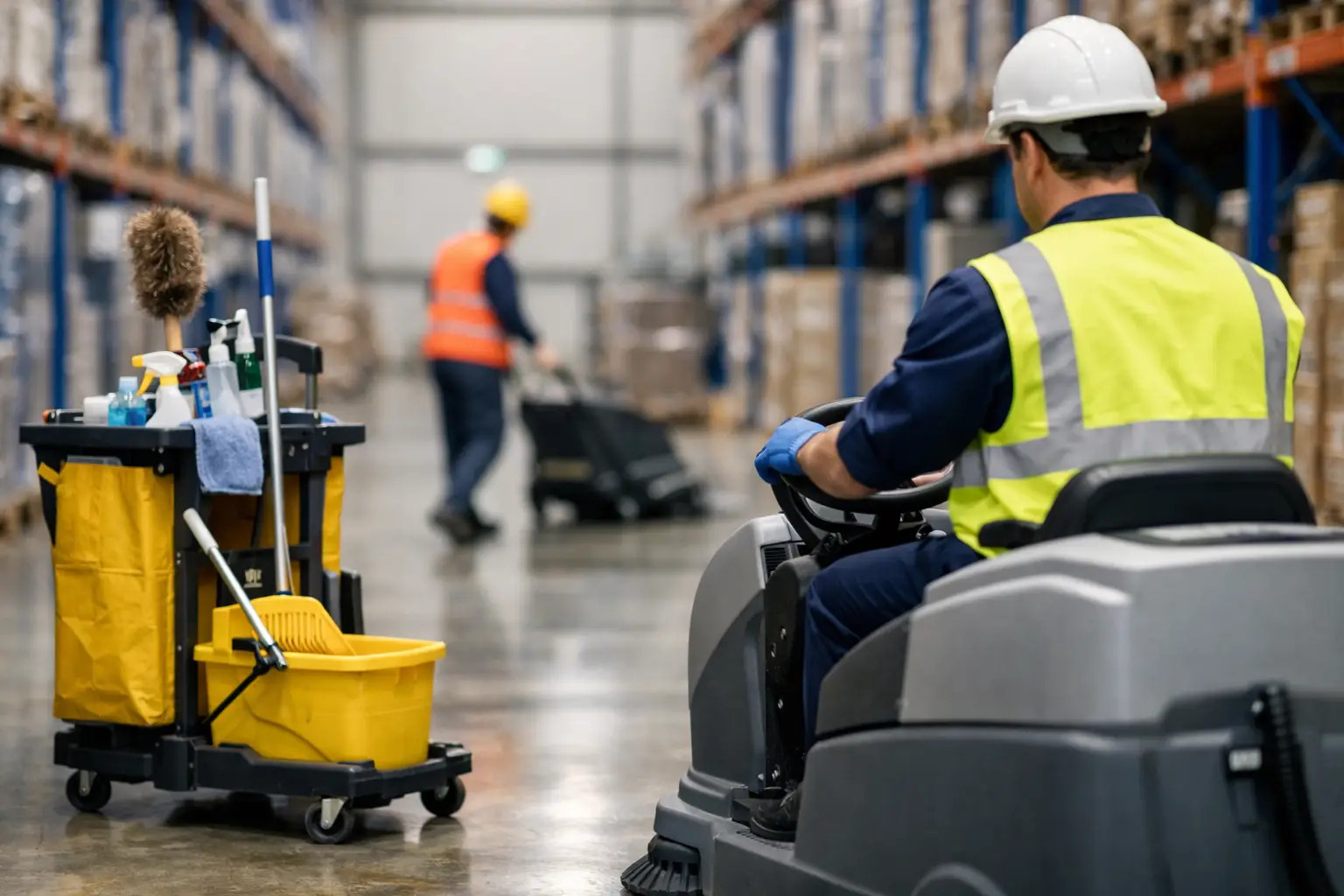

A warehouse can look acceptable from the office while dust builds above racking, forklift traffic tracks grime through aisles, and loading bays become a safety concern. This warehouse cleaning procurement guide helps facilities and operations managers buy the right service for the actual condition of the site, not simply the lowest quoted cleaning package.
Warehouse cleaning procurement is different from buying routine office cleaning. The work may involve high ceilings, inaccessible ledges, sensitive stock, active logistics routes, machinery, drains, loading docks, and restricted shutdown windows. A meaningful procurement process defines those conditions before comparing contractors.
Warehouse Cleaning Procurement Guide: Start With Scope
The first procurement decision is not which contractor to appoint. It is what needs to be cleaned, how often, and what result the business expects. A vague request for “deep cleaning” produces vague quotations, exclusions, and avoidable changes once work begins.
Walk the facility with the operations team and identify each area by function. Separate production or storage floors from offices, restrooms, loading bays, external hardstanding, racking zones, plant rooms, and waste areas. Include elevated surfaces such as beams, pipes, ducting, skylights, wall cladding, and ceiling ledges where dust may accumulate out of sight.
Your scope should state whether the work is a one-time restoration, a scheduled maintenance program, or a combination of both. A post-renovation clean, for example, needs a different labor plan and equipment setup than a quarterly high-level dust removal program. If a contractor must work around daily dispatches, specify the available hours and whether certain aisles or bays can be isolated.
Define the expected finish in practical terms. For floors, that may mean removal of loose debris, oil residue, tire marks, or built-up grime. For high-level cleaning, it may mean controlled dust removal without contaminating inventory below. For exterior areas, it may include washdown of loading docks, gutters, façades, or access walkways. Clear outcomes make site inspection and price comparison far more reliable.
Assess Risk Before Requesting Prices
A warehouse is an operational environment, not an empty room. Cleaning activity can create risks around moving vehicles, stored goods, wet floors, electrical equipment, and work at height. Procurement should require contractors to explain how their method addresses the conditions at your site.
Ask how technicians will access high-level areas. Depending on the height, layout, and obstructions, the suitable method may involve mobile elevated work platforms, scaffold systems, rope access, or specialized extension equipment. Each option has trade-offs. A lift may provide efficient access in an open bay but needs adequate floor condition, maneuvering space, and exclusion zones. Rope access can reduce ground disruption in certain areas, but it requires suitable anchor arrangements and a competent work plan.
Confined spaces, roof gutters, elevated façades, and internal structures near machinery require an even more specific assessment. The contractor should identify access limitations during the site visit rather than assuming standard equipment will work. If the method is not established until the workday, the project can face delays, added cost, or unacceptable safety exposure.
Require a site-specific work plan that covers access, work sequencing, housekeeping, protective measures for stock and equipment, and traffic management. It should also address how the crew will control falling dust or debris during high-level work and how wet-cleaned zones will be made safe for staff and vehicles.
Evaluate Capability, Not Just a Service List
A general cleaning provider may be suitable for break rooms, offices, and routine floor care. That does not automatically mean it can manage difficult warehouse conditions. The stronger question is whether the contractor has the people, equipment, and supervision required for the exact work package.
During evaluation, look for evidence that the contractor understands industrial environments. Their proposal should distinguish between routine janitorial tasks and technically demanding activities such as high-level cleaning, pressure washing, exterior maintenance, confined space work, or difficult-access cleaning. A capable provider will ask informed questions about ceiling height, operating schedules, floor finishes, utilities, stock protection, and access constraints.
Staffing matters as much as equipment. Check who will supervise the project, whether the crew is experienced with the proposed access method, and how the contractor will maintain quality during night or weekend shifts. For a large site, a small crew may offer an attractive initial price but extend downtime or leave work incomplete. Conversely, a larger crew can shorten the program but may require more staging space and tighter coordination.
Equipment should be matched to the scope. Industrial vacuum systems, scrubber dryers, pressure-washing equipment, access platforms, containment materials, and appropriate cleaning chemicals all serve different purposes. Request the proposed equipment list and ask the contractor to explain why it is suitable for the floor type, contamination level, and work area.
Build a Quotation Request That Can Be Compared
Comparable quotations depend on comparable information. Give every bidder the same site details, scope, operating restrictions, and expected completion window. Where possible, arrange a site visit before final pricing. Warehouse cleaning costs are influenced by more than square footage. Height, access difficulty, contamination, labor hours, required equipment, and the need to work outside normal operations can all affect the price.
A useful request for quotation should cover the cleaning zones, service frequency, preferred work hours, access requirements, and any areas that must remain operational. It should also identify whether water, power, drainage, and waste disposal are available on site. If cleaning around stock is required, clarify who is responsible for moving pallets, covering products, or creating clear access.
Ask contractors to separate recurring services from one-time work. This avoids mixing a periodic deep clean with a monthly maintenance price. It is also sensible to request optional line items for work that may be needed later, such as high-level dust removal, gutter cleaning, exterior washdown, or emergency spill-response support.
Do not compare totals alone. Review the assumptions, exclusions, manpower allocation, equipment, number of shifts, and completion period behind every price. A lower quote may exclude access equipment, waste removal, night work, or protection for adjacent assets. Those omissions can turn a low-cost proposal into a more expensive project once the work is underway.
Plan Around Warehouse Operations
The best cleaning plan protects productivity as well as appearance. In a busy warehouse, the contractor should coordinate with site representatives on vehicle routes, loading schedules, shift changes, and restricted zones. A staged approach often works better than trying to clean the entire facility at once.
For example, floor scrubbing can be scheduled by aisle or zone, with barriers and signage preventing pedestrian or forklift entry until surfaces are dry. High-level work may need to happen after stock is moved or protected beneath the work area. Exterior services should consider delivery traffic, weather conditions, drainage, and public access near the building.
Set a single operational contact from your team and require a responsible supervisor from the contractor. Daily briefings are particularly useful for multi-day projects, high-risk access work, or sites with changing delivery schedules. They allow both sides to address access conflicts before they affect the work.
Inspect Results and Set the Next Service Cycle
Acceptance should be based on the scope agreed at the start, not a general impression after the crew leaves. Inspect representative zones with the contractor’s supervisor, including hard-to-see areas where practical. Check floor edges, drains, dock corners, elevated ledges, access routes, and areas around machinery or racking.
Document any incomplete items promptly and agree on a correction plan. For recurring work, record the condition of each zone and use the findings to adjust the service frequency. A high-traffic loading area may need more frequent attention than a low-use storage section, while high-level cleaning may be planned less often but require more preparation.
For facilities that need one provider across industrial cleaning, difficult-access work, exterior maintenance, and commercial painting, Urban Solutions Services Sdn Bhd can assess the site and prepare a quotation based on the actual access and labor requirements.
Site teams should align their risk controls with Malaysia’s Occupational Safety and Health Act when planning the work.
For a site-specific scope, review our commercial cleaning services and arrange an assessment before confirming access, timing and cost.
A well-procured warehouse cleaning service gives your team a workable plan, not just a price. Start with a detailed site walk, insist on a method that fits the risks, and appoint the contractor that can deliver clean, safe conditions without disrupting the operation.