

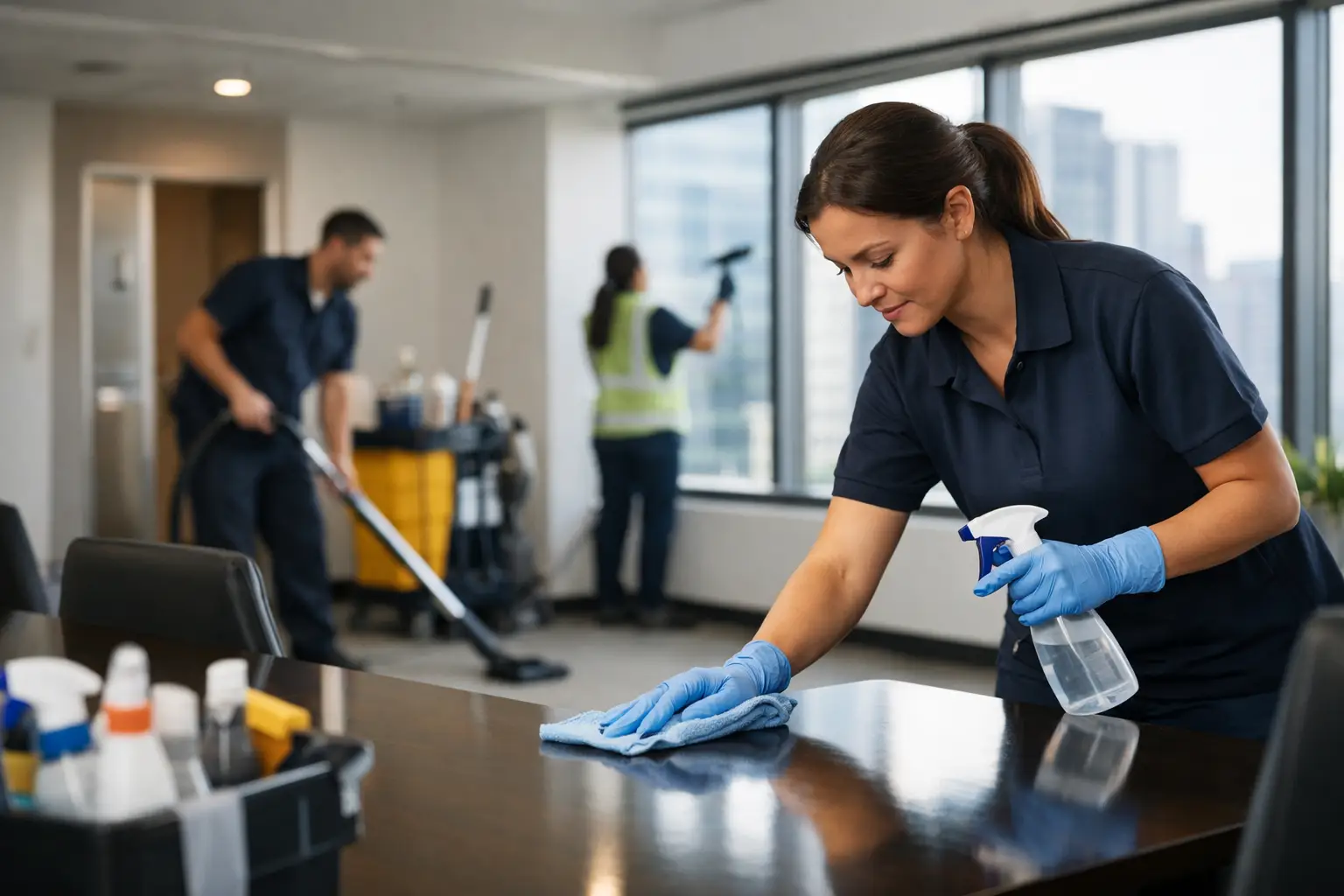

A streaked glass facade, overflowing restroom bins, or slippery lobby floor can change how tenants, visitors, and staff view a property within minutes. The top office building cleaning priorities are not simply about making a space look tidy. They protect occupant health, reduce safety risks, preserve expensive building materials, and keep daily operations moving without disruption.
For property managers and facilities teams, the right priorities depend on the building’s occupancy, tenant mix, operating hours, and access conditions. A busy corporate tower needs a different plan than a low-rise office complex or industrial administration block. The objective is the same: keep visible areas presentable while addressing the hard-to-reach maintenance work that can create larger problems when delayed.
Top Office Building Cleaning Priorities for Commercial Properties
A practical cleaning plan should begin with the areas that affect health, safety, and business continuity most directly. Routine interior cleaning matters, but it should work alongside planned exterior and high-access maintenance rather than replace it.
Keep high-contact areas consistently clean
Office buildings have constant contact points that collect fingerprints, oils, dust, and germs. Entrance doors, elevator buttons, reception counters, handrails, pantry surfaces, meeting room controls, and shared equipment need frequent attention based on traffic levels.
The right frequency depends on how the building is used. A lobby serving multiple tenants may require several touchpoint cleaning rounds per day, while a smaller office may only need a focused daily service. The goal is not excessive cleaning for its own sake. It is to maintain a visibly cared-for environment and reduce the chance that shared surfaces become a source of complaints.
Cleaning teams should also coordinate with security and reception staff. They often see problems first, whether that is a spill near an elevator, dirty entrance glass, or a sudden increase in visitor traffic. Clear reporting helps cleaning resources go where they are needed instead of following a rigid schedule that misses real conditions.
Maintain restrooms before they become a tenant issue
Restrooms are among the strongest indicators of overall building standards. Poor odor control, empty dispensers, stained fixtures, wet floors, and overflowing waste bins can quickly damage tenant confidence. These areas require a combination of cleaning, restocking, inspection, and fast response.
A restroom schedule should account for peak times, not just total occupancy. Buildings with morning arrivals, lunchtime traffic, or public-facing tenants may need inspections between scheduled cleaning visits. Floor dryness is especially critical. Water around sinks or toilet areas creates an avoidable slip risk and should be addressed immediately.
Facilities managers should also watch for repeat issues such as leaking fixtures, poor ventilation, or damaged sealant. Cleaning alone cannot solve a maintenance defect. Early reporting allows the responsible team to correct the source before it causes stains, odors, or water damage.
Protect floors, carpets, and entrance zones
Flooring absorbs the daily impact of a commercial building. Dirt carried in through entryways scratches hard surfaces, dulls finishes, and shortens carpet life. In rainy conditions, it also increases the risk of slips in lobbies, lift areas, and corridors.
Entrance matting, regular vacuuming, spot treatment, and periodic deep cleaning are practical controls. Hard floors may need machine scrubbing, polishing, or recoating depending on the material and wear level. The trade-off is timing. Deep floor work can affect access, create noise, or require drying time, so it is often best scheduled after hours or during quieter periods.
Do not wait until carpet stains or worn floor finishes are highly visible. Restorative work becomes more costly when soil has settled deeply into fibers or protective coatings have failed. A planned maintenance cycle protects the appearance of the building and helps defer replacement costs.
Prioritize exterior windows and facade condition
Exterior presentation is a major priority for office buildings, particularly properties with large glass elevations, curtain walls, cladding, or high-rise facades. Dust, traffic residue, rain marks, algae, and airborne pollution can make a well-managed property appear neglected from a distance.
Window and facade cleaning also require a different level of planning than internal janitorial work. Building height, anchor points, roof access, facade design, public areas below, weather conditions, and access equipment all affect the method and cost. Rope access may suit one section of a tower, while boom lifts, gondolas, or other access methods may be more suitable for another.
Safety cannot be treated as an add-on. High-rise cleaning should be performed by trained personnel using site-appropriate equipment and controls. A proper site review identifies restricted zones, fragile surfaces, access limitations, and operational risks before work begins. This protects occupants, pedestrians, technicians, and the property itself.
Inspect rooftops, gutters, and drainage points
Roof gutters and drainage systems are easy to overlook because they are out of sight. Yet blocked gutters, downpipes, roof drains, and debris traps can lead to ponding water, leaks, staining, mold growth, and damage to ceilings or external walls.
Cleaning priorities should include periodic roof and gutter inspection, especially before periods of heavy rainfall or after storms. Leaves, plastic waste, nesting material, and construction debris can block drainage surprisingly quickly. The exact schedule depends on nearby trees, building height, roof design, and exposure to windblown debris.
This work involves elevated and sometimes restricted areas, so access planning matters. A contractor should assess safe roof entry, edge protection, drainage routes, and the disposal of collected debris. Simply clearing the visible gutter line is not enough if downpipes or outlet points remain blocked.
Address confined and hard-to-access spaces
Some of the most serious cleaning and maintenance concerns develop in areas that staff rarely see. Service shafts, tanks, plant rooms, ceiling voids, drainage chambers, and other confined spaces can accumulate dust, sludge, debris, moisture, and contaminants over time.
These locations should never be approached as routine cleaning tasks. Access restrictions, ventilation, atmospheric conditions, entry procedures, and rescue planning may all be relevant. The right approach depends on the space and the work required, but the principle is clear: use trained personnel and a controlled work process.
For office buildings, this priority often arises during planned maintenance, water issues, renovation work, or pest concerns. Addressing it early can prevent a small hidden condition from becoming an operational disruption.
Set Cleaning Frequencies by Risk, Not Habit
A fixed cleaning schedule is useful, but it should be reviewed against actual building conditions. High-traffic lobbies, elevators, restrooms, and pantries may need daily or multiple daily service. Carpets, hard floors, interior glass, and meeting spaces may follow weekly or monthly cycles. Exterior windows, facades, roofs, gutters, and confined spaces are usually planned at longer intervals based on exposure, condition, and safe access requirements.
Property teams should record recurring complaints, weather-related issues, foot traffic patterns, and maintenance observations. These details help identify where the current program is underperforming. For example, a lobby may look clean at 8 a.m. but require an additional afternoon touch-up because of visitor volume. A facade may need more frequent cleaning on one elevation due to traffic pollution or rain runoff.
The most efficient plan is not always the one with the fewest visits. It is the one that prevents avoidable deterioration and keeps disruption to tenants low.
Choose a Contractor That Can Handle the Full Scope
Standard office cleaning is only one part of commercial property care. When a building requires high-rise window cleaning, facade washing, roof gutter work, confined space cleaning, or commercial painting, using specialists with the right access capability can simplify coordination and reduce risk.
Before appointing a contractor, confirm that the scope is site-specific. Building size, height, surface condition, labor needs, access complexity, work hours, and safety requirements should all be considered in the quotation. A generic price without a site assessment may overlook the conditions that determine safe and effective execution.
Urban Solutions Services Sdn Bhd supports commercial properties with cleaning and maintenance services for demanding, hard-to-access areas. A site visit helps define the work method, access requirements, and practical schedule before technicians begin work.
Site teams should align their risk controls with Malaysia’s Occupational Safety and Health Act when planning the work.
For a site-specific scope, review our high-rise window cleaning services and arrange an assessment before confirming access, timing and cost.
A clean office building should feel controlled rather than constantly corrected. Give attention to the areas people see, the surfaces they touch, and the elevated or hidden spaces where delayed maintenance can become expensive. When priorities are based on risk and building condition, cleaning becomes a dependable part of property performance.