

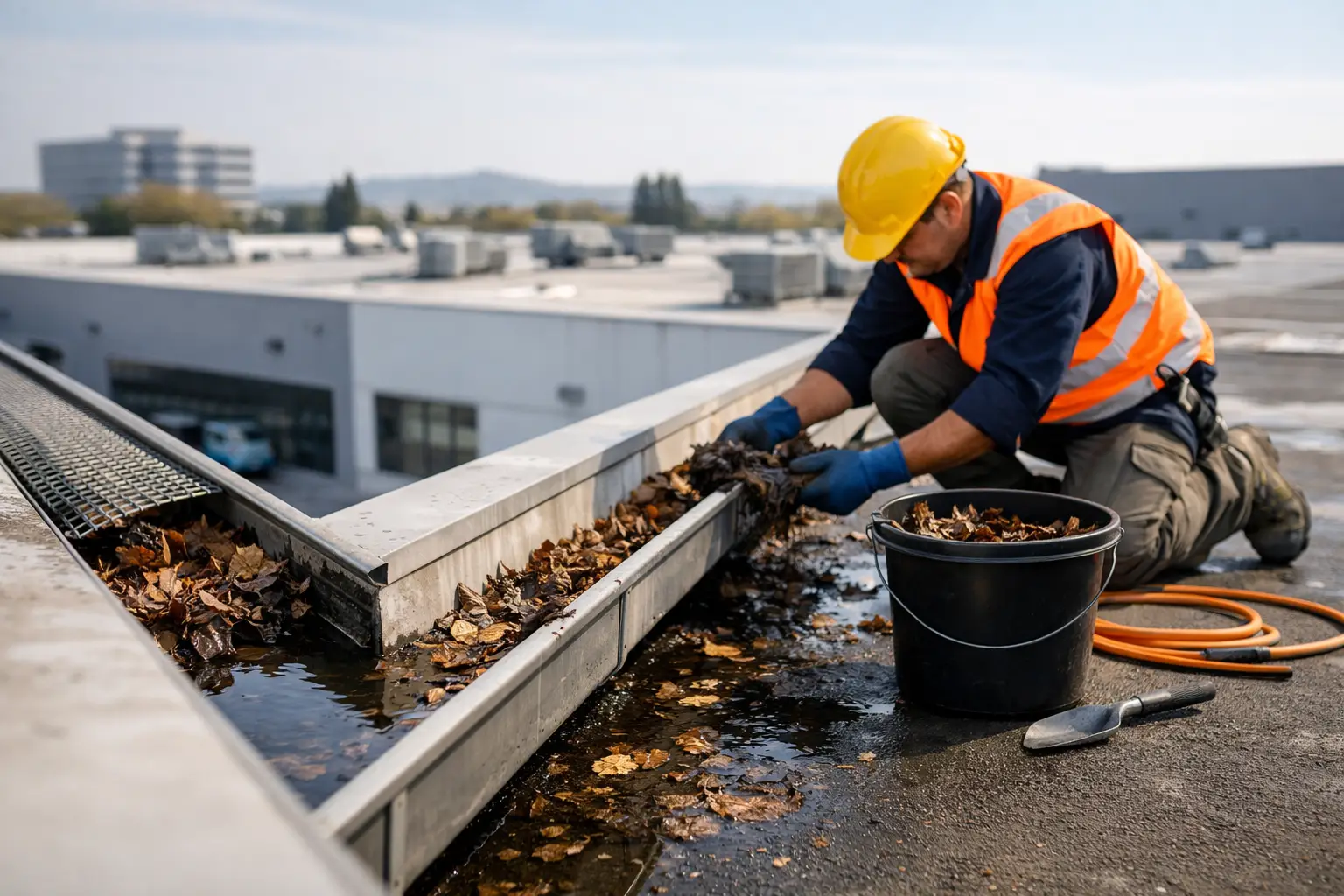

A blocked downspout can turn one heavy afternoon storm into water spilling over roof edges, staining facades, saturating walls, and pooling near entrances. For commercial properties, roof gutter maintenance is not a cosmetic task. It is a practical defense against water damage, safety hazards, tenant disruption, and avoidable repair costs.
For building managers and facilities teams, the challenge is rarely knowing that gutters need attention. The challenge is arranging the work safely, at the right frequency, and with a contractor capable of reaching elevated or difficult roof areas without creating new risk on site.
Why Roof Gutter Maintenance Matters for Commercial Buildings
Gutters, outlets, and downpipes manage a large volume of rainwater in a short time. When the system is clear, water is directed away from the roofline, exterior walls, walkways, and building foundations. When it is obstructed, water takes the easiest path available – often over the gutter edge or back into roof details that were not designed to hold standing water.
The resulting damage may begin quietly. Overflow can leave streaks on exterior finishes, encourage mold growth, corrode metal components, and weaken sealants around roof penetrations. On flat or low-slope roofs, debris can also restrict roof drains and create ponding. Over time, that added load and moisture exposure can affect membranes, flashing, insulation, and interior ceilings.
For offices, retail properties, warehouses, factories, and high-rise developments, poor drainage also creates operational concerns. Water near loading bays, public walkways, and entrances increases slip risk. Leaks above workspaces or electrical systems can interrupt business activity. A maintenance issue that could have been addressed during a planned visit can quickly become an urgent callout during severe weather.
What Commercial Gutter Systems Collect
Leaves are only part of the problem. Commercial roofs collect material from surrounding trees, nearby construction, air-conditioning areas, and normal weather exposure. Dust and fine sediment can combine with organic matter to form dense sludge that is difficult to remove with a simple rinse.
Common obstructions include:
- Leaves, twigs, seed pods, and nesting material
- Roof grit, dust, soil, and windblown debris
- Moss, algae, and vegetation growth around outlets
- Loose roofing material, sealant fragments, and construction waste
- Plastic packaging or other litter carried onto the roof by wind
The type of property affects what accumulates. A warehouse near an industrial zone may experience more airborne dust, while a commercial building surrounded by mature landscaping may need more frequent removal of leaves and organic debris. Buildings near active construction sites often require closer monitoring because sediment can block gutters and drains surprisingly fast.
How Often Should Gutters Be Inspected?
There is no single schedule that suits every building. As a working baseline, many commercial properties benefit from inspection and cleaning at least twice a year, with additional checks before and during periods of heavier rain. Properties with trees overhanging the roof, older drainage systems, or known overflow issues may need quarterly attention.
Frequency should be based on the building’s actual conditions rather than a fixed calendar alone. A high-rise roof with limited tree cover may stay relatively clean but still require regular inspections of outlets, internal drains, and downpipes. A low-rise industrial site can collect more debris even when its gutters are easier to access.
It is also sensible to inspect the system after major storms, nearby construction work, or roof repairs. These events can shift debris into outlets, loosen brackets, or reveal weaknesses that were not visible during routine maintenance.
Warning Signs That Cannot Wait
Some signs indicate that cleaning should be arranged promptly instead of waiting for the next scheduled visit. These include water cascading over gutter edges during rain, stains running down exterior walls, visible vegetation in gutters, sagging gutter sections, slow-draining outlets, and puddles near downpipe discharge points.
Indoor symptoms matter too. Damp ceiling tiles, water marks near upper-level walls, peeling paint, and recurring leaks may be linked to roof drainage, although a qualified inspection is needed to confirm the source. Treating interior staining without addressing the water path only delays the problem.
A Proper Commercial Gutter Service Includes More Than Debris Removal
Effective roof gutter maintenance starts with access planning. The work may require roof access, ladders, mobile elevated work platforms, rope access, or other approved methods depending on building height, roof design, and site conditions. The safest method is not always the quickest-looking option. It must suit the property, work area, weather, and fall-protection requirements.
Once access is established, technicians should remove accumulated debris from gutters, roof valleys, drain channels, outlets, and accessible downpipe entry points. Material should be collected and disposed of responsibly rather than pushed onto the roof or surrounding grounds.
Cleaning should be followed by a controlled water-flow test where appropriate. This helps identify slow outlets, blocked downpipes, poor gutter falls, or leaks at joints. A gutter that appears clear from above can still have a downpipe blockage lower in the system.
The inspection should also look for physical defects, such as loose brackets, separated joints, corrosion, cracked sealant, damaged gutter sections, and inadequate discharge away from the building. Cleaning restores flow, but it does not correct a drainage system that is sagging or poorly connected. Where repairs are needed, they should be identified clearly so the facilities team can prioritize action.
Safety Is the Deciding Factor on Elevated Properties
Gutter work is often underestimated because the task itself sounds straightforward. On commercial properties, the risk comes from where the work is performed. Roof edges, fragile roof sheets, wet surfaces, restricted access points, electrical equipment, and public areas below all require proper control measures.
Untrained workers should not be sent onto elevated roofs simply to clear visible leaves. A fall, dropped object, or damaged roof panel can cost far more than a professional service. The contractor should assess access routes, establish exclusion zones where needed, use suitable fall-protection equipment, and work within a planned method for the specific site.
For high-rise and complex buildings, experience in exterior access work is particularly valuable. The team must understand how gutter cleaning connects with facade conditions, roof drainage, building operations, and safe movement around hard-to-reach areas. Urban Solutions Services Sdn Bhd approaches these assignments as site-specific maintenance work, not as a one-size-fits-all cleaning task.
How to Plan Gutter Maintenance Without Disrupting Operations
The most efficient approach is to include gutters in a broader preventive maintenance plan. Schedule inspections around weather patterns and building operations, rather than waiting for a leak complaint. For retail and office sites, work may need to be planned outside peak visitor periods. Industrial facilities may require coordination with loading schedules, safety officers, or restricted production areas.
Before requesting a quotation, prepare basic details such as building height, roof type, estimated gutter length, known access limitations, and any past water issues. Photos can be useful, but they do not replace a proper site assessment. Access complexity, labor requirements, equipment needs, and the condition of the drainage system all influence the scope and cost of work.
A clear scope also prevents gaps between cleaning and repairs. If the goal is only debris removal, state that. If the property needs inspection, water testing, minor repairs, debris disposal, and reporting, include those requirements from the start. The right service level depends on the condition of the building and the consequences of drainage failure.
Do Not Let Overflow Become a Roof Problem
Gutters are easy to ignore because most of the system is out of sight. By the time overflow is visible from ground level, debris may already be affecting outlets, roof edges, and wall finishes. Planned inspections give facilities teams control over timing, cost, and site safety.
Where the work involves roof or elevated access, property teams should also review DOSH guidance on working at height when planning access, supervision and fall-prevention controls.
For a site-specific scope, review our roof and gutter services and arrange an assessment before confirming access, timing and cost.
If your property has difficult roof access, recurring overflow, or visible drainage issues, arrange a professional site assessment before the next heavy rain turns a manageable cleaning job into a repair project.