

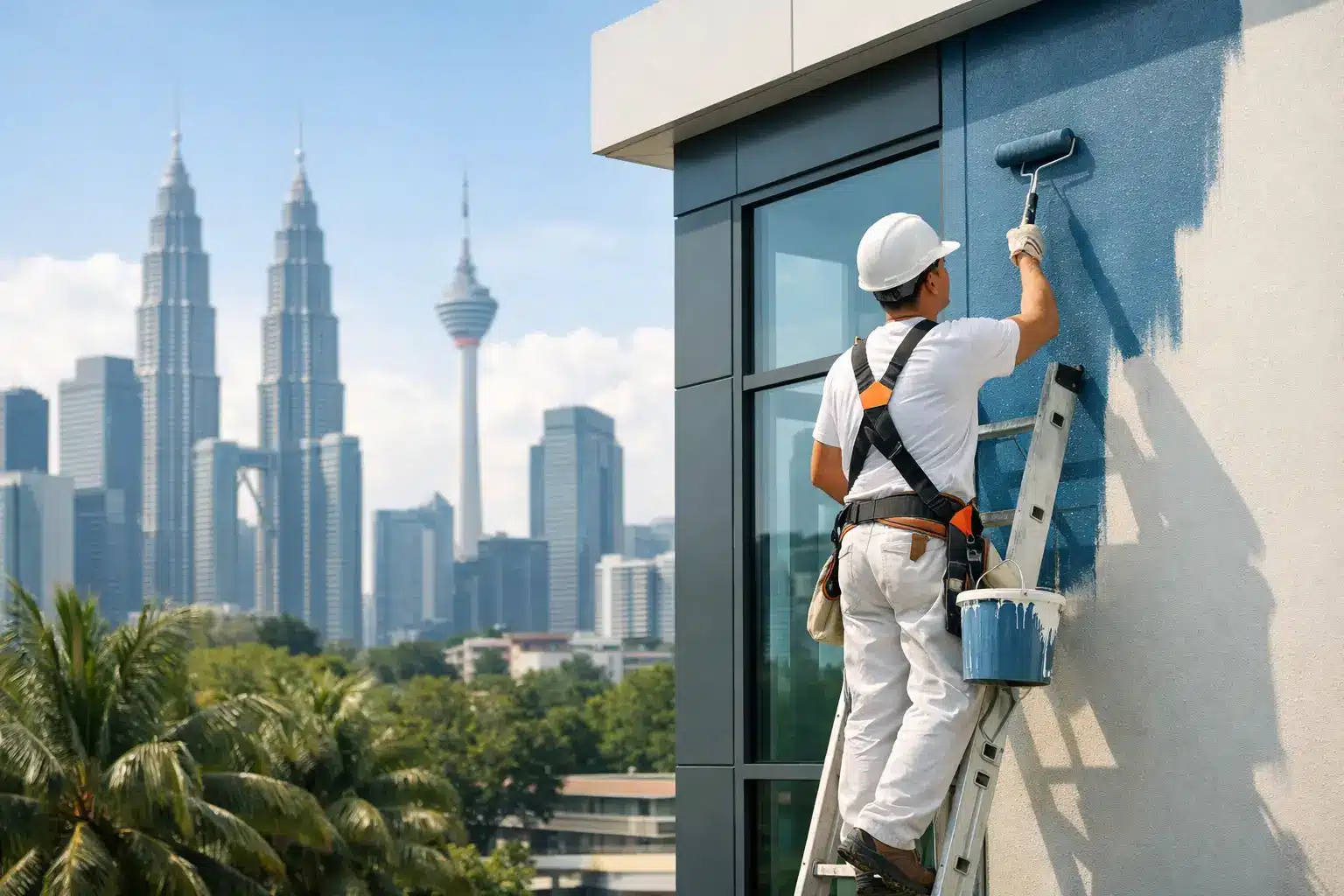

A faded office exterior changes how people read a building before they ever walk through the lobby. In Kuala Lumpur, where heat, rain, humidity, and traffic exposure wear surfaces fast, office exterior painting Kuala Lumpur projects are not just about fresh color. They are about protecting the building envelope, keeping the property presentable, and carrying out the work without creating safety or access problems.
For property managers and facilities teams, that usually means the painting contractor matters as much as the paint itself. A low-rise office block with simple wall access is one thing. A multi-story commercial building with glass sections, exposed concrete, signage, rooftop obstacles, and restricted working hours is another. The right approach starts with understanding the building, not just pricing by square footage.
Why office exterior painting matters more than appearance
Exterior painting does improve curb appeal, but commercial buyers rarely approve a project for appearance alone. The real value is protection. Exterior coatings help shield concrete, plaster, steel, and other substrates from moisture intrusion, UV exposure, staining, and early surface breakdown.
That matters even more in office environments where the building exterior directly affects tenant confidence, visitor perception, and long-term maintenance costs. A neglected facade can make an otherwise well-run property look poorly managed. On the other hand, a clean and well-painted exterior signals upkeep, professionalism, and operational control.
There is also a cost angle. When peeling paint, cracks, or water marks are left too long, repainting can turn into broader repair work. Surface damage spreads. Rust gets worse. Hairline cracks become more serious patching jobs. In that sense, repainting at the right time is often cheaper than waiting.
Office exterior painting Kuala Lumpur projects require site-specific planning
No two office buildings should be quoted the same way. In Kuala Lumpur, exterior painting conditions vary widely from one property to the next. Height, facade design, surrounding access, neighboring buildings, parking conditions, and working-hour restrictions all affect execution.
A proper site review should look at substrate condition first. If the wall has chalking, blistering, flaking paint, algae growth, or visible cracks, those issues need treatment before any new coating goes on. Painting over failed surfaces may make the building look better for a short period, but it does not solve the underlying problem.
Access is the next major factor. Some buildings can be handled with boom lifts or scaffolding. Others need rope access or a combination of methods to reach narrow or obstructed areas safely. This is where many commercial painting jobs become more technical than buyers expect. High-rise sections, awkward elevations, and areas above glass canopies or service lanes require experienced access planning, not improvised methods on site.
Timing also affects the outcome. Exterior painting has to be sequenced around weather exposure, drying time, and daily building operations. For offices, that may include avoiding tenant peak hours, protecting entry points, controlling overspray risk, and maintaining safe pedestrian flow around the site.
What a professional exterior painting scope should include
A dependable commercial painting scope is more than paint application. Surface preparation is usually the difference between a finish that lasts and one that fails early.
Preparation may include pressure cleaning, facade washing, scraping loose coatings, patching cracks, treating damp or stained areas, sanding rough sections, priming exposed substrates, and masking nearby surfaces. If the facade has accumulated dirt, pollutants, or biological growth, cleaning should happen before coating begins. On many office buildings, painting and facade cleaning work are closely connected.
Material selection should also match the substrate and exposure level. Exterior wall paint for a sheltered office entrance may not be suitable for upper facade sections exposed to stronger sun and rain. The same goes for metal elements, trim, and service structures. Different surfaces need different systems.
Commercial clients should expect clear information on coating type, number of coats, prep requirements, access method, and any exclusions. If those details are vague, there is usually a gap somewhere in the scope.
Common surfaces in office exterior painting
Office exteriors often combine painted render, concrete, metal frames, external steelwork, perimeter walls, and service enclosures. Each one behaves differently. Concrete can trap moisture. Metal can corrode. Old painted surfaces may have inconsistent adhesion across elevations.
That is why one blanket solution rarely works. A proper contractor evaluates each area by condition, not just by appearance from the ground.
Safety and access are not side issues
For mid-rise and high-rise office buildings, painting is a work-at-height job first and a paint job second. Safety planning needs to cover access equipment, anchor points, technician competency, exclusion zones, weather monitoring, and on-site supervision.
This is especially relevant when the facade includes narrow ledges, recessed areas, curtain wall edges, rooftop drops, or sections above public walkways. The risk profile changes quickly depending on the building layout.
A contractor with high-rise access capability can usually reduce disruption because the team is already equipped to work on hard-to-reach areas without creating unnecessary obstruction below. That is often a better fit for occupied office properties where parking, entry access, and tenant movement cannot be shut down for long periods.
Urban Solutions Services Sdn Bhd operates in this type of environment, where exterior improvement work often overlaps with high-access maintenance requirements. For commercial buyers, that matters because it reduces the need to coordinate separate vendors for facade cleaning, access support, and painting-related exterior work.
How to evaluate an office exterior painting contractor
Commercial decision-makers usually compare price first, but price alone can hide major differences in scope. A lower quote may exclude surface repairs, use thinner coating systems, or assume easier access than the building actually requires.
A better evaluation starts with questions. Has the contractor reviewed the site in person? Are they pricing based on actual access conditions? Do they understand occupied-building constraints? Can they explain the preparation process clearly? Are they experienced with elevated exterior work, not just interior office repainting?
It also helps to look at how they handle operational details. Strong contractors are usually direct about timelines, weather dependencies, area isolation, and sequencing. They do not promise unrealistic speed if the building condition says otherwise.
When the cheapest quote becomes the expensive one
If paint is applied over dirty or unstable surfaces, failure can show up quickly as peeling, patchiness, or uneven fading. At that point, the property owner may end up paying twice – once for the original job and again for corrective work.
The same applies to access planning. If the team arrives without the right method for reaching key facade sections, delays start immediately. Equipment changes, schedule slips, and partial completion all create avoidable friction for the client.
Budget factors in office exterior painting Kuala Lumpur work
Most commercial buyers want a fast price, but office exterior painting Kuala Lumpur costs are shaped by several moving parts. Building height is a major one, because labor, access equipment, and safety controls increase with complexity. Surface condition is another. A facade that needs washing, crack repair, patching, or rust treatment will cost more than one that is already sound.
Paint system choice also affects budget. Higher-performance coatings usually cost more upfront, but they may extend the repaint cycle and improve weather resistance. For some buildings, that is a smarter long-term decision. For others, especially where ownership plans or redevelopment timelines are shorter, a different balance may make sense.
Then there is access. Open perimeter access is simpler than painting above active driveways, tight side lanes, landscaped setbacks, or pedestrian-heavy entrances. This is why site-specific quotations are standard for serious commercial work.
Practical ways to reduce disruption during painting
A well-managed project should protect business continuity as much as the facade. That usually means scheduling noisy prep work carefully, isolating active zones, coordinating with building management, and communicating clearly with occupants.
For office properties, early planning around tenant hours, visitor routes, loading areas, and parking access can prevent most complaints. Even simple measures like staged work zones and clear ground barriers make a difference.
Weather planning is also part of disruption control. Rushing an exterior job before rain, or restarting repeatedly because surfaces are not ready, tends to stretch the project and frustrate everyone involved. A realistic schedule is more useful than an aggressive one that slips immediately.
When is the right time to repaint an office exterior?
There is no perfect calendar rule, because exposure conditions vary by building. Some offices need repainting because the finish has faded badly. Others still look acceptable from a distance but already show warning signs such as chalking, hairline cracking, mold staining, or localized peeling.
A simple site inspection can usually tell whether the building needs a full repaint, targeted repairs with recoating, or surface cleaning first. That is the practical starting point. Not every facade problem needs the same scope, and not every office building should be pushed into a full repaint if maintenance treatment will solve the issue for now.
Where the work involves roof or elevated access, property teams should also review DOSH guidance on working at height when planning access, supervision and fall-prevention controls.
For a site-specific scope, review our commercial painting services and arrange an assessment before confirming access, timing and cost.
If your office exterior is starting to look uneven, tired, or difficult to maintain, the best next step is not guessing from ground level. It is getting the facade assessed properly, with access, condition, and execution considered together. A good exterior painting job should do more than improve the building this month. It should make ongoing property maintenance easier for the next few years.