

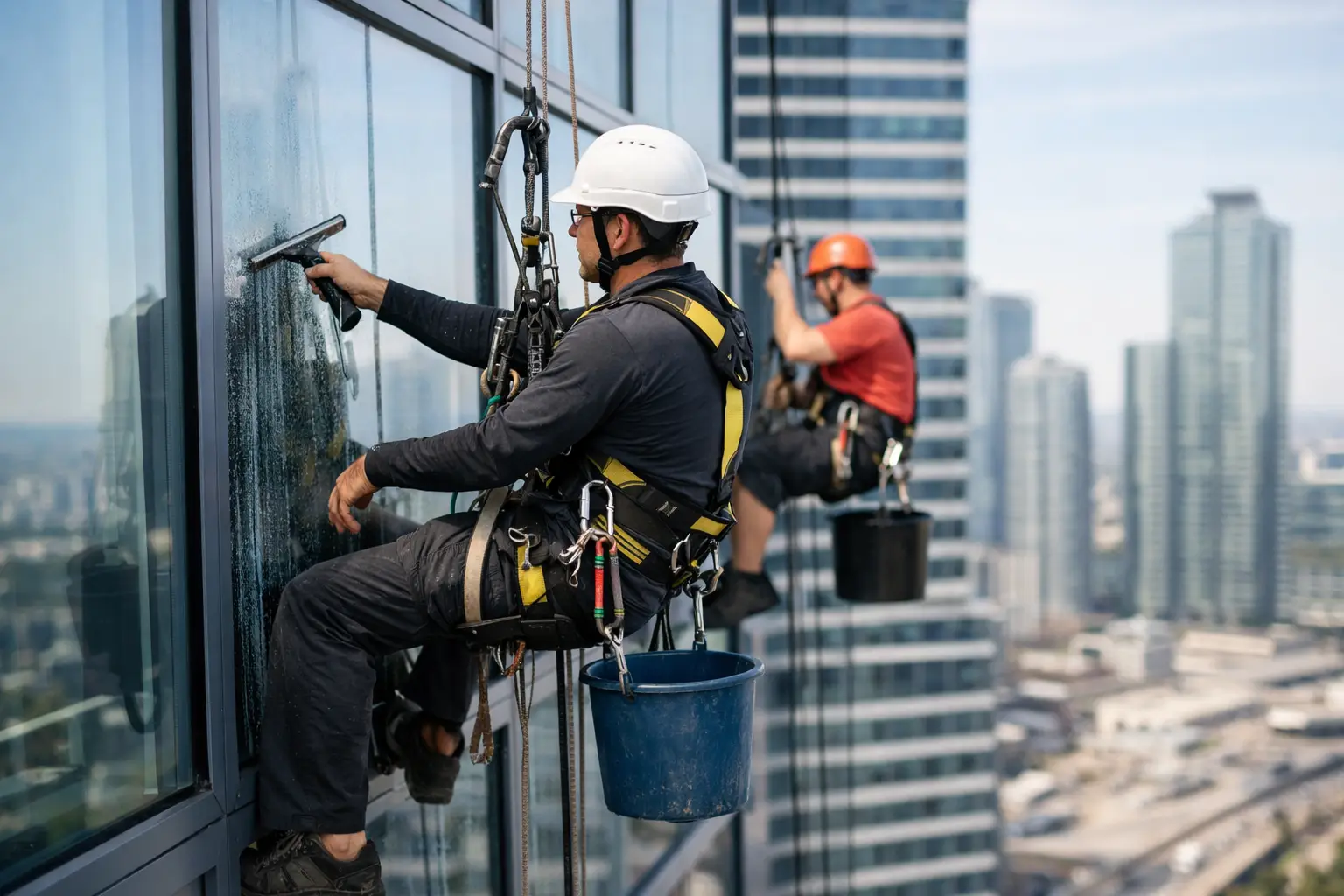

A streaked glass facade does more than hurt curb appeal. For commercial buildings, it can signal deferred maintenance, create a poor first impression for tenants and visitors, and raise questions about how exterior assets are being managed. That is usually when facility teams ask the right question: is high rise window cleaning safe?
The short answer is yes, but only when the work is planned, supervised, and carried out by trained technicians using the right access method for the building. High-rise window cleaning is not routine janitorial work. It is specialized exterior maintenance that combines access engineering, fall protection, weather judgment, equipment inspection, and disciplined on-site procedures.
For property managers and building owners, that distinction matters. Safety is not just about whether a technician is wearing a harness. It depends on how the full job is designed before anyone leaves the ground.
Is High Rise Window Cleaning Safe When Done Professionally?
Professional high-rise window cleaning can be performed safely, but it is never something to treat casually. The level of risk changes based on building height, facade design, roof access, anchor point condition, surrounding pedestrian traffic, and weather exposure. A 12-story office tower with straightforward suspended access is very different from a mixed-use building with recessed glass, architectural fins, and limited roof clearance.
That is why experienced contractors do not give blanket answers or one-size-fits-all pricing. A proper assessment looks at the building itself, how workers will move across elevations, what equipment is required, and what controls need to be in place to protect both the crew and the public below.
When those controls are handled correctly, high-rise window cleaning becomes a controlled technical service rather than an unmanaged hazard.
What Actually Makes It Safe
Safety starts with worker competence. High-rise crews need practical training in work at height, equipment use, emergency response, and hazard recognition. Experience also matters. A technician may know how to operate on ropes or suspended platforms, but that does not automatically mean they can handle every facade condition safely.
The next factor is access method. Depending on the building, contractors may use rope access, gondolas, boom lifts, scaffolding, or other approved systems. The safest option is not always the fastest or the cheapest. It is the method that suits the building layout, access points, and work scope with the least exposure to avoidable risk.
Equipment condition is another major part of the equation. Harnesses, ropes, descenders, lifelines, anchors, cradles, and lifting systems all require inspection and proper use. Safety failures often come from poor equipment control, improvised setups, or using gear that is not suitable for the actual facade conditions.
Site planning is just as important as personal protective equipment. Before work starts, the contractor should assess drop zones, restrict ground-level access where needed, coordinate with building management, and account for tenant activity, loading bays, canopies, and public walkways.
The Biggest Risks in High-Rise Window Cleaning
The obvious risk is falls from height, but that is only one part of the exposure. Falling tools, unstable access systems, sudden weather changes, facade obstructions, and poor communication can all turn a manageable task into a serious incident.
Wind is one of the most underestimated issues. On paper, weather may appear acceptable at ground level, but conditions can be very different at elevation. Wind funnels around corners, between towers, and across open rooflines. That affects worker stability, suspended equipment movement, and even visibility during the cleaning process.
Building design also changes the risk profile. Decorative cladding, protruding ledges, sloped surfaces, and limited anchor positions can complicate movement and increase the chance of contact damage or unsafe positioning. Older buildings may present another issue if anchor systems or roof access features are not clearly documented or maintained.
Ground-level safety matters too. A safe high-rise operation protects the public as well as the crew. Barricading, signage, controlled access zones, and timing work around building traffic are all part of responsible execution.
Why Cheap Window Cleaning Quotes Can Be a Red Flag
For commercial buyers, cost control matters. But if a high-rise window cleaning quote comes in far below market expectations, it is worth asking what has been left out.
A low quote may mean fewer technicians on site, weaker supervision, unsuitable access methods, rushed schedules, or inadequate planning. It can also mean the contractor is not fully accounting for facade complexity, safety setup time, or the need for proper equipment.
This is where experienced B2B buyers tend to make the best decisions. They understand that exterior maintenance on tall buildings is not just a cleaning line item. It is a risk-managed service. A provider that prices the job based on building height, access difficulty, labor requirements, and operational controls is usually taking the work more seriously than one offering a flat rate without a site review.
That does not mean the highest quote is always the best one. It means the scope should make sense. If the method, manpower, and safety planning are vague, the price alone should not create confidence.
How to Judge Whether a Contractor Takes Safety Seriously
If you are responsible for a commercial property, the best question is not simply whether high-rise window cleaning is safe. It is whether this contractor has a safe system for your building.
A capable provider should be able to explain how access will be achieved, what risks have been identified, what controls will be used, and how the work area will be managed during operations. They should also be clear about what they need from the building side, such as roof access, timing restrictions, or temporary clearance of certain zones.
Look for practical detail, not broad assurances. Statements like “we follow safety standards” are not enough on their own. You want to hear how the team approaches pre-job assessment, equipment inspection, crew supervision, emergency preparedness, and weather-related stop-work decisions.
A contractor with real high-rise experience will usually ask better questions during the quoting stage. They will want to know the building height, facade type, access limitations, rooftop conditions, and whether there are sensitive public areas below. That level of detail is a good sign because it shows they are planning the job, not guessing.
Is High Rise Window Cleaning Safe for Every Building?
Not every building should be approached the same way, and that is where the answer becomes more nuanced. In general, yes, high-rise window cleaning can be safe across a wide range of commercial properties. But the method and schedule may need to change depending on the site.
Some buildings are ideal for routine cleaning with established systems. Others require partial access, special rigging plans, work outside normal business hours, or staged cleaning over multiple days. In some cases, a building may need maintenance work on anchors, roof equipment, or facade access infrastructure before window cleaning should proceed.
This is especially relevant for older towers, architecturally complex facades, and sites with high pedestrian activity. A good contractor will not force a standard process onto a non-standard building. They will adjust the plan to fit the actual conditions.
That flexibility is often what separates a specialist from a general cleaning vendor.
What Building Managers Should Expect Before Work Begins
A professional high-rise cleaning project should begin with a site review, not a rushed booking. That review helps determine the right access method, crew size, work duration, and any site controls required.
You should expect a clear scope of work, a realistic schedule, and communication around building operations. If tenants, visitors, or loading areas may be affected, that should be addressed early. The contractor should also account for weather disruptions rather than treating them as an afterthought.
For large office, commercial, and industrial properties, coordination is part of safety. The cleaner, facility team, and site management all need the same understanding of how the work will be carried out and how temporary restrictions will be managed.
Urban Solutions Services Sdn Bhd approaches this kind of work as a technical access service, not a basic cleaning task. That difference is what helps reduce risk while delivering the finish commercial properties expect.
The Real Answer to the Safety Question
So, is high rise window cleaning safe? Yes, when the contractor has the right people, the right equipment, and a site-specific plan that matches the building. No, if the work is underplanned, underqualified, or treated like standard cleaning at height.
For building owners and facility teams, the safest decision is usually to slow down at the selection stage. Ask how the job will be done. Ask what could affect the method. Ask what protections are in place for both technicians and the public. A clean facade matters, but the way it gets cleaned matters more.
Where the work involves roof or elevated access, property teams should also review DOSH guidance on working at height when planning access, supervision and fall-prevention controls.
For a site-specific scope, review our high-rise window cleaning services and arrange an assessment before confirming access, timing and cost.
When high-rise work is handled by a specialist that understands access, risk, and execution, safety is not a sales claim. It is part of the job from the first site visit onward.