

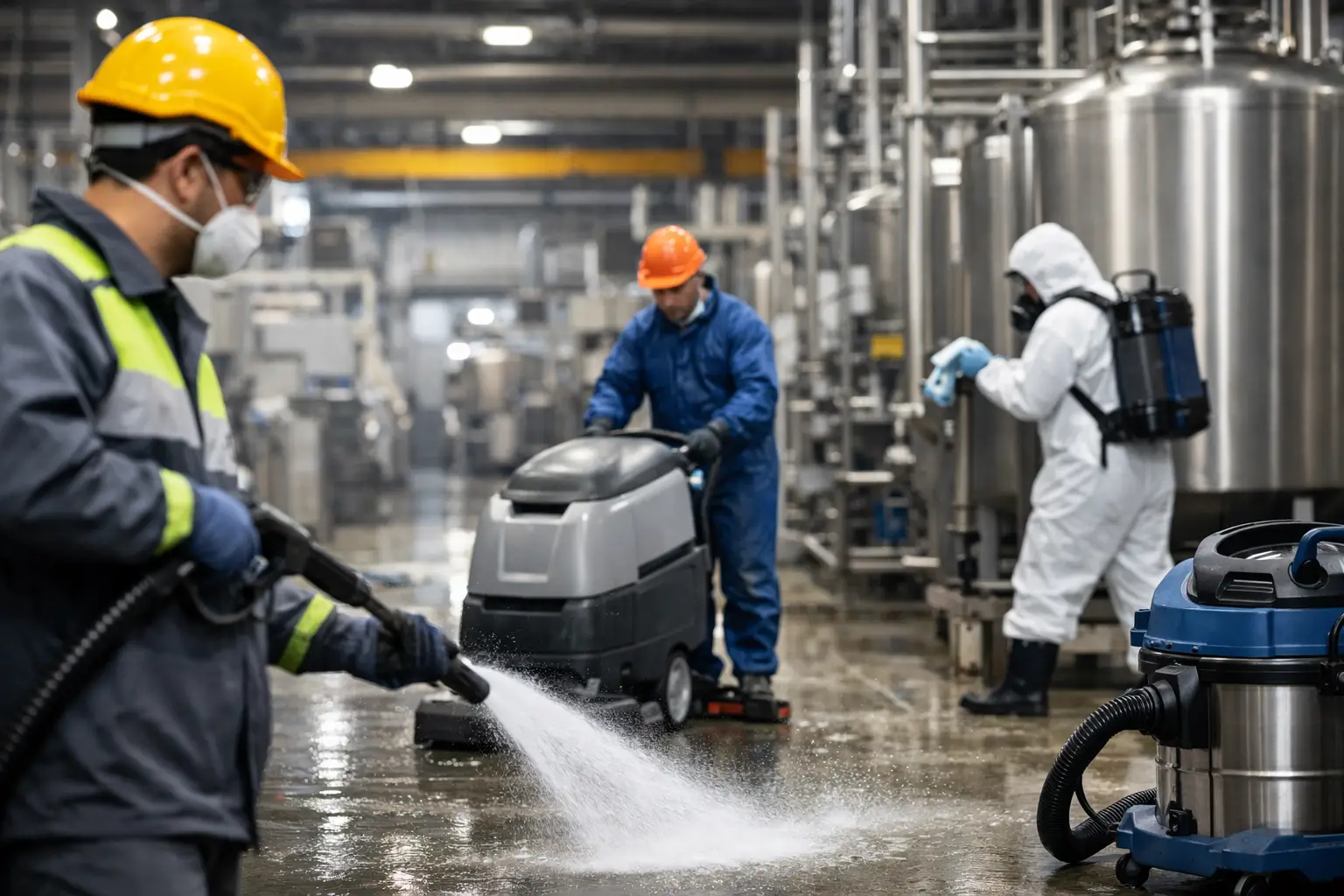

A factory floor can look acceptable at a glance and still hide the problems that lead to downtime, safety issues, and faster wear on the building itself. That is why industrial cleaning services Johor are rarely just about appearance. For plant operators, facility managers, and property owners, the real question is whether the cleaning scope matches the risks, access limits, and operating conditions on site.
Industrial environments are demanding by default. Dust builds up in overhead areas. Grease settles into production zones. Exterior surfaces take on traffic film, weather staining, and residue that standard commercial cleaning teams are not equipped to handle. Add elevated facades, roof gutters, service corridors, confined spaces, or shutdown-sensitive work areas, and the gap between a routine cleaner and a qualified industrial contractor becomes obvious.
What industrial cleaning services in Johor should actually cover
In many facilities, cleaning is treated as a broad category when it should be split into technical scopes. Office cleaning, common area upkeep, and washroom maintenance are one thing. Industrial cleaning is different because it often involves specialized equipment, trained crews, access planning, and method statements that fit the site.
A capable contractor should be prepared to handle more than open, easy-to-reach spaces. That includes high-level cleaning, external facade washing, high-rise window cleaning, roof gutter clearing, and work in hard-to-access zones where safety controls matter as much as cleaning results. In industrial and commercial properties, these tasks often overlap with preventive maintenance because the condition of exterior surfaces, drainage points, and elevated structures affects long-term building performance.
This is where many procurement decisions go wrong. A low quote may cover visible areas only, while the difficult sections are excluded, rushed, or handled without proper controls. If your building has height, access restrictions, sensitive operations, or confined spaces, the cleaning plan needs to reflect that from the start.
Why access capability matters in industrial cleaning services Johor
Access is often the deciding factor in whether a job is done properly. A contractor may be able to clean a lobby or warehouse aisle, but that does not mean they can safely reach facade panels, upper-level glazing, rooftop drainage lines, or narrow service voids. In industrial cleaning, the hardest part is frequently not the cleaning itself. It is reaching the work area safely, without disrupting operations or creating unnecessary risk.
This matters for buildings with multiple elevations, active loading zones, plant equipment, or restricted work areas. It also matters for sites that cannot afford improvised methods. Ladders and basic tools may be enough for light work in low-risk settings, but not for high-rise glass, elevated external walls, or confined service areas.
A specialist contractor should assess how the crew will access each section of the site before work begins. That includes identifying anchor points, equipment requirements, fall protection, work-at-height procedures, exclusion zones, and any shutdown coordination needed. If those conversations are missing during the quoting stage, the proposal is probably too generic for an industrial job.
Safety is not a line item – it is part of the service
Commercial buyers usually ask about price first, then schedule. Both matter, but safety should shape the whole scope. Industrial cleaning work can involve chemicals, slip hazards, elevated positions, wet surfaces, moving machinery, and enclosed spaces. A contractor that treats safety as paperwork instead of execution creates avoidable exposure for the client.
A more dependable approach starts with site review. The contractor should want to understand your layout, traffic flow, operating hours, risk areas, and access limitations. They should also be clear about what can be done during live operations and what should be scheduled during off-peak hours or shutdown windows.
There is also a trade-off to manage. The fastest cleaning method is not always the safest or most suitable one. Aggressive washing can damage surfaces. Poor chemical selection can affect coatings or leave residues. Rushing overhead work can disrupt operations below. A qualified team balances speed with safe execution and surface-appropriate methods.
Site-specific quotes are usually the right choice
For industrial properties, flat-rate pricing can be misleading. Two buildings with the same floor area can require very different labor, equipment, and access planning. Height, facade condition, contamination type, roof layout, and the number of restricted zones all affect the true scope.
That is why site-specific quotations tend to produce better outcomes. They allow the contractor to assess what is actually needed rather than forcing the work into a standard package. For clients, this reduces the risk of change orders, scope disputes, and under-resourced crews arriving on site.
A proper quote should account for building size, height, labor requirements, access complexity, and the nature of the cleaning task. Exterior washing, confined space cleaning, gutter clearing, and facade work all carry different demands. The more technical the scope, the less useful a one-size-fits-all estimate becomes.
For larger sites, a site visit is not just helpful. It is often the only way to price the job accurately and schedule it without surprises.
What to look for in a contractor
Experience matters, but relevant experience matters more. If your property includes elevated surfaces, glazed facades, roof-level drainage, or inaccessible service areas, ask whether the contractor handles those conditions regularly. Industrial and high-risk access work should not be an occasional add-on.
It also helps to look at how the contractor defines the work. Strong providers are specific. They talk about methods, crew capability, site assessment, equipment, and execution planning. Weak providers tend to stay general and focus only on being affordable or fast.
Responsiveness is another useful signal. Industrial clients need vendors who can visit the site, clarify the scope, and coordinate with facilities or operations teams without dragging out the process. Delays during the inquiry stage often continue into mobilization and execution.
Finally, consider whether the contractor can support related maintenance needs. In many commercial and industrial buildings, exterior cleaning, gutter services, facade care, and access-based maintenance are connected. Working with one specialist provider can simplify coordination and reduce the need to brief multiple vendors on the same site constraints.
Common problem areas that need more than routine cleaning
Some building areas repeatedly get overlooked until they create visible or operational issues. Roof gutters are a good example. When they clog, the problem quickly moves beyond cleanliness and into overflow, staining, water intrusion, and avoidable building damage.
External facades are another. Dirt, algae, pollution film, and runoff marks do more than affect appearance. Over time, surface contamination can shorten the life of finishes and make a property look poorly maintained, even if internal operations are well managed.
High-rise glazing often falls into the same category. For office towers, mixed-use buildings, and larger industrial facilities with administrative blocks, dirty windows affect first impressions. But the bigger issue is access. If the contractor is not equipped to clean elevated glazing safely, the job tends to be deferred until the condition becomes too obvious to ignore.
Then there are confined or difficult-access areas. These are the sections most likely to be skipped by general cleaning teams and the most likely to collect dust, grime, moisture, or debris over time. Ignoring them may save money in the short term, but it usually leads to harder and more expensive remediation later.
When routine cleaning is enough – and when it is not
Not every property needs a highly technical cleaning scope every month. That depends on how the building is used, what contaminants are present, and which parts of the structure are difficult to access. A low-rise commercial site with easy roof access and limited exterior exposure may only need periodic specialist work.
A larger industrial property, by contrast, may need a mix of recurring and project-based services. Routine internal cleaning can continue on a standard schedule, while facade washing, high-level dust removal, gutter maintenance, or confined space cleaning are planned separately based on site conditions.
That distinction matters because it affects budgeting and contractor selection. If the site requires both day-to-day cleaning support and technical access work, it helps to choose a provider that understands where the boundary sits. You do not want to overpay for specialist capability where it is unnecessary, but you also do not want a general team stretched beyond its safe working limits.
Choosing a service partner, not just a vendor
The best industrial cleaning outcomes usually come from contractors who understand the building as an operating asset, not just a job site. They know that cleaning affects presentation, safety, drainage, access, maintenance cycles, and how smoothly your team can keep the property running.
That is the standard serious buyers should expect from industrial cleaning services Johor. Clear scope. Real access capability. Safe execution. Site-based pricing. And a crew that can handle demanding work without turning every difficult area into someone else’s problem.
Site teams should align their risk controls with Malaysia’s Occupational Safety and Health Act when planning the work.
For a site-specific scope, review our commercial cleaning services and arrange an assessment before confirming access, timing and cost.
If your site includes height, restricted access, exterior exposure, or maintenance-sensitive zones, it is worth bringing in a specialist early. A short site visit and a properly defined quote can prevent a lot of unnecessary risk later.