

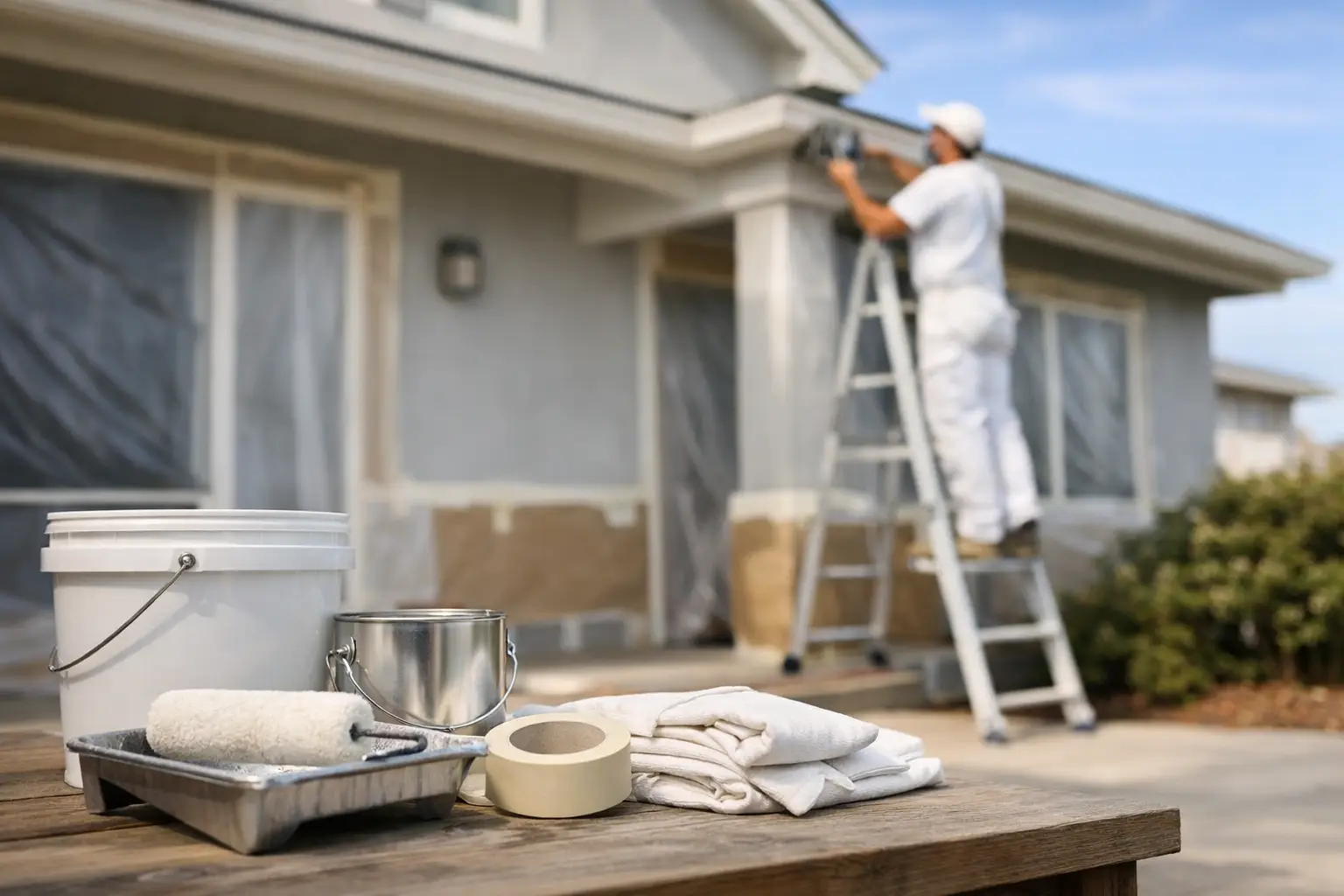

A commercial paint job usually fails before the first coat goes on. The problem is rarely the paint itself. It is poor surface prep, missed defects, trapped moisture, and access issues that were never resolved at the start. If you are planning exterior works, knowing how to prepare building for painting is what protects the finish, the schedule, and the budget.
For property managers and facilities teams, preparation is not a cosmetic step. It is a maintenance process. Done properly, it helps paint adhere, reveals substrate damage early, and reduces the risk of rework on high-rise facades, rooftops, service ledges, and other hard-to-reach areas.
How to prepare building for painting starts with inspection
Before any washing, patching, or coating begins, the building needs a proper site assessment. This is where many commercial projects either gain control or lose it. A visual check from the ground is not enough, especially on taller buildings where staining, cracks, failed sealant, and coating breakdown are often concentrated at upper levels or sheltered elevations.
A full inspection should look at the facade material, the condition of existing paint, visible cracks, water ingress, biological growth, joint failure, and access constraints. Concrete, metal cladding, plastered walls, and masonry each require a different prep approach. If the old coating is chalking heavily or peeling in multiple areas, surface treatment will be more extensive than a simple wash-down and repaint.
This stage also helps identify what is causing the paint to fail. If the root issue is water intrusion from failed sealant, blocked gutters, or roof edge leakage, repainting without repair will only hide the problem temporarily. On commercial buildings, that usually means faster deterioration and a second round of cost much sooner than expected.
Cleaning is not optional
Paint needs a sound, clean surface. Dirt, pollution film, algae, mildew, grease, and loose powder all interfere with adhesion. On urban commercial properties, facade contamination is often heavier than expected, especially near roads, industrial zones, loading areas, and exhaust discharge points.
The right cleaning method depends on the surface condition. Some facades can be pressure washed safely. Others need controlled washing with the correct pressure range and cleaning agents to avoid damaging render, sealant lines, or older coatings. High-rise structures add another layer of planning because access equipment, technician movement, and water runoff all need to be managed properly.
This is where specialized exterior cleaning matters. If a building has elevated glass sections, decorative fins, narrow ledges, or recessed facade zones, incomplete cleaning can leave behind contamination in exactly the places where new paint needs to bond. For larger commercial assets, cleaning and painting should be treated as one coordinated scope, not two separate jobs handled without site alignment.
Watch for hidden contamination
Some surfaces look clean until they dry. Chalking, salt deposits, and residue from previous maintenance chemicals can stay behind after a basic wash. If the surface still feels dusty or leaves residue on the hand, it is not ready. In coastal or industrial environments, this check becomes even more important because airborne contaminants can shorten coating life if they are not fully removed.
Repair work comes before primer
Once the building is clean, defects become easier to see. This is the point where repairs should be carried out, not rushed through. Hairline cracks, hollow render, spalling concrete, rust bleed, failed sealant, and damaged joints all affect the performance of the new paint system.
Small surface cracks may only need localized treatment, but active cracks or moisture-related defects require closer evaluation. If there is movement in the substrate, the paint system alone will not solve it. The same applies to concrete areas with reinforcement corrosion or metal surfaces with active rust. In those cases, the repair sequence matters as much as the coating choice.
Loose paint must be scraped or mechanically removed. Glossy or unstable areas may need sanding or abrasion to create a sound profile. Patches should be compatible with the substrate and allowed to cure properly before any coating work starts. Trying to save time here often creates visible patch marks, uneven absorption, or early peeling.
Moisture control determines whether the job lasts
A building can look dry and still hold enough moisture to cause failure. This is one of the most overlooked parts of painting preparation, especially after facade washing or during wet weather periods. Exterior walls, parapets, and repaired concrete sections need enough drying time before primer and topcoat are applied.
If moisture is trapped under the coating, blistering, bubbling, and discoloration are likely. On buildings with a history of leaks, rising damp, or poor drainage, preparation should include identifying where water is entering and how it is moving through the structure. The right answer may include roof repairs, gutter clearing, sealant replacement, or waterproofing work before the painting schedule is finalized.
In Malaysia’s climate, weather planning is part of moisture control. Drying windows can be narrower than expected, particularly on shaded elevations or dense urban sites with limited airflow. A realistic program takes these conditions into account rather than assuming all sides of the building can be coated at the same pace.
Access planning is part of how to prepare building for painting
On commercial and high-rise properties, access is not a side issue. It affects cleaning quality, repair quality, safety controls, and productivity. If the team cannot reach a surface safely and consistently, preparation will be incomplete.
The access method should match the building design and work scope. That may involve rope access, gondola systems, boom lifts, scaffolding, or a mixed approach. Narrow setbacks, fragile roofs, busy loading bays, and public-facing entrances all affect how work can be carried out. The safest method is not always the fastest, and the fastest is not always practical for detailed repairs.
A proper access plan should also consider pedestrian control, traffic management, protection of parked vehicles, and work timing around tenant operations. For office towers and active commercial sites, this coordination is often what keeps the project moving without complaints, delays, or unnecessary shutdowns.
Safety and compliance cannot be added later
Preparation work often involves washing, scraping, patching, and edge access at height. That means method statements, risk controls, permit requirements, and technician competency need to be addressed early. Waiting until mobilization day to sort this out usually causes avoidable delays.
For facility teams, this is one of the clearest signs of a capable contractor. Good preparation is visible in the paperwork, the sequencing, and the site controls long before paint is opened.
Protect surrounding assets before work begins
Commercial buildings rarely offer open, empty work zones. There are cars, landscaping, signage, glass panels, air intake systems, and public walkways to protect. Paint prep can create dust, slurry, wash water, and debris, so containment matters.
Masking and protection should be planned based on the building layout, not applied as an afterthought. Sensitive surfaces such as aluminum frames, curtain wall glass, and decorative panels can be stained or scratched during prep if the team is careless. This is especially relevant where facade cleaning, sealant work, and repainting happen in sequence.
Interior risk should be considered too. If external cracks or failed sealant lines are being repaired, facility managers may need to coordinate with occupants near affected zones. Noise, temporary access restrictions, and window closure requirements are easier to manage when they are communicated early.
Choose the coating system after the surface is understood
Many buyers start by asking which paint brand or finish is best. In practice, the better question is whether the surface has been prepared well enough for any specified system to perform. Coating selection should follow inspection, cleaning results, substrate condition, and exposure level.
A standard exterior acrylic may suit one office block but not an industrial facility exposed to harsher contaminants. Likewise, heavily weathered elevations may need a different primer or intermediate build than sheltered sections. Uniform specifications can be convenient, but they are not always the most cost-effective option across an entire property.
This is why site-specific quotation and planning matter. A dependable contractor should be able to explain what preparation is needed, what access challenges affect the price, and where repair scope may expand once cleaning exposes hidden defects. Urban Solutions Services Sdn Bhd works this way because building height, condition, and reach directly affect execution quality.
What commercial decision-makers should confirm before approving work
Before signing off on a painting project, it helps to ask a few direct questions. Has the facade been inspected up close, or only from the ground? What cleaning method will be used, and is it suitable for the surface? Which defects are included in the repair scope, and which are provisional? How will access be handled on upper elevations and restricted zones? What drying time is allowed between washing, repairs, primer, and topcoat?
Those questions do more than clarify the quote. They tell you whether the contractor is thinking like a maintenance partner or simply pricing a paint application.
Where the work involves roof or elevated access, property teams should also review DOSH guidance on working at height when planning access, supervision and fall-prevention controls.
For a site-specific scope, review our commercial painting services and arrange an assessment before confirming access, timing and cost.
A better-looking building starts with better preparation, but the real value is longer service life and fewer surprises after handover. If the prep work is done thoroughly, the paint has a fair chance to do its job, and so does your maintenance budget.