

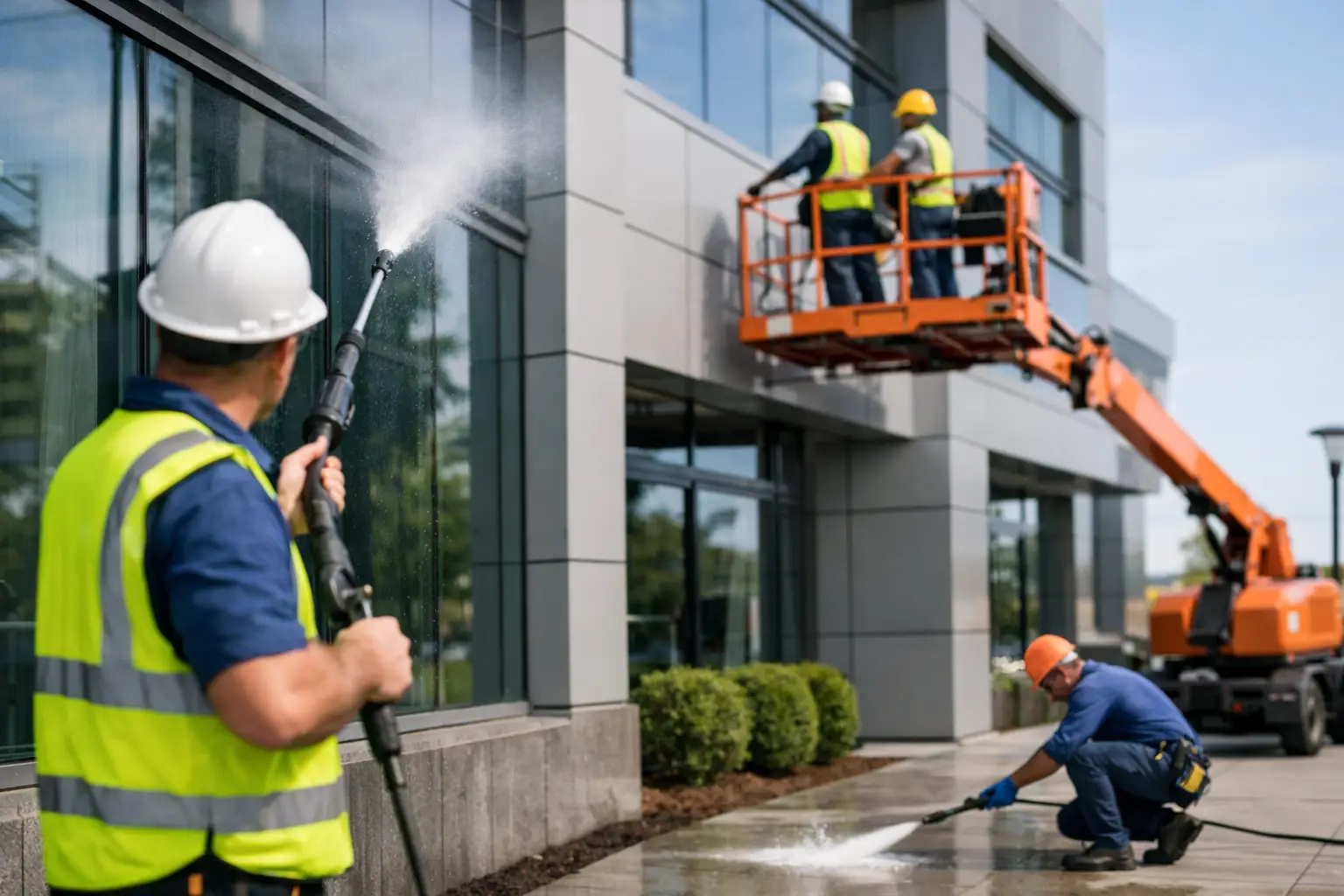

A commercial building rarely gives you one big warning before exterior problems become expensive. More often, it shows small signs first – stained façade panels, blocked roof gutters, cloudy windows, water marks near joints, paint breakdown, or debris collecting in hard-to-reach areas. If you need to maintain commercial building exterior assets properly, those early signs matter. They affect appearance, tenant perception, drainage performance, safety risk, and eventually repair cost.
For property managers and facilities teams, exterior upkeep is not just about making a building look presentable. It is part of protecting asset value and controlling long-term maintenance spend. A well-kept exterior also supports safety compliance, reduces avoidable damage, and helps your property present the right standard to occupants, visitors, and clients.
What it takes to maintain commercial building exterior areas
The exterior of a commercial property works as a system, not a collection of separate tasks. Windows, façade surfaces, sealants, gutters, rooftops, paint coatings, drainage points, and access areas all affect one another. When one part is neglected, another usually absorbs the impact.
A blocked gutter can push water down a wall. A dirty façade can hide cracks, failed sealant, or rust staining. Unwashed windows and ledges can trap grime that accelerates surface wear. Paint failure on exposed sections can lead to moisture intrusion and a shorter service life for the substrate underneath.
That is why exterior maintenance works best when it is planned, not reactive. Scheduled inspections and cleaning let your team spot defects while they are still manageable. In most cases, the cost of regular upkeep is easier to justify than emergency access work, tenant complaints, or premature restoration.
Start with the highest-risk exterior elements
Not every building needs the same maintenance frequency. A mid-rise office in a sheltered area will age differently than a high-rise exposed to traffic residue, heavy rain, and constant sun. Industrial properties also face different conditions than corporate towers, especially where exhaust, grease, dust, or process residue are involved.
The highest-risk exterior elements are usually the ones that are hardest to access and easiest to ignore. These include high-rise windows, upper façade sections, roof gutters, external ledges, canopy tops, and confined service areas. They often collect dirt and water long before anyone sees a problem from ground level.
For that reason, access capability matters as much as cleaning capability. A contractor may be able to wash low-level glass, but maintaining elevated façades and difficult exterior sections safely requires trained technicians, proper work methods, and equipment suited to the site. On taller or more complex properties, that difference is significant.
Windows and façade surfaces
Windows are usually the first thing occupants and visitors notice, but façade cleaning goes beyond appearance. Dirt buildup can mask sealant failure, panel staining, algae growth, corrosion marks, and drainage issues. Regular washing helps preserve the finish while giving maintenance teams a clearer view of developing defects.
The right cleaning method depends on the material. Glass, aluminum cladding, painted surfaces, stone, and composite panels all respond differently to pressure, chemicals, and scrubbing methods. Overly aggressive cleaning can do damage, while underpowered cleaning may leave contaminants in place. This is where site-specific planning matters.
Gutters, roofs, and water flow points
Roof gutters are often neglected because they are out of sight and difficult to reach. That makes them a common source of preventable damage. Leaves, silt, nesting material, and debris can block water flow and cause ponding, overflow, staining, or leakage into wall and ceiling areas.
Routine gutter cleaning is especially important in heavy rain conditions. If a property has mature landscaping nearby or a roof design that traps debris, the cleaning cycle may need to be more frequent. A basic annual schedule may be enough for one building and inadequate for another.
Paint and protective coatings
Exterior painting is not purely cosmetic. On many commercial buildings, paint and protective coatings act as a barrier against weather exposure and surface degradation. Once coatings begin to chalk, peel, or blister, the substrate underneath becomes more vulnerable.
Touch-up work can help in isolated areas, but widespread breakdown usually means the coating system is reaching the end of its useful life. The timing matters. Repainting before deep deterioration sets in is often far more cost-effective than waiting until repairs are needed first.
Build a realistic maintenance schedule
A practical exterior maintenance plan is based on risk, exposure, and building use. There is no single schedule that fits every property, and any contractor promising one standard frequency for all sites is simplifying a problem that is usually site-specific.
For many commercial properties, exterior glass cleaning may be scheduled monthly, quarterly, or at another interval depending on image standards and environmental exposure. Façade cleaning may be less frequent but still regular enough to prevent heavy buildup. Gutters should be inspected on a recurring basis, especially before and after severe weather periods. Roof edges, ledges, and elevated drainage areas also benefit from periodic checks.
If your property has public-facing frontage, premium tenants, or executive office occupancy, visual standards may justify more frequent exterior attention. If the building is industrial, the focus may shift more toward functional cleaning, safe access, and removal of residue that can interfere with equipment or drainage.
The key is to balance presentation, preservation, and budget. Too frequent, and you overspend. Too infrequent, and cleaning turns into restoration.
Why inspections should happen during cleaning work
One of the most practical ways to maintain commercial building exterior systems is to treat cleaning visits as inspection opportunities. Technicians working at height are often in the best position to notice loose fittings, cracked sealants, blocked outlets, bird activity, corrosion spots, coating failure, or water ingress indicators.
That does not replace a formal building condition assessment, but it does improve visibility. Small findings reported early can help facilities teams prioritize follow-up work before defects spread. This is especially useful on high-rise properties where visual checks from the ground tell you very little.
A good exterior maintenance partner should be able to flag issues clearly, document visible conditions, and explain whether a problem is urgent, routine, or worth monitoring. That kind of feedback adds operational value beyond the cleaning itself.
Safety is part of the maintenance decision
Exterior cleaning and maintenance is straightforward only until access becomes difficult. Once work involves suspended access, rooftops, fragile surfaces, confined spaces, or high-level edge exposure, the method matters as much as the result.
For building owners and facilities managers, this is where vendor selection becomes a risk decision. You are not simply buying a wash service. You are appointing a team to carry out technically demanding work around occupied commercial property, often above entrances, parking zones, service roads, or active operations.
A capable contractor should assess the building layout, access constraints, height, surface condition, labor requirement, and equipment needs before quoting. That process may seem more detailed than a basic cleaning estimate, but it usually reflects a more professional standard of planning. On complex sites, a free site visit is often the right starting point because the real scope is rarely visible from photos alone.
When bundled services make more sense
Many facilities teams manage exterior work through separate vendors – one for glass, one for gutters, one for painting, and another for difficult access cleaning. That can work, but it also creates coordination gaps. Access equipment may need to be mobilized multiple times, findings may not be shared across vendors, and minor defects can fall between scopes.
Bundling compatible services can improve control and reduce downtime, especially when the same access method is needed for multiple tasks. A single contractor handling high-rise window cleaning, façade cleaning, gutter clearing, and selected exterior maintenance work can often complete the job more efficiently while giving your team a clearer picture of the building’s actual condition.
This is particularly useful for properties with limited shutdown windows or strict operational requirements. One coordinated program is usually easier to manage than several isolated callouts.
Signs your building exterior needs attention now
Some exterior issues can wait for the next planned service. Others should be addressed quickly. Streaking under façade joints, overflowing gutters, recurring wall stains, peeling exterior paint, visible algae growth, or dirt accumulation in elevated corners usually point to a maintenance gap that is already affecting performance.
Likewise, if exterior cleaning has become harder each visit because buildup is heavier than before, that is a sign the schedule is too light for the building’s exposure level. Maintenance should preserve condition, not chase decline.
Urban Solutions Services Sdn Bhd works with commercial and industrial properties that need more than surface-level cleaning, especially where access, height, and safety planning are part of the job.
Site teams should align their risk controls with Malaysia’s Occupational Safety and Health Act when planning the work.
For a site-specific scope, review our high-rise window cleaning services and arrange an assessment before confirming access, timing and cost.
A well-maintained exterior does more than improve curb appeal. It gives you clearer sight of risk, better control over long-term costs, and a building that continues to perform the way it should.