

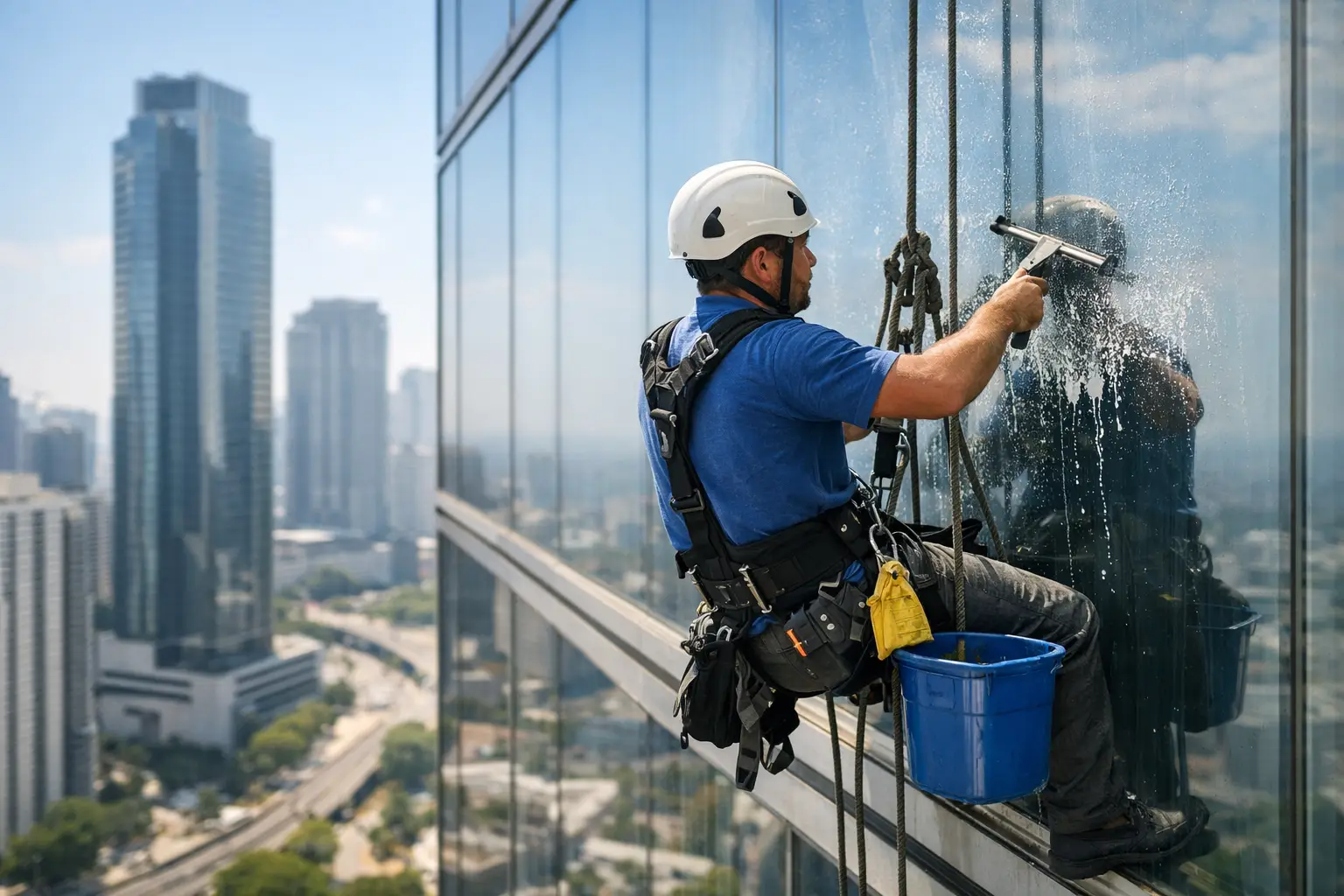

A streaked glass facade does more than look neglected. On a commercial tower, it affects tenant perception, natural light, and the overall standard your property presents to visitors, staff, and clients. That is why understanding how to clean windows in high rise buildings matters for any facility team managing a mid- to high-rise asset.
At ground level, window cleaning is straightforward. At 20 or 30 stories, it becomes a technical access job that combines safety planning, weather assessment, equipment selection, trained crews, and building-specific execution. The cleaning itself is only one part of the work. The real challenge is reaching every panel safely, without disrupting operations or creating unnecessary risk.
How to clean windows in high rise projects starts with access
The first decision is not which detergent to use. It is how technicians will access the glass. In high-rise work, access method drives the schedule, crew size, equipment needs, and cost.
For some buildings, a suspended cradle or building maintenance unit is the most efficient option. This works well on towers designed with dedicated facade access systems, especially when large vertical sections of glass need regular servicing. It allows controlled movement across the facade and can be productive on repetitive elevations.
On other properties, rope access is the better fit. This is common when the building has architectural features, recessed panels, fins, ledges, or irregular facade lines that make cradle access less practical. Rope access can also reduce setup footprint at ground level, but it depends heavily on anchor suitability, technician competency, and site-specific risk control.
Boom lifts and other elevated platforms may be suitable for lower elevations, podium areas, atriums, or sections with open access from the ground. They are often useful as part of a mixed-access plan rather than a full-building solution.
This is where many property teams underestimate the scope. There is no single best method for every building. How to clean windows in high rise environments depends on facade design, height, roof layout, access points, public exposure, and operational constraints around the site.
Site assessment determines the real scope
Before any cleaning begins, the building should be assessed properly. A professional contractor will not quote purely from photos or a rough floor count if the facade has access complications.
A useful site assessment looks at roof anchorage, parapet condition, drop zones, pedestrian traffic, window type, water source, stain severity, and whether there are facade defects that could affect cleaning. It also reviews timing. Cleaning a busy office tower during peak arrival hours creates a different operational plan than cleaning a lower-traffic commercial block.
For building managers, this stage is where hidden issues usually appear. Some facades have old sealant, loose trims, or damaged glass film that can be worsened by aggressive cleaning. Others have mineral buildup, hard water marks, or construction residue that standard methods will not remove quickly. These details affect both labor and risk.
A proper assessment also clarifies whether the job is routine maintenance or a restoration-style clean. That difference matters because expectations, tools, and time on site are not the same.
Safety is the job, not a box to check
High-rise window cleaning is often treated as a simple visual service. In practice, it is a high-risk maintenance operation. The contractor needs more than cleaners. They need a system.
That system includes trained access personnel, pre-job hazard review, rescue planning, equipment inspection, barricading, communication procedures, and weather monitoring. Wind conditions alone can change the work plan on the same day. A facade that is safe to clean in the morning may not be suitable by midday if gusts increase around corners or exposed elevations.
Public protection matters just as much as worker protection. Ground-level exclusion zones, clear signage, and controlled tool handling are essential in commercial environments with constant pedestrian movement. On mixed-use properties, this becomes even more important because public-facing entrances and retail zones cannot be treated like empty service yards.
From an owner or facilities perspective, the right contractor should be able to explain the method clearly. If the proposal is vague about access, manpower, site controls, or risk measures, that is usually a warning sign.
The cleaning process itself is more technical than it looks
Once access and safety controls are in place, the actual cleaning process begins with the condition of the glass. Dust, urban grime, traffic film, bird droppings, and mineral deposits each require a different level of treatment.
Most routine high-rise window cleaning follows a controlled sequence. Glass is wetted or pre-treated as needed, dirt is loosened using suitable applicators, the surface is cleaned with professional-grade solutions, and the glass is then squeegeed or detailed to a clear finish. Frames and edges may also be wiped where the scope includes full presentation cleaning rather than glass only.
However, not all contaminants should be attacked the same way. Hard deposits and post-construction debris often tempt crews to use abrasive tools, which can damage glass if handled poorly. Tempered glass, coated glass, and treated surfaces each have their own limitations. The right result comes from matching the method to the material, not forcing speed.
Water quality also affects outcomes. In some situations, purified water systems can help reduce spotting, especially on exterior surfaces where rinse quality matters. In others, traditional hand-finished methods provide better control on heavily soiled or detail-sensitive sections. Again, it depends on the building and the finish expected.
What affects cost and scheduling
Commercial buyers usually want to know why one building takes longer or costs more than another of similar height. The answer is that height is only one factor.
Facade complexity is usually a bigger cost driver than people expect. A straight glass elevation with good roof access is easier to clean than a shorter building with setbacks, decorative fins, restricted anchorage, and limited drop zones. Labor intensity rises quickly when crews need to reposition often or switch access systems.
Frequency also matters. A building cleaned on a planned maintenance cycle is generally easier to maintain than one left too long between services. Dirt buildup becomes harder to remove, detailing takes longer, and the visual difference between cleaned and uncleaned sections can expose staining that routine service would have prevented.
Scheduling should also account for tenant operations, weather windows, and site traffic. In dense urban areas such as Kuala Lumpur, planning around delivery zones, parking limitations, and public activity can influence how efficiently a team can mobilize and work. The best contractors build that into the job rather than treating it as an afterthought.
Choosing a contractor for high-rise window cleaning
If you are responsible for procurement or vendor selection, the key question is not who can clean glass. It is who can manage access risk and deliver consistent results on your specific building.
Look for a contractor that understands commercial and industrial properties, not just general cleaning. High-rise work requires a different operating standard. You want a team that can assess access realistically, explain the method in plain terms, mobilize the right equipment, and work around the realities of an active site.
It is also worth paying attention to how they quote. A serious contractor will usually ask about building height, facade type, access limitations, timing, and service frequency. They may recommend a site visit before confirming final pricing, especially for technically demanding properties. That is not delay. It is part of controlling cost and reducing surprises.
Urban Solutions Services Sdn Bhd approaches these projects as site-specific maintenance work, not one-size-fits-all cleaning. That is the right model for commercial assets where safety, appearance, and execution all matter.
When regular window cleaning supports broader facade maintenance
For many buildings, window cleaning should not be treated as a standalone task forever. It often sits alongside facade washing, sealant checks, roof gutter clearing, and other exterior maintenance needs. When the same access setup can support multiple scopes, there may be operational value in combining works.
This does not mean every service should be bundled automatically. Sometimes the best choice is to separate tasks for budget or scheduling reasons. But on buildings with difficult access, coordinated planning can reduce repeat mobilization and improve visibility into facade condition over time.
That visibility is one of the most practical benefits. A trained exterior crew often spots developing issues early – loose facade elements, drainage staining, failed sealant lines, or neglected areas that are not visible from the ground. For property teams, that can support better maintenance decisions before small issues become larger repair costs.
Where the work involves roof or elevated access, property teams should also review DOSH guidance on working at height when planning access, supervision and fall-prevention controls.
For a site-specific scope, review our high-rise window cleaning services and arrange an assessment before confirming access, timing and cost.
A clean facade sends a clear message about how a building is managed. More importantly, it shows that maintenance is being handled with the right level of care. If you are planning high-rise window cleaning, the best next step is not guessing the method from the ground – it is arranging a proper site review so the work can be scoped safely and done right the first time.