

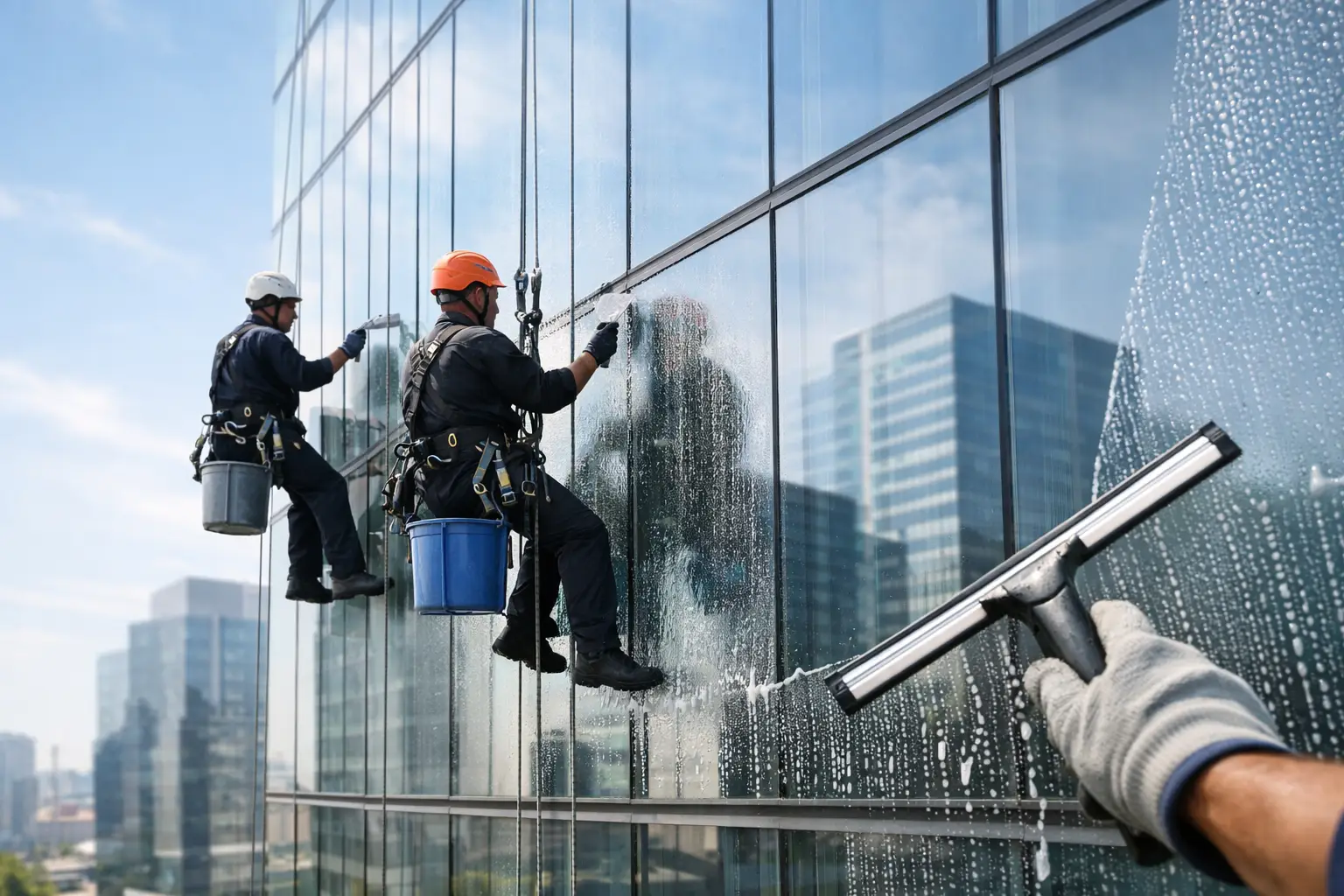

A streaked glass facade is easy to spot from the street. So is a rushed cleaning job with poor edge detail, water runoff marks, or access work that clearly was not planned properly. For commercial buildings, knowing how to clean glass facade safely is not just about appearance. It affects public safety, technician safety, tenant experience, and the long-term condition of the building envelope.
On low-level glass, cleaning may look straightforward. On a multi-story office tower, retail frontage, or industrial facility with mixed cladding and hard-to-reach elevations, it becomes a specialist operation. The method has to match the building, the access constraints, the glass type, and the site conditions on the day.
Why safe facade cleaning starts before any glass is touched
The biggest risk in facade cleaning is assuming every building can be approached the same way. It cannot. A glass facade on a podium block with wide perimeter access requires a different setup than a high-rise with tight drop zones, active loading bays, or rooftop limitations.
A proper job starts with a site assessment. That means reviewing building height, facade design, glass condition, anchor points, roof access, ground hazards, pedestrian traffic, and weather exposure. Even details that seem minor, such as landscaping, uneven pavement, or signage can change how technicians access the work area.
This is also where the cleaning scope should be defined clearly. Some clients need glass only. Others need a broader facade service that includes frames, mullions, ledges, panel joints, or surrounding cladding. If that is not clarified early, the result may look incomplete even if the glass itself is clean.
How to clean glass facade safely on commercial buildings
For commercial properties, safe cleaning depends on using the correct access system and work method rather than relying on general cleaning practices. A technician working from the ground with extension tools faces a different set of risks than a rope access team on a high-rise elevation or a crew using a boom lift around active vehicle lanes.
The right process usually includes four parts: access planning, area control, suitable cleaning materials, and competent execution by trained personnel. If one of those is weak, the job becomes less efficient and far riskier.
Choosing the right access method
This is often the most important decision on the project. Rope access is effective for many high-rise buildings because it allows technicians to reach difficult elevations without heavy ground equipment. It is especially useful where facade geometry, tight surroundings, or limited staging areas make other systems impractical.
Boom lifts and gondolas can also be appropriate, but only when the building and site support them. A lift may offer good productivity on some elevations, yet be unsuitable where access roads are narrow or where pedestrian segregation is difficult. Gondola systems can be efficient on buildings designed for them, but they still require inspection, proper operation, and favorable weather conditions.
For lower structures, water-fed pole systems may be enough, provided the facade can be reached effectively from the ground and the results meet the building standard. They are efficient in the right setting, but they are not a universal answer for every commercial facade.
Controlling the work zone
Facade cleaning happens above people, vehicles, entrances, and public-facing areas. That means the drop zone cannot be treated casually. Barricades, warning signage, controlled access routes, and timing adjustments are often necessary, especially at office towers, malls, hospitals, and mixed-use sites.
In some cases, the safest approach is to schedule work outside peak occupancy hours. In others, phased cleaning by elevation is better because it reduces disruption while keeping control measures manageable. It depends on tenant activity, public exposure, and the layout around the building.
The cleaning materials matter more than many teams realize
Glass is durable, but facade systems are not all equally forgiving. Using the wrong chemicals, abrasive pads, or contaminated tools can scratch glass, stain frames, damage coatings, or leave residues that become more visible in direct sunlight.
For most commercial facade work, the safest approach is to use non-abrasive tools, clean water, professional-grade squeegees, and glass-safe detergents suited to the contamination level. Dust, traffic film, mineral deposits, bird droppings, and construction residue all behave differently. A one-product-fits-all approach rarely delivers the best result.
Technicians also need to consider the surrounding materials. Aluminum frames, sealants, painted surfaces, and facade panels may react differently to cleaning agents. What works on one building can create avoidable damage on another.
When the glass needs more than routine washing
Some facades are not just dirty. They are stained by hard water, exposed to oxidation runoff, or affected by post-construction debris. These situations require more care, not more force.
Scraping glass without verifying the surface condition is a common mistake. So is using harsh chemicals to speed up stain removal. On coated or treated glass, that can create permanent visible defects. If the facade has stubborn contamination, the cleaning plan should be adjusted to the glass specification and tested on a small section first.
Safety depends on technician competence, not just equipment
Good equipment does not make a risky operation safe by itself. The people using it must understand work-at-height procedures, rescue planning, equipment checks, and the practical realities of cleaning on live commercial sites.
This is where experienced facade contractors stand apart from general cleaning teams. High-rise and exterior access work requires a different standard of planning and execution. Teams should know how to inspect gear, identify changing site conditions, manage edge protection, and work without creating hazards below.
They also need to know when not to proceed. Wind, rain, lightning risk, heat exposure, and surface temperature can all affect safety and cleaning quality. Pressing ahead in poor conditions may satisfy a schedule on paper, but it creates preventable risk and often leads to poor results.
Common mistakes property teams should avoid
One mistake is choosing purely on price without checking access capability. A low quote can quickly become a problem if the vendor has not accounted for building height, roof access limitations, traffic control needs, or the manpower required to complete the work safely.
Another is treating facade cleaning as separate from overall exterior maintenance. Dirty glass may be the visible issue, but blocked gutters, stained cladding, neglected sealant edges, or rooftop debris can affect presentation and building performance at the same time. For many commercial properties, it is more efficient to assess exterior needs together.
A third mistake is waiting too long between cleanings. Heavy buildup takes longer to remove, may need more specialized treatment, and can make the facade look uneven even after service. Preventive scheduling usually protects appearance and budget better than reactive cleaning after complaints or inspections.
How often should a glass facade be cleaned?
There is no fixed answer that suits every property. A tower in a dense urban corridor may need more frequent cleaning than a low-rise commercial building in a less exposed area. Buildings near heavy traffic, construction activity, coastal conditions, or industrial output generally accumulate soil faster.
For many office and commercial sites, a scheduled maintenance program works better than one-off cleaning. It keeps the facade consistently presentable and allows issues such as failed seals, access defects, or localized staining to be spotted earlier. The right interval depends on image standards, tenant expectations, facade exposure, and budget.
What facility managers should expect from a professional contractor
A professional facade cleaning contractor should be able to explain the access method, define the work scope, identify site risks, and provide a quotation based on actual building conditions. If the proposal is vague on access, safety controls, or exclusions, that usually means important details have not been addressed.
You should also expect a practical site review before final planning on more complex buildings. This is particularly important for high-rise properties, mixed-material facades, and active commercial sites where public movement affects how the work can be carried out.
For property teams managing assets in Kuala Lumpur, Selangor, Penang, or Johor, local weather patterns, traffic conditions, and site logistics can also influence timing and method. That is another reason facade cleaning should be quoted and planned around the building itself rather than sold as a standard package.
A safer result usually comes from a more specific plan
If you are evaluating how to clean glass facade safely, the best answer is rarely the fastest or cheapest method. It is the method that fits the building, protects the public, preserves the facade materials, and allows trained technicians to do the work properly.
Where the work involves roof or elevated access, property teams should also review DOSH guidance on working at height when planning access, supervision and fall-prevention controls.
For a site-specific scope, review our façade cleaning services and arrange an assessment before confirming access, timing and cost.
Clean glass should not come at the expense of access safety, surface damage, or site disruption. When the planning is right, the result is not just a better-looking building. It is a maintenance operation you can sign off on with confidence.