

A vendor says they can clean your facade, reach your high-rise glass, and handle difficult access. That sounds fine until you ask how they will do it, who will be on site, what safety system they use, and what happens if the access plan changes mid-job. That is where knowing how to choose rope access cleaners becomes a practical business decision, not just a purchasing exercise.
For property managers, facilities teams, and building owners, the right contractor does more than wash windows. They reduce risk, protect the building envelope, work around tenant operations, and complete specialized cleaning without turning a routine maintenance job into a site issue. Rope access work is highly effective in the right hands, but it is not a commodity service.
Why rope access is not the same as standard cleaning
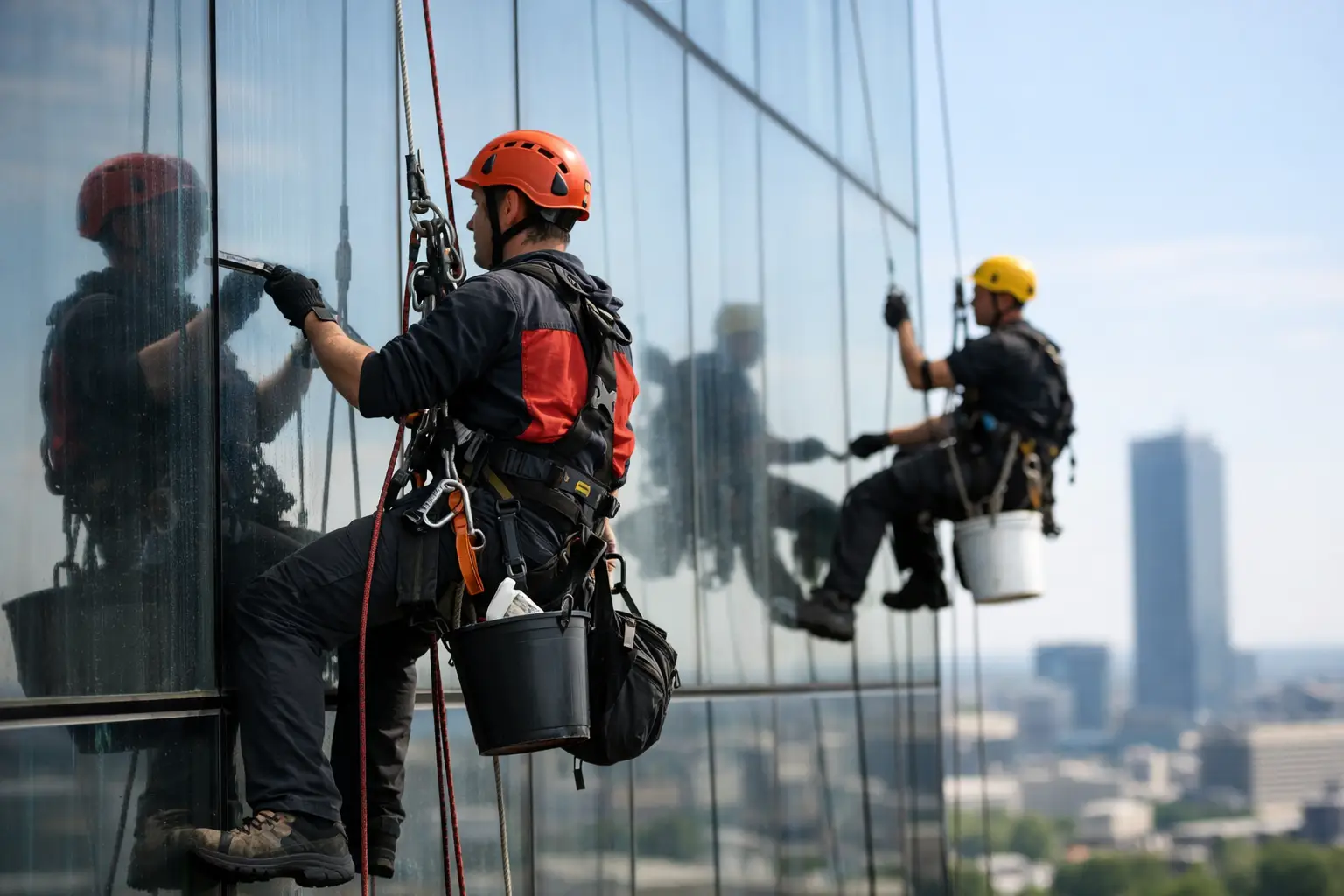
Rope access cleaning sits in a different category from general commercial cleaning. The work often involves elevated facades, external glass, architectural features, rooftops, atriums, canopies, and other hard-to-reach areas where ladders or standard access methods are either inefficient or unsuitable.
That changes what you should evaluate. You are not only buying cleaning results. You are buying access planning, technician competence, site safety controls, and the ability to complete work on a live commercial or industrial property with minimal disruption.
A low quote can look attractive at the start, but if the provider is not equipped for the actual site conditions, delays and safety concerns usually cost more than the initial savings.
How to choose rope access cleaners for commercial buildings
The first thing to look for is direct experience with buildings like yours. A contractor that handles low-rise retail lots may not be the right fit for a multi-story office tower, an industrial facade, or a property with difficult roof access. Ask what types of structures they routinely service and how they approach access for glass, facade panels, ledges, signage, gutters, and confined exterior zones.
It also helps to ask how they scope a project. Serious rope access cleaners do not rely on guesswork. They assess building height, anchor points, access constraints, ground conditions, manpower needs, and the cleaning method required for each surface. If a company is willing to quote a complex high-rise job without asking many questions or arranging a site review, that is a warning sign.
A proper site visit is often where the quality gap becomes obvious. Strong contractors ask about public access below the work zone, tenant-sensitive hours, roof entry procedures, water supply, facade material, drainage, and any previous maintenance issues that could affect execution.
Check safety systems, not just safety claims
Most contractors will say safety is a priority. That alone is not enough. You want to understand whether safety is built into their operating process or simply added to marketing language.
Ask who supervises high-risk work, how pre-job risk assessments are handled, what rescue planning is in place, and how exclusion zones are managed below active work areas. For rope access cleaning, the quality of the planning matters as much as the quality of the technicians.
You should also ask whether the team assigned to your building is specifically trained for rope access tasks rather than general cleaning tasks. There is a real difference between a cleaner who occasionally works at height and a technician who is prepared for controlled descent, work positioning, anchor use, and site-specific hazard management.
If your property stays fully operational during the work, communication matters too. The contractor should be able to explain how they will coordinate with security, management, and tenants so the job moves safely without unnecessary disruption.
Make sure the cleaning method suits the building
Not every facade should be cleaned the same way. Glass, painted surfaces, metal cladding, stone, and coated architectural finishes can each require a different approach. This is one of the most overlooked parts of how to choose rope access cleaners.
A capable contractor will ask what materials they are cleaning and whether there are existing issues such as staining, oxidation, sealant wear, hard water marks, algae, or accumulated grime from traffic and weather exposure. The method should suit the condition of the surface, not just the access method.
This matters because an aggressive cleaning process can create avoidable damage, while an overly light method may leave visible residue and force repeat work. In commercial settings, poor results are not only cosmetic. They can affect tenant perception, brand presentation, and maintenance cycles.
Evaluate the quote beyond the total price
Price matters, but it should not be the only comparison point. In rope access work, quotations can vary because the actual job variables vary. Height, surface area, facade design, manpower, equipment needs, access difficulty, and scheduling constraints all affect cost.
A useful quote should show that the contractor understands the scope. It should be clear about what is included, what assumptions were made, and what may change the price. If the quote is vague, the project often becomes vague once work begins.
It is worth asking a few direct questions. Does the price include all access equipment and labor? Are difficult elevations or partial obstructions already factored in? Is waste removal included if relevant? What happens if the site requires extra safety controls or restricted work hours?
The goal is not to push every vendor to the lowest price. The goal is to identify which one has priced the real job, not an easy version of it.
Look for operational reliability, not just technical skill
A rope access cleaning contractor may be technically capable and still be difficult to work with. For commercial properties, that creates its own cost. Missed schedules, poor communication, incomplete reporting, and inconsistent crews can put pressure on your internal team.
A reliable provider should be able to confirm scope, schedule work clearly, respond to site requirements, and manage changes without confusion. This is especially important if the project needs to happen in phases or outside standard business hours.
If your building has multiple maintenance needs, there is added value in working with a contractor that understands more than one exterior service line. A provider that can support facade cleaning, high-rise glass, roof gutters, or related maintenance issues can simplify coordination and reduce the need to brief multiple vendors on the same access conditions.
Questions worth asking before you appoint a contractor
The best vetting questions are practical. Ask who will be on site, how many technicians are planned, how long the job is expected to take, and what site preparation is needed from your side. Ask how they protect areas below active work, what they need for roof access, and how they handle weather delays.
You should also ask for examples of similar completed work. Not because every building is identical, but because relevant project experience tells you whether the contractor understands the pace, standards, and constraints of commercial environments.
If the answers are clear and specific, that is usually a good sign. If they stay broad and sales-heavy, keep probing.
Signs you may be choosing the wrong rope access cleaners
Some warning signs are easy to miss during procurement. One is a company that jumps straight to price without properly reviewing the building. Another is a provider that talks a lot about cleaning results but very little about access, planning, or site controls.
Be cautious if communication is already slow before the job starts, or if different people give different answers about scope and execution. In high-risk cleaning work, small inconsistencies early on often turn into larger problems later.
It is also worth being careful with contractors who treat every building as if the same crew, method, and timeline will work everywhere. Commercial properties vary too much for that approach to hold up in practice.
Choosing for long-term value
The best decision is usually the contractor that gives you confidence in execution. That means they understand the site, explain the method clearly, account for risk, and price the work based on reality. It also means they can deliver a clean, presentable result without creating headaches for your team.
For high-rise and difficult-access properties, rope access cleaning should feel controlled from the first conversation to the final sign-off. If a contractor can show that level of discipline early, you are usually looking at a provider worth keeping in your maintenance network.
Where the work involves roof or elevated access, property teams should also review DOSH guidance on working at height when planning access, supervision and fall-prevention controls.
For a site-specific scope, review our high-rise window cleaning services and arrange an assessment before confirming access, timing and cost.
If you are comparing vendors, slow the process down just enough to ask better questions. The right rope access cleaner will not be frustrated by scrutiny. They will be ready for it.