

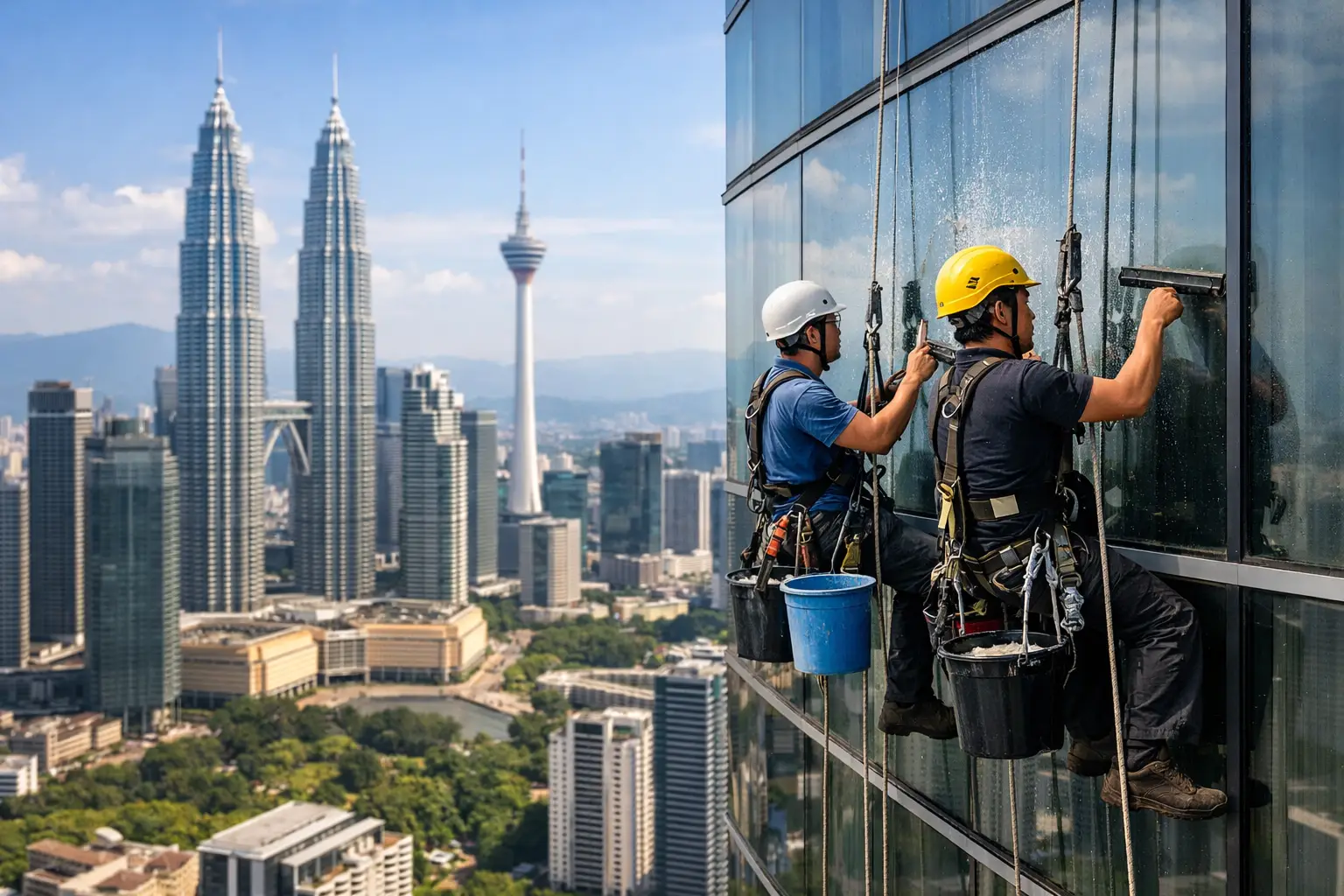

A streaked facade changes how a building is perceived long before anyone steps into the lobby. For office towers, mixed-use developments, and commercial properties, high rise window cleaning Kuala Lumpur is not just a cosmetic task. It affects tenant impressions, brand presentation, daylight quality, and the long-term condition of exterior glass and facade surfaces.
In dense urban environments, exterior glass picks up more than dust. Traffic residue, rain marks, mineral buildup, algae, and airborne pollutants gradually dull the surface. On taller buildings, those issues are harder to ignore and much harder to address. That is why commercial property teams usually need more than a standard cleaning vendor. They need a contractor with the right access methods, trained technicians, and a practical plan for working safely at height.
Why high rise window cleaning in Kuala Lumpur needs specialist handling
Cleaning low-level storefront glass is one thing. Cleaning a multistory facade with varying setbacks, ledges, canopy lines, and restricted access points is something else entirely. High-rise work depends on site conditions, and no two buildings are identical.
A commercial tower may have suspended access points designed into the roof. Another property may require rope access for selected elevations. Some buildings have architectural features that create blind spots or trap runoff, which means the cleaning method has to be adjusted to avoid missed sections or repeat staining. Wind exposure, pedestrian traffic below, and operating hours also affect how the work is scheduled.
This is where specialist execution matters. A capable high-rise team assesses not only what needs to be cleaned, but how the work can be carried out with minimal disruption and controlled risk. For facilities managers and building owners, that reduces the burden of coordinating multiple contractors or solving access issues internally.
What commercial clients should expect from a high rise window cleaning Kuala Lumpur contractor
A serious contractor should start with the building, not a generic price. Site-specific quoting matters because facade maintenance depends on height, glass area, access complexity, labor requirements, and the condition of the surfaces.
A proper assessment usually looks at roof access, anchor points, suspended platforms if applicable, rope access requirements, ground control zones, water source availability, and any coordination needed with security or building management. If a vendor can quote a large tower without asking these questions, the quote is probably based on assumptions that may not hold up on site.
Commercial clients should also expect clear communication around scope. That includes whether the service covers exterior glass only, facade frames, mullions, signage areas, canopies, or hard-to-reach sections around architectural features. Many disputes happen because one side assumes a full facade clean while the other has priced a narrower scope.
The better approach is straightforward. Define the elevations, identify access methods, set the work sequence, and confirm any exclusions before mobilization.
Safety is not a talking point
For high-rise cleaning, safety is part of delivery. It is not an extra feature and it should never be treated as sales language. Teams working at height need the right training, equipment checks, supervision, and site controls. The building itself also needs protection through controlled drop zones, work permits where required, and coordination with operations on the ground.
For commercial properties, this matters beyond compliance. One poorly managed high-access job can disrupt tenant movement, create reputational issues, or expose the property team to avoidable risk. A dependable contractor works in a way that supports the building’s daily operation instead of fighting against it.
What affects pricing for high-rise window cleaning
Pricing is rarely about square footage alone. Height is a major factor, but it is only one part of the job. A 20-story building with straightforward roof access may be simpler to clean than a shorter building with difficult setbacks, limited rigging options, and heavy staining.
The main pricing variables usually include building height, total facade area, access method, number of technicians required, frequency of cleaning, and the condition of the glass. If mineral deposits, post-construction residue, or neglected buildup are present, additional time and materials may be needed.
Scheduling can also affect cost. Night work, weekend work, and buildings with strict loading or access windows often require more planning. In active commercial sites, timing matters because the job must fit around tenant operations, deliveries, and public circulation.
That is why site visits are valuable. They lead to more accurate quotations and fewer surprises once work begins.
How often should a commercial tower be cleaned?
It depends on the property type, its location, and the image the building needs to maintain. A premium office tower with prominent street visibility may need more frequent exterior glass cleaning than a low-traffic industrial office block. Buildings near major roads or construction activity tend to collect grime faster. Properties exposed to frequent rain runoff may also show water spotting sooner.
For many commercial buildings, a scheduled maintenance program works better than ad hoc cleaning. Regular service helps preserve a consistent appearance and prevents contamination from becoming more difficult to remove. It also makes budgeting easier because the property team can plan maintenance instead of reacting to complaints or visible decline.
That said, not every building needs the same cycle. Some facades perform well with quarterly cleaning. Others may need more frequent attention on selected elevations, especially those facing traffic-heavy corridors or direct weather exposure.
Window cleaning and facade care are closely connected
Glass rarely gets dirty in isolation. Frames, facade joints, ledges, fins, and surrounding cladding all influence the final appearance of the building. If the windows are cleaned but adjacent facade surfaces remain stained, the property can still look neglected.
For that reason, many commercial clients prefer a contractor that can handle broader exterior maintenance needs, including facade cleaning, roof gutter work, and difficult-access areas. It creates a more consistent result and reduces the time spent coordinating separate trades.
This is especially useful for buildings where drainage issues or facade staining contribute to recurring window marks. Cleaning the glass alone may improve appearance temporarily, but the underlying cause remains. A more complete maintenance approach usually delivers better long-term value.
Signs your building needs professional attention now
Some warning signs are obvious. Visible streaking, patchy glass, algae staining, and dull facade sections all suggest the building is overdue for service. Other signs are less dramatic but still costly if ignored.
If tenants are raising appearance complaints, natural light is noticeably reduced in office interiors, or upper elevations have not been cleaned for an extended period, it is worth arranging an inspection. The same applies after facade repairs, painting works, or nearby construction, when residue often settles on glass and elevated surfaces.
Property teams should also pay attention to access-related warning signs. If previous vendors avoided certain elevations or left inconsistent results, the issue may not be cleaning quality alone. It may be that the building requires a more capable access strategy.
Choosing a contractor without creating more work for your team
The right contractor should make the process easier, not more complicated. For building managers and operations teams, that means responsive quoting, clear site requirements, realistic scheduling, and a crew that understands commercial environments.
Look for a provider that asks practical questions early. How is roof access managed? What are the facade obstacles? Are there restricted areas, public-facing entrances, or loading limitations? Can the work be staged by elevation or tenant sensitivity? These questions show the contractor is planning for execution, not simply trying to secure the job.
It also helps to work with a provider that already handles technically demanding exterior cleaning and maintenance. Companies such as Urban Solutions Services Sdn Bhd are built around that kind of work, which is different from general janitorial service. When the same contractor can address high-rise glazing, facade issues, and other hard-to-access maintenance needs, coordination becomes simpler and service quality is easier to manage.
A cleaner facade supports more than appearance
For commercial properties, exterior glass cleaning protects presentation, supports tenant confidence, and helps preserve the condition of the building envelope. It is one of those maintenance items that looks simple from the ground but requires careful execution once height, access, and safety enter the picture.
Where the work involves roof or elevated access, property teams should also review DOSH guidance on working at height when planning access, supervision and fall-prevention controls.
For a site-specific scope, review our high-rise window cleaning services and arrange an assessment before confirming access, timing and cost.
If your building’s exterior is showing buildup, uneven results, or areas that have gone untouched because they are difficult to reach, the next step is not guesswork. It is a proper site assessment, a clear scope, and a contractor that can carry out the work safely and professionally. When that happens, the result is not just cleaner glass. It is a building that looks managed, credible, and ready for business.