

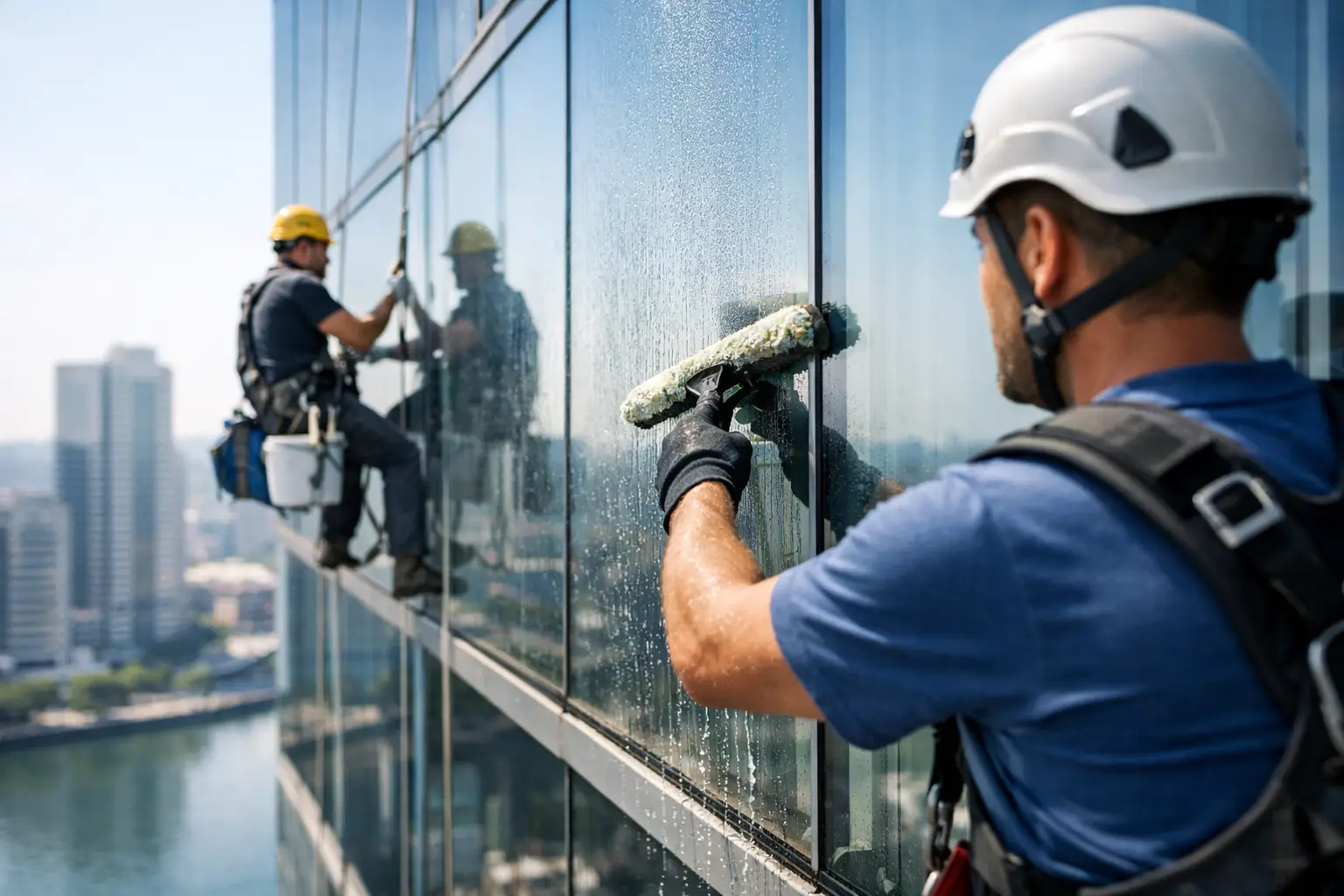

A tower can look fully leased, professionally managed, and structurally sound, then lose that impression because the glass reads as dull, stained, or permanently weathered from the street. In practice, high rise glass restoration methods are not just about appearance. They protect asset value, support tenant perception, and help building teams avoid replacing panels that can often be restored at a lower cost.
For commercial properties, the real question is not whether the glass looks dirty. It is whether the issue is surface contamination, mineral buildup, coating failure, light scratching, or deeper damage that cleaning alone will not fix. That distinction matters because the wrong method can waste time, increase access costs, and in some cases make the glass worse.
What glass restoration actually means on a high-rise
Glass restoration sits between routine window cleaning and full glass replacement. Standard cleaning removes dust, soil, and common environmental residue. Restoration addresses defects that remain after cleaning, such as hard water staining, oxidation marks, silicone residue, post-construction debris, and certain scratch patterns.
On a high-rise, the method is only one part of the job. Access planning, technician control, facade condition, weather exposure, and safety requirements all affect execution. A ground-level process does not always translate well to a 20-story or 40-story facade, especially when the glass type varies by elevation or exposure.
That is why experienced contractors begin with an inspection instead of a standard cleaning scope. Before any restoration work starts, the team needs to identify the glass specification, the source of staining, and whether surrounding frames, sealants, or coatings may react to chemical or abrasive treatment.
The most common causes of glass deterioration
Most commercial buildings do not develop glass problems overnight. The damage usually builds in layers. Mineral-rich water runoff from rooftops and ledges can leave hard deposits. Construction debris can bond to the surface. Pollutants and oxidation can reduce clarity over time. In coastal or high-exposure zones, airborne contaminants can speed up deterioration.
Scratches are another common issue, especially after renovation work or improper cleaning. Not every scratch can be polished out safely. Some are superficial and manageable. Others distort visibility or weaken the surface enough that replacement becomes the better option.
The cause matters because restoration should solve the source, not just the symptom. If runoff from facade elements is causing repeated staining, you may restore the glass and still see the problem return quickly.
High rise glass restoration methods for commercial buildings
Non-abrasive chemical stain removal
This is often the first method considered when glass shows mineral deposits, hard water staining, light cement residue, or oxidation haze. Specialized restoration compounds break down bonded contamination without aggressive mechanical action.
Used correctly, chemical restoration can recover clarity with minimal impact on the glass surface. Used incorrectly, it can damage surrounding materials or fail completely because the stain has already etched into the glass. That is why dwell time, dilution, and rinsing control matter. On suspended access or rope access work, those details become even more important because overspray and runoff have to be managed carefully.
Controlled abrasive polishing
When contamination has bonded more deeply or when there are fine scratches and surface etching, controlled polishing may be required. This method uses restoration-grade pads, compounds, and machine polishing techniques to refine the glass surface.
Polishing can be effective, but it is not a universal fix. Heat buildup, optical distortion, and inconsistent finish are real risks if the work is rushed or handled by an untrained crew. On high-rise facades, the challenge increases because technicians must maintain even pressure and consistency while working at height. For that reason, polishing is best reserved for clearly defined damage that has been assessed panel by panel.
Scraper-free debris removal for post-construction glass
Post-construction glass often carries paint mist, adhesive residue, silicone marks, and cement contamination. The old habit of scraping glass with blades creates unnecessary risk, especially on tempered or coated panels. Modern restoration work favors scraper-free or low-risk removal systems designed to lift residue without scratching.
This is one of the clearest cases where method selection protects long-term building condition. A fast cleanup approach may look efficient during handover, but if it leaves scratch patterns across multiple elevations, the correction cost rises quickly.
Coating-safe restoration on treated glass
Many commercial buildings use coated, tinted, laminated, or low-emissivity glass. Those surfaces can react differently to restoration chemicals and mechanical treatment. What works on standard float glass may damage a coated unit.
In these cases, restoration has to be matched to the actual glass system. A capable contractor will confirm where the coating sits, how visible the damage is, and whether restoration can be done safely without affecting performance or appearance. Sometimes the right decision is partial restoration on selected elevations instead of a full-building process.
When restoration is better than replacement
Replacement sounds simple until you factor in procurement lead times, facade access logistics, tenant disruption, and the cost of matching existing glass. If the issue is limited to staining, residue, or light surface damage, restoration is often the more practical path.
It also makes sense when the damage is widespread but shallow. A building with visible hard water staining across many floors may look like it needs new glass from a distance, yet the panels can often be recovered through systematic restoration.
That said, restoration is not always the cheaper option in every case. If only a few panels are deeply scratched, cracked, or visibly distorted, replacing those units may be more efficient than attempting correction. The right call depends on damage severity, facade access cost, and the number of affected panels.
Why access strategy affects restoration quality
The technical method gets most of the attention, but access planning has a direct impact on results. Rope access, gondolas, boom lifts, and suspended platforms all create different working conditions. Some are better for broad facade coverage. Others are more suitable for targeted defect correction.
For example, chemical stain removal across large elevations may be efficient with suspended access when rinse control is managed properly. Detailed polishing of isolated defects may be better handled through a more controlled setup where the technician can stabilize position and maintain surface consistency.
This is where specialist high-rise contractors add value. They do not just bring a restoration product. They match manpower, equipment, and access method to the building condition. That reduces risk, shortens project time, and improves finish quality.
How to evaluate a restoration contractor
If you are comparing vendors, ask how they determine whether staining is removable or etched. Ask whether they have experience with coated glass and post-construction defects. Ask what access method they recommend and why.
You should also expect a site assessment. Restoration quotes based only on photos can miss key variables such as panel type, facade geometry, access restrictions, water source, or surrounding material sensitivity. A proper inspection helps define whether the work is cleaning, restoration, localized polishing, or selective replacement support.
For property teams managing office towers, retail facades, or industrial buildings, this matters because the wrong scope can create repeat costs. A dependable contractor should be able to explain the method, the limitations, and what result is realistically achievable.
Maintenance after restoration
Restored glass should not be left to deteriorate under the same conditions that caused the problem in the first place. If hard water runoff is the source, drainage or facade detailing may need attention. If pollution buildup is recurring, the building may need a more consistent exterior cleaning schedule.
Routine maintenance protects the restoration investment. It also makes future cleaning safer and more efficient because contaminants are removed before they bond deeply to the surface. For many commercial properties, combining facade cleaning, window care, and targeted maintenance under one service partner simplifies scheduling and vendor management.
Urban Solutions Services Sdn Bhd sees this often on high-rise sites where cleaning and access work are closely tied to broader exterior upkeep. The best results usually come from treating restoration as part of a building maintenance strategy, not as a one-time cosmetic fix.
Where the work involves roof or elevated access, property teams should also review DOSH guidance on working at height when planning access, supervision and fall-prevention controls.
For a site-specific scope, review our high-rise window cleaning services and arrange an assessment before confirming access, timing and cost.
If your building glass still looks stained, hazy, or damaged after regular cleaning, the next step is not guesswork. It is a proper site review that identifies the defect, the safest access plan, and the restoration method that fits the facade. A clear building exterior sends the right message long before anyone steps into the lobby.