

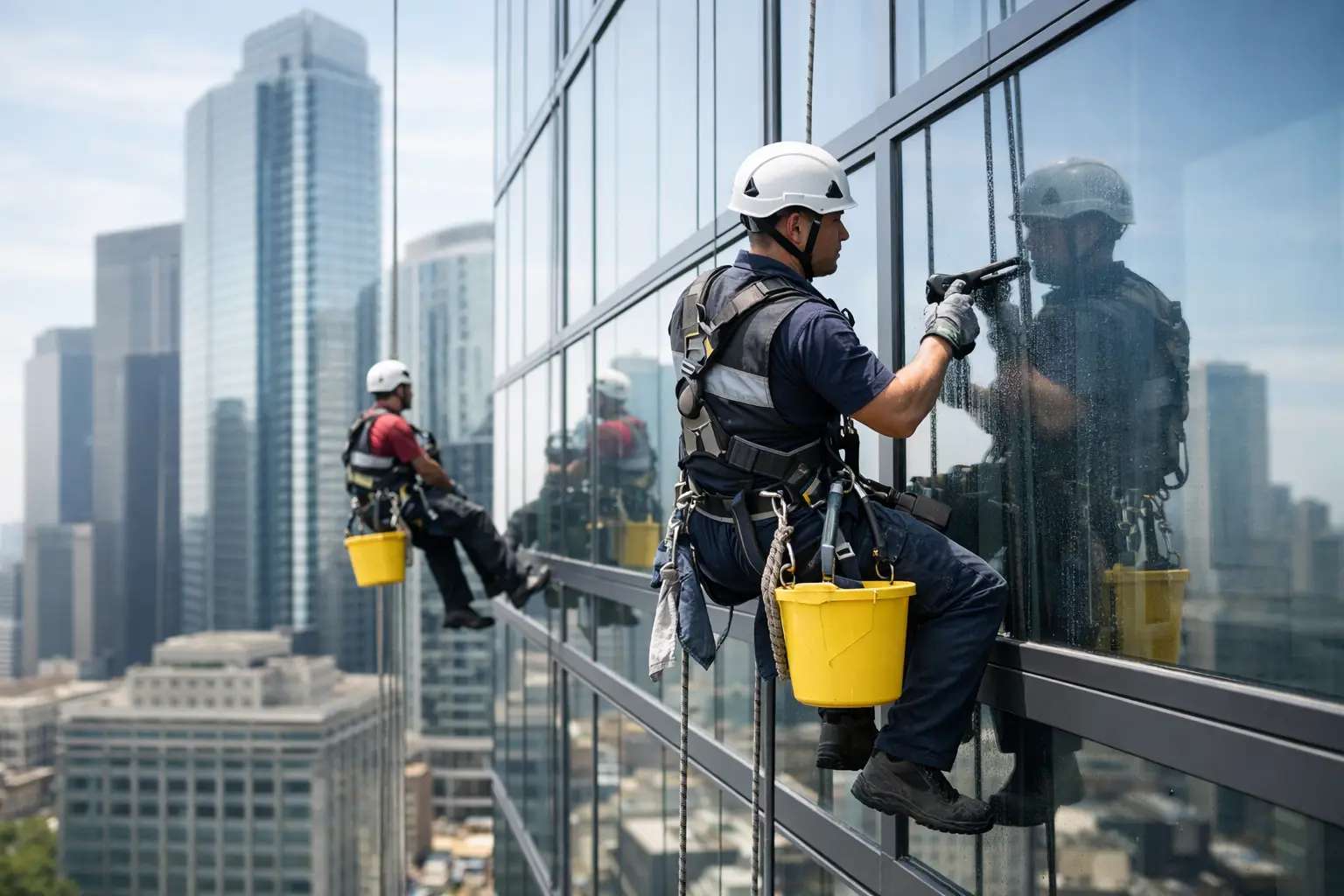

A streaked curtain wall, clogged roof drainage, or stained exterior glass does more than hurt curb appeal. For commercial properties, high rise cleaning affects tenant perception, maintenance planning, and risk control at the same time. When access is difficult and the scope involves height, weather exposure, and public-facing surfaces, the job needs more than a general cleaning crew.
What high rise cleaning actually covers
High rise cleaning is not limited to window washing. In commercial settings, it often includes exterior glass cleaning, facade cleaning, roof gutter clearing, pressure cleaning for selected surfaces, and work on hard-to-reach building areas that standard access methods cannot safely reach.
That distinction matters because many buildings do not have one cleaning problem. They have several related maintenance issues happening at once. Dust buildup on glazing, algae or pollution stains on facade panels, blocked gutters, and dirt accumulation around elevated ledges all affect appearance and long-term building condition. Managing those issues under one capable contractor is usually more efficient than splitting the work across multiple vendors.
For facility teams and property managers, the real question is not whether a building needs exterior cleaning. It is whether the contractor can access the work area safely, complete the job without disrupting operations, and leave the building looking consistently presentable.
Why high rise cleaning matters beyond appearance
Clean exterior surfaces make a strong first impression, but that is only part of the value. On office towers, retail centers, hotels, industrial facilities, and mixed-use properties, exterior dirt can hide early signs of wear. Staining, water runoff marks, sealant issues, and blocked drainage points are easier to notice when routine cleaning is done properly.
There is also an asset protection angle. Pollutants, mineral deposits, bird droppings, and organic growth can sit on surfaces for months if they are not addressed. Over time, that buildup can become harder and more expensive to remove. In some cases, surface deterioration accelerates because cleaning is delayed too long or handled with the wrong method.
For customer-facing properties, presentation matters even more. Tenants, visitors, and corporate clients notice the condition of a building before they ever step inside. A clean facade supports the image of a well-managed property. A neglected exterior suggests deferred maintenance, even when the interior is in good shape.
The access challenge in high rise cleaning
This is where many cleaning plans fail. The cleaning itself may be straightforward, but access is not. High rise work often involves suspended platforms, rope access, boom lifts, ladders for limited areas, or site-specific methods based on the building design. The right solution depends on height, facade shape, setback areas, roof anchorage, traffic flow below, and the surfaces being cleaned.
That is why site inspection is not a formality. It is how a contractor identifies hazards, confirms equipment needs, and determines labor requirements. A building with decorative fins, recessed glazing, narrow service zones, or restricted roof access will require a different plan than a tower with simple vertical lines and clear staging areas.
A reliable contractor should be clear about these differences. If a quote seems unusually simple for a technically difficult building, that is usually a warning sign. High rise cleaning should be priced and planned around real site conditions, not guesswork.
What affects the cost of high rise cleaning
Commercial buyers often want a quick price, but exterior cleaning at height is rarely a flat-rate service. The cost depends on building height, total surface area, access complexity, condition of the surfaces, frequency of service, and whether the scope includes additional maintenance support such as gutter cleaning or facade treatment.
Labor is another major factor. Some projects require larger crews, traffic management, or work outside normal business hours to reduce disruption. Others may need specialized equipment or extra safety controls because of pedestrian exposure, nearby roads, or limited setup space.
The building condition also changes the scope. Light dust on glass is very different from years of neglected staining, construction residue, or heavy environmental buildup. A first-time cleanup may take significantly longer than routine scheduled service.
This is why site-specific quotations make sense. They allow the contractor to match the method, manpower, and schedule to the actual building rather than forcing a generic package onto a specialized job.
How to evaluate a high rise cleaning contractor
If you manage a commercial property, you are not only buying a cleaning result. You are buying execution in a high-risk environment. The right contractor should show competence in planning, safety, equipment handling, and communication from the start.
Look first at access capability. A contractor that handles high rise window cleaning, facade work, gutters, and difficult-to-reach exterior areas is usually better positioned to manage real site conditions. This matters when the scope changes after inspection, which happens often on complex buildings.
Next, assess how they quote and communicate. A dependable provider asks practical questions about height, access points, facade materials, working hours, and operational restrictions. They explain what is included, what may require separate treatment, and what site conditions could affect scheduling.
Safety should also be discussed in concrete terms, not vague assurances. Commercial clients need a team that works with trained technicians, suitable equipment, and clear site procedures. On occupied properties, this is essential for protecting building users as well as the crew.
Finally, consider service range. For many commercial buildings, exterior cleaning connects to broader maintenance needs. If one contractor can support facade cleaning, high-access work, roof gutter service, and selected maintenance tasks, coordination becomes easier and downtime is reduced.
When scheduling makes the biggest difference
Many buildings wait too long between exterior cleaning cycles. By the time service is approved, dirt has become embedded, water marks are heavier, and access planning is more urgent because of a tenant visit, audit, or event. That usually means higher effort and tighter scheduling.
A planned schedule is more efficient. It keeps glazing clearer, reduces surface buildup, and makes each service visit more predictable. The ideal frequency depends on the building type and environment. A tower near heavy traffic or active construction may need more frequent attention than a lower-exposure office block. Buildings with large glass frontages or premium tenant expectations also tend to require a tighter cycle.
Weather and local conditions matter too. In Malaysia, rain patterns, humidity, and urban pollution can quickly affect glass and facade surfaces. That does not mean every building needs constant service, but it does mean cleaning intervals should be based on exposure, not assumption.
High rise cleaning and operational disruption
One of the main concerns for property teams is disruption to occupants and visitors. This is a fair concern. Exterior access work affects entrances, loading areas, parking, and public-facing spaces if it is not managed properly.
A professional high rise cleaning plan should address timing, work zones, and communication before work begins. Some projects are best handled during off-peak hours. Others can proceed during business hours if sections are isolated properly and the sequence is planned around tenant activity.
This is where experience shows. A specialist contractor understands that the building still needs to function while the work is underway. Clean results matter, but so does controlled execution.
Why specialized support is often the better choice
General cleaning vendors can be effective for interior janitorial work, but high rise exterior cleaning is a different category. The combination of height, access constraints, safety exposure, and material-specific cleaning methods calls for specialized teams.
That is especially true for commercial and industrial properties where exterior maintenance ties directly to building performance and public image. A specialist brings the equipment, trained personnel, and site planning needed to complete technically demanding work with fewer surprises.
For building owners and managers in Kuala Lumpur, Selangor, Penang, and Johor, that practical advantage often matters more than a low initial quote. The cleaner result is only part of the outcome. The larger value is knowing the work was assessed properly, carried out safely, and aligned with the realities of your site.
Urban Solutions Services Sdn Bhd works in exactly that space – supporting commercial properties that need dependable high-access cleaning and maintenance without compromising on safety or execution.
Where the work involves roof or elevated access, property teams should also review DOSH guidance on working at height when planning access, supervision and fall-prevention controls.
For a site-specific scope, review our high-rise window cleaning services and arrange an assessment before confirming access, timing and cost.
If your exterior surfaces are getting harder to maintain, your access points are challenging, or your current scope keeps expanding beyond basic cleaning, it may be time to treat high rise cleaning as part of your building maintenance strategy rather than a last-minute fix.