

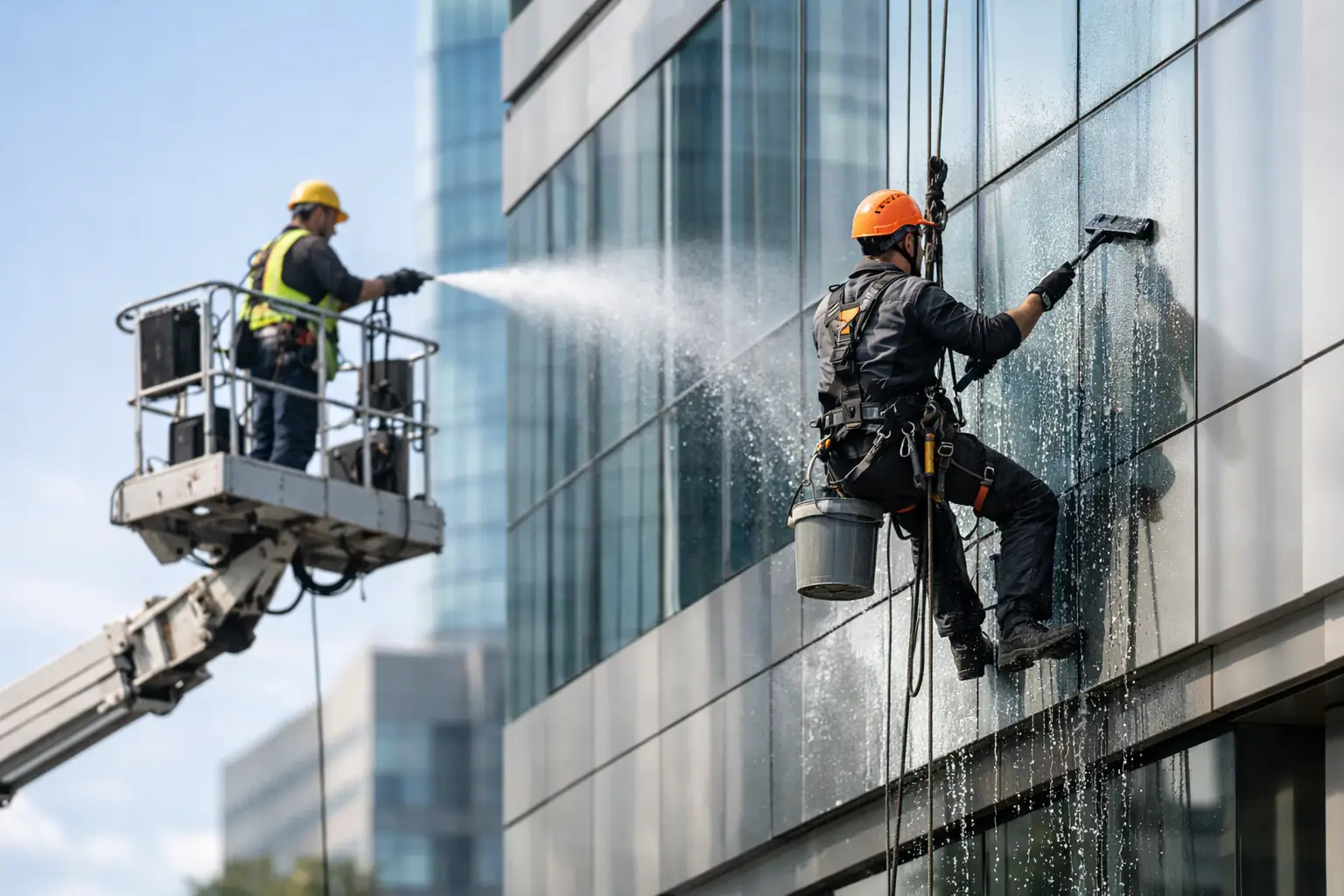

A stained exterior changes how people read a building before they ever step inside. For office towers, retail centers, industrial sites, and mixed-use properties, facade cleaning services are not just about appearance. They support tenant confidence, brand presentation, material lifespan, and safer long-term maintenance planning.
Commercial properties deal with more than dust on glass. Facades collect traffic residue, algae, hard water staining, airborne pollutants, construction dust, grease, and runoff marks. In dense urban areas, these issues build up faster and become harder to remove if cleaning is delayed. What starts as a cosmetic issue can eventually mask sealant failure, clogged drainage points, cracked panels, or corrosion around fixings.
What facade cleaning services actually cover
A proper facade cleaning scope depends on the building envelope, access conditions, and the level of contamination. On one property, the work may focus on glass, aluminum framing, and external cladding. On another, it may involve stone, painted surfaces, signage surrounds, ledges, fins, louvers, and hard-to-reach architectural details.
That is why commercial buyers should avoid thinking of facade cleaning as a single standard service. The cleaning method has to match the surface. Glass may require purified water cleaning or manual detailing. Painted finishes may need lower-pressure washing and controlled chemical use. Natural stone, composite panels, and coated metals all respond differently to agitation, detergents, and water pressure.
This is also where access capability matters. A low-rise commercial block and a high-rise tower may need very different execution plans even if the staining looks similar. Rope access, boom lifts, gondolas, scaffolding, and other access methods affect labor, timing, site safety, and cost.
Why commercial properties schedule facade cleaning services
For most building managers, the first reason is visibility. A dirty exterior makes a commercial property look neglected, even when the interior is well maintained. That affects tenant perception, customer traffic, and how the asset is viewed by visitors, investors, and prospective occupants.
The second reason is preventive maintenance. Dirt buildup can trap moisture and hide developing defects. When exterior surfaces are cleaned on a planned basis, maintenance teams get a better look at joints, seals, coatings, anchor points, and drainage paths. That makes it easier to catch issues before they become repair projects.
There is also an operational reason. If a building already requires high-access work for windows, gutters, roof edges, signage, or external repairs, combining those scopes through one capable contractor can reduce disruption. It often makes more sense to coordinate access once and complete related tasks in the same maintenance window.
Not every facade should be cleaned the same way
This is where many service decisions go wrong. Choosing the lowest quote without reviewing method statements can create avoidable risk. High pressure may remove surface dirt quickly, but on the wrong material it can damage coatings, force water into joints, or leave inconsistent results. Strong chemicals may cut through biological growth but can stain sensitive finishes or affect nearby landscaping if not managed correctly.
A dependable contractor will assess the facade material, staining type, water source, drainage conditions, and surrounding site activity before recommending a process. In some cases, a gentle wash with the right detergent is enough. In others, spot treatment, manual agitation, or staged cleaning is required. There are situations where partial restoration may also be more realistic than expecting every mark to disappear, especially on aged surfaces with permanent discoloration.
That kind of honesty matters. Commercial clients need realistic outcomes, not overpromises.
Access planning is a major part of the job
Facade cleaning at height is not just a cleaning task. It is an access and safety operation. Buildings with setbacks, canopies, recessed glazing, tight service lanes, active loading areas, or rooftop limitations need careful planning before work starts.
This affects the service far more than many buyers expect. The same facade area can have very different labor requirements depending on whether crews can use a boom lift, suspended platform, or rope access system. Site restrictions, pedestrian flow, weather exposure, and permit requirements all change the execution plan.
For high-rise and technically challenging buildings, experienced access teams make a real difference. They know how to work around live commercial environments, protect surrounding areas, and complete the job without creating unnecessary disruption for tenants or operations staff.
What affects pricing for facade cleaning services
Commercial buyers usually want a quick number, but accurate pricing depends on several site-specific factors. Building height is one part of it, but not the only one. Total facade area, surface type, level of soiling, frequency of cleaning, and access complexity all have a direct impact.
A property with easy ground access and standard glazing will usually price differently from a tower with multiple facade types, roof rigging requirements, and restricted work zones. Labor intensity also changes when technicians need extra detail work around fins, ledges, signage, or deep recesses.
That is why site visits are valuable. A proper inspection allows the contractor to quote based on actual conditions rather than rough assumptions. It also gives the client a clearer understanding of the method, timeline, and any access constraints that may affect scheduling.
How often should a commercial building clean its facade?
There is no single schedule that suits every property. A prime office building in a busy city corridor may need more frequent exterior cleaning than a lower-exposure facility in a less polluted area. Buildings near highways, construction activity, coastal environments, or heavy rainfall patterns often accumulate visible staining faster.
For some properties, quarterly or biannual cleaning keeps the exterior consistently presentable. Others may only need annual cleaning, especially if the facade material hides dirt well or the property has a lower public-facing profile. The better question is not what is standard, but what your building condition, tenant expectations, and maintenance goals require.
If presentation is part of the asset strategy, cleaning should be planned, not reactive. Waiting until the facade looks noticeably dirty often means more intensive work later.
What to look for in a facade cleaning contractor
Commercial property teams should look beyond basic cleaning claims. The contractor should be able to explain how they will access the work area, what cleaning method suits the facade, how they will protect surrounding surfaces, and what site coordination is required.
Experience with high-rise and difficult-access projects is especially important for larger buildings. So is the ability to manage related exterior maintenance scopes when needed. A contractor that understands facade cleaning, window cleaning, roof edge work, and other elevated services can often help simplify vendor management across the property.
Responsiveness matters too. Site inspections, clear quotations, practical scheduling, and straightforward communication tend to tell you a lot about how the project will run. On occupied commercial sites, reliability is part of the service.
Why facade cleaning is part of asset care, not just housekeeping
Too often, exterior cleaning is treated like a cosmetic extra that can be pushed back indefinitely. In reality, the facade is one of the most exposed parts of the building. It takes the full impact of weather, pollution, runoff, and environmental buildup every day.
Keeping it clean does more than improve appearance. It supports inspections, helps preserve finishes, and shows that the property is being managed properly. For landlords and facilities teams, that matters. A well-maintained exterior sends a clear message about standards before anyone sees the lobby, office floor, or production area.
On commercial properties in places like Kuala Lumpur and Selangor, where pollution, humidity, and rainfall can accelerate facade staining, planned exterior cleaning becomes even more practical. The right service partner will not just wash surfaces. They will assess access, protect the building envelope, and complete the work with the discipline these environments require.
Where the work involves roof or elevated access, property teams should also review DOSH guidance on working at height when planning access, supervision and fall-prevention controls.
For a site-specific scope, review our façade cleaning services and arrange an assessment before confirming access, timing and cost.
If your facade is becoming harder to maintain, that is usually a sign to act earlier, not later. A clean exterior is not just easier to present. It is easier to manage.