

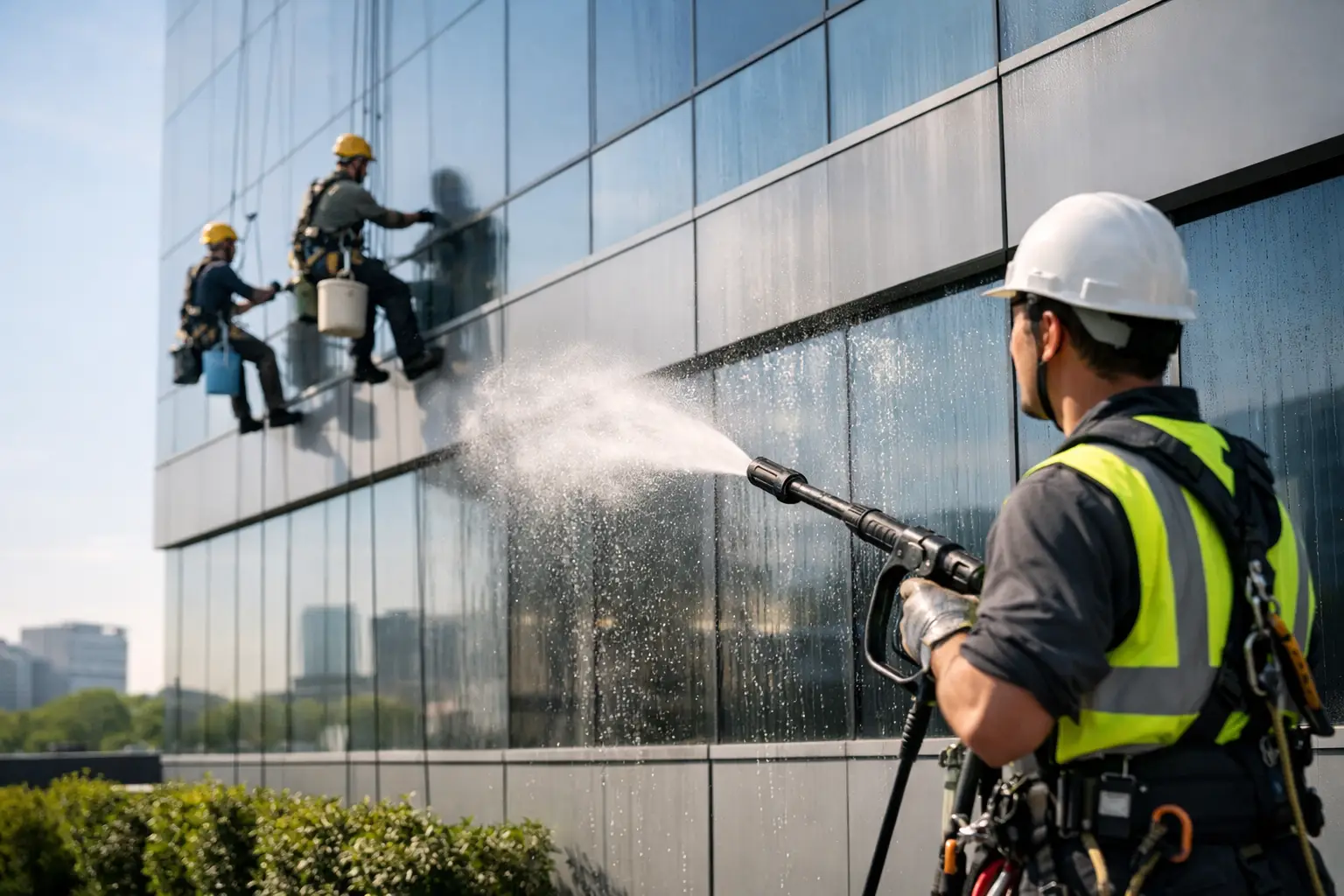

A stained exterior does more than make a building look neglected. For commercial properties, it affects tenant perception, visitor confidence, and how quickly minor facade issues get noticed. That is why commercial facade washing Selangor is not just a cosmetic service. It is part of practical building maintenance, especially for offices, retail sites, industrial facilities, and high-rise properties exposed to heavy rain, dust, traffic residue, and algae growth.
In Selangor, facade conditions can change quickly. Moisture, heat, pollution, and airborne dirt leave visible marks on cladding, glass, painted surfaces, concrete, and metal panels. On low-rise buildings, these stains may appear manageable from the ground. On taller or more complex properties, access becomes the real challenge. A proper result depends on both cleaning knowledge and safe high-access execution.
Why commercial facade washing matters
A clean facade protects more than appearance. When dirt, mold, algae, and residue stay on a surface for too long, they can shorten coating life and make deterioration harder to detect. Building managers often discover sealant failure, cracks, corrosion, blocked drainage points, or loose fittings only after exterior cleaning exposes the actual condition underneath.
For commercial buildings, appearance also has a direct operational value. Offices need to look presentable for tenants and visitors. Retail and hospitality properties rely on curb appeal. Industrial facilities may not prioritize aesthetics in the same way, but exterior cleanliness still reflects maintenance standards and site discipline.
There is also a timing issue. Waiting until the facade looks obviously dirty usually means more aggressive cleaning is needed. That can raise labor time, equipment needs, and in some cases the risk of surface damage if the wrong method is used. Preventive washing is usually more efficient than corrective cleaning.
Commercial facade washing Selangor for different building types
Not every building needs the same cleaning plan. A glass-heavy office tower has different requirements from a painted shop lot or a warehouse with metal cladding. The best approach depends on height, surface material, surrounding exposure, and how much staining has built up.
High-rise office and mixed-use buildings
These properties often need specialized access systems such as rope access, gondolas, boom lifts, or scaffolding support. The facade may combine glass, aluminum, ACP panels, concrete, and decorative features that each respond differently to cleaning agents and water pressure. In these cases, the contractor is not just washing surfaces. They are managing access, edge protection, technician movement, public safety, and work sequencing around building operations.
Retail buildings and commercial shop lots
These sites are often more visible to foot traffic and road traffic, so staining becomes a branding issue quickly. Retail exteriors also tend to collect grease, signage shadows, and street-level grime. Access may seem easier, but there can be complications from awnings, narrow frontage, overhead wiring, and active business hours.
Industrial and logistics properties
Industrial facades can accumulate dust, exhaust residue, and production-related buildup. The cleaning method must account for operational sensitivity, nearby equipment, vehicle movement, and the type of exterior finish. A wash that is suitable for office glass may not be right for coated metal panels or concrete walls in a plant environment.
What affects facade washing methods
The right method starts with the surface. Painted walls, curtain wall glass, precast concrete, stone, and metal cladding all require different pressure levels, tools, and detergents. Using excessive pressure may remove dirt fast, but it can also strip coatings, force water into joints, or leave visible marks.
This is why site inspection matters. A contractor should assess height, water access, drainage, staining type, public exposure, and the safest working method before pricing or scheduling the job. For one building, pure water cleaning may be sufficient. For another, soft washing with controlled chemical application may be needed to treat algae or embedded grime. In heavier cases, manual detailing is required around joints, ledges, and shaded sections where buildup is worst.
It also depends on the facade age. Older surfaces may already have weakened sealants or faded coatings. Cleaning can still be done safely, but the process needs more control. A dependable contractor will point out these conditions before work starts instead of treating every exterior the same way.
Safety is not a side issue
Facade washing sounds simple until access becomes complex. Once technicians are working at height, around traffic, above entrances, or near sensitive building features, the job becomes a high-risk service. That changes what property managers should look for in a vendor.
Safe commercial facade washing Selangor requires more than manpower and hoses. It involves trained technicians, suitable access equipment, work permits where needed, hazard assessment, drop-zone control, and a realistic method statement for the site. On occupied commercial properties, the work must also be planned to reduce disruption to tenants, staff, customers, and deliveries.
This is where experience matters. Buildings with setbacks, architectural fins, tight perimeter space, rooftop anchor use, or restricted access zones need a contractor that can adapt. The lowest quote may not reflect the actual access difficulty. If the vendor underestimates the site, delays and safety concerns usually follow.
How often should a commercial facade be washed?
There is no single schedule that fits every property. For some office buildings, a planned annual or twice-yearly wash is enough to keep surfaces in good condition. High-visibility retail sites or buildings near major roads may need more frequent service. Properties with shaded elevations, poor runoff, or persistent algae issues may also need shorter intervals.
A practical schedule should be based on exposure, appearance standards, and material protection. If the building is part of a premium commercial development, presentation may justify a tighter maintenance cycle. If the site is industrial and appearance is secondary, the focus may shift toward preserving materials and preventing long-term buildup.
The best schedule is usually preventive, not reactive. Cleaning before heavy staining sets in helps control cost and keeps access work more efficient.
What affects project cost
Commercial buyers usually want a quick rate, but facade washing is one of those services where site conditions directly shape the price. Building height is only one factor. The total area, facade type, access restrictions, labor intensity, and equipment required all matter.
A five-story building with difficult perimeter access can be more complicated than a taller building with straightforward equipment positioning. Likewise, a facade with mixed materials, deep ledges, and heavy staining will take longer than a flat exterior with light dust buildup.
The most accurate pricing usually comes after a site visit. That allows the contractor to assess access points, safety controls, water source availability, working hours, and whether the job should be phased. For property managers, that process is useful because it reduces variation later. A detailed quotation should reflect actual site requirements, not assumptions.
Choosing the right contractor
For commercial facade work, capability matters more than broad claims. A suitable contractor should be able to explain how the job will be done, what access method is recommended, how the building and public areas will be protected, and what limitations exist based on the facade material.
It also helps to work with a provider that understands commercial maintenance beyond basic cleaning. Exterior washing often overlaps with related needs such as window cleaning, roof gutter clearing, or hard-to-reach maintenance issues noticed during access work. When one contractor can handle technically demanding exterior tasks under a clear scope, coordination becomes simpler for the client.
Urban Solutions Services Sdn Bhd operates in this space with a strong focus on high-access commercial and industrial cleaning, where execution, safety planning, and site-specific quotations are part of the service rather than an afterthought.
When to book facade washing
The best time is before the building reaches a visible decline. If your facade already shows runoff marks, algae patches, dull panels, or uneven discoloration, the cleaning cycle is overdue. Another good trigger is before a tenant handover, major visitor event, audit, repainting project, or budget planning cycle.
For many facilities teams, the smart move is to arrange a site assessment first. That gives you a realistic view of access difficulty, cleaning method, and service frequency before the facade condition turns into a bigger maintenance problem.
Where the work involves roof or elevated access, property teams should also review DOSH guidance on working at height when planning access, supervision and fall-prevention controls.
For a site-specific scope, review our façade cleaning services and arrange an assessment before confirming access, timing and cost.
A clean exterior will not solve every building issue, but it makes the property easier to manage, easier to present, and easier to protect over time.