


A stained facade sends the wrong message before anyone steps through the door. For property managers and building owners, exterior appearance is not just cosmetic. It affects tenant perception, brand image, maintenance planning, and in some cases the service life of the building envelope. This commercial facade cleaning guide explains what to assess, how cleaning methods differ, and what matters when hiring a contractor for commercial or high-rise work.
What a commercial facade cleaning guide should help you decide
Most buildings do not need the same cleaning plan. A low-rise office block with painted exterior walls has very different requirements from a high-rise tower with curtain wall glass, aluminum cladding, and recessed architectural details. Traffic exposure, nearby construction, air pollution, rain runoff, biological growth, and the age of the surface all change the cleaning approach.
That is why facade cleaning should not be treated like a standard janitorial task. The work often involves height access, surface-specific chemicals, water control, fall protection, and a clear method statement. A poor approach can leave streaking, etch delicate finishes, force water into joints, or create unnecessary risk on site.
For most commercial properties, the right question is not simply how to wash the exterior. The better question is what cleaning method protects the facade while restoring appearance with minimal disruption.
Start with the facade material, not the dirt
The surface determines the method. Dirt may look similar from the ground, but the wrong process can damage the facade long before the building looks clean.
Glass and curtain wall systems usually require purified water, non-abrasive tools, and careful attention to seals and edges. Aluminum composite panels and coated metal surfaces often need gentler detergents and controlled pressure. Natural stone and precast concrete may hold embedded staining that needs a different treatment from general surface dust. Painted exteriors can fade or peel if pressure is too aggressive. Rendered walls and textured finishes also trap dirt differently and may need spot treatment instead of broad washing.
This is where site inspection matters. A contractor should look at staining patterns, surface age, previous repairs, access points, drainage behavior, and whether there are vulnerable areas such as loose sealant, cracked panels, or oxidized coatings. Cleaning should fit the building condition, not just the building type.
Common types of facade contamination
Commercial facades rarely get dirty in one uniform way. In practice, several contaminants build up at the same time.
Urban dust and vehicle emissions create a gray film that dulls the building quickly, especially on roadside properties. Algae, mold, and mildew tend to appear on shaded elevations or damp sections where runoff lingers. Rust marks can form below fixings or metal elements. Hard water staining often shows up around ledges and drainage points. Construction dust can cling to facades after nearby renovation or new development. Bird droppings and organic debris are also common around ledges, signage, and service areas.
Each type of contamination responds differently. General washing may remove loose dirt, but mineral staining or biological growth often needs targeted treatment. If a contractor proposes one method for every surface and every stain, that is usually a sign the assessment is too broad.
The main cleaning methods and where they fit
A practical commercial facade cleaning guide needs to be honest about trade-offs. No method is best in every situation.
Soft washing is often suitable for painted walls, delicate coatings, and surfaces with biological growth. It uses lower pressure and appropriate cleaning agents to break down contaminants without forcing water into the facade. This method is effective, but it depends on correct dilution, dwell time, and rinsing.
Pressure washing can work well on durable surfaces such as certain concrete areas, external hardscape elements, and some robust facade sections. It is faster in the right setting, but excessive pressure can scar finishes, lift paint, or compromise joints. On commercial buildings, pressure alone is rarely the whole answer.
Water-fed pole systems are useful for lower to mid-level external glass and facade sections that can be reached safely from the ground. They can deliver a good finish with less setup time, though access limits still apply.
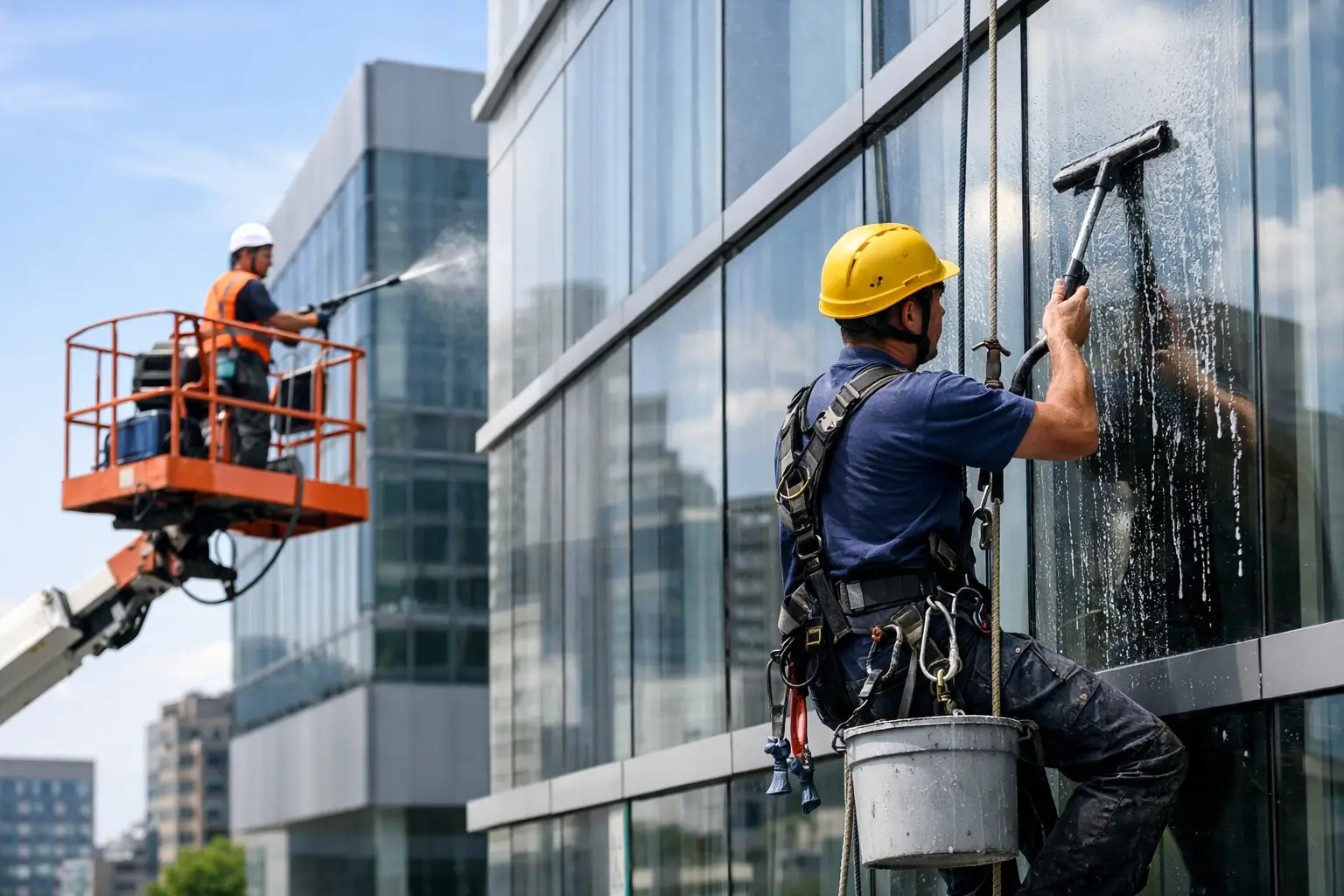
Rope access and gondola-based cleaning are often necessary for high-rise buildings. These methods allow technicians to reach vertical elevations, awkward geometry, and difficult facade zones safely when planned properly. They are especially valuable where traditional scaffolding would be slow, expensive, or disruptive.
Boom lifts and mobile elevated work platforms can be the right choice for selected elevations, podiums, canopies, and industrial structures. The trade-off is that machine access depends on ground conditions, clearance, and available operating space.
Access planning is as important as the cleaning itself
On high-rise and technically challenging buildings, access is not a side issue. It is a major part of the job scope.
A proper facade cleaning plan considers anchor points, roof setup, edge protection, restricted areas, tenant movement, public safety, and weather exposure. On active commercial sites, work may also need to be staged outside peak hours or coordinated around loading bays, entrances, and sensitive operations.
This is one reason quotations vary so much from one building to another. Two buildings with similar square footage can require very different labor, equipment, and safety controls if one has clean roof access and straightforward elevations while the other has complex setbacks, limited staging areas, and multiple facade materials.
For decision-makers, this matters because the cheapest quote may exclude the practical realities of the site. If access planning is weak, delays and change orders usually follow.
How often should commercial facades be cleaned?
There is no universal schedule, but there are clear patterns. High-visibility office buildings, retail-facing properties, hospitality sites, and corporate headquarters generally benefit from more frequent cleaning because exterior appearance directly affects visitor experience. Buildings near heavy traffic, construction corridors, or industrial activity also accumulate dirt faster.
In many cases, a planned schedule works better than waiting until the facade looks visibly neglected. Routine cleaning is usually more efficient than restoring heavily soiled surfaces after long delays. Dirt, runoff staining, and organic growth become harder to remove over time, and deferred cleaning can expose maintenance issues later than it should.
A site visit is the best way to set the right interval. Some buildings need quarterly touch-ups on selected elevations and annual full facade cleaning. Others may only require periodic deep cleaning with spot maintenance in between.
What to look for in a facade cleaning contractor
Experience with height is not the same as experience with facades. A contractor should be able to explain the cleaning method, the access method, the surface risks, and the site controls in plain terms.
Look for a provider that can assess building height, material type, labor demand, and access complexity before pricing the work. That usually leads to a more accurate quotation and fewer surprises on site. It also helps if the contractor can handle related exterior maintenance tasks, since facade cleaning often overlaps with window cleaning, gutter clearing, roof access work, and localized exterior upkeep.
Safety should be visible in the planning process, not just mentioned in passing. You want to see proper job scoping, technician competency, equipment suitability, and clear control measures for public-facing areas.
For larger properties or portfolios, responsiveness also matters. Delays in scheduling, poor communication, and weak site coordination can create more operational strain than the cleaning itself.
Why site-specific quoting is the right approach
This commercial facade cleaning guide would be incomplete without addressing cost. Commercial buyers often want a fast price, but facade work is one of those services where generic pricing can be misleading.
The real cost depends on building size, height, facade type, degree of soiling, required equipment, labor intensity, and access difficulty. Night work, restricted access windows, and live-site safety measures may also affect the scope. A site-specific quote is not a sales tactic. It is usually the only responsible way to price technically demanding exterior cleaning.
For that reason, free site visits are valuable. They allow the contractor to inspect the facade properly, identify constraints early, and recommend a cleaning plan that matches the building instead of forcing the building into a standard package.
Urban Solutions Services Sdn Bhd works this way because high-risk exterior cleaning is rarely one-size-fits-all.
The value is bigger than appearance
A cleaner facade improves first impressions, but the operational value runs deeper. Regular exterior cleaning can help reveal failed sealants, drainage issues, staining sources, corrosion points, and areas where maintenance is starting to slip. That gives building teams a better chance to address small issues before they become expensive repairs.
For commercial properties, facade cleaning is part presentation and part asset care. When the work is planned properly, it supports safety, protects exterior finishes, and keeps the building looking managed rather than merely occupied.
Where the work involves roof or elevated access, property teams should also review DOSH guidance on working at height when planning access, supervision and fall-prevention controls.
For a site-specific scope, review our façade cleaning services and arrange an assessment before confirming access, timing and cost.
If your building has hard-to-reach elevations, mixed facade materials, or visible staining that keeps returning, the right next step is not guesswork. It is a proper site assessment and a cleaning plan built around the actual conditions on your property.