

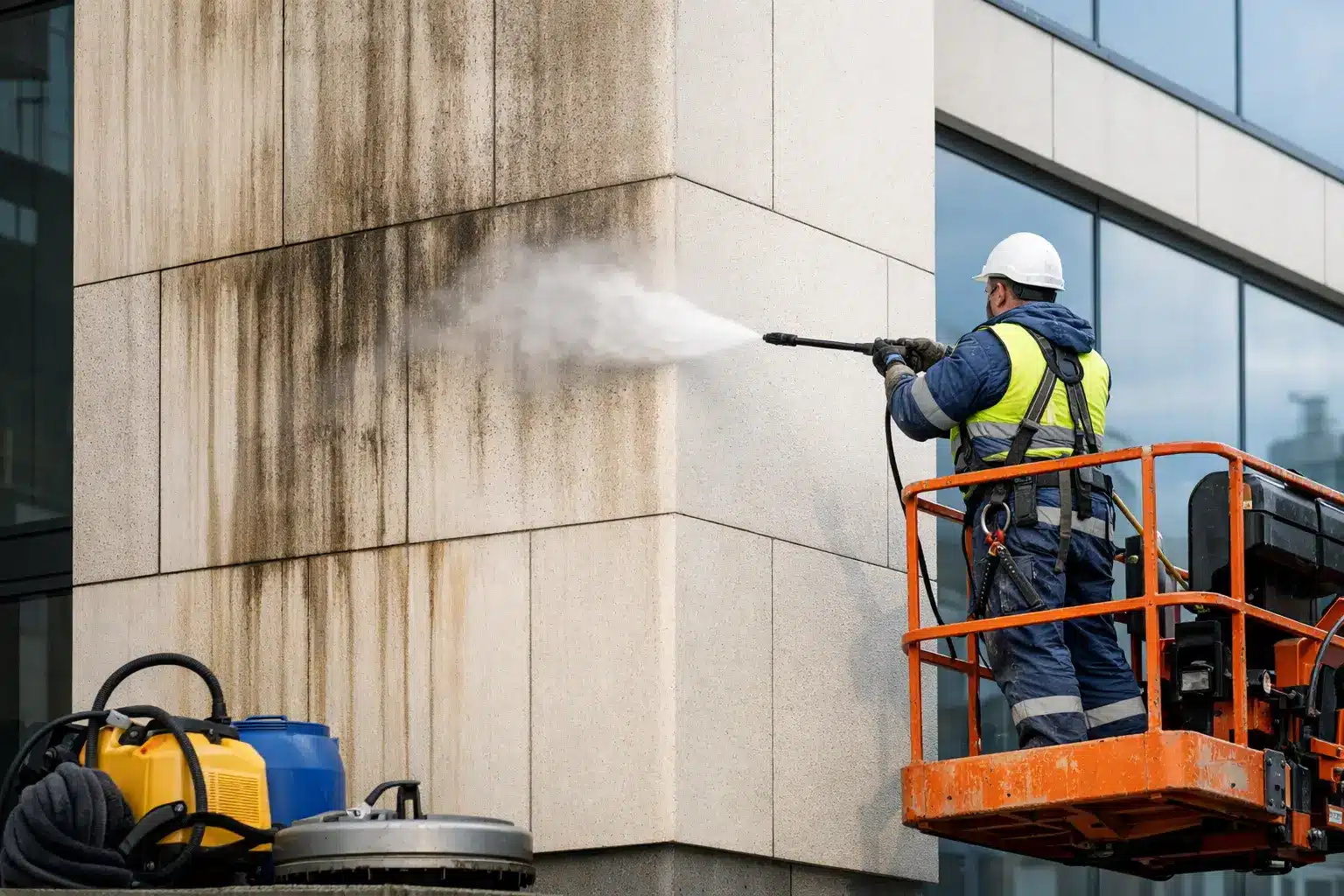

A dark runoff line beneath an air-conditioning drain, rust marks below an exposed bracket, or algae spreading across shaded cladding can quickly make an otherwise well-managed property look neglected. The best methods for facade stain removal start with identifying what caused the stain, not simply applying more pressure or a stronger chemical.
For commercial buildings, facade cleaning is a maintenance decision as much as an appearance issue. The wrong process can etch glass, fade coatings, drive water behind panels, damage sealants, or create a safety risk at height. A professional approach protects the building envelope while restoring a clean, presentable exterior.
Why Stain Identification Comes First
Facade stains rarely have one universal solution. Concrete, painted surfaces, aluminum composite panels, natural stone, brick, glass, and metal cladding all react differently to water pressure, cleaning agents, and mechanical agitation. Even two areas of the same facade may need different treatment if one is exposed to rainwater runoff and another is shaded by surrounding structures.
A site inspection should identify the surface material, stain type, age of the staining, previous cleaning history, access restrictions, and nearby components such as windows, signage, drainage outlets, landscaping, and public walkways. Small test patches are particularly useful on coated panels, stone, and painted surfaces. They show whether a cleaning product lifts the stain without changing the surface finish.
Common commercial facade stains include atmospheric dirt, soot, algae, mold, mineral deposits, rust, oil residue, paint transfer, and efflorescence. Some are surface-level deposits. Others point to an underlying maintenance issue, such as a leaking pipe, corroded fixture, failed sealant, or poor drainage.
Best Methods for Facade Stain Removal by Stain Type
Low-pressure washing for dust and general grime
Low-pressure rinsing with the correct detergent is often the right starting point for dust, traffic film, light soot, and general environmental grime. In dense commercial areas, airborne particles can settle quickly on ledges, panels, windows, and textured finishes. A suitable detergent helps loosen the deposit so it can be rinsed away without aggressive force.
Pressure must be controlled carefully. High pressure may appear efficient, but it can force water into joints and openings, strip aging paint, damage soft stone, and compromise sealants. The goal is controlled cleaning, not maximum force. Water flow, nozzle angle, stand-off distance, and the condition of the facade all affect the result.
Biocidal treatment for algae and mold growth
Green, black, or dark organic staining is common on shaded elevations, areas with frequent rain exposure, and sections near condensate drains. Washing alone may remove the visible growth, but it may not address spores embedded in porous surfaces.
A compatible biocidal treatment can break down algae and mold before a gentle rinse. The required dwell time depends on the product, surface, and severity of growth. This work should be planned with runoff control in mind, especially around landscaped areas, drainage channels, and occupied entrances. If moisture is continually feeding the growth, cleaning should be paired with drainage or maintenance repairs to prevent rapid return.
Specialized cleaners for mineral deposits and efflorescence
White, chalky staining on brick, concrete, stone, or masonry can be mineral deposits or efflorescence. Efflorescence occurs when water moves through a porous material, carries salts to the surface, and evaporates. It is not simply dirt, and treating it as dirt can waste time and damage the surface.
Dry brushing or a mild, surface-appropriate cleaner may be sufficient for light deposits. More established staining may require a specialized product and careful neutralization. Acid-based cleaners can be effective in certain conditions, but they are not a default solution. On the wrong material or concentration, they can etch stone, attack metal, damage coatings, and leave uneven marks. Testing and material knowledge are essential.
Rust stain treatment with source correction
Rust stains often appear below metal brackets, bolts, air-conditioning supports, railings, or facade fixtures. The visible orange-brown streak is only part of the problem. If the metal source remains corroded, the stain will return after cleaning.
Rust removal generally requires a purpose-made treatment that is compatible with the facade material, followed by thorough rinsing. The source should then be assessed for corrosion protection, coating repair, replacement, or water intrusion. On a high-rise exterior, this may involve coordination between facade cleaning, maintenance, and painting teams.
Degreasers for oil, soot, and exhaust residue
Industrial properties, loading bays, parking areas, kitchens, generator zones, and buildings near busy roads can develop oily or carbon-based deposits. These stains usually need a degreaser rather than plain water. The product must be matched to the surface and managed carefully to avoid streaking on glass or surrounding panels.
For porous materials, a single treatment may not be enough. The cleaning team may need to apply the product, allow controlled dwell time, agitate gently where appropriate, and rinse in stages. Runoff containment matters because oily wastewater should not be allowed to flow uncontrolled into drains or public areas.
Access Method Is Part of the Cleaning Method
The most suitable cleaning chemical will not deliver a reliable result if the team cannot safely reach the stained area. High-rise and hard-to-access facades require an access plan that suits the building design, working height, anchor points, ground conditions, and occupant activity.
Rope access can be efficient for targeted stain removal, detailed work around panels and windows, and areas with limited ground space. Mobile elevated work platforms may suit lower elevations or broad areas where safe equipment positioning is available. Building maintenance units, suspended platforms, and scaffolding may be appropriate for larger projects or locations requiring extended working time.
Access selection affects cost, duration, public protection measures, and the consistency of cleaning. A proper site-specific quotation should account for building height, facade area, labor requirements, stain severity, access complexity, water availability, and required safety controls. Choosing a contractor based only on a low per-square-foot figure can leave out the controls needed for a safe, complete job.
Protect the Building Envelope During Cleaning
Facade stain removal should never be treated as an isolated cosmetic task. Windows, expansion joints, sealants, gaskets, vents, electrical fixtures, signage, and drainage components all need protection. Before work begins, technicians should inspect vulnerable openings and identify areas where water ingress could affect interior spaces or equipment.
Cleaning from the top downward helps prevent dirty runoff from re-staining completed sections. Sensitive areas may need masking or temporary covers. Ground-level controls should protect pedestrians, vehicles, and landscaping from falling debris, spray, and cleaning runoff.
For occupied commercial sites, timing also matters. Cleaning near entrances, tenant-facing glazing, loading areas, or parking access should be scheduled around building operations where possible. Clear work zones reduce disruption and help the job proceed efficiently.
Prevent Stains From Returning Too Quickly
A clean facade can lose its appearance quickly if the source of staining remains. After cleaning, building managers should review water discharge points, gutters, downpipes, roof runoff, air-conditioning condensate lines, corroded metalwork, and damaged coatings. Small maintenance defects often create the most visible streaking.
Regular facade inspections help teams catch early staining before it becomes embedded. The right frequency depends on the building’s location, surrounding construction activity, traffic exposure, facade material, and weather conditions. A tower near major roads or in a humid, shaded environment may need more frequent attention than a protected low-rise office building.
Planned cleaning also gives facility teams a chance to inspect facade components while access is available. Combining exterior cleaning with window cleaning, gutter work, minor sealing checks, or commercial painting touch-ups can reduce repeat mobilization and simplify maintenance planning.
When Professional Facade Cleaning Is the Better Choice
Routine ground-level washing may be suitable for simple, accessible areas. High-rise staining, sensitive materials, heavy mineral deposits, widespread organic growth, and stains near facade joints need more controlled execution. These jobs involve working-at-height procedures, specialized equipment, chemical handling, and the ability to adjust methods based on real site conditions.
Urban Solutions Services Sdn Bhd approaches facade cleaning as a site-specific maintenance service, with access planning and stain treatment selected for the building rather than forced into a one-size-fits-all package. For commercial properties in Kuala Lumpur, Selangor, Penang, and Johor, a site visit can clarify both the cleaning requirement and the maintenance issue behind it.
Where the work involves roof or elevated access, property teams should also review DOSH guidance on working at height when planning access, supervision and fall-prevention controls.
For a site-specific scope, review our façade cleaning services and arrange an assessment before confirming access, timing and cost.
The right facade cleaning method leaves more than a cleaner surface. It preserves materials, limits operational disruption, and gives your building a standard of presentation that reflects the way the property is managed.